 Ferndale Exterior
 Marietta sits close enough to the water that its decks live a harder life than decks fifteen miles inland. Between the salt-laden air coming off Bellingham Bay, the driving rain that Whatcom County sees for months at a stretch, and a moss season that can run from fall through spring, a deck out here takes on moisture and grime at a pace that surprises a lot of homeowners who moved from drier climates. We repair decks in this area regularly, and the patterns we see are consistent enough that we can usually tell a homeowner what's wrong before we've finished the first walk-around.
This page is about deck repair specifically — not full rebuilds, not new construction. If your deck is structurally sound but showing wear, damage, or early rot in specific spots, repair is very often the right call. The goal here is to explain what that actually involves in a place like Marietta, so you know what to expect and what a correct repair looks like versus a patch job that won't hold.
What Marietta's Climate Actually Does to a Deck
Three things drive most of the deck repair calls we get in this part of Whatcom County, and they compound each other.
Salt Air
Proximity to Bellingham Bay means airborne salt settles on everything, including your deck's hardware. Standard fasteners — nails, screws, joist hangers — corrode faster here than they would twenty miles east. Corroded fasteners lose grip strength long before they look obviously rusted, which is why a deck can feel a little "spongy" or develop squeaks well before anything looks visibly broken.
Driving Rain
Whatcom County rain doesn't just fall straight down — wind off the water pushes it sideways into ledger boards, stair stringers, and any spot where two pieces of wood meet. Water that gets driven horizontally finds gaps that vertical rain never would, which is why the ledger board (where the deck attaches to the house) and the tops of support posts are so often where rot starts.
Moss Season
Moss needs shade, moisture, and time — Marietta's tree cover and long wet stretches provide all three. Moss on a deck surface isn't just a slip hazard; it holds water against the wood constantly, which is exactly the condition that accelerates rot underneath a board that still looks fine on top.
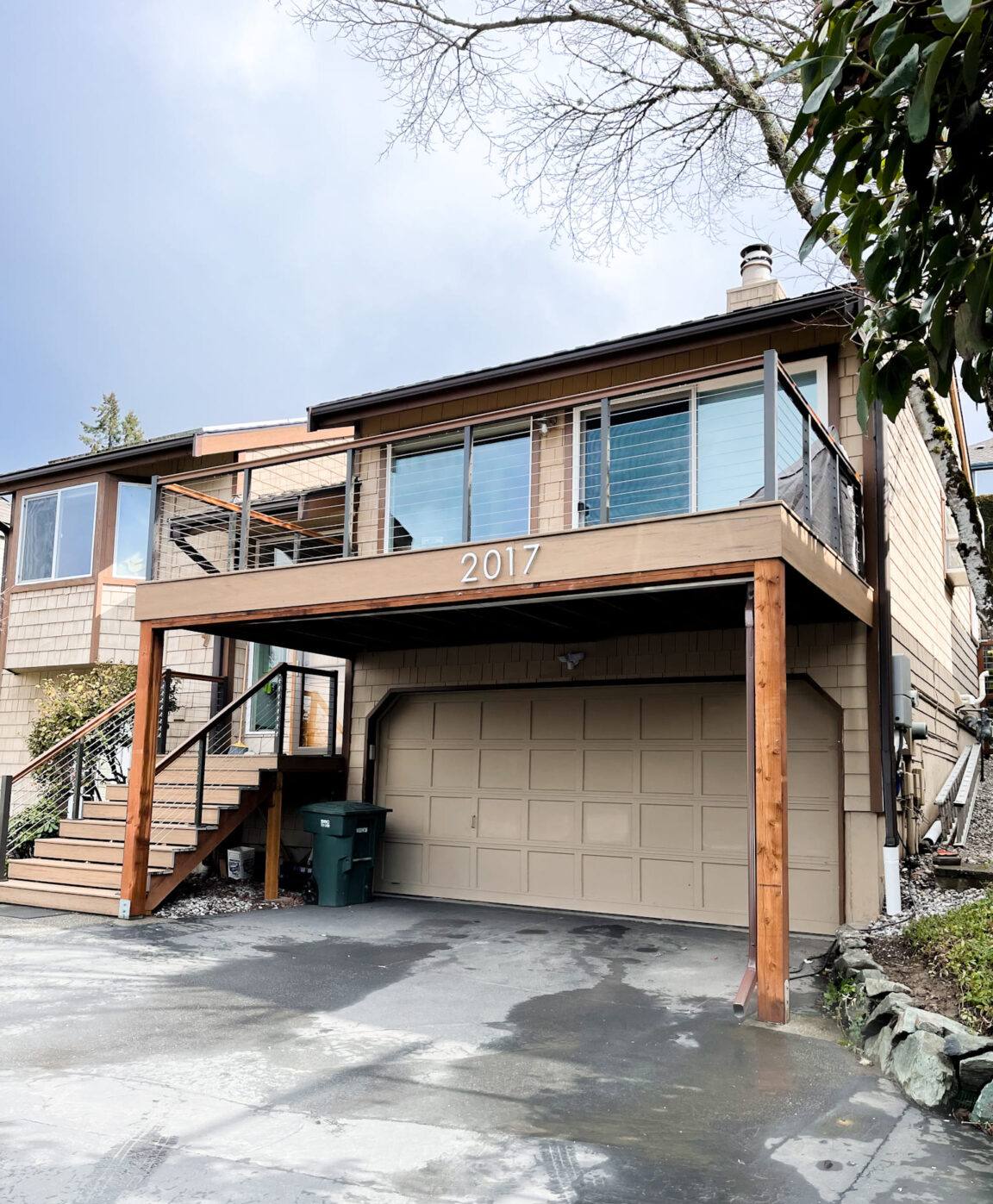
Signs Your Marietta Deck Needs Repair, Not a Full Rebuild
Most decks don't fail all at once. They fail in specific, identifiable spots first. Here's what we check for and what homeowners can look for themselves before calling anyone:
- Soft or spongy spots when you walk across the deck, especially near the house or stairs
- Boards that have visibly cupped, split, or pulled away from joists
- Rust streaks below screw heads or joist hangers — a sign the fastener itself is degrading
- Wobble in the railing when you push on it, which usually points to a loose or rotted post connection
- Gaps or separation where the deck meets the house (the ledger board area)
- Persistent moss or algae in the same spots year after year, even after cleaning
- Stair stringers that flex or feel uneven underfoot
- Discoloration or a slightly different sound (a dull thud instead of a solid knock) when tapping a board
If what you're seeing is limited to a few boards, a section of railing, or one problem area near the stairs, that's almost always a repair, not a replacement. Widespread rot in the framing itself, or a ledger board connection that's failed, is a different conversation — and we'll tell you honestly if that's what we're looking at.
What a Correct Deck Repair Actually Involves
A repair that's done right isn't just swapping the board that looks bad. It means checking what's underneath and around it, because in this climate, visible damage is usually a symptom of something happening below the surface.
Framing and Structure First
Before we touch decking boards, we check joists, beams, and posts for soft spots with a probe — not just a visual look. Wood can look intact on the surface while being compromised an inch in. Any framing member that's structurally weakened gets sistered or replaced; it's not something to patch around.
The Ledger Board Connection
Because this is where driving rain does the most damage, we pay particular attention to flashing at the ledger board. If the flashing has failed or was never installed correctly, water has likely been getting behind the board for a while — repairing the visible wood without fixing the flashing just means the same repair again in a few years.
Fasteners and Hardware
Given the salt air here, we don't reuse corroded hardware just because it's still technically holding. Joist hangers, structural screws, and post connectors get matched to the exposure level of the specific spot — more on that below.
Decking Boards and Railings
Individual board replacement, railing repair, and stair stringer reinforcement are the most common visible repairs. These get tied back into sound framing and matched as closely as practical to existing materials, with attention to drainage gaps between boards so water doesn't pool and start the moss cycle over again.
Repair or Replace? What We Actually Look At
Homeowners often ask us straight out whether their deck needs repair or full replacement. Honest answer: it depends on how much of the structure is still sound. Here's the general framework we use.
| Factor | Repair Usually Makes Sense | Replacement Usually Makes Sense |
|---|---|---|
| Framing condition | Joists and beams probe solid, damage is localized | Widespread soft spots across multiple joists or the main beam |
| Ledger board | Connection is sound once flashing is corrected | Ledger itself is rotted or pulling from the house |
| Decking surface | A handful of boards affected | Most boards show cupping, splitting, or rot |
| Age of structure | Built with sound framing lumber, issue is wear-related | Original construction has recurring, unresolved design flaws |
| Budget priority | Targeted fix now, plan ahead for future sections | One project, one warranty, no repeat visits over a few years |
We'll walk your deck with you and point out exactly what falls in which column before we quote anything. If a repair is genuinely the better value, that's what we'll recommend — we're not trying to sell a rebuild a deck doesn't need.
Our Process for Marietta Deck Repairs
- Inspection. We probe the framing, check the ledger and flashing, inspect fasteners, and identify every problem area — not just the one you called about.
- Honest assessment. You get a clear breakdown of what needs repair now, what to watch, and what can wait, with a straightforward estimate.
- Materials matched to exposure. Fasteners, flashing, and lumber or composite selection are chosen based on how exposed that section of the deck actually is to salt air and driving rain — not a one-size-fits-all approach.
- The repair itself. Structural work first, then decking, railings, and stairs, with drainage and airflow considered at every step so water has somewhere to go.
- Cleanup and a final walk-through. We show you the work, explain what was done, and flag anything worth monitoring going forward.
Materials and Fasteners That Hold Up in This Climate
There's no single "right" material for every deck — it depends on your budget, your deck's exposure, and how it's used. What we won't do is use standard-grade hardware in a spot with heavy salt exposure just because it's cheaper up front; that's a repair you'll be paying for again.
- Fasteners: In higher-exposure areas closer to the water, stainless or high-grade coated fasteners are worth the extra cost over standard galvanized hardware — the difference in corrosion resistance is real, and re-doing fastener work is disruptive and avoidable.
- Pressure-treated lumber: A solid, cost-effective choice for framing and many decking applications, provided it's properly sealed and maintained — it does require more upkeep than composite over time.
- Composite decking: Lower maintenance and resistant to rot, at a higher material cost. It still needs proper drainage gaps and correct fastening — composite doesn't forgive bad installation any more than wood does.
- Flashing: Often the most overlooked component and the most important one at the ledger board. Correct flashing is cheap insurance against the kind of hidden rot that turns a repair into a rebuild.
Why a Crew That Already Works Marietta Matters
Deck repair isn't a generic skill applied the same way everywhere. A crew that works this specific stretch of Whatcom County regularly has already seen what salt air does to fasteners over five years, which corners of a deck take the worst of the driving rain, and how fast moss comes back if drainage isn't addressed the first time. That's not something you get from a general contractor who repairs decks occasionally in a drier part of the state — the failure patterns here are genuinely different, and repairs built for a different climate don't hold up the same way in Marietta.
We also know that a repair job needs to blend in and function as one deck, not a patchwork of mismatched fixes. That means matching board profiles reasonably well, keeping railing height and spacing consistent, and making sure a repaired section drains the same way the rest of the deck does.
After the Repair: Keeping Moss and Moisture From Coming Back
A good repair buys you time, but this climate doesn't stop working on your deck once we leave. A few habits go a long way:
- Sweep leaves and debris off the deck regularly, especially in fall — trapped organic matter is what moss feeds on
- Keep gutters and downspouts clear so runoff isn't dumping extra water onto the deck
- Reseal or re-stain wood decking on the schedule appropriate for the product — don't wait until it's visibly failing
- Check fastener heads and railing connections once a year for early rust or looseness
- Trim back overhanging branches where practical to cut down on shade and moss growth
If your deck in Marietta has soft spots, loose railings, worn boards, or persistent moss that keeps coming back, we're glad to come take a look. The estimate is free, there's no pressure, and you'll get a straight answer about whether you need a repair or something more — just fill out the form below to get started.