 Ferndale Exterior
 Windows Built for Everson's Weather, Not Just Any Weather
Everson sits in a part of Whatcom County that takes weather seriously. Homes here deal with driving rain that comes in sideways during winter storms, salt-tinged air moving in off the Sound, and a moss season that seems to stretch longer every year. None of that is a problem for windows that were installed correctly with materials matched to the job. It becomes a problem fast when windows were installed to a builder-grade minimum, sealed with caulk instead of proper flashing, or fitted with glass packages meant for a drier climate.
Custom windows for an Everson home aren't about fancy shapes or oversized picture windows, although we do plenty of that too. "Custom" here mostly means sized, specified, and installed to match the actual conditions of your house and your specific exposure to wind and rain — not whatever size opening happened to be cut when the house was framed.
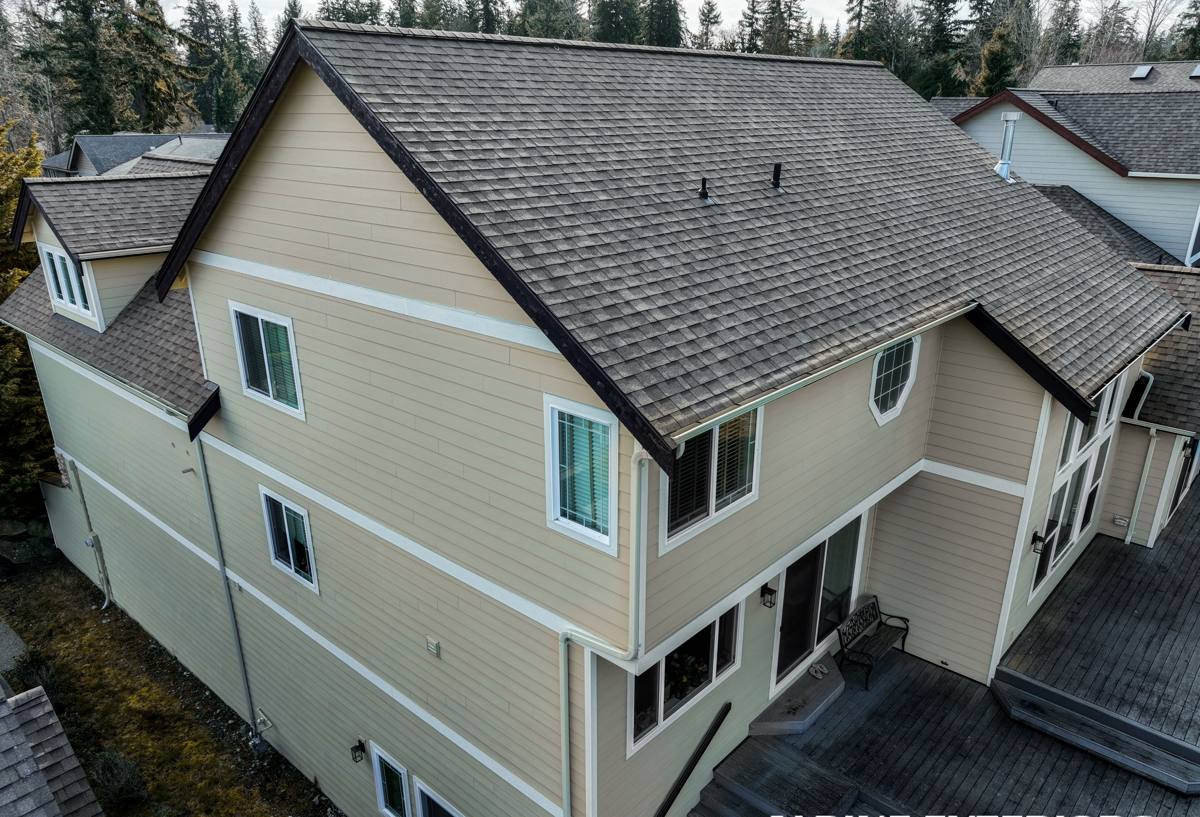
What Your Windows Are Actually Up Against
Before we talk about products, it helps to understand what's working against a window assembly in this part of Whatcom County year-round.
- Driving rain: Wind-driven rain doesn't just hit glass — it gets pushed sideways into the gap between the window frame and the rough opening, which is where most leaks actually start.
- Salt air: Airborne salt accelerates corrosion on hardware, fasteners, and lower-grade metal components, and it degrades some finishes faster than inland installations ever see.
- Long moss and mildew season: Extended damp periods mean any trapped moisture behind a window has more time to do damage before it ever dries out.
- Temperature swings: Cold, wet winters paired with warm summer afternoons stress seals and glazing over years of expansion and contraction.
A window is a system, not just a piece of glass in a frame. The frame material, the glass package, and — most importantly — the installation details all have to work together to handle this.
What a Correct Installation Actually Involves
This is the part homeowners rarely see, and it's the part that determines whether a window lasts 25 years or starts leaking in five. A correct install, whether it's a full-frame replacement or an insert into an existing frame, includes:
Sill Pan Flashing
A sloped, sealed pan at the bottom of the rough opening that directs any water that does get past the window back outside, instead of letting it sit against wood framing.
Proper Weather-Resistant Barrier Integration
Flashing tape and the window's nailing flange need to be layered correctly with your home's house wrap or building paper — shingle-style, top piece over the one below — so water is always directed down and out, never trapped behind the siding.
Backer Rod and Sealant, Not Just Caulk
Gaps around the frame get backer rod and a proper sealant joint sized for movement, not a bead of caulk smeared over a gap that's too wide or too narrow to seal reliably.
Shimming and Squaring
An out-of-square window binds, doesn't lock tight, and stresses the seals around the glass — which shortens the life of the insulated glass unit itself.
Skip any one of these steps and you can end up with a window that looks fine and performs poorly, sometimes for years before the damage shows up as soft trim, stained drywall, or a musty smell near the wall.
Choosing Frame Material and Glass for This Climate
There's no single "best" window material — there's a best match for your house, your budget, and how exposed that particular wall is to wind and rain. Here's how the common options stack up for a Whatcom County home:
| Material | Strengths Here | Trade-offs |
|---|---|---|
| Vinyl | Good value, no painting, handles moisture well, wide color/style range | Lower-end vinyl can look and feel cheap; frame color choices are more limited than wood |
| Fiberglass | Very stable in temperature swings, strong, holds paint well, long lifespan | Higher upfront cost than vinyl |
| Wood-clad | Classic interior look, real wood warmth inside | Exterior cladding and joints need ongoing attention in a wet, salty climate; more maintenance over time |
| Aluminum | Slim sightlines, strong for large spans | Poor insulator unless thermally broken; can be prone to condensation without upgrades |
For most Everson homes we lean toward vinyl or fiberglass for exterior-exposed walls simply because they shrug off moisture and salt air with the least ongoing maintenance. Where wood-clad is the right call — usually for matching an existing architectural style — we're upfront that it needs more attention over the years than vinyl or fiberglass will.
Glass Packages Worth Discussing
Double-pane, low-E glass with argon fill is the baseline we'd recommend for this area — it's a meaningful step up from older single-pane or basic double-pane windows in both comfort and condensation resistance. For north-facing or heavily shaded walls where condensation tends to show up first, a warm-edge spacer system is worth the small upgrade to keep the edges of the glass from becoming a cold spot.
Energy Performance and Code Requirements
Washington's energy code sets minimum performance requirements for replacement and new-construction windows, and those minimums matter for more than just your utility bill — they affect comfort near exterior walls and how much condensation you'll see on cold mornings. When we quote a job, we spec glass and frame combinations that meet or beat code requirements for the area, and we'll walk you through the U-factor and solar heat gain numbers on the actual product being installed, not just a glossy brochure number. If your project needs a permit, we handle that as part of the process rather than leaving it on your plate.
Our Process, Start to Finish
- On-site assessment: We look at each opening individually — sun exposure, wind exposure, current condition of the framing and trim, not just the window itself.
- Honest recommendation: We'll tell you where a standard replacement makes sense and where an upgrade (better glass, a different frame material, a full-frame replacement instead of an insert) is actually worth the money.
- Written estimate: Clear pricing by window, with the material and glass package spelled out so you know exactly what you're buying.
- Careful removal: We protect your interior and landscaping and remove old windows without tearing up more of the opening than necessary.
- Correct installation: Sill pan flashing, WRB integration, proper shimming and sealing — the details covered above, on every window, every time.
- Final walkthrough: We test operation, check seals, and clean up before we consider the job done.
Signs Your Current Windows Are Already Failing
Some window problems are obvious. Others build slowly, especially in a climate with this much sustained moisture. Worth checking for:
- Fogging or a hazy film between the panes — the seal on the insulated glass unit has failed
- Soft or discolored trim/drywall around a window frame
- Drafts you can feel with your hand near the frame on a windy day
- Windows that are hard to open, close, or lock — often a sign the frame has shifted or swollen
- Visible moss, algae, or persistent black staining on the sill or frame
- A musty smell near an exterior wall that shows up mainly in wet months
Any one of these is worth a look before it turns into a bigger repair behind the wall.
Living With New Windows in a Wet, Mossy Climate
Even well-installed windows benefit from a little seasonal attention here. Keep weep holes at the bottom of the frame clear of debris and moss so water can drain as designed. Rinse salt residue off exterior frames and hardware periodically if your home is closer to open water. Check exterior caulk lines once a year for cracking or separation — sealant joints are a maintenance item, not a lifetime guarantee, and catching a failed bead early is a five-minute fix instead of a bigger repair.
Why It Matters That We Already Work in Everson
Window installation done right depends on understanding the specific way a house in this area takes on wind and water — which walls catch the worst of a winter storm, how a particular roofline sheds water past an upper window, what the moss and moisture buildup actually looks like on homes nearby. A crew that already works in and around Ferndale and Everson isn't guessing at any of that. We're also close enough to actually stand behind the work — if something needs a look after the fact, we're not driving in from across the state to do it.
If you're dealing with drafty, foggy, or hard-to-operate windows, or you're planning ahead for a remodel, we're happy to take a look and give you a straight answer about what your home actually needs. Reach out for a free, no-pressure estimate using the form below.