 Ferndale Exterior
 Lummi Island's Marine Climate Puts Real Stress on Siding
Lummi Island sits out in the marine weather of Whatcom County, and homes there take a harder hit than a house a few miles inland in Ferndale. Salt-laden air off the water accelerates corrosion on anything metal — fasteners, flashing, trim screws — long before it would fail on a dry-side property. Driving rain off Georgia Strait and Hale Passage doesn't just fall straight down; wind pushes it sideways into wall assemblies, testing every seam, joint, and piece of flashing on the building. And because so many island lots are wooded and shaded, north- and east-facing walls stay damp for days after a storm, which is exactly the environment moss and algae need to take hold.
None of this is unusual for the Pacific Northwest coast, but it adds up faster on an island than it does on a typical Ferndale street. Boats corrode near salt water for the same reason siding does — constant moisture exposure plus salt breaks down materials and fasteners that would otherwise last decades. A siding job done to a generic spec, without accounting for this, tends to show problems in year five or six instead of year twenty-five.
What "Correct" Looks Like for a James Hardie Install Here
James Hardie fiber cement is the right base material for this exposure — it's non-combustible, it doesn't rot, and it doesn't feed moss and mildew the way wood-based products can. But the material is only half the equation. On Lummi Island, the installation details matter as much as the product choice, because a good product installed to a minimum-code spec still fails early in this climate.
Fasteners and Flashing Built for Salt Exposure
We use corrosion-resistant fasteners rated for coastal exposure, not standard interior-grade nails or screws. The same goes for flashing at windows, doors, and roof-to-wall transitions — these are the spots where wind-driven rain finds its way behind the cladding, and they're the first place cheap materials fail near salt air. Flashing gets lapped correctly, sealed where it should be sealed, and left open where it needs to drain — a detail that's easy to get backwards if a crew doesn't install a lot of siding in this specific environment.
A Drainage Plane, Not Just a Nailed-On Board
Fiber cement siding is not a waterproof membrane by itself — it's a rain-screen material, and it needs a proper water-resistive barrier and drainage gap behind it to perform the way it's designed to. On a wind-exposed, high-rainfall property, we pay close attention to this layer: correctly lapped house wrap or building paper, sealed penetrations, and, where the wall assembly calls for it, a drainage gap that lets any moisture that gets behind the siding find its way back out instead of sitting against the sheathing.
Picking the Right Hardie Product Line for Waterfront and Wooded Lots
James Hardie engineers its siding by climate zone, and that matters more on Lummi Island than almost anywhere else in Whatcom County. HZ5 formulations are built for wetter, harsher climates — better resistance to moisture-related damage than a generic national product. For homes right along the shoreline with direct wind and salt exposure, we typically lean toward this engineering rather than a one-size-fits-all specification.
Product form matters too. HardiePlank lap siding is the standard choice for most homes and gives good drainage geometry at each course. HardiePanel vertical siding works well on gable ends, accent walls, or contemporary designs, and can shed water effectively when detailed correctly. On heavily shaded, moss-prone walls, we sometimes recommend adjusting trim and reveal details specifically to help the wall dry faster between rain events — a small design choice that pays off over the life of the siding.
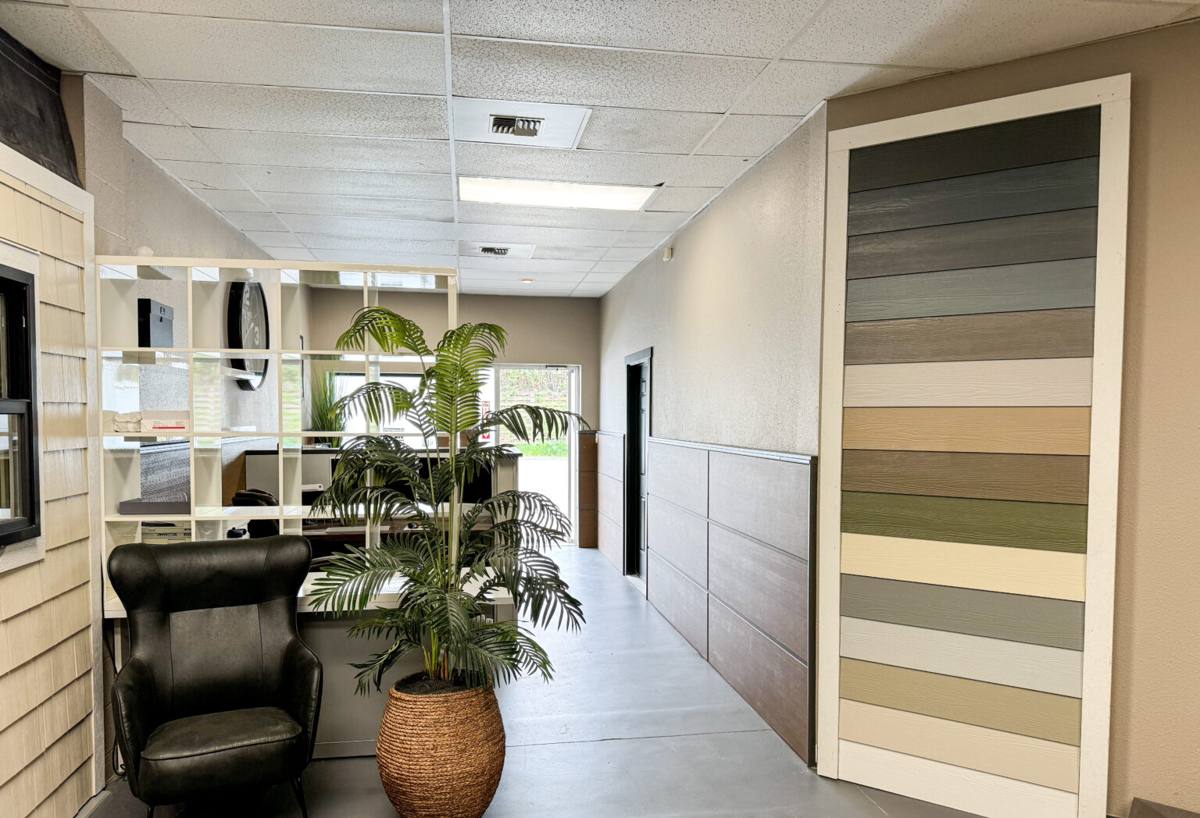
ColorPlus factory-applied finish is worth calling out on its own. Because it's baked on in a controlled factory process rather than field-applied, it holds color and resists the mildew and dirt streaking that field-painted siding tends to show first in a wet, shaded climate. On a job site where humidity and rain interruptions are the norm, that's a real practical advantage, not just a marketing detail.
Moss and Algae: Prevention Starts With the Install, Not the Pressure Washer
Every siding material can grow moss and algae if conditions are right — shade, moisture, and organic debris are the real cause, not the siding brand. What changes is how much a home can help itself. A well-installed James Hardie system won't feed organic growth the way bare wood or absorbent trim can, but installation choices still make a measurable difference on a shaded island lot.
- Drip caps and proper flashing above windows and trim boards so water sheds away from the wall instead of running down the face
- Adequate clearance between siding and grade, decks, and roof lines so splash-back and standing moisture don't sit against the bottom course
- Trim and reveal details that let shaded walls dry out between storms instead of staying damp for days
- Gutters and downspouts sized and positioned to keep concentrated roof runoff off the siding face
- Keeping vegetation trimmed back from walls so airflow can do its job — this is homeowner maintenance, not something we can build in, but it's worth planning for at the landscaping stage
How We Handle a Lummi Island Project From Estimate to Finish
Working on the island adds logistics that a mainland Ferndale job doesn't have — ferry access affects scheduling, material deliveries, and how crews and equipment move day to day. We plan around that up front rather than discovering it mid-project. That means batching material deliveries, scheduling crew time efficiently around ferry sailings, and giving homeowners a realistic timeline that accounts for the crossing instead of a generic mainland schedule that slips once the job starts.
On site, the process itself doesn't cut corners because of the location: a walk-around to assess existing siding, trim, flashing, and any moisture damage; removal of the old cladding and inspection of the sheathing underneath (which, on an older island home, sometimes reveals problems the homeowner didn't know were there); correction of the water-resistive barrier and flashing details before a single piece of new siding goes up; installation to manufacturer spec with fasteners and product lines chosen for the exposure; and a final walk-through with the homeowner before we call the job done.
Cost Factors on the Island vs. a Mainland Ferndale Job
Every project is different, but homeowners planning a budget should understand which cost factors are specific to Lummi Island versus a similar job closer to central Ferndale.
| Factor | Mainland Ferndale | Lummi Island |
|---|---|---|
| Material delivery | Direct truck delivery | Staged and timed around ferry crossings |
| Crew scheduling | Flexible day-to-day | Built around ferry sailing windows |
| Fastener and flashing spec | Standard exterior-grade | Corrosion-resistant, coastal-rated |
| Product line | Standard climate engineering often sufficient | HZ5 or comparable often recommended for shoreline exposure |
| Site access | Typically straightforward | Varies by lot — wooded, sloped, or shoreline access can add setup time |
None of this means an island job is out of reach cost-wise — it means the estimate should reflect the real conditions of the site rather than a copy-paste mainland number that gets revised upward once the crew is on the ground.
Why Local Experience on Lummi Island Actually Matters
A contractor who hasn't worked the island before is learning these logistics on the homeowner's dime — figuring out ferry timing, material staging, and site access for the first time during the job. A crew that already works Lummi Island has already solved that problem. They know how to sequence a project so ferry schedules don't blow up the timeline, they've seen which walls on island homes take the worst weathering, and they've already made the fastener and flashing decisions that a first-timer might have to learn the hard way.
There's also a permitting and code angle. Whatcom County governs building permits for Lummi Island, and a contractor who regularly pulls permits in this jurisdiction moves through that process more smoothly than one encountering it for the first time. None of this is glamorous, but it's the difference between a project that runs on schedule and one that stalls waiting on logistics nobody planned for.
Maintaining James Hardie Siding in This Climate
James Hardie siding is low-maintenance compared to wood or vinyl, but "low-maintenance" doesn't mean "no maintenance" in a climate like this. A simple annual routine keeps a correctly installed system performing the way it's designed to for decades.
- Rinse siding annually with a garden hose to remove salt residue and organic buildup, especially on shoreline-facing walls
- Inspect caulking at trim, windows, and joints yearly and have any cracked or missing sealant replaced promptly
- Keep gutters clear so overflow doesn't run down the siding face during heavy rain
- Trim back vegetation that shades walls or holds moisture against the siding
- Have flashing and fastener condition checked every few years, particularly on the most wind- and salt-exposed elevations
If you're weighing a siding project on Lummi Island or elsewhere around Ferndale, we're happy to take a look at your home and walk through what your specific site needs — no pressure, no obligation. A free estimate is a good place to start.