 Ferndale Exterior
 Roof Repair for Kendall Homes
Kendall sits inland from Ferndale in the Whatcom County foothill country, where tree cover is heavier, rain sits longer on a roof deck, and the growing season for moss and lichen runs nearly year-round. Homes out here take a different kind of beating than a roof on an open lot closer to town. Overhanging branches, shaded north-facing slopes, and slow-draining valleys all shorten the working life of shingles, flashing, and gutters if a roof isn't checked and maintained on a regular schedule.
We're a Ferndale-based exteriors crew, and Kendall is part of our regular service area — not a once-in-a-while drive-out. That matters more than it sounds like it should, because roof problems in this part of the county tend to be climate-driven and repetitive. A crew that already knows what a Kendall roof looks like after five wet winters diagnoses faster and fixes the actual cause, not just the leak.
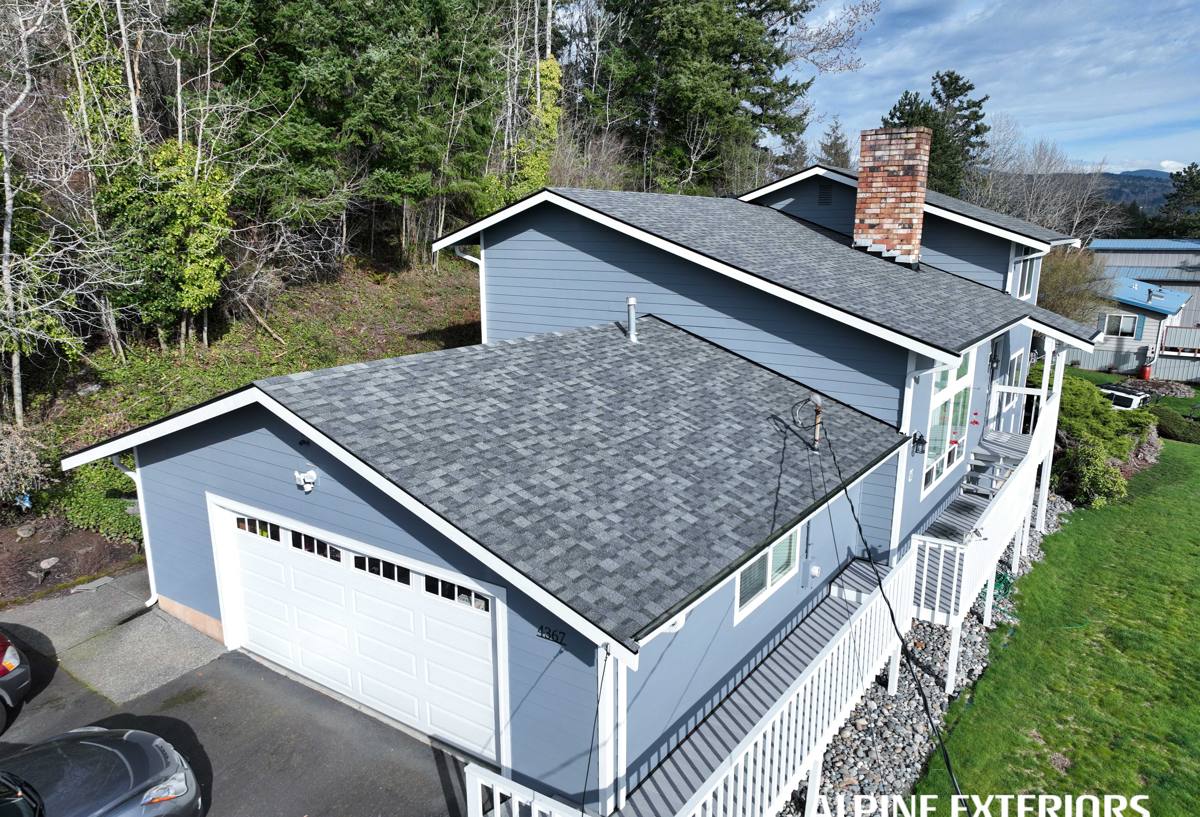
What the Local Climate Does to a Roof
Whatcom County weather is a mix of steady Pacific rainfall, periods of driving wind-blown rain off Bellingham Bay and the Strait of Georgia, and a marine air layer that carries a light salt content well inland on stronger weather systems. None of that is dramatic on any single day, but roofing failures in this region are almost always a slow accumulation, not a sudden event.
Moss and Organic Growth
Moss is the single biggest driver of roof repair calls we get from wooded and shaded properties like the ones common around Kendall. Moss doesn't just sit on top of shingles — it roots into the granule surface, holds moisture against the mat, and lifts shingle edges as it grows. Once moss gets a foothold on a north-facing slope or in a shaded valley, it spreads, and the roof underneath ages faster than the rest of the field.
Driving Rain and Wind
Wind-driven rain finds any gap in flashing, any lifted shingle tab, or any nail that's backed out slightly, and pushes water sideways and upward under the roof covering instead of letting gravity carry it down and off. This is why a roof can look intact from the ground and still be leaking at a chimney, skylight, or wall intersection.
Salt-Influenced Marine Air
The salt content in Pacific storm systems is lower once you're inland at Kendall than it is directly on the water, but it's not zero. Over years, that combined with constant damp conditions accelerates corrosion on exposed metal fasteners, flashing, and vent boots faster than a dry-climate roof would show.
Common Repair Issues We See in This Area
- Moss-lifted shingles on north- and east-facing slopes, especially under tree canopy
- Clogged valleys and gutters causing water backup under the roof edge
- Cracked or dried-out rubber boots around plumbing vents letting water track into the attic
- Flashing pulled loose or rusted at chimneys, skylights, and roof-to-wall junctions
- Nail pops and lifted tabs from repeated wind events
- Soft or spongy decking discovered only after a leak has been active for a while
- Ice-dam-adjacent damage from occasional hard freezes following heavy rain
What a Correct Roof Repair Actually Involves
A roof repair done right starts with figuring out where water is actually entering — which is often several feet away from where a stain shows up inside the house, since water travels along rafters and sheathing before it drips. Patching the visible spot without tracing the real entry point is the most common shortcut we see undone on other contractors' work, and it's why the same leak often "comes back" a year later.
Diagnosis Before Repair
We check the roof surface, the flashing details, the attic side of the deck, and the gutter and drainage path together, not in isolation. A leak at a chimney can be a flashing failure, a step-flashing problem hidden under the shingle course above it, or moss holding water against the counterflashing — each has a different fix, and guessing wrong means a callback.
Matching the Repair to the Roof's Age
On a roof with a lot of remaining service life, a targeted repair — replacing a section of shingles, resealing or replacing flashing, clearing and treating moss, correcting a drainage path — is the right, cost-effective call. On a roof that's already near the end of its expected life, repeated repairs in different spots each season are usually a sign the whole roof covering is failing, and we'll tell you that plainly instead of billing you for another patch.
Our Process
- Inspection: We walk the roof and the attic (where accessible), check flashing points, valleys, vents, and drainage, and photograph problem areas.
- Diagnosis: We trace the water path and identify the actual cause, not just the visible symptom.
- Written scope: You get a clear explanation of what's wrong, what we recommend, and why — repair versus replacement, if it's a close call.
- Repair: We complete the agreed work, matching materials as closely as possible and correcting the underlying cause (moss, drainage, failed flashing) alongside the patch.
- Cleanup and check: Debris is cleared, gutters and valleys are checked for flow, and we confirm the fix before we consider the job done.
Repair or Replace? How We Help You Decide
| Factor | Leans Toward Repair | Leans Toward Replacement |
|---|---|---|
| Roof age | Under roughly 15 years for asphalt shingle | Near or past manufacturer's expected service life |
| Number of trouble spots | One isolated area (flashing, boot, valley) | Multiple separate leaks across different slopes |
| Decking condition | Solid, no soft spots found | Soft, delaminating, or water-stained sheathing |
| Granule loss / shingle condition | Localized wear | Widespread granule loss, brittle or curling shingles |
| Moss history | First occurrence, treatable | Repeated regrowth despite treatment, shingle mat damage underneath |
This is a general guide, not a rule — every roof is a judgment call once you're on it. We'll always walk you through what we actually found rather than defaulting to the more expensive option.
Roofing Materials: What We Recommend and Why
Most homes in and around Kendall are on asphalt composition shingle, which is the practical choice for this climate when it's installed and ventilated correctly — the materials are well understood, widely available for repair matching, and cost-effective for the region's rain and moss exposure. Metal roofing sheds moss and debris better and holds up well over the long term, but it comes with a higher upfront cost and requires correct fastener and flashing detailing to avoid the same corrosion issues that affect any exposed metal in this marine-influenced air. Cedar shake has a traditional look but demands a maintenance commitment — regular treatment and moss control — that many homeowners underestimate given how fast growth returns in a shaded, damp setting like this one. We'll talk through the honest maintenance and cost trade-offs of each rather than pushing whatever's easiest for us to install.
Preventing the Next Repair Call
A lot of roof repair in this climate is preventable with a basic seasonal routine. None of this requires climbing on the roof yourself if you're not comfortable with it — but knowing what to watch for helps you catch problems early, when they're a repair instead of a replacement.
- Keep overhanging branches trimmed back to reduce shade, debris, and moss spread
- Clear gutters and valleys at least twice a year, more often under heavy tree cover
- Have moss treated before it spreads across a full slope, not after
- Check attic spaces after major storms for new staining or damp insulation
- Address small flashing or nail issues promptly rather than waiting for a visible leak
- Schedule a roof check-up every year or two even with no known problems
Why a Local Ferndale Crew Matters for Kendall
Roofing problems in this part of Whatcom County repeat themselves in predictable patterns — the same shaded slopes, the same drainage weak points, the same moss cycle year after year. A crew that's out in Ferndale and the surrounding communities regularly, including Kendall, has already seen how these houses age and where the weak points tend to show up first. That means less time spent guessing at your roof and more time spent fixing the actual cause, plus a shorter wait when a leak needs attention before the next storm system moves through.
We stand behind our repair work and will always tell you honestly whether a patch is the right call or whether you're better served putting that money toward a longer-term fix. If you're dealing with a leak, moss buildup, or just want a roof checked before the next wet season, we're glad to come out and take an honest look — reach out for a free, no-pressure estimate using the form below.