 Ferndale Exterior
 Why Lummi Island Decks Wear Out Faster Than You'd Expect
Lummi Island sits right in the path of Puget Sound weather, and that means a deck out here works harder than one a few miles inland in Ferndale. Salt-laden air off the water accelerates corrosion on fasteners and hardware, driving rain gets pushed sideways into railings and board seams by wind, and the long, wet Whatcom County winters keep everything shaded or north-facing damp enough for moss to take hold and stay. A deck built with generic, big-box assumptions about weather often shows problems within a few seasons: fastener staining, soft spots at the ledger board, moss creeping into board gaps, and color fade that happens unevenly depending on sun exposure.
None of that means decking is a bad investment on the island — it means the material choice and the installation details matter more here than they do in a drier, more sheltered part of the state. Composite decking, chosen and installed correctly, is one of the more sensible answers to that climate, but "composite" is not a single product with one set of rules. Getting it right for a waterfront or near-waterfront property takes some real decisions.
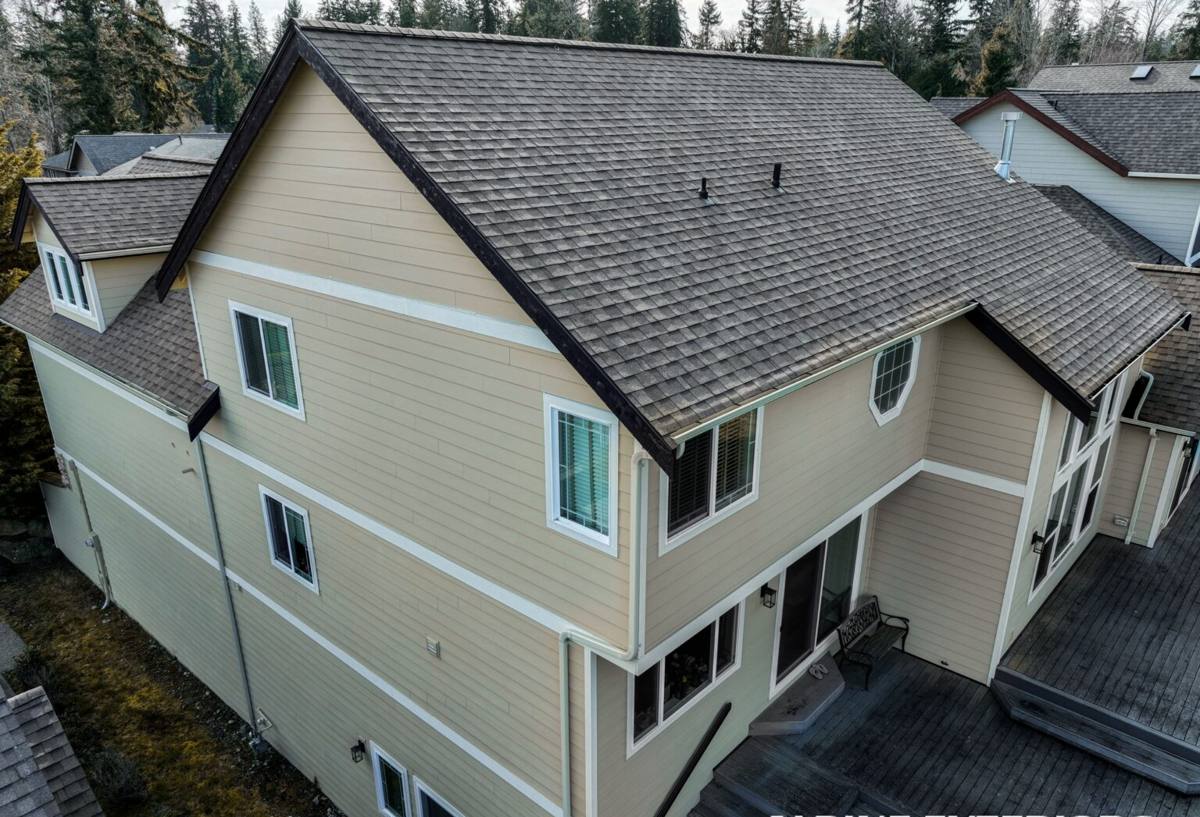
What Salt Air, Rain, and Moss Actually Do to a Deck
Salt Air
Airborne salt doesn't just affect boats and metal railings. It accelerates corrosion on any exposed steel — screws, joist hangers, structural brackets — and it can leave a dulling residue on decking surfaces that needs to be rinsed off periodically. Composite boards themselves aren't damaged by salt the way wood fiber can be, but the fasteners and substructure holding the deck together absolutely are, if the wrong hardware is used.
Driving Rain
Wind-driven rain finds its way into places vertical rain never would: under railing base plates, into end-cut boards that weren't sealed, along the ledger board where the deck meets the house. Water that gets trapped and can't drain or dry out is the single biggest cause of rot in the framing underneath a deck, even when the decking surface on top is a waterproof composite.
Moss Season
Whatcom County's wet season runs long, and shaded or north-facing decks on Lummi Island can stay damp for weeks at a time. Moss and algae need exactly that: moisture, low light, and a surface to grip. Composite boards with heavy wood-grain texturing can actually hold onto moisture and moss more than a smoother-finish board, which is a detail worth knowing before you pick a color and texture.
Why Composite Makes Sense for This Climate
Composite decking is manufactured from a blend of wood fiber and recycled plastic, and in capped versions, wrapped in a protective polymer shell. Compared to natural wood, it doesn't absorb water into its core the way lumber does, it doesn't need annual staining or sealing, and it resists the kind of splintering and cupping that shows up on wood decks exposed to constant wet-dry cycling. For a property that takes the kind of weather Lummi Island gets, that translates into fewer maintenance trips and a more predictable lifespan.
That said, composite isn't maintenance-free, and it isn't immune to the local climate — it's just more resistant to it than untreated or under-maintained wood. The boards can still collect moss and grime on the surface, the color can still shift slightly over years of UV and salt exposure, and cheap or uncapped composite can absorb moisture at cut edges if those edges aren't sealed properly during installation. The material advantage only pays off if the installation respects those limits.
Composite Decking Types: What the Difference Actually Means
| Type | How It's Made | Best For | Trade-Offs |
|---|---|---|---|
| Capped Composite | Wood-plastic core wrapped in a solid polymer shell | Waterfront and salt-exposed decks like Lummi Island | Higher upfront cost; cut edges need sealing |
| Uncapped Composite | Wood-plastic blend with no protective shell | Budget-conscious, more sheltered locations | More prone to moisture absorption and mold in constant-wet conditions |
| Mineral-Based / PVC | Little to no wood fiber, higher plastic or mineral content | Maximum moisture resistance, low-maintenance priority | Different look and feel than wood-grain composite; higher cost |
For most Lummi Island applications, we steer homeowners toward capped composite or PVC-based decking specifically because of the moisture exposure. Uncapped composite can still be a reasonable choice on a covered or well-sheltered deck, but we're honest with clients about where it will and won't hold up out here.
Board Texture and Color: A Practical Note
Heavily embossed, deep wood-grain textures look great in photos but can trap grime and moss spores in a wet, shaded environment. A lighter texture or a color that doesn't show pollen and mineral deposits as readily is often the more practical choice for a shaded, waterfront lot, even if it's a slightly less dramatic look. This is the kind of trade-off worth talking through before ordering material, not after.
What a Correctly Built Composite Deck Requires Here
The composite boards themselves get most of the attention, but the parts underneath and around them are what actually determine whether the deck holds up to Lummi Island weather.
- Stainless or coated hardware: Standard galvanized fasteners can corrode faster in salt air; we use hardware rated for coastal exposure.
- Proper joist spacing: Composite boards flex differently than wood and often require tighter joist spacing than a traditional lumber deck, especially on angled or picture-frame layouts.
- Ledger board flashing: The point where the deck attaches to the house is the single most common source of hidden rot; correct flashing keeps driving rain from working its way behind the board.
- Ventilation underneath: Trapped, still air under a low deck holds moisture and encourages rot in the framing even if the surface above is composite.
- Sealed cut ends: Every field cut on a capped board exposes the untreated core; those cuts need to be sealed with the manufacturer-approved product, every time.
- Drainage-conscious framing: Slight slope and clear drainage paths keep water from pooling under the deck surface during long rain stretches.
How We Approach a Lummi Island Composite Deck Project
1. Site Assessment
We look at sun exposure, prevailing wind and rain direction, proximity to the water, existing structure condition, and drainage before recommending a specific product line or board profile.
2. Material Selection
We walk through capped vs. uncapped, texture, and color with the trade-offs above in plain terms — no upselling to the most expensive line if a mid-tier capped board is the more sensible fit for the site.
3. Substructure Inspection or Rebuild
If we're replacing an existing deck surface, we inspect the ledger board, joists, and posts for rot or corrosion before covering anything back up. Framing problems don't go away because there's new decking on top.
4. Installation
Hidden fastener systems where the product allows for it, coastal-rated hardware throughout, sealed cut edges, and attention to expansion gaps — composite boards expand and contract with temperature more than people expect, and gaps that are too tight will buckle.
5. Final Walkthrough
We go over basic care with the homeowner before we leave: what to rinse off, what not to power-wash aggressively, and what a normal weathering pattern looks like versus something to call us about.
Living With a Composite Deck on Lummi Island: Realistic Maintenance
Composite is lower-maintenance than wood, not zero-maintenance. On a shaded or waterfront lot, plan on:
- A seasonal rinse-down with a garden hose and soft-bristle brush to clear pollen, salt residue, and early moss growth before it takes hold
- Keeping planters, mats, and furniture legs off the surface long enough that damp collects underneath
- Checking railing posts and stair stringers annually for hardware corrosion, since metal fails before composite does
- Avoiding high-pressure power washing directly on the board surface, which can wear the cap layer over years of repeated use
- Clearing gutters and downspouts near the deck so runoff isn't discharging directly onto or under the decking
Cost Factors to Expect
| Factor | Why It Moves the Price |
|---|---|
| Board tier (uncapped vs. capped vs. PVC) | Material cost per square foot varies significantly between tiers |
| Substructure condition | Rot or corrosion found during framing inspection adds repair scope |
| Deck height and railing style | Taller decks and code-required railings add labor and material |
| Access to the site | Ferry logistics and site access on Lummi Island can affect scheduling and delivery costs |
| Layout complexity | Picture-frame borders, angles, and stairs add cutting and fastening time |
We don't quote a job without seeing the site and the existing structure — anyone offering a firm number over the phone for a Lummi Island deck hasn't accounted for what's actually underneath the old boards.
Why Hiring a Crew That Already Works This Area Matters
A contractor based in Ferndale who regularly works Whatcom County waterfront properties already knows which hardware corrodes fastest in this air, which board textures actually shed moss instead of holding it, and how to detail a ledger board connection that won't rot out in five years. That local pattern recognition is different from general decking experience picked up somewhere inland. It also means we're not learning the realities of island access, ferry scheduling, or material delivery logistics on your project — we've already worked through those on others nearby.
Composite decking is a real upgrade for a Lummi Island home, but the value only shows up if the substructure, hardware, and installation details are handled with this specific climate in mind. A deck that looks identical to one built for a dry inland lot but wasn't built for salt air and driving rain will show its weaknesses within a few winters.
If you're considering a new composite deck or replacing an aging one on Lummi Island, we're happy to come take a look and give you a straightforward, no-pressure estimate — just fill out the form below and we'll get in touch.