 Ferndale Exterior
 Deck Building in Lummi Nation: Built for This Coastline, Not a Generic Backyard
Lummi Nation sits right up against the salt water of Bellingham Bay and the Strait of Georgia, just west of Ferndale in Whatcom County. That location is beautiful, and it's also demanding on outdoor structures in ways that inland decks never have to deal with. A deck built here is fighting salt-laden air, long stretches of driving rain off the water, and a moss and algae season that can run most of the year. A deck design that works fine forty minutes inland in a drier microclimate can fail early out here if it wasn't built with this coastline in mind.
We build and repair decks specifically for homes in and around Lummi Nation, and the difference shows up in the details most homeowners never think to ask about until something goes wrong: the fasteners, the flashing, the slope, the spacing between boards. This page covers what local homes actually need from a deck, what a correctly built one involves, and how we approach the work.
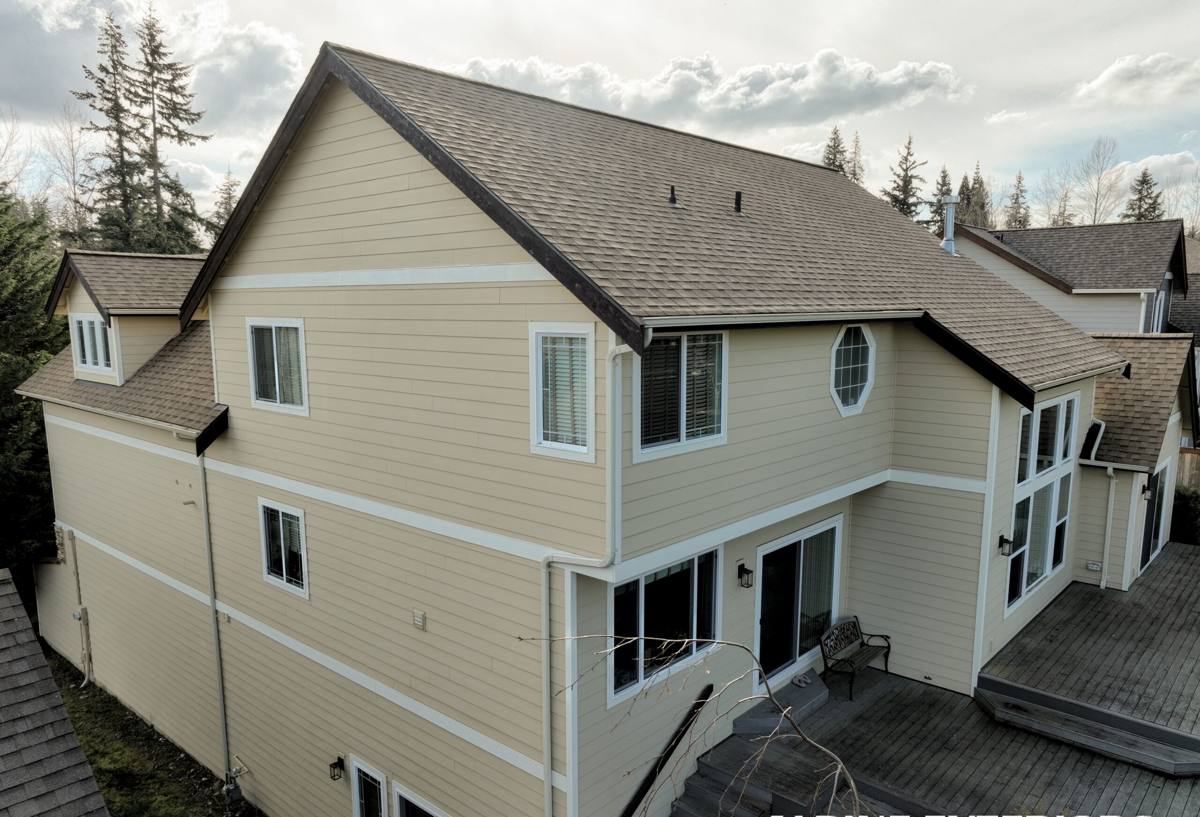
What Salt Air, Rain, and Moss Actually Do to a Deck
Before talking about materials or process, it helps to understand the specific stresses a coastal Whatcom County deck is under. This isn't generic "wood gets wet" advice — it's the particular combination of conditions that shows up on decks near the water.
Salt Air and Corrosion
Airborne salt from the bay accelerates corrosion on any metal it touches — nails, screws, joist hangers, bolts, and railing hardware. Standard electro-galvanized fasteners that would be fine on an inland deck can start rusting and staining within a few seasons out here. Once a fastener corrodes, it loses holding strength long before the wood around it looks like a problem, which is how a deck can seem fine right up until a board or a railing post isn't.
Driving Rain and Moisture Intrusion
Rain off the water here doesn't just fall straight down — wind-driven rain gets pushed sideways into ledger boards, under railings, and into any gap where end grain is exposed. Wood soaks up water fastest through its end grain, so cut ends, joints, and fastener holes are where rot typically starts, not the flat faces of the boards.
Moss, Algae, and a Long Wet Season
Whatcom County's wet season runs long, and shaded or low-airflow deck areas near the water can stay damp for weeks at a stretch. That's exactly what moss and algae need to establish. Beyond being slippery underfoot, moss holds moisture against the deck surface, which speeds up wood decay and can trap water against fasteners and framing below.
Choosing a Decking Material for This Climate
There's no single "best" decking material for every home — the right choice depends on budget, how much upkeep you want to do, and how exposed the deck is to sun, wind, and salt spray. Here's how the common options actually perform in this specific environment.
| Material | Moisture & Salt Air Behavior | Maintenance | Typical Lifespan Here |
|---|---|---|---|
| Pressure-treated wood | Resists rot well when properly sealed; end cuts need extra sealing since factory treatment doesn't always penetrate fully | Needs re-staining or sealing every 1-3 years in this climate | 15-20 years with upkeep |
| Cedar | Naturally rot- and insect-resistant, but softer and more prone to surface graying and moss uptake without sealing | Regular cleaning and periodic sealing to control moss and UV graying | 15-20 years with upkeep |
| Composite decking | Doesn't absorb water or rot, but can still grow surface algae/moss film in shaded, damp spots — needs cleaning, not sealing | Low — periodic washing, no staining or sealing | 25-30+ years, manufacturer-dependent |
| PVC decking | Fully moisture-resistant, best resistance to salt air staining of the board itself | Low — occasional washing | 25-30+ years, manufacturer-dependent |
We're upfront about the trade-offs rather than pushing one product. Wood costs less upfront and gives a natural look, but it asks for consistent maintenance in a climate that punishes neglect faster than most. Composite and PVC cost more initially and can still develop a surface film in shaded, low-airflow spots — they just don't rot or need staining. Whatever material a homeowner picks, the framing underneath and the fasteners holding it together matter more to the deck's actual lifespan than the decking surface itself.
What a Correctly Built Deck Involves in This Area
A deck that holds up here isn't just about picking good decking boards — most of what determines whether a deck lasts is hidden once the project is finished. This is where a lot of shortcuts get taken on lower-quality builds, because nobody sees the framing after the fact.
Footings Set to the Correct Depth
Footings need to be set below frost depth and sized correctly for the soil conditions on the lot, which can vary block to block near the water. Undersized or shallow footings are one of the more common causes of a deck that develops a wobble or uneven settling within a few years.
Ledger Board Flashing
Where the deck attaches to the house, proper flashing is what keeps rain from working its way behind the siding and into the wall framing — one of the most damaging and expensive problems a poorly built deck can cause, because it hides behind the wall until there's visible damage. This is a step that's easy to rush and hard to inspect later, so it needs to be done right the first time.
Fastener and Hardware Selection
Given the salt air here, we favor stainless steel or heavy-duty coated fasteners and hardware rated for coastal exposure over standard galvanized options. It costs more upfront but avoids the early corrosion that undermines an otherwise well-built deck.
Drainage and Slope
Decking should be installed with a slight slope away from the house and enough gap between boards for water to drain through rather than pool. Standing water is what feeds both rot and moss growth, so getting the slope and spacing right at installation is far cheaper than dealing with either problem later.
Guardrails and Structural Code Requirements
Elevated decks need guardrails, baluster spacing, and stair details that meet applicable building code — this isn't optional and it's not just a safety formality, it's what keeps the structure sound under load over time.
Permits and Local Considerations
Building requirements can differ depending on whether a property falls under Whatcom County jurisdiction or Lummi Nation's own governance as a sovereign tribal nation. Because permitting authority and requirements can vary by specific parcel and situation, we always confirm with the homeowner and the appropriate permitting authority for that property before finalizing a design, rather than assuming one set of rules applies everywhere in the area. If you're not sure which authority governs your property, we're happy to help figure that out as part of the estimate process.
Our Process, Start to Finish
- Site visit and assessment. We look at the lot's exposure to wind and salt spray, existing drainage, sun/shade patterns, and how the deck will connect to the house.
- Design and material selection. We walk through material trade-offs honestly — budget, maintenance appetite, and how exposed the specific location is — so the choice fits how you actually want to use and maintain the deck.
- Permitting. We identify the correct permitting authority for the property and handle the paperwork.
- Framing and flashing. Footings, ledger flashing, joists, and fastener selection are done to hold up against this coastline's conditions, not generic minimums.
- Decking, railings, and finish work. Boards are installed with correct spacing and slope for drainage, and railings meet code for height and spacing.
- Final walkthrough. We go over the finished deck and basic upkeep specific to the material chosen, so there are no surprises down the road.
Maintenance That Actually Matters Here
Every deck material benefits from some level of care, but in this climate a few habits make an outsized difference in how long a deck lasts before needing repair.
- Sweep or blow off leaves and debris regularly — trapped organic matter holds moisture and feeds moss growth
- Clean moss and algae off the surface at the first sign of it, rather than waiting until it's established
- Check fastener heads and hardware yearly for early rust staining, especially near railings and stair connections
- Inspect the ledger board area where the deck meets the house for any signs of water staining
- Reseal or re-stain wood decking on the schedule appropriate for the product — don't stretch it to save time
- Keep gutters and downspouts near the deck clear so roof runoff isn't dumping extra water onto or under the structure
Why Hire a Crew That Already Works in This Area
A lot of the problems that show up on coastal decks — corroding fasteners, moss buildup in shaded corners, water working into a ledger board — aren't obvious defects at the time of construction. They show up two, five, or ten years later, and by then the cost of the original shortcut has multiplied. A crew that builds decks throughout Ferndale, Whatcom County, and out to Lummi Nation sees these failure patterns repeatedly and builds around them from the start, rather than learning the hard way on someone's project.
We also know this stretch of coastline well enough to have a real conversation about trade-offs specific to your lot — how exposed it is, what the drainage looks like, and which material actually makes sense for how you plan to use and maintain the deck, instead of a one-size-fits-all recommendation.
Get a Free, No-Pressure Estimate
If you're planning a new deck or need an honest look at an existing one, we're glad to come take a look. There's no obligation and no pressure — just a straightforward assessment of what your property needs and what it would take to do the job right. Use the form below to request your free estimate.