 Ferndale Exterior
 Lynden's Weather Is Harder on a Roof Than It Looks
Lynden sits a bit inland from the coast, so homes here don't take quite the same direct salt exposure as waterfront properties closer to Bellingham Bay or the Ferndale shoreline. But inland doesn't mean dry. Lynden still sits under the same marine weather pattern that governs all of Whatcom County: long stretches of low-pressure systems rolling in off the Pacific, wind-driven rain that hits roofs sideways instead of straight down, and heavy tree cover — fir, cedar, big-leaf maple — that keeps shaded roof sections damp long after a storm has passed. That combination is what drives moss growth, and in Lynden, moss season can realistically run eight months or more out of the year.
None of that is a reason to panic about your roof. It's just the environment it has to perform in, and it's why a roof installed correctly for this area looks a little different — in materials, in ventilation, in flashing detail — than a roof built for a dry climate.
Moss and Trapped Moisture
Moss itself doesn't punch holes in shingles. The problem is what it does over time: it holds moisture against the roofing material, lifts shingle edges as it grows, and creates a spongy layer that keeps the deck below it wet far longer than it should ever stay wet. On older or improperly ventilated roofs, that chronic dampness is what eventually leads to soft decking, granule loss, and premature failure — usually years before the shingles were rated to last.
Wind-Driven Rain at Eaves and Valleys
The other thing local weather does is push rain sideways under normal circumstances get wet only at the surface. Valleys, eave edges, and anywhere two roof planes meet are where a roof either sheds that water cleanly or lets it find a way in. This is almost entirely a flashing and underlayment issue, not a shingle issue — which is why so many "roof leaks" in this area trace back to poor detail work at transitions rather than failed shingles in the open field.
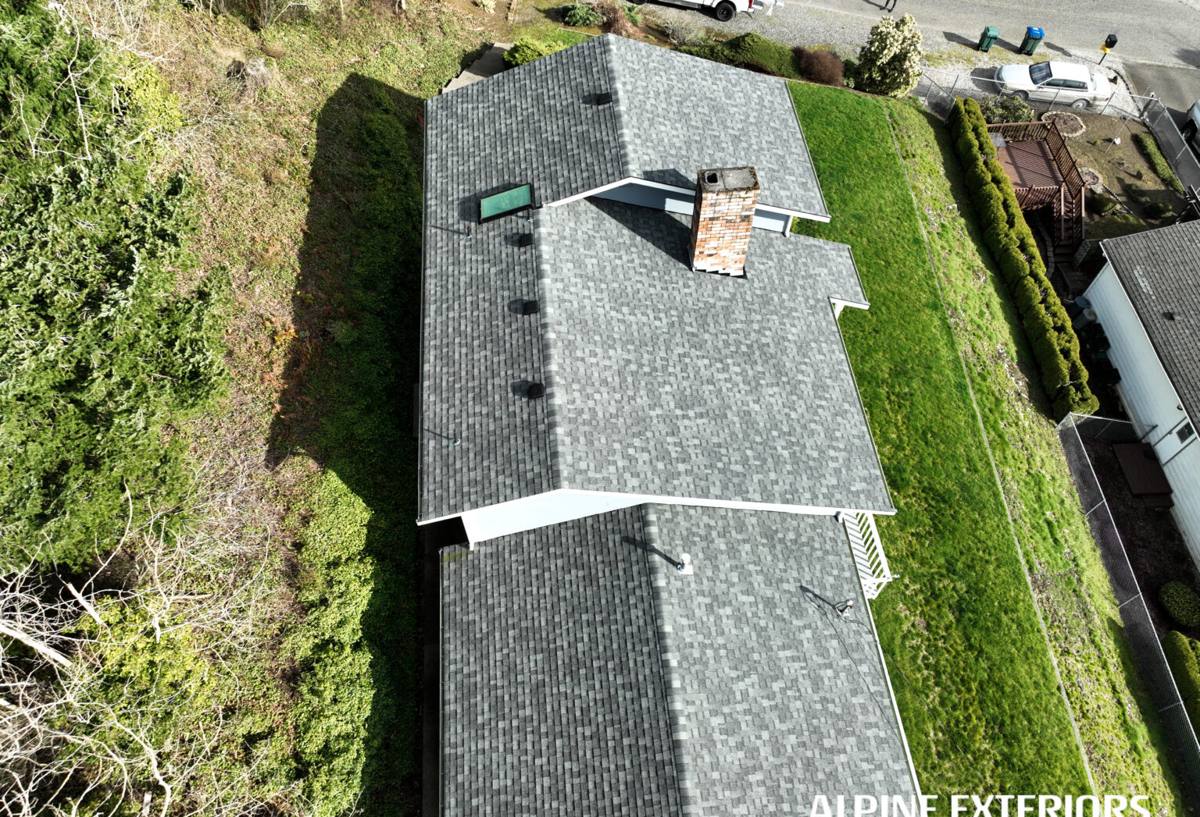
Signs a Lynden Home Needs a New Roof, Not Another Repair
Repairs make sense when a roof has years of usable life left and the damage is isolated. A full replacement makes sense when the underlying materials — deck, underlayment, flashing — are failing broadly, even if the shingles still look okay from the ground. Here's what we look for when deciding which side of that line a roof is on:
- Granules collecting in gutters or at downspout outlets, especially on a roof over 15-20 years old
- Moss established across large sections rather than a few isolated patches
- Soft or spongy spots underfoot during inspection, particularly near valleys and chimneys
- Daylight visible through the attic decking, or water stains on attic sheathing
- Curling, cracked, or missing shingles spread across multiple roof planes, not just one storm-damaged corner
- Repeated leak calls to the same general area despite prior patch repairs
- Interior ceiling stains that reappear after a repair, meaning water is tracking further than the visible patch
If a roof is showing one or two of these in a limited area, a repair is usually the honest answer and we'll say so. Full replacement gets recommended when several of these show up together, which typically means the roof's underlying moisture barrier has been compromised for a while.
What a Correct New Roof Installation Actually Includes
A new roof is more than new shingles laid over what's already there. Done right, it's a full system, and every layer matters for how the roof handles Whatcom County weather specifically:
- Full tear-off to bare decking — installing over old layers hides deck damage and voids most manufacturer warranties
- Deck inspection and repair, replacing any sheathing that's soft, delaminated, or water-damaged before anything new goes down
- Ice-and-water shield at eaves, valleys, and roof penetrations — the areas most exposed to wind-driven rain
- Synthetic underlayment across the full field, which handles sustained damp conditions better than older felt products
- New flashing at chimneys, walls, skylights, and valleys rather than reusing old flashing, which is a common shortcut that leads to early leaks
- Balanced attic ventilation — intake at the eaves, exhaust at the ridge — sized correctly for the roof, not just whatever vents were already there
- Manufacturer-specified shingle or panel installation, including proper nailing patterns and exposure, which is what keeps the material warranty valid
Skipping any one of these doesn't always show up right away. It shows up in year six or seven, as a leak that seems to come from nowhere but actually traces back to a shortcut taken during installation.
Choosing the Right Roofing Material for a Lynden Property
There's no single "best" roofing material — the right choice depends on the home, the budget, and how much tree cover and shade the roof deals with. Here's how the common options compare for this climate specifically:
| Material | Typical Lifespan Here | Moss Resistance | Relative Cost | Best Fit |
|---|---|---|---|---|
| Architectural asphalt shingle | 25-30 years | Moderate — benefits from algae-resistant granules | Lowest | Most Lynden homes; good value with proper ventilation |
| Standing seam metal | 40-50+ years | High — sheds moisture quickly, little surface for moss to grip | Highest | Steep roofs, heavy tree cover, long-term owners |
| Synthetic/composite shake | 30-40 years | Moderate to high, varies by product | Mid-to-high | Homes wanting a wood-shake look without wood's maintenance |
| Cedar shake | 20-30 years with upkeep | Low without regular treatment | Mid-to-high | Owners committed to annual moss and moisture maintenance |
We install cedar shake when a homeowner wants that specific look and understands the maintenance commitment, but for most shaded Lynden lots, we're honest that cedar's low moss resistance and moisture sensitivity in this climate mean more upkeep than a lot of owners expect going in. That's a maintenance and warranty trade-off, not a knock on the material — it just performs better in drier climates than the one we're working in here.
Our Installation Process, Start to Finish
- On-site inspection — we get on the roof, check the attic, and look at deck condition before quoting anything
- Written estimate outlining material options, scope, and a clear price — no vague allowances
- Permitting — pulled through Whatcom County or the applicable local jurisdiction before work starts
- Material delivery and site protection — landscaping, gutters, and siding protected before tear-off begins
- Full tear-off and deck repair, with any damaged sheathing replaced and documented
- Underlayment, flashing, and ventilation installation per manufacturer specification
- Roofing material installation, followed by a full-site cleanup including magnetic nail sweep
- Final walkthrough so you can see the finished roof and ask questions before we consider the job done
We don't start a tear-off without a weather window that lets us get the deck dried in the same day. In a climate that rains as often as this one does, an open roof overnight is how you turn a roofing job into a water-damage job.
Ventilation and Moisture Control Matter More Under Tree Cover
A lot of Lynden properties sit on lots with mature trees close to the house, which keeps roofs shaded and slower to dry after rain. That makes attic ventilation less optional than it might be on an open, sun-exposed roof elsewhere. Balanced intake and exhaust ventilation pulls moist air out of the attic before it can condense on the underside of the decking — which, left unaddressed, causes rot from the inside even on a roof that looks fine from the ground. When we replace a roof, we size and check ventilation as part of the job, not as an upsell afterward.
Permits, Codes, and Warranty Basics
New roof installations in Whatcom County require a permit, and inspections confirm the work meets current building code — including underlayment and ventilation requirements that have been updated over the years. We handle the permitting as part of the job. On the warranty side, most manufacturers offer stronger coverage when the roof is installed by a certified contractor using their full system rather than mixed components, so we'll tell you upfront which shingle or panel lines qualify for extended coverage and what that actually requires from an installation standpoint.
Why Hiring a Crew That Already Works in Lynden Matters
A roofing crew that works this area regularly already knows what a Lynden roof is up against — the tree cover, the moss patterns, the way wind-driven rain behaves on a given roof pitch — before they ever climb a ladder. That translates into fewer surprises during tear-off, more accurate estimates upfront, and ventilation and flashing decisions based on what actually holds up here rather than a generic installation spec. It also means when you call with a question six months after the job, you're calling a crew that's still local and still around, not a company that did one job in the area and moved on.
If your roof is showing its age or you just want an honest opinion on where it stands, we're happy to take a look. Reach out for a free, no-pressure estimate using the form below — we'll tell you straight whether you need a full replacement, a repair, or nothing at all right now.