 Ferndale Exterior
 Roofing Built for Marietta's Waterfront Exposure
Marietta sits close enough to Bellingham Bay that homes here take a different kind of beating than roofs just a few miles inland. Salt-laden air moves in off the water, driving rain comes in sideways during winter storms, and the shaded, moisture-heavy conditions common to this part of Whatcom County keep roofs damp far longer than homes in drier parts of the state. Asphalt shingle roofing can hold up well against all of this, but only when it's specified and installed with that exposure in mind. A roof that would be perfectly fine in a dry inland subdivision can fail early in Marietta if the underlayment, ventilation, and fastening weren't chosen for salt air and standing moisture.
This page is about that one job — asphalt shingle roofing for homes in and around Marietta — not a general overview of roofing everywhere in Whatcom County. The climate factors here are specific enough that they change real decisions: which underlayment we use, how we detail valleys and edges, and how aggressively we plan for moss.
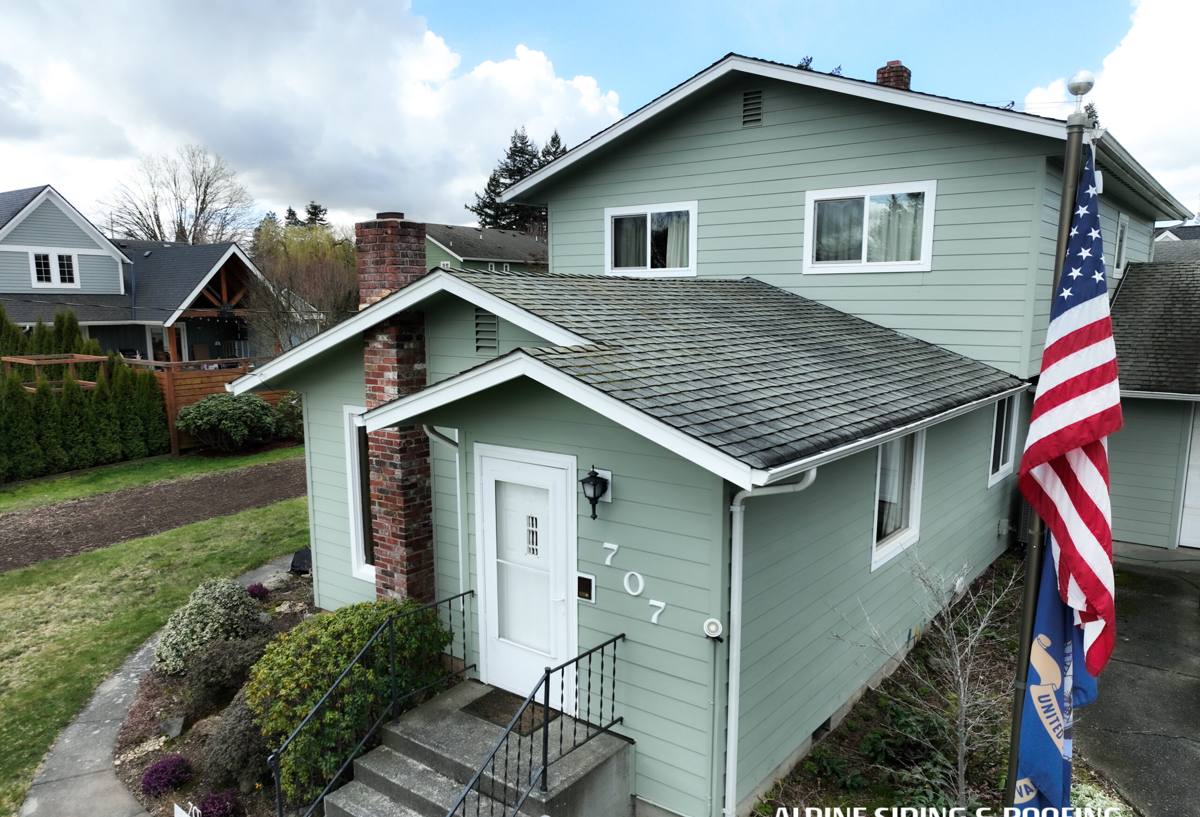
What Salt Air, Rain, and Moss Actually Do to a Shingle Roof
Each of these three factors attacks a roof differently, and understanding the mechanism is what separates a correct repair from one that just covers the symptom.
Salt air and metal components
Airborne salt accelerates corrosion on exposed metal — nail heads, flashing, valley metal, and vent stacks. Once a fastener starts to corrode, it loses holding power long before it looks obviously bad from the ground. On homes close to the water, we treat fastener and flashing material selection as a real decision, not an afterthought.
Driving rain and wind-driven water
Standard rain falls straight down and sheds off a properly lapped shingle easily. Driving rain, pushed sideways by storm winds off the bay, can work its way under shingle tabs, around vent penetrations, and into valleys that weren't sealed with enough margin. This is why underlayment choice and valley detailing matter more here than in calmer inland areas.
Extended moss season
Whatcom County's damp, shaded winters give moss a long window to establish itself, especially on north-facing slopes and roofs shaded by mature trees. Moss holds moisture against the shingle surface, lifts tabs as it grows, and can work granules loose over time. Left unaddressed, it shortens the effective life of an otherwise sound roof.
What a Correct Asphalt Shingle Installation Involves
A shingle roof is a system, not a single product. Skipping or downgrading any one layer undermines the rest, and in a climate like Marietta's, the layers underneath the shingles often matter more than the shingles themselves.
- Deck inspection and repair — any soft, delaminated, or water-damaged sheathing gets replaced before anything new goes down; covering a bad deck just hides a problem.
- Ice and water shield at vulnerable points — eaves, valleys, and penetrations get a self-adhering membrane, not just felt, since these are the areas most exposed to wind-driven rain.
- Synthetic underlayment across the field — a durable, water-resistant layer under the full roof, sized for the moisture load this area sees.
- Corrosion-resistant fasteners and flashing — chosen with salt-air exposure in mind, particularly on homes with a direct sightline to the bay.
- Proper valley and edge metal — installed with enough overlap and secured so wind-driven rain can't get behind it.
- Balanced attic ventilation — intake at the eaves and exhaust at the ridge, sized to the attic volume, so moisture from inside the home isn't adding to what the roof already fights from outside.
- Correct shingle nailing pattern — placed and driven per the manufacturer's specification, since underdriven or misplaced nails are one of the most common causes of early shingle failure and voided warranties.
Choosing the Right Shingle for Marietta's Exposure
Not every asphalt shingle line is built the same way, and the differences matter more on an exposed, moisture-heavy roof than they would somewhere drier. We walk homeowners through the trade-offs honestly rather than defaulting to whatever is cheapest to install.
| Shingle Type | Typical Lifespan | Best Fit For Marietta | Trade-Offs |
|---|---|---|---|
| 3-Tab Asphalt | 15–20 years | Budget-conscious re-roofs on less exposed slopes | Lighter weight and less wind resistance; less algae/moss resistance without an upgraded granule |
| Architectural (Laminate) | 25–30 years | Most Marietta homes, especially bay-facing exposures | Higher material cost, but better wind rating and thicker construction handle driving rain and gusts better |
| Algae-Resistant (Impregnated Granules) | 25–30 years | Shaded roofs or north-facing slopes prone to moss and algae streaking | Slight cost premium; resistance fades gradually over the shingle's life rather than lasting forever |
| Impact-Resistant (Class 4) | 30+ years | Homeowners prioritizing long-term durability and possible insurance credit | Highest upfront cost; savings depend on your insurer's discount structure |
For most homes in this area, we lean toward architectural shingles with algae-resistant granules as the sensible middle ground — the extra durability earns its keep given how long moss season runs here.
Our Process, Start to Finish
1. On-site assessment
We walk the roof and attic, not just look from the ground. That means checking deck condition, existing ventilation, flashing condition, and how much moss or moisture staining is already present, especially on shaded slopes.
2. A written estimate you can actually compare
We break down material choice, underlayment, ventilation work, and labor separately so you can see what you're paying for and why, rather than a single lump number.
3. Tear-off and deck inspection
We don't install over failing material. Full tear-off lets us see the deck and fix anything hidden underneath before it becomes your problem again in five years.
4. Installation to manufacturer specification
Underlayment, flashing, ventilation, and shingle nailing are all installed to the standard required to keep material warranties valid — a detail some faster jobs skip.
5. Final walkthrough and cleanup
We walk the finished roof with you, confirm ventilation and flashing details, and do a magnetic sweep of the property for stray fasteners before we consider the job done.
Repair vs. Full Replacement — Making the Right Call
Not every roofing problem in Marietta requires a full replacement. But moss, salt exposure, and wind-driven rain do tend to accelerate the point at which patch repairs stop making financial sense.
| Factor | Favors Repair | Favors Full Replacement |
|---|---|---|
| Age of roof | Under 12–15 years, isolated issue | Approaching or past expected lifespan for the shingle type |
| Extent of moss/algae staining | Localized, surface-level | Widespread, with granule loss underneath |
| Flashing and valley condition | Isolated failure at one penetration | Multiple aging flashing points, especially on bay-facing slopes |
| Deck condition | Sound, no soft spots found | Soft, delaminated, or water-stained sheathing present |
| Ventilation | Adequate and balanced already | Undersized or missing — worth correcting during a full re-roof |
When a repair is the honest answer, we say so. A full replacement is only the right recommendation when the underlying conditions actually call for it.
Ongoing Maintenance for Marietta Homeowners
Given how long the moss and moisture season runs in this part of Whatcom County, a little seasonal attention goes a long way toward protecting the investment in a new or existing shingle roof.
- Clear gutters and downspouts before the fall rains arrive, so water isn't backing up under the shingle edge.
- Have moss and algae growth treated early on shaded or north-facing slopes, before it lifts shingle tabs.
- Check attic ventilation isn't blocked by insulation, especially after any attic work.
- Trim back overhanging branches that keep sections of the roof shaded and slow to dry.
- After major windstorms off the bay, do a visual check for lifted or missing shingles.
- Have flashing around chimneys, vents, and skylights checked every few years, since these are the first points to fail under wind-driven rain.
Why a Crew That Already Works Marietta Matters
Roofing crews who mostly work drier, inland areas don't always default to the underlayment, fastener, and ventilation choices that hold up against salt air and driving rain. We work in Ferndale and the surrounding Whatcom County communities regularly, including Marietta, and we build our specifications around what actually holds up here — not a generic installation standard written for a different climate. That means fewer callbacks for moss-related granule loss, fewer corroded fasteners showing up in five years, and a roof that's specified for the conditions it's actually going to face.
If you're weighing a repair, a full replacement, or just want an honest read on how much life your current roof has left, we're happy to take a look. Request a free, no-pressure estimate using the form below and we'll walk the roof with you and lay out your options plainly.