 Ferndale Exterior
 New Roof Installation Built for Marietta's Coastal Climate
Marietta sits close enough to the water that salt air is a real factor in how long a roof lasts, not just a talking point. Add in the long, wet stretch of fall through spring that Whatcom County sees every year, and you have a combination that wears out roofing materials faster than homeowners moving here from drier climates usually expect. A new roof installation here isn't just about covering the house — it's about choosing materials and details that are matched to salt exposure, driving rain, and a moss season that can run most of the year in shaded spots.
We install roofs across Ferndale and the surrounding communities, and Marietta homes get the same attention to the details that actually matter in this environment: fastener choice, flashing work, underlayment selection, and ventilation. Those are the parts of a roof job that don't show up in a quick look from the street, but they're what separates a roof that holds up for its full expected life from one that starts showing problems in year eight or nine.
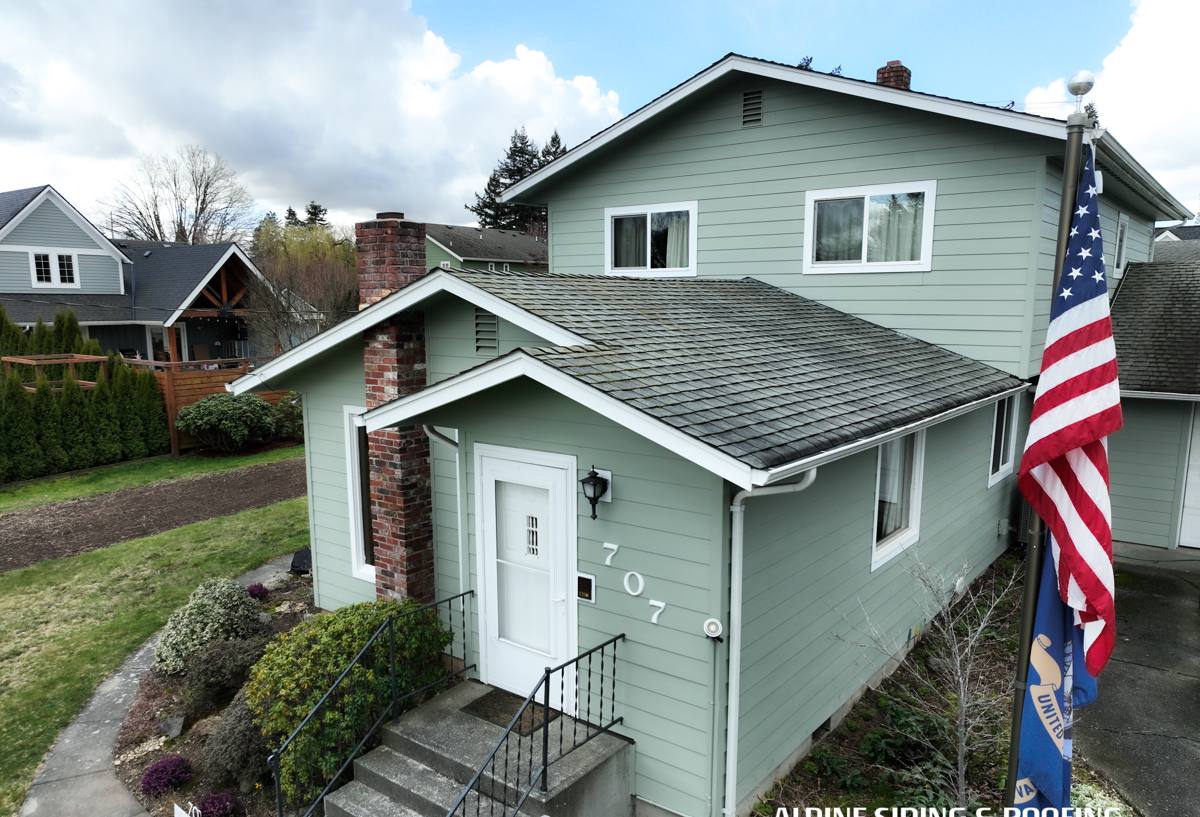
Why Marietta's Climate Is Hard on Roofing
Salt Air and Corrosion
Airborne salt from the nearby water accelerates corrosion on exposed metal — nail heads, flashing, vents, and gutter hardware. Over time, that corrosion can create small failure points long before the shingles themselves are worn out. Roofs installed with standard-grade fasteners and thin flashing metal in a coastal-influenced area tend to develop leaks at those metal components first, not at the field of the roof.
Driving Rain
Storms coming off the water don't just drop rain straight down — wind pushes it sideways and up under laps, ridges, and roof-wall intersections. A roof that would perform fine in a calmer inland climate can leak here if the underlayment, step flashing, and valley details aren't installed with that wind-driven rain in mind.
A Long Moss Season
Shaded lots, mature conifers, and consistent moisture give moss a long window to establish itself on north-facing slopes and anywhere debris collects. Moss holds water against the roofing material, and on some products it can lift shingle edges as it grows, which shortens the roof's usable life if it's left unaddressed.
What a Correctly Installed Roof Needs Here
A new roof installation done right for Marietta's conditions includes a few specific things we treat as standard, not upgrades:
- Corrosion-resistant fasteners and flashing metal rated for coastal exposure, not the minimum-grade hardware that's fine in drier inland areas
- Ice-and-water shield membrane at eaves, valleys, and roof-wall intersections — the areas most exposed to wind-driven rain and ice damming during cold snaps
- Properly lapped synthetic underlayment across the full roof deck as a second line of defense, not just at vulnerable spots
- Balanced intake and exhaust ventilation so the attic can dry out between wet stretches instead of trapping moisture
- Careful step flashing and counter-flashing at every wall, chimney, and dormer intersection — the most common source of leaks on older roofs in this area
- Roofing material and color chosen with moss resistance and maintenance in mind, especially on shaded or tree-covered lots
Signs a Marietta Roof May Need Replacement
Homeowners often wait for an active leak before calling, but by that point the deck underneath may already have water damage. Earlier signs worth acting on include granule loss showing up in gutters, shingles that are curling or cupping at the edges, moss establishing on more than isolated patches, soft spots when walking the attic, and visible daylight or staining around chimneys and vent pipes. Any roof approaching 20-25 years old in this climate is worth a professional look even without obvious symptoms, since coastal exposure tends to shorten material life compared to the manufacturer's general climate assumptions.
Choosing the Right Roofing Material
There's no single "best" roofing material for every Marietta home — the right choice depends on the roof's slope, sun and shade exposure, budget, and how long the homeowner plans to stay in the house. Here's how the common options compare for this specific climate:
| Material | Coastal/Moisture Performance | Moss Resistance | Typical Lifespan Here |
|---|---|---|---|
| Architectural asphalt shingle | Good, with proper flashing and underlayment | Moderate — benefits from algae-resistant granules | 20-25 years |
| Standing seam metal | Excellent when properly fastened and coated | High — sheds debris and dries quickly | 40-50+ years |
| Synthetic composite (shake-style) | Good, engineered to resist moisture absorption | Moderate to high depending on product | 30-40 years |
| Cedar shake | Requires diligent maintenance in wet climates | Lower without regular treatment | 20-30 years with upkeep |
For most Marietta homes, especially on shaded lots near trees, we lean toward architectural asphalt with algae-resistant granules or standing seam metal, since both handle moss and moisture with reasonable maintenance. Cedar shake can still be the right call for a homeowner who values the look and is committed to the upkeep it needs — we'll walk through the honest maintenance trade-offs rather than push a product that doesn't fit how the house will actually be cared for.
Our New Roof Installation Process
- On-site inspection and estimate. We walk the roof, check the attic where accessible, and look at drainage, tree cover, and sun exposure specific to the property.
- Material selection. We go over options based on slope, budget, and the moss/moisture realities of the specific lot — not a one-size-fits-all recommendation.
- Tear-off and deck inspection. Old roofing is removed and the deck is checked for soft spots or water damage before anything new goes down.
- Underlayment and flashing installation. Ice-and-water shield at vulnerable areas, synthetic underlayment across the field, and new flashing at every penetration and wall intersection.
- Roofing material installation. Installed to manufacturer specifications, with fastener patterns and exposure set for wind and rain performance, not just the minimum code requirement.
- Ventilation check. Intake and exhaust ventilation confirmed or upgraded so the finished roof system can manage moisture over time.
- Final walkthrough and cleanup. We review the finished roof with the homeowner and make sure the property is left clean, including magnetic sweep for stray fasteners.
Ventilation and Moisture: The Part You Don't See
A new roof's surface materials get most of the attention, but attic ventilation is what determines whether that roof performs well over the long run in a climate this wet. Without balanced intake (usually at the eaves) and exhaust (ridge or roof vents), moisture from daily living and humid outside air gets trapped in the attic. Over a long moss season and repeated rainy months, poor ventilation can lead to condensation on the underside of the deck, premature wear on the new roofing material, and conditions that encourage mold in the attic space. We check and correct ventilation as part of every new roof installation rather than treating it as an optional add-on.
Why a Crew That Already Works Marietta Matters
Roofing crews unfamiliar with this specific stretch of Whatcom County sometimes default to specs and details that work fine in drier or less wind-exposed regions. That gap shows up later as leaks at flashing points, premature corrosion, or moss returning within a year or two of installation. A crew that regularly works Marietta and the greater Ferndale area already knows which roof details need the extra attention — the wall intersections that catch wind-driven rain, the north-facing slopes that hold moss longest, and the fastener and flashing grades that actually hold up near the water. That familiarity translates into fewer callbacks and a roof that performs the way it's supposed to for its full expected life.
Simple Maintenance That Extends a New Roof's Life
A correctly installed roof still benefits from basic upkeep, especially in a climate that supports moss growth for most of the year. A short annual routine goes a long way:
- Clear gutters and downspouts before the fall rains start, so water isn't backing up under the roof edge
- Remove overhanging branches that keep sections of the roof shaded and slow to dry
- Have moss physically removed rather than pressure-washed, and treated with a roof-safe product if it returns
- Check attic ventilation isn't blocked by insulation or debris
- Schedule a professional look after any major windstorm to catch lifted shingles or damaged flashing early
If you're weighing a new roof for a Marietta property, we're happy to take a look and walk you through what your specific roof, slope, and tree cover actually call for. Reach out for a free, no-pressure estimate using the form below.