 Ferndale Exterior
 Roofing in Blaine's Salt Air and Marine Weather
Blaine sits right on the water, close enough to Semiahmoo Bay and the Strait of Georgia that salt air is part of daily life for every roof in town. Combine that with Whatcom County's wind-driven winter rain and a moss season that can run eight months out of the year, and you've got a climate that's genuinely harder on a roof than most inland parts of Washington. Homes just a few miles inland in Ferndale deal with plenty of rain too, but Blaine roofs take an extra beating from salt-laden wind, which speeds up corrosion on fasteners, flashing, and any exposed metal that isn't rated for it.
A roof that's installed without accounting for that combination — salt exposure, sustained moisture, and heavy shade from evergreen tree cover in a lot of Blaine's older neighborhoods — will show problems years before it should. This page covers what a new roof installation actually needs to hold up here, what a correct job looks like from tear-off to final inspection, and why it matters to work with a crew that already understands Blaine's specific conditions rather than a generic install.
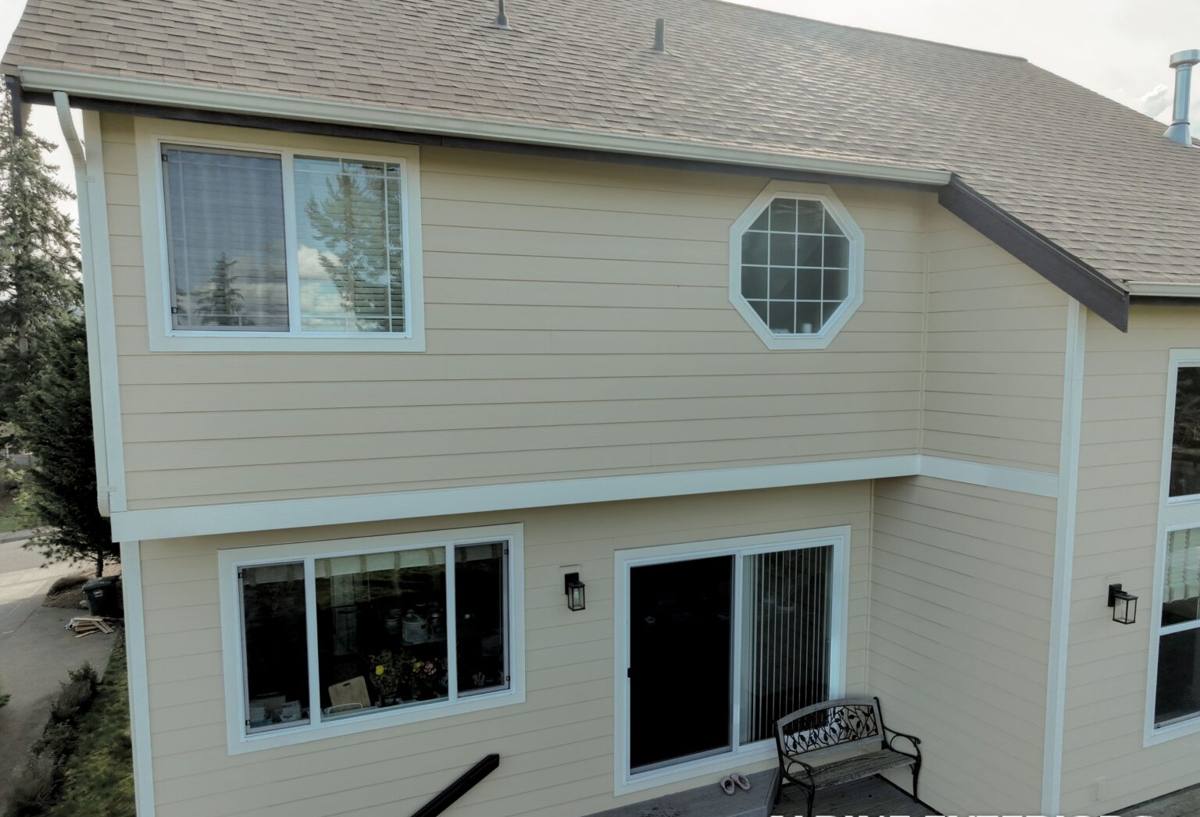
Why "Just Replace the Shingles" Isn't Enough Here
A lot of roof replacement quotes focus almost entirely on the shingle brand and color. In Blaine, the shingle is honestly one of the less important decisions. What determines whether a new roof lasts its full rated lifespan is what happens underneath it and around its edges: the underlayment, the flashing, the ventilation, and the fastener hardware. Skip any of those and you can end up with a roof that looks brand new for two or three years and then starts failing at the valleys, the eaves, or anywhere metal meets metal.
This is especially true on homes close to the water or with a lot of surrounding tree cover, where wind-driven rain gets pushed sideways under shingle tabs and moss holds moisture against the roof deck long after a storm has passed. A correct installation plans for both of those realities from day one.
Signs a Blaine Home Needs a New Roof, Not a Repair
Roof repairs make sense for isolated damage — a cracked pipe boot, a section of lifted shingles after a windstorm, a single leak traced to a nail pop. A full replacement becomes the smarter, more cost-effective option once the damage is spread across the roof or the underlying materials are compromised. Signs it's time to talk replacement instead of another patch:
- Granules collecting in gutters or at the base of downspouts, indicating shingles are past their protective life
- Moss or algae staining that keeps coming back within a season or two of cleaning
- Multiple soft spots or sagging areas when walked, suggesting deck damage from long-term moisture
- Shingles curling, cupping, or losing their tabs, especially on south- and west-facing slopes
- Flashing around chimneys, skylights, or vent pipes that's rusted, lifted, or was never properly stepped
- Daylight visible through the attic roof boards, or consistent musty odor in the attic space
- The roof is past 20-25 years old for asphalt composition, regardless of surface appearance
If you're only seeing one or two of these in a contained area, a repair is often the honest recommendation. We'll tell you that directly rather than push a replacement a roof doesn't need yet.
Choosing a Roofing System That Fits Blaine's Climate
There's no single "best" roofing material for every home — it depends on your roof's pitch, sun exposure, tree cover, and budget. What matters is understanding the real trade-offs for a marine, moss-heavy climate like Blaine's rather than picking based on price alone.
| Material | Typical Lifespan Here | Moss/Algae Resistance | Salt Air Durability |
|---|---|---|---|
| Architectural asphalt shingle | 25-30 years | Good with algae-resistant granules; needs periodic cleaning | Good, provided fasteners and flashing are corrosion-rated |
| Standard 3-tab asphalt shingle | 15-20 years | Fair; moss takes hold faster on the thinner profile | Fair; shorter overall service life in this climate |
| Metal (standing seam or panel) | 40-50+ years | Very good; moss struggles to grip smooth metal | Very good with marine-grade coatings and fasteners |
| Cedar shake | 20-30 years with upkeep | Poor without regular treatment; holds moisture | Fair; requires more maintenance near salt air |
We install asphalt composition and metal roofing as our standard offerings because both perform predictably in this climate when installed correctly, and both carry manufacturer warranties that hold up when the installation meets spec. We generally steer homeowners away from cedar shake and other high-maintenance wood roofing for Blaine specifically — not because it's a bad product everywhere, but because the combination of shade, moisture, and salt air here shortens its practical life and raises the maintenance burden more than most homeowners expect going in. That's an honest trade-off conversation we'll have with you, not a sales pitch against any one brand.
Color and Reflectivity Considerations
Darker shingles show algae streaking more visibly than lighter or algae-resistant blends, though the streaking itself isn't unique to any color — it's a granule and moisture issue. If moss and algae staining has been a recurring frustration with your current roof, it's worth discussing algae-resistant shingle lines when we go over material options.
What a Correct New Roof Installation Actually Involves
A roof is a system, and every layer has a job. Here's what we install on, and why each layer matters for a home in this part of Whatcom County:
Full Tear-Off and Deck Inspection
We don't install a new roof over an old one. A full tear-off lets us see the actual condition of the roof deck — soft or delaminated plywood, especially around valleys and eaves where moisture collects, needs to be found and replaced before anything new goes down. Installing over hidden deck damage just locks the problem under a new roof.
Ice and Water Shield at Vulnerable Areas
Even though Blaine doesn't see heavy sustained snow most winters, ice and water shield membrane still matters at eaves, valleys, and around penetrations because of wind-driven rain. That rain doesn't fall straight down here — it gets pushed sideways and can work its way under standard felt at these vulnerable transition points.
Synthetic Underlayment
We use synthetic underlayment over the full deck rather than older felt paper. It handles prolonged wet exposure during installation better (useful on a job site that might see a rain delay) and provides a more consistent moisture barrier over the life of the roof.
Corrosion-Resistant Flashing and Fasteners
This is where salt air exposure really matters. Standard galvanized fasteners and flashing can corrode faster near the water than they would further inland. We use fastener and flashing hardware rated for coastal exposure at chimneys, skylights, valleys, and roof-to-wall transitions, since these are the points where a roof most commonly starts to leak first.
Proper Attic Ventilation
Balanced intake and exhaust ventilation keeps the underside of the roof deck dry and temperature-regulated. Poor ventilation traps moisture in the attic, which shortens shingle life from underneath and contributes to moss and mildew issues that have nothing to do with the shingle quality itself.
Our Installation Process
- On-site inspection and estimate — we walk the roof, check the attic, and measure before quoting, not after.
- Material selection — we go over the honest trade-offs for your roof's pitch, sun exposure, and budget.
- Scheduling around weather — we plan installs to minimize exposed-deck time given how often it rains here.
- Tear-off and deck inspection — old roofing removed, deck checked and repaired as needed.
- Underlayment, flashing, and ventilation installed — the layers that actually determine roof lifespan.
- Shingle or metal installation to manufacturer specification, which is what keeps material warranties valid.
- Final walkthrough — we review the completed roof with you before considering the job done.
Cost Factors for a New Roof in Blaine
Every home is different, so we won't quote a number without seeing your roof, but these are the factors that most affect price on a Blaine installation:
- Roof size and number of squares (100 sq ft units) to be covered
- Roof pitch and complexity — steep or cut-up roofs with multiple valleys take longer
- Number of layers being torn off and condition of the existing deck
- Material choice — asphalt composition versus metal, and shingle tier within that
- Amount of flashing work required around chimneys, skylights, and vents
- Ventilation upgrades needed to bring an older attic up to current standards
- Access — steep sites, limited driveway access, or tree cover that requires extra care
We provide itemized, written estimates so you can see exactly what you're paying for rather than a single lump number.
Why It Matters to Hire a Crew That Already Works in Blaine
Roofing crews that mostly work drier, inland climates sometimes under-spec the flashing and fastener hardware because it hasn't caused them problems where they normally build. That's not a knock on their skill — it's just a different climate with different failure points. A crew that regularly works Blaine and the surrounding Whatcom County coastline already knows which details can't be skipped: corrosion-rated hardware near the water, extra attention to valley and eave protection against sideways rain, and ventilation planned around the shade and moisture that drive moss growth here.
That local familiarity also means we're not guessing at permitting requirements or typical construction in Blaine's older neighborhoods versus newer builds closer to the water. It's the difference between a roof that's technically installed correctly on paper and one that's actually built for the conditions it has to survive.
Maintaining Your New Roof After Installation
A correctly installed roof still benefits from basic upkeep in this climate. Keep gutters clear so water isn't backing up under the eaves, have moss and debris removed from valleys and north-facing slopes before it builds up, and get an occasional visual check after major windstorms. None of this is heavy maintenance, but skipping it entirely shortens the life of even a well-installed roof.
If your roof is showing its age or you're just planning ahead, we're happy to take a look and give you a straight answer on what it needs. Reach out using the form below for a free, no-pressure estimate on a new roof installation for your Blaine home.