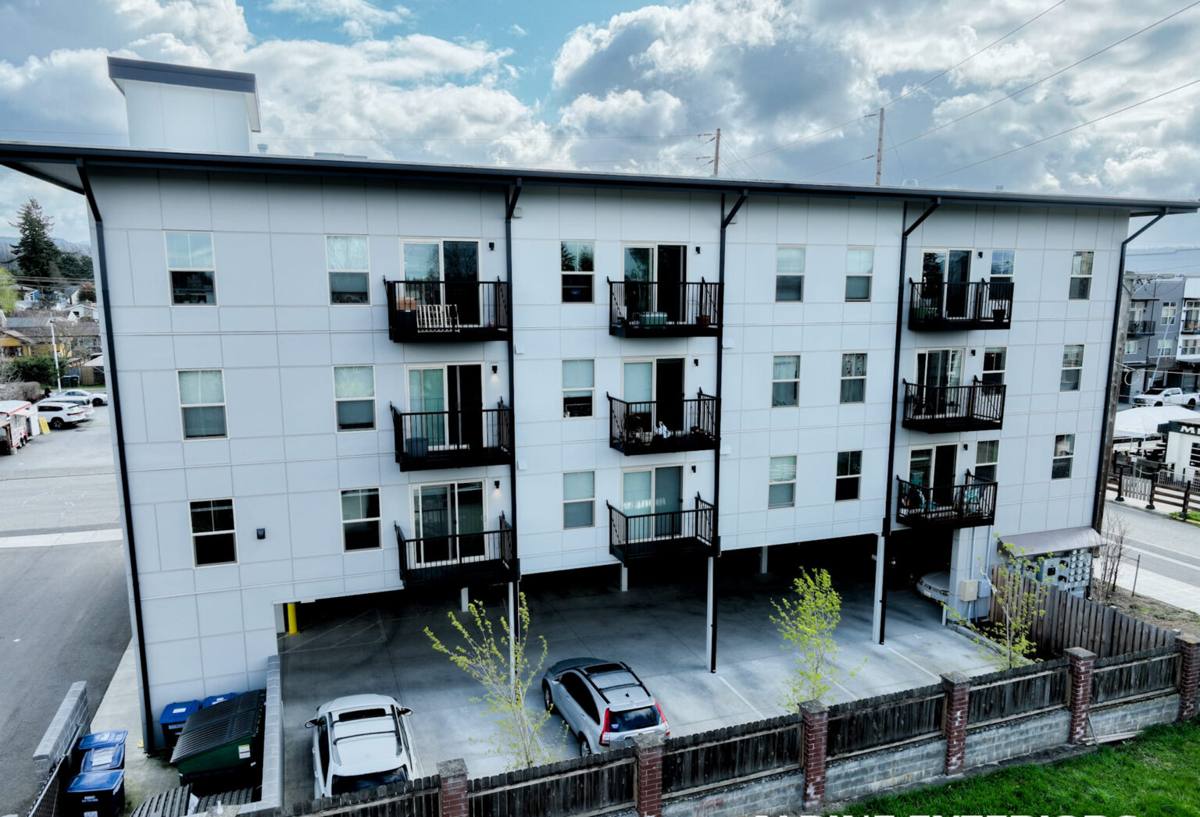
 Ferndale Exterior
 Why Nooksack Homes Need More Than a Catalog Window
Nooksack sits in the Nooksack River valley in Whatcom County, close enough to Ferndale and Bellingham Bay that the same maritime weather pattern governs both places: long stretches of low-pressure rain, heavy morning dampness, and short winter days that never quite dry a house out. Homes here don't fail because of one big storm. They fail slowly, from months of moisture sitting against wood trim, glazing seals working loose from repeated wet-dry cycling, and moss creeping into anywhere it can hold water against a surface.
Windows are one of the first places that shows up. A window that was fine in a drier climate can become a cold spot, a condensation source, or a slow leak here simply because it wasn't detailed for this much sustained moisture. "Energy-efficient" in Nooksack has to mean more than a good U-factor rating on a spec sheet — it has to mean a window and installation that actually holds up to driving rain and stays sealed through another wet Whatcom County winter.
What Energy-Efficient Really Means in This Climate
It's Not Just the Glass
Manufacturers advertise U-factor and Solar Heat Gain Coefficient (SHGC) numbers, and those matter — a lower U-factor means less heat escaping through the glass in winter. But in a marine climate like ours, the glass package is only part of the story. Air infiltration around the sash, the quality of the weatherstripping, and how well the frame resists warping in constant humidity all affect real-world performance just as much as the labeled rating.
Condensation Control Matters Locally
Cool, damp air combined with warm indoor air is a recipe for condensation on interior glass and, worse, hidden condensation inside the wall cavity if a window isn't sealed correctly. A properly specified energy-efficient window with the right glazing and a tight, correctly flashed installation reduces both the visible fogging on cold mornings and the moisture that can work its way into framing over years.
Signs Your Windows Are Working Against You
- Cold drafts near the window frame even when the sash is fully latched
- Condensation or fogging between the glass panes (a sign the seal has failed)
- Soft or discolored trim, sill, or drywall below the window
- Visible daylight or air movement around the frame perimeter
- Moss or dark streaking building up on the sill or exterior casing
- Noticeably higher heating bills compared to similar-sized homes nearby
- Windows that are difficult to open, close, or lock due to swelling or warping
Any one of these on its own might just mean a window needs adjustment or resealing. Several of them together usually mean the window and its surrounding flashing have reached the end of their useful life.
What a Correct Installation Actually Involves
The window itself only performs as well as the installation around it. In a climate that gets this much driving rain, the details at the rough opening matter as much as the product being installed.
Flashing and Water Management
Every opening needs a proper drainage plane: sill pan flashing to direct any incidental water back out, correctly lapped house wrap or building paper above and below the window, and flashing tape at the jambs sealed in the right order so water sheds outward instead of pooling. Skipping or rushing this step is the single most common reason a "new" window still leaks two winters later.
Air Sealing Without Trapping Moisture
The gap between the window frame and the rough opening needs to be insulated and air-sealed, but not with a product that traps moisture against the wood. Low-expansion foam or backer rod and sealant, applied correctly, closes the air gap without creating a hidden wet spot.
Fastening and Squaring
A window that isn't shimmed square will bind, won't seal evenly along all four sides, and puts uneven stress on the frame that shortens its service life. Correct fastening also keeps the frame from racking as the house settles or the wood around it swells seasonally with humidity.
Comparing Window Materials for This Climate
| Material | How It Handles Local Moisture | Maintenance | Typical Lifespan |
|---|---|---|---|
| Vinyl | Won't rot, resists moss growth on frame; can flex slightly in temperature swings | Low — occasional cleaning | 20-30 years |
| Fiberglass | Very stable in wet/dry cycling, holds paint and finishes well | Low to moderate | 30-40+ years |
| Wood (unclad) | Handsome but needs consistent upkeep to resist rot in constant dampness | High — regular sealing/painting | Varies widely with maintenance |
| Wood-clad (vinyl or aluminum exterior) | Exterior face resists moisture and moss; interior keeps wood look | Moderate | 25-35+ years |
We don't push one material as universally "best." A vinyl window that's well-installed will outperform a premium wood window that's poorly flashed. Our job is matching the material to the exposure of that specific wall — a window under deep eaves facing away from prevailing rain has different needs than one on an exposed west-facing gable.
A Note on Wood Windows
We're honest with Nooksack homeowners about unclad wood windows: they can look great, but in a climate with this much sustained dampness, they demand a maintenance schedule most households don't keep up with. If you want the wood look with less upkeep, a clad wood window gives you that appearance with a weather-resistant exterior shell — it's a trade-off in cost, not a knock on wood as a material.
Cost Factors to Expect
| Factor | Why It Changes the Price |
|---|---|
| Window count and size | More openings and larger glass areas increase material and labor |
| Material choice | Vinyl, fiberglass, and clad-wood carry different unit costs |
| Full-frame vs. insert replacement | Full-frame replaces flashing and framing too — more work, better long-term seal |
| Existing water or rot damage | Sill or framing repair adds time but prevents sealing a problem back into the wall |
| Access and site conditions | Second-story or hard-to-reach openings take more setup time |
We'd rather walk your specific windows and give you real numbers than quote a range that doesn't mean much until we've seen the house.
Our Process, Start to Finish
- On-site assessment — we check each window's current seal, frame condition, and any signs of past water intrusion before recommending anything
- Straightforward proposal — material options, full-frame vs. insert approach, and a clear scope of work
- Careful removal — old windows come out without unnecessary damage to surrounding siding or trim
- Flashing and drainage done right — sill pan, house wrap laps, and flashing tape installed in the correct sequence for this climate
- Precise setting and sealing — window shimmed square, air-sealed, and fastened per manufacturer specification
- Trim and finish work — interior and exterior trim reinstalled or replaced to match
- Walkthrough — we test operation and go over care with you before we consider the job done
Why It Matters That We Already Work Nooksack
A crew that installs windows across Whatcom County regularly already knows which wall orientations in this area take the worst of the driving rain, how much moss buildup to expect on north-facing sills, and how the ground moisture around Nooksack properties tends to affect lower-level windows differently than upper floors. That's not something you get from a general contractor passing through once. It shows up in small decisions — where to add extra flashing, which sills need a slightly different pitch — that don't cost more to do right, but do cost more to fix later if they're missed.
We also know that a callback for a leaking window months after installation is a bigger problem here than in a drier climate, because by the time it's noticed, moisture may already be sitting inside the wall. Getting the flashing and sealing right the first time isn't optional in this region — it's the difference between a window that lasts decades and one that causes a repair bill in a few years.
Living With Your New Windows: Moss Season and Beyond
Even a well-installed, energy-efficient window benefits from a little seasonal attention here. Keep sills and tracks clear of organic debris so moisture and moss don't build up against the frame. Rinse pollen and grime off glass and frames a couple of times a year — it's mostly cosmetic, but it also lets you spot any early sealant wear before it becomes a leak. If you notice a sash sticking or a draft returning after a few years, it's worth having it looked at promptly rather than waiting; small adjustments are simple, while an ignored seal failure in this climate rarely stays small.
If your windows are drafty, fogging, or just past their prime, we're glad to walk your Nooksack-area home, look at what's actually going on, and give you a free, no-pressure estimate on what it would take to fix it right.