 Ferndale Exterior
 New-Construction Windows in the Nooksack Area
If you're framing a new home or addition out toward Nooksack, the window installation you get during construction sets the tone for the next 30 years of that building's life. New-construction windows aren't just "windows installed in a new house" — they're a specific product type and installation method, built around a nailing flange that gets integrated directly into the wall's weather-resistive barrier before siding goes on. Get that sequence wrong and you won't see the consequences for a year or two, by which time it's hidden behind trim and siding. Get it right and the window becomes part of a continuous drainage plane that's built to shed water, not fight it.
We work new-construction jobs in and around Ferndale regularly, including the Nooksack corridor, and the framing crews and builders out here know us. That matters more than it sounds — a window installer who's coordinated with local framers before knows how rough openings tend to run in this area, knows which builders flash a certain way, and isn't learning the house's quirks on your dime.
Why Whatcom County's Climate Changes the Job
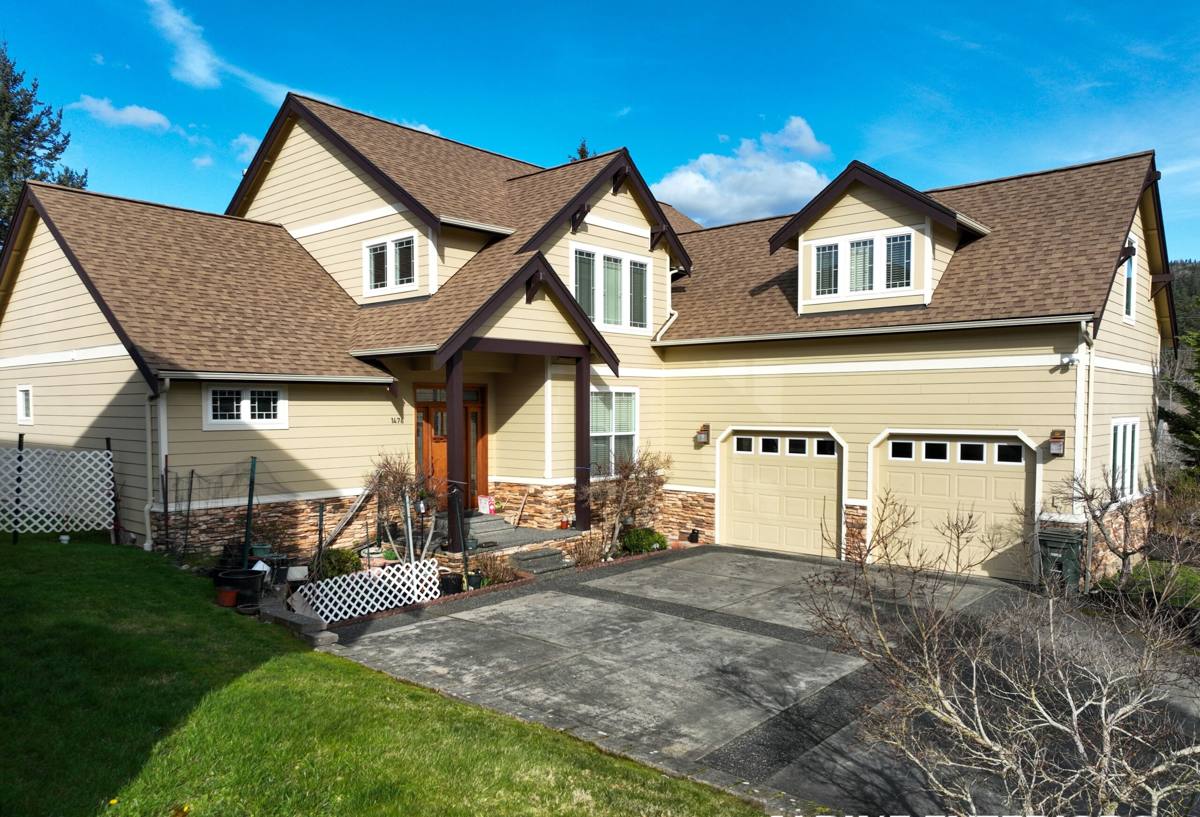
Whatcom County sits where marine air off Bellingham Bay meets a long, wet fall-through-spring stretch of driving rain. Homes near Nooksack get the combination straight on: salt-tinged moisture in the air, wind-driven rain that doesn't fall straight down, and a moss season that can run half the year on north- and west-facing surfaces. None of that is dramatic on its own, but it's relentless, and relentless is what eventually finds every shortcut in a window install.
For new construction specifically, this climate context changes three things:
- Flashing has to assume wind-driven rain will hit the window from an angle, not just straight-on — sill pans and head flashing details matter more here than in drier climates.
- Salt-influenced air accelerates corrosion on cheap fasteners and lower-grade hardware, so fastener and flashing tape specs aren't a place to cut corners.
- Moss and algae growth on north-facing walls means sill design and drainage need to actually work, not just look finished, because a poorly draining sill stays damp longer and feeds growth right at the window.
What a Correct New-Construction Install Actually Involves
The Sequence Matters More Than the Window
A premium window installed out of sequence with the weather-resistive barrier (WRB) will leak eventually. A mid-grade window installed in correct sequence, with proper sill pan flashing, WRB integration, and head flashing lapped correctly over the WRB, will outperform it. The order of operations — sill pan first, window set into the pan, side flashing over the nail fin, WRB integrated at the sides, head flashing last and lapped over the top — is the actual product here, more than the window brand.
Sill Pan Flashing
Every new-construction window we set gets a sloped or flashed sill pan underneath it, not just a bead of sealant. This is the single detail most likely to be skipped on a rushed job, and it's the one that determines whether incidental water that gets past the window ends up draining back outside or sitting on the framing.
Nail Fin Integration with the WRB
The window's nailing flange has to be sealed and lapped correctly with the housewrap or WRB in a specific shingle-style order — bottom, sides, top — so water draining down the wall's surface is directed over the flange, never behind it. This is a five-minute detail per window that's easy to rush on a busy framing schedule and expensive to fix once siding is on.
Rough Opening Prep
Rough openings run big, small, or slightly out-of-square more often than anyone expects, even on new builds. We check level, plumb, and square before setting anything, and we shim to the window's structural points, not just wherever it happens to sit.
Choosing Window Products for This Climate
We don't push one brand or material as the only right answer — the right call depends on the home's design, budget, and exposure. What we do insist on is glass packages and frame materials that are proven in a wet, coastal-influenced climate, and we're upfront about the trade-offs of each option rather than overselling anything.
| Frame Material | Moisture Behavior | Maintenance | Typical Fit |
|---|---|---|---|
| Vinyl | Won't rot; performs well if drainage is correct | Low | Most new builds, budget-conscious |
| Fiberglass | Dimensionally stable in swings of wet/dry | Low | Larger openings, higher-end builds |
| Wood-clad | Needs correct sealing at all joints; sensitive to installation errors | Higher | Traditional or high-end aesthetic where owner accepts upkeep |
| Aluminum | Conducts cold, can condense in our damp winters without thermal breaks | Moderate | Modern designs with proper thermal-break hardware |
For glass, we default to low-E, argon-filled dual-pane units as a baseline for this area — the marine layer and overcast stretches don't demand exotic solar-control coatings the way a hot, sunny climate would, but the insulating value matters through our long heating season.
Why We're Selective About Certain Products
We steer clients away from a few product types for new construction here — not because any brand is bad outright, but because some designs are more installation-sensitive or higher-maintenance than the climate rewards. Wood frames without factory cladding, for example, ask a lot of ongoing maintenance in a climate that stays damp much of the year, and any gap in that maintenance shows up as rot faster than it would somewhere drier. We'll walk through these trade-offs honestly rather than steering you toward whatever's easiest for us to install.
How Our Process Works on a New Build
- Plan review: we look at the window schedule and rough opening sizes before framing is finalized, so surprises get caught early.
- Coordination with the framer/builder: we confirm WRB timing so windows go in at the right point in the sequence, not before the wrap is ready or after siding prep has started.
- Rough opening check: level, plumb, square, and sized correctly before a single window is set.
- Sill pan and flashing installation: done to a consistent, documented sequence on every opening, not just the ones someone remembers to double-check.
- Window setting and fastening: shimmed to structural points, fastened per manufacturer spec to preserve warranty coverage.
- Final flashing and WRB integration: head flashing lapped last, taped and inspected before the wall is closed up behind siding.
- Walkthrough: operation, hardware, and weatherstripping checked on every unit before we consider the job done.
What We See Go Wrong on Rushed New-Construction Jobs
Most of the window problems we get called to fix on newer homes in this area trace back to the same handful of shortcuts: skipped or improvised sill pans, WRB lapped in the wrong order, fasteners that don't match the manufacturer's schedule, or window crews working off a framing schedule instead of the actual WRB installation timeline. None of these show up at final walkthrough. They show up two or three rainy seasons later as staining, soft trim, or a musty smell near a window that "should" still be brand new.
A crew that already works new construction in the Nooksack and Ferndale area has usually already seen the local framing habits, the typical rough opening quirks, and the builders' sequencing — which means fewer assumptions and fewer things slipping through because "that's not how it usually goes."
Cost Factors on a New-Construction Window Package
| Factor | Why It Moves the Price |
|---|---|
| Number and size of openings | More glass and larger units mean more material and labor per opening |
| Frame material | Vinyl runs lower than fiberglass or clad-wood options |
| Glass package | Upgraded low-E coatings or gas fills add cost per unit |
| Flashing and sill pan complexity | Non-standard sills, decks, or drainage details take more labor to flash correctly |
| Access and scheduling | Coordinating tightly with a framing schedule can affect labor efficiency |
We'll give you an itemized breakdown before work starts so you know what's driving the number, and we're honest if a cheaper option is genuinely fine for a given opening versus one where it's a bad trade-off.
Homeowner Checklist Before Windows Go In
- Confirm your window schedule matches the actual rough openings framed, not just the plan set.
- Ask your window installer how they handle sill pan flashing — a clear, specific answer is a good sign.
- Confirm timing with your builder so windows are set at the correct point relative to the WRB installation, not before or after.
- Get manufacturer fastening specs followed, in writing if needed, to protect your warranty.
- Ask whether the crew has worked in your specific area before and what they watch for locally.
- Walk each window before drywall or siding closes it in, if your schedule allows.
Working With a Local Crew
New construction rewards installers who've already dealt with the specific conditions of an area — the way Whatcom County's driving rain hits certain wall orientations, how quickly moss establishes on shaded north walls, and how salt-influenced coastal air treats lower-grade hardware over time. We build for those conditions as a matter of standard practice on every new-construction job we take on near Ferndale and Nooksack, not as an upgrade or an afterthought.
If you're planning a new build or addition in the Nooksack area and want windows installed correctly the first time, we're happy to walk your plans, talk through product options honestly, and give you a straightforward, no-pressure estimate. Use the form below to get started.