 Ferndale Exterior
 Windows in Point Roberts Work Harder Than Windows Almost Anywhere Else in Whatcom County
Point Roberts sits on its own peninsula, exposed to open water on three sides, which means homes there take a steadier beating from salt-laden air than most inland Whatcom County properties. Add the region's long stretch of driving rain each fall and winter, plus a moss season that can run for months on shaded or north-facing walls, and you have a climate that finds every weak point in a window installation eventually. Frame corners that weren't sealed correctly. Sills that were never properly pitched to shed water. Flashing that was skipped because the old window "looked fine" going back in. None of these show up on day one. They show up two or three winters later, as soft trim, fogged glass, or a musty smell in a room that never used to have one.
We're not saying this to scare anyone — it's just the honest starting point for talking about window installation here. A window that would be perfectly adequate installed fifty miles inland can underperform on a peninsula lot facing open water. That's the whole reason installation quality matters more than brand names or marketing claims.
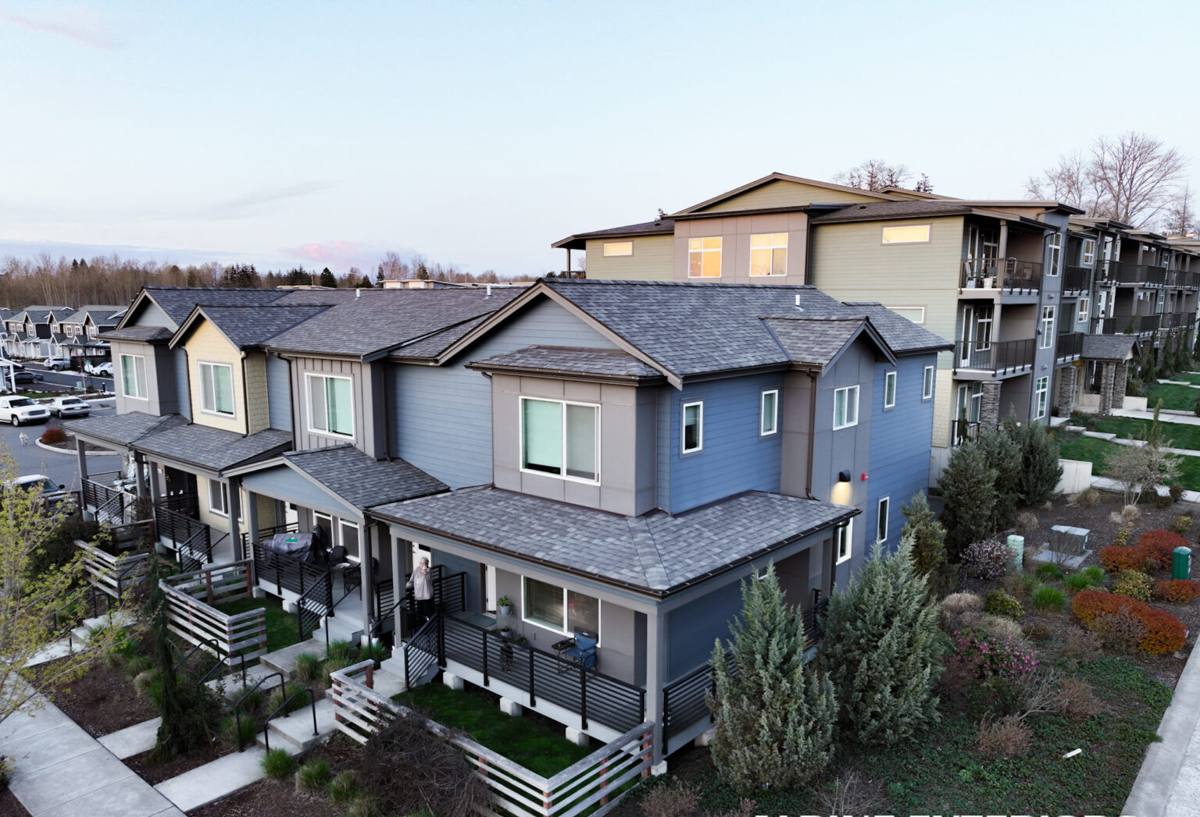
What Salt Air, Rain, and Moss Actually Do to a Window System
It helps to understand the specific failure modes, because they shape how we approach every install:
- Salt air accelerates corrosion on exposed metal — hinges, cranks, screws, and lesser-grade flashing — and it degrades some sealants faster than inland exposure would.
- Driving, wind-driven rain doesn't just fall straight down here; it gets pushed sideways into wall assemblies, which means flashing and water management details matter far more than they would in a calmer climate.
- Extended moss and mildew season keeps siding and trim around windows damp for longer stretches, so any gap or failed seal has more time each year to let moisture soak into wood framing before it ever dries out.
None of this means Point Roberts is an impossible place to keep windows in good shape. It means the installation has to account for these conditions from the start, not patch around them later.
What a Correct Window Installation Actually Involves
It's Never Just "Pull Old, Drop In New"
A proper window replacement or new installation is really a small water-management project built around a piece of glass. The window itself is often the easiest part. The details that determine whether it lasts are:
- Opening inspection — checking the rough opening and surrounding framing for existing rot, soft wood, or prior water intrusion before anything new goes in.
- Sill pan flashing — creating a sloped, sealed pan at the bottom of the opening so any water that gets past the window sheds back outside instead of pooling against the framing.
- Weather-resistive barrier integration — lapping flashing tape correctly with the house wrap or building paper so water is directed down and out, shingle-style, the way rain actually falls.
- Air sealing — sealing the gap between the window frame and the rough opening with appropriate low-expansion foam or sealant, not just stuffing it with fiberglass insulation that does nothing to stop air or moisture movement.
- Correct shimming and squaring — a window that's out of square will bind, won't seal against its own weatherstripping properly, and will stress the frame over time.
- Exterior trim and caulking — the visible finish work, done last, sealing the transition between window and siding against wind-driven rain.
Skip or rush any one of these steps and the window can still look fine for a season or two. In a climate like this one, the shortcuts show up faster than they would somewhere drier.
Choosing a Window Built for This Climate
Material and glass choice matter, but less than most homeowners expect — installation quality still does most of the work. That said, some materials hold up more predictably in salt air and constant damp than others.
| Material | Behavior in Salt Air / Moisture | Maintenance | Typical Lifespan |
|---|---|---|---|
| Vinyl | Doesn't corrode; performs consistently near water | Low — occasional cleaning | 20-30+ years |
| Fiberglass | Very stable, minimal expansion/contraction, holds paint well | Low to moderate | 30-40+ years |
| Wood or wood-clad | Attractive but more vulnerable if any seal fails and moisture reaches the wood core | Higher — periodic refinishing/inspection | Varies widely with maintenance |
| Aluminum-clad | Durable exterior face, but hardware and fasteners need salt-resistant coatings | Moderate | 25-35 years |
We don't push homeowners toward one material across the board. We do steer people away from products or hardware grades that carry a known maintenance burden in this specific environment — not because a product is bad everywhere, but because a peninsula lot exposed to salt air and driving rain isn't the forgiving environment some products were designed around. That's a professional judgment call we're happy to walk through openly, including the trade-offs, rather than just recommending whatever's easiest to install.
Our Installation Process
- On-site assessment — we look at each opening individually, check for existing moisture damage, and measure for accurate fit rather than assuming every window on the house is identical.
- Product selection — we go over material, glass package, and hardware options suited to a coastal-exposed home, with honest pros and cons for your specific walls and exposure.
- Removal — old windows come out carefully, and we inspect the opening as soon as it's exposed, before anything new goes in.
- Repair as needed — any soft framing, failed old flashing, or hidden moisture damage gets addressed before a new window is installed over it. Installing new over a damaged opening just hides a problem instead of fixing it.
- Flashing and sill pan installation — built correctly for this climate's wind-driven rain, not just to a minimum-code standard.
- Setting, shimming, and squaring — the window is leveled, squared, and fastened so it operates and seals properly for its full service life.
- Air sealing and insulation — the gap between frame and opening is sealed against both air and moisture movement.
- Exterior and interior finish work — trim, caulking, and touch-up work completed to match the surrounding siding and interior finish.
- Final walkthrough — we check operation, sealing, and appearance with you before calling the job done.
What Affects the Cost of a Window Installation Project
| Cost Factor | Why It Matters |
|---|---|
| Number and size of openings | More or larger windows mean more material and labor hours |
| Condition of existing framing | Hidden rot or moisture damage found during removal adds repair time before installation can proceed |
| Material and glass package | Vinyl, fiberglass, and wood-clad windows carry different price points; upgraded glass (low-E coatings, additional panes) adds cost |
| Access and site conditions | Second-story or hard-to-reach openings take more time and equipment |
| Exterior finish requirements | Matching existing trim, siding, or paint adds finish-carpentry time |
We give straightforward, itemized estimates rather than a single number, so you can see exactly what's driving the price and where there's room to adjust the scope if needed.
Signs Your Current Windows Are Already Losing the Battle
Because moisture problems around windows tend to develop slowly, it's worth checking your own home for early warning signs rather than waiting for an obvious failure:
- Fogging or a milky haze between panes on double- or triple-pane glass (a sign the seal has failed)
- Soft, spongy, or discolored trim and siding directly around a window frame
- Visible moss, algae, or persistent dampness on the wall just below or beside a window
- Drafts you can feel around the frame even with the window fully closed and locked
- Windows that are difficult to open, close, or lock, or that no longer sit flush in the frame
- A musty smell in a room near an exterior window, especially after heavy rain
- Visible corrosion on hinges, cranks, or exterior hardware
Any one of these on its own may not mean much. Two or three together, especially on the same wall, usually mean it's worth having someone take a closer look before it becomes a bigger repair.
Why Local Experience in Point Roberts Actually Matters
Point Roberts is a peninsula separated from the rest of Whatcom County, which adds real logistics to any construction project there — getting crews, materials, and equipment on-site takes planning that a contractor unfamiliar with the area often underestimates. A crew that already works in Point Roberts builds that reality into scheduling and material staging from the start, instead of discovering it mid-project. Beyond logistics, a crew that has actually installed windows on this specific stretch of coastline has seen firsthand how salt air and driving rain affect hardware, sealants, and flashing choices here — not in a general Pacific Northwest sense, but on this peninsula specifically. That experience shows up in fewer callbacks and installations that are genuinely built for the exposure, not just built to code minimums.
After Installation: Keeping Windows Performing in This Climate
A correctly installed window still benefits from basic upkeep in a salt-air, high-moisture environment. Rinsing accumulated salt residue off exterior frames and hardware periodically helps slow corrosion. Keeping moss and organic growth cleared from siding and trim near windows reduces the amount of time those surfaces stay damp. And a quick annual look at exterior caulking — especially after a hard winter of driving rain — catches small cracks before they become entry points for water. We're glad to point out what to watch for on your specific windows during the final walkthrough of any project.
If you're dealing with drafty, foggy, or aging windows on a Point Roberts home — or planning new construction — we're happy to take a look and put together a free, no-pressure estimate. There's a form below to get that conversation started.