 Ferndale Exterior
 Roof Repair for Fairhaven Homes
Homes in and around the Fairhaven area near Ferndale sit close enough to the water that salt air becomes part of daily life on the roof, whether anyone thinks about it or not. Add in the driving rain that comes off Bellingham Bay through the fall and winter, plus a moss season that can run most of the year in shaded spots, and you get a roof that ages differently than one fifty miles inland. Roof repair here isn't a one-size-fits-all job. It has to account for salt-laden air working on fasteners and flashing, wind-driven rain finding the smallest gaps, and moss holding moisture against shingles for months at a time. This page walks through what that actually means for a repair done right.
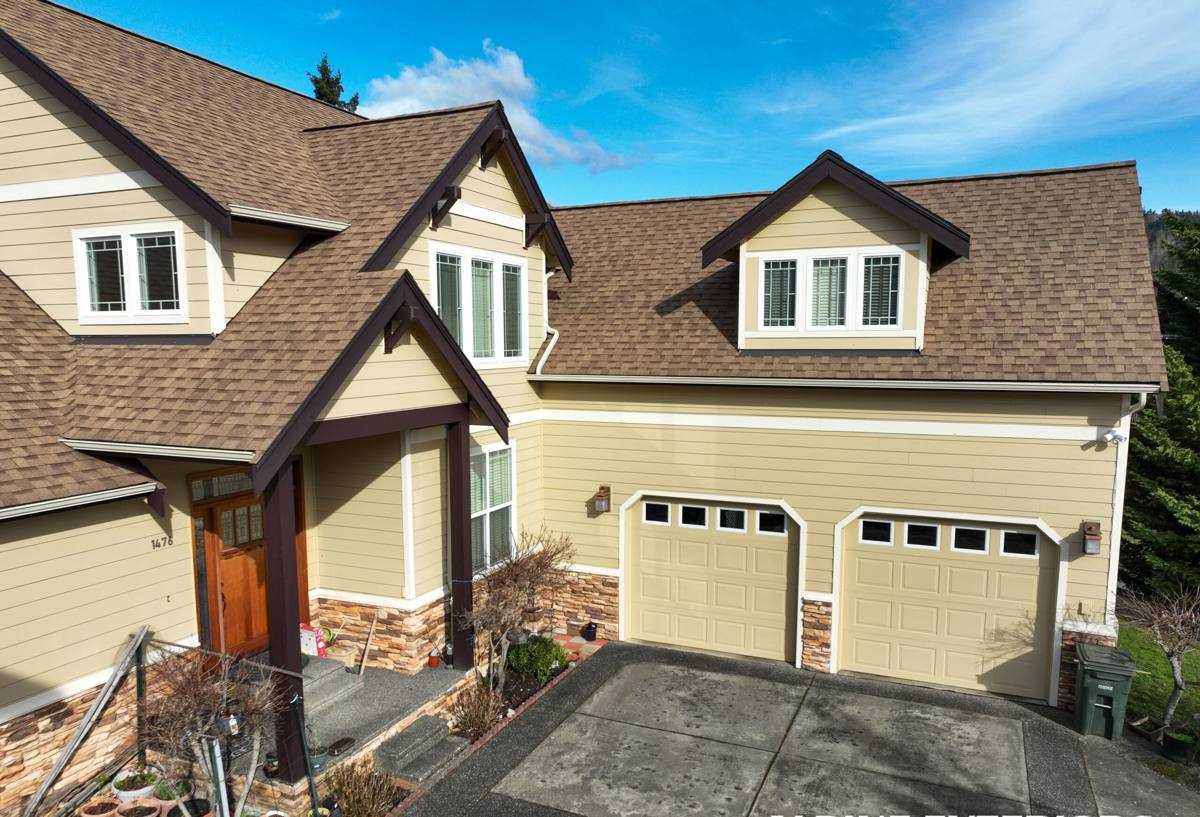
What the Local Climate Does to a Roof
Salt Air and Corrosion
Coastal and near-coastal air in Whatcom County carries fine salt particles that settle on roofing metal — nails, flashing, drip edge, and any exposed fasteners. Over years, that salt accelerates corrosion, especially on lower-grade galvanized hardware. A roof that's otherwise in decent shape can still develop leaks at rusted nail heads or pitted flashing seams long before the shingles themselves wear out. Repair work in this area needs to look past the obvious damage and check the metal components that salt air targets first.
Driving Rain and Wind
Storms off the water don't just drop rain straight down — they push it sideways, under shingle tabs, around chimney flashing, and into any seam that isn't sealed correctly. A repair that only addresses the visible hole or stain, without checking how water is actually traveling once it hits the roof, tends to fail again in the next storm. Wind-driven rain is one of the main reasons a "small" leak in this climate can trace back to a flashing detail several feet away from where the water shows up inside.
Moss and Slow-Drying Surfaces
Shade from mature trees, combined with Whatcom County's damp, mild winters, gives moss the conditions it needs to take hold on north-facing slopes and anywhere debris collects. Moss holds moisture against the roofing surface long after the rest of the roof has dried out. That constant dampness breaks down asphalt shingles faster, lifts edges, and works into fastener holes. On wood or aging composite roofs, moss can also trap water against sheathing, which is a slower but more serious problem than most homeowners realize until a soft spot shows up.
Signs a Roof Needs Repair
Some damage is obvious from the ground; a lot of it isn't. Here's what we tell Fairhaven-area homeowners to watch for between inspections:
- Water stains on ceilings or upper interior walls, especially after a windy rainstorm
- Granules collecting in gutters or at downspout outlets
- Curling, cracked, or missing shingle tabs, particularly on the side of the roof that takes the worst weather
- Visible moss or dark streaking on shaded slopes
- Rust staining around flashing, vents, or nail heads
- Soft or spongy feeling decking near roof edges or valleys
- Daylight visible through the attic roof deck
- Flashing that's pulled away from a chimney, skylight, or wall intersection
Any one of these on its own might be minor. Two or three together usually mean water has been getting in longer than it looks like from the outside.
What a Correct Repair Actually Involves
Diagnosis Before Patching
The most common mistake in roof repair isn't bad materials — it's fixing the spot where water showed up instead of the spot where it got in. Water travels along rafters, sheathing, and underlayment before it ever reaches a ceiling stain, sometimes appearing several feet from the actual entry point. A proper repair starts with tracing the leak to its source: checking flashing, valleys, penetrations, and shingle condition uphill from the interior damage, not just patching the nearest visible gap.
Common Repair Categories
Most repair calls in this area fall into a handful of categories:
- Flashing repair or replacement — around chimneys, skylights, dormers, and wall-to-roof transitions, where salt air and movement over time loosen seals
- Shingle replacement — swapping out cracked, curled, or wind-lifted shingles and the underlayment beneath them
- Valley repair — valleys carry the most water on any roof and take the brunt of driving rain
- Moss and debris remediation — careful removal followed by treatment, not just a pressure wash that can drive moisture under shingles
- Vent and penetration reseal — plumbing stacks, exhaust vents, and other roof penetrations where rubber boots crack and metal collars rust
- Decking repair — replacing sections of sheathing that have softened from sustained moisture exposure, usually found once shingles are pulled back
Repair or Replacement: How We Decide
Not every leak means a new roof, and not every roof is worth repairing indefinitely. We walk homeowners through the actual condition of the roof rather than defaulting to the most expensive option.
| Factor | Favors Repair | Favors Replacement |
|---|---|---|
| Age of roofing material | Well within expected service life | Near or past typical lifespan for the material |
| Extent of damage | Isolated to one area or component | Spread across multiple slopes or recurring in different spots |
| Decking condition | Solid, dry sheathing under the damaged area | Soft, delaminating, or repeatedly wet decking |
| Moss and moisture history | Recent growth, caught early | Long-term moss damage with granule loss across large areas |
| Flashing and metal condition | Isolated corrosion or gaps | Widespread rust or failing flashing systems throughout |
| Homeowner plans | Planning to stay, roof otherwise sound | Preparing to sell, or roof is a known ongoing liability |
When a roof is a reasonable candidate for repair, we say so plainly. When the underlying structure or material is past the point where repair makes financial sense, we explain why — usually because repeated patching on a failing roof costs more over a few years than doing the job once.
Our Repair Process
- Inspection — a full walk of the roof, not just the reported leak area, checking flashing, valleys, vents, and shaded slopes for moss or moisture buildup
- Interior check — where accessible, we look at attic sheathing and framing near the affected area to see how far water has traveled
- Written explanation — what's actually wrong, what caused it, and what the repair will and won't address
- Repair — matching materials to the existing roof where possible, replacing underlayment and decking as needed rather than just capping over damage
- Flashing and seal check — reworking any flashing or penetration seals in the repair area, since these are the most common repeat-failure points in salt air and wind-driven rain
- Cleanup and follow-up notes — debris cleared, and any additional maintenance items (moss treatment, gutter clearing) flagged for the homeowner
Materials We Use and Why
For a climate with regular wind-driven rain and a long wet season, the underlayment and flashing details matter as much as the visible shingle or panel. We use synthetic or self-adhered underlayment in valleys and around penetrations rather than relying on shingles alone to shed water, since those are the areas most exposed to standing moisture and wind-driven rain. Flashing gets replaced with corrosion-resistant metal where the old flashing shows pitting or rust, rather than resealed over failing material — resealing corroded flashing is a short-term fix that tends to fail again within a season or two in salt air conditions. For fasteners, we favor corrosion-resistant options over standard galvanized in exposed, salt-air-influenced applications; it costs a little more up front but avoids the fastener failures that are one of the most common causes of repeat leaks in this area.
Moss Treatment and Prevention
Removing moss without damaging the roofing surface underneath takes a careful hand — aggressive scraping or pressure washing can lift granules and shorten the life of asphalt shingles just as much as the moss itself. Our approach is to remove growth gently, treat the area to slow regrowth, and address the underlying cause where we can — usually overhanging branches or persistent shade that keeps a slope from drying out between rains. Zinc or copper strips near the ridge can help slow future moss growth on shaded slopes, and we'll discuss whether that makes sense for a given roof rather than applying it automatically.
Why Local Experience in Fairhaven Matters
A roof repair crew that regularly works homes near Ferndale and the surrounding Whatcom County coastline already knows which flashing details tend to fail first in salt air, which slopes hold moss the longest through a given winter, and how wind-driven rain typically finds its way into a roof system in this specific setting. That's different from general roofing knowledge — it's pattern recognition built from repeat visits to similar homes in similar conditions. It means less time spent guessing at a cause and more time spent fixing the actual problem the first time.
Maintenance Between Repairs
A repair holds up longer with a little attention in between service calls. A few habits make a real difference in this climate:
- Clear gutters and downspouts before the fall rains pick up, since clogged gutters back water up under the roof edge
- Trim back branches that shade roof slopes and feed moss growth
- Have flashing and penetrations checked every year or two, since these fail quietly and often show no interior sign until water has been getting in for a while
- Address small moss patches early, before they spread across a full slope
- Watch for granule buildup in gutters as an early sign of shingle wear
If you're dealing with a leak, seeing moss take hold on a shaded slope, or just want an honest read on where your roof stands, we're happy to take a look. Reach out for a free, no-pressure estimate using the form below.