 Ferndale Exterior
 Roof Repair Built for the Lummi Nation Area's Coastal Climate
Homes near Lummi Nation sit in one of the more demanding roofing environments in Whatcom County. You've got salt-laden air rolling off the water, driving rain that comes in sideways during winter storms, and a moss season that seems to start earlier and last longer every year. None of that is a coincidence — it's the combination of marine exposure and the Pacific Northwest's wet season that wears down roofing materials faster here than in drier inland areas. A roof repair done right in this area accounts for all three factors, not just the visible leak or missing shingle that prompted the call.
We work on homes throughout Ferndale and the surrounding coastal communities, including the Lummi Nation area, and we've tailored our repair approach around what actually fails here: fasteners and flashing that corrode faster near salt air, moss that lifts shingles and traps moisture, and roof valleys that take on more water volume than they were ever designed for.
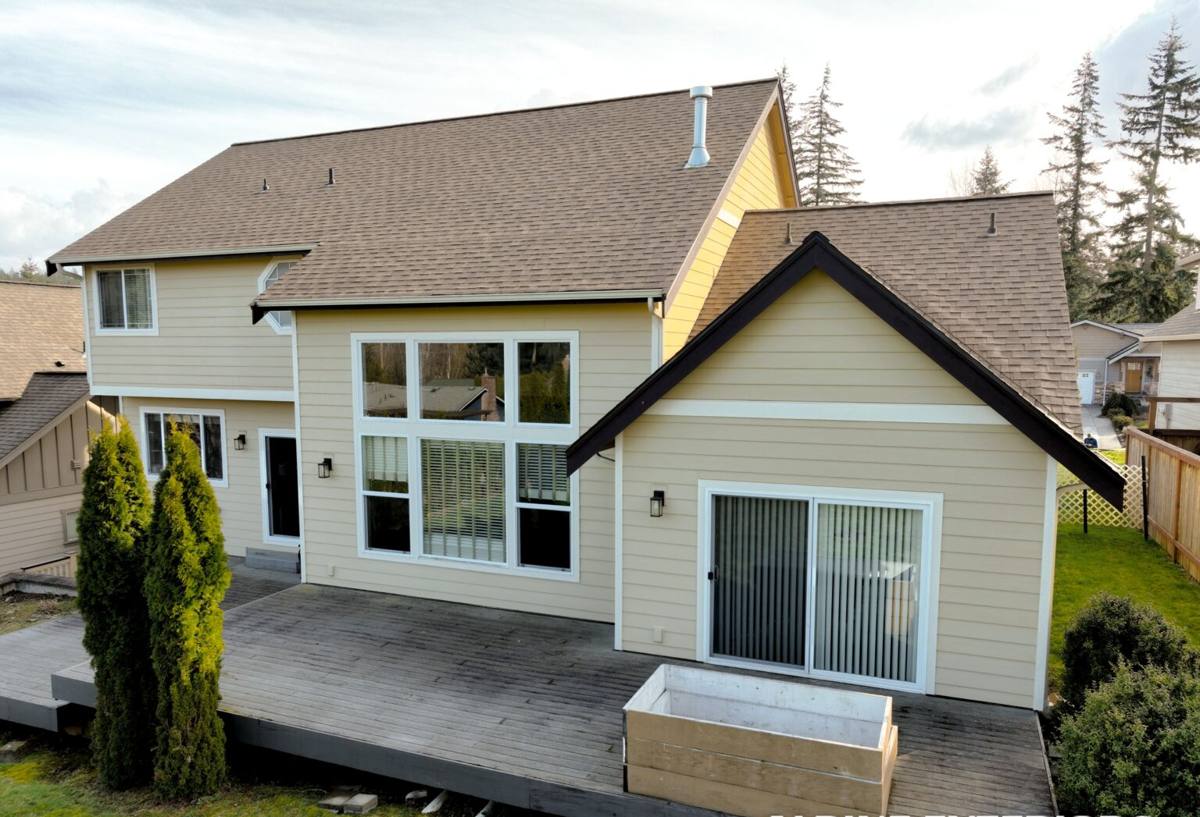
Why Roofs Near the Water Wear Differently
Salt air is corrosive to exposed metal — nails, flashing, vent caps, and gutter hardware all take more of a beating near the shoreline than they would a few miles inland. Over time this shows up as rust streaking, loosened fasteners, and flashing seams that no longer seal tight. Combine that with wind-driven rain that gets pushed under shingle edges and around roof penetrations, and you get a slow, often invisible pattern of water intrusion that doesn't show up as an interior leak until it's already done real damage to the decking or framing underneath.
Moss adds a third layer to the problem. Shaded, north-facing slopes and roofs under tree cover stay damp longer after every rain, which is exactly what moss needs to take hold. Once established, moss doesn't just look bad — it physically lifts shingle edges as it grows, creating channels for water to work its way underneath. A roof that looks intact from the ground can have moss doing quiet damage for a full season or more before a leak actually appears indoors.
The Result: Repairs That Aren't Always Where the Leak Shows Up
One of the most common mistakes in roof repair is fixing the spot where water is visibly entering the house rather than the spot where it's actually getting into the roof system. Water travels along the underlayment and framing before it drips through a ceiling, so the entry point can be several feet — sometimes several roof planes — away from the stain you see inside. A correct repair traces the water back to its actual source.
Common Roof Problems We See in Homes Near Lummi Nation
- Moss and algae growth on shaded or north-facing roof slopes
- Lifted or curled shingle edges from years of wind and moisture cycling
- Corroded or loosened flashing around chimneys, skylights, and roof-to-wall transitions
- Clogged or undersized gutters that back water up under the roof edge
- Wind-driven rain intrusion at valleys and low-slope roof sections
- Nail pops and fastener corrosion from repeated wet-dry cycles
- Soft or spongy decking discovered only once shingles are pulled back
What a Correct Roof Repair Actually Involves
A roof repair is only as good as the diagnosis behind it. Before any materials go on the roof, the problem needs to be understood — not guessed at. That means getting on the roof (not just looking from the ground), checking the attic or interior for signs of moisture tracking, and identifying whether the damage is isolated or a symptom of a larger issue with the roof's age, ventilation, or flashing details.
Diagnosis Before Materials
We look at the full roof system, not just the damaged section — flashing condition, underlayment where it's exposed, decking firmness, and how water is actually moving across that particular roof plane. A patch applied without this step can look fine for a season and fail again the next winter because the underlying cause was never addressed.
Matching Materials, Not Just Covering the Hole
Repairs need to match the existing roofing material in type, weight, and where possible, color and profile. A mismatched patch doesn't just look wrong — it can behave differently in wind and rain than the surrounding material, creating a new weak point instead of solving the old one.
Flashing and Detail Work
Most roof leaks trace back to a flashing detail, not the field of the roof itself. Chimneys, vent pipes, skylights, and roof-to-wall intersections are where water intrusion actually starts in the majority of cases we see. Correct repair means resealing or replacing flashing with proper technique — not just running a bead of sealant over the old metal and calling it done.
Our Roof Repair Process
1. Inspection and Diagnosis
We start with a full roof inspection, including the areas around the reported problem, not just the problem itself. If there's interior evidence — a stain, damp insulation, discoloration — we trace it back to its likely source before proposing a fix.
2. A Clear, Written Explanation
We explain what we found, what's causing it, and what the repair involves, in plain language. If a roof is old enough or damaged enough that repair isn't the right long-term answer, we'll tell you that honestly rather than patching something that needs more.
3. The Repair
Work is done with matched materials, proper flashing technique, and attention to how water moves across that specific roof — not a generic patch job. Any soft or damaged decking found during the repair is addressed before new roofing material goes back down.
4. Cleanup and Walkthrough
We clear debris and fasteners from the yard and gutters, and walk through what was done and why, so you understand the fix rather than just trusting it happened.
Repair Options and When Each One Makes Sense
| Situation | Typical Repair Approach | What to Expect |
|---|---|---|
| Isolated missing or damaged shingles | Shingle replacement, matched to existing material | Fast turnaround, minimal disruption |
| Leak at chimney, skylight, or vent | Flashing repair or replacement | Often the true source of a leak reported elsewhere on the roof |
| Moss coverage on shaded slopes | Moss removal plus treatment, shingle inspection underneath | May reveal lifted shingles needing separate repair |
| Recurring leak in the same area | Deeper investigation into decking and underlayment | May uncover damage beyond the visible surface |
| Widespread wear across an older roof | Repair may only be a short-term fix | Honest conversation about remaining roof lifespan |
Moss, Algae, and Managing a Marine Climate Long-Term
Moss removal is straightforward, but keeping it from coming back is the harder part of the job — and it's an ongoing reality for roofs in this part of Whatcom County, not a one-time fix. Shaded roof sections near trees, north-facing slopes, and areas with poor airflow will keep growing moss no matter how many times it's cleared, unless the underlying moisture conditions change. That can mean trimming back overhanging branches, improving attic ventilation so the roof deck dries faster after rain, or in some cases installing zinc or copper strips that discourage regrowth over time. We treat moss control as part of a repair plan, not a separate errand, because a roof that's had moss removed but not addressed at the root will be back to the same condition within a season or two.
Signs Your Roof Needs Repair Now, Not Later
- Water stains on interior ceilings or upper walls, especially after a windy storm
- Granules collecting in gutters or at downspout outlets
- Visible moss or dark streaking on roof slopes
- Shingles that look curled, cracked, or lifted at the edges
- Daylight visible through the roof deck from inside the attic
- Soft spots felt when walking the roof or attic floor
- Flashing that looks rusted, loose, or separated from the roof surface
Cost Factors in Roof Repair
| Factor | Why It Matters |
|---|---|
| Size and location of the damaged area | Steeper or harder-to-access sections take more time and equipment |
| Roofing material type | Some materials are more readily available and easier to match than others |
| Extent of hidden decking damage | Not known until the roofing material is pulled back for inspection |
| Flashing complexity | Chimneys, skylights, and multiple roof planes add labor and detail work |
| Roof age and overall condition | Affects whether repair is the right long-term call versus replacement |
We don't quote roof repairs sight-unseen, because the honest cost depends on what we find once we're actually on the roof. What we can promise is a clear, itemized explanation before any work starts, with no surprise add-ons once we're already up there.
Why Hiring a Crew That Already Works This Area Matters
Roof repair near Lummi Nation isn't the same job as roof repair on a dry, inland roof with no salt exposure. A crew that regularly works homes in this coastal stretch of Whatcom County already knows to check flashing hardware for corrosion, to expect moss on shaded slopes even on relatively young roofs, and to account for wind-driven rain patterns that push water into places a typical inland repair wouldn't need to consider. That local pattern recognition is the difference between a repair that holds up through the next winter storm season and one that reopens the same leak a year later.
If you're seeing signs of a roof problem — a stain on the ceiling, visible moss, missing shingles after a windstorm — reach out for a free, no-pressure estimate. We'll take a real look at the roof, explain what we find in plain terms, and give you an honest recommendation, whether that's a targeted repair or a bigger conversation about the roof's remaining life.