 Ferndale Exterior
 Roof Repair Built for Nooksack's Weather
Nooksack homes sit in a stretch of Whatcom County that gets the full range of what Pacific Northwest weather can throw at a roof. Driving rain pushed sideways by wind, a moss season that runs longer than most homeowners realize, and the moisture-laden air that moves through this part of the county all put steady pressure on roofing materials. None of it is dramatic on any given day. The damage shows up slowly, in the form of a soft spot near a chimney, a stain spreading across a ceiling, or shingles that have gone thin and granule-bare years before they should have.
A roof repair done right in this area has to account for that slow-motion wear, not just patch whatever is visibly broken. That's the difference between a repair that holds for another decade and one you're revisiting again next winter.
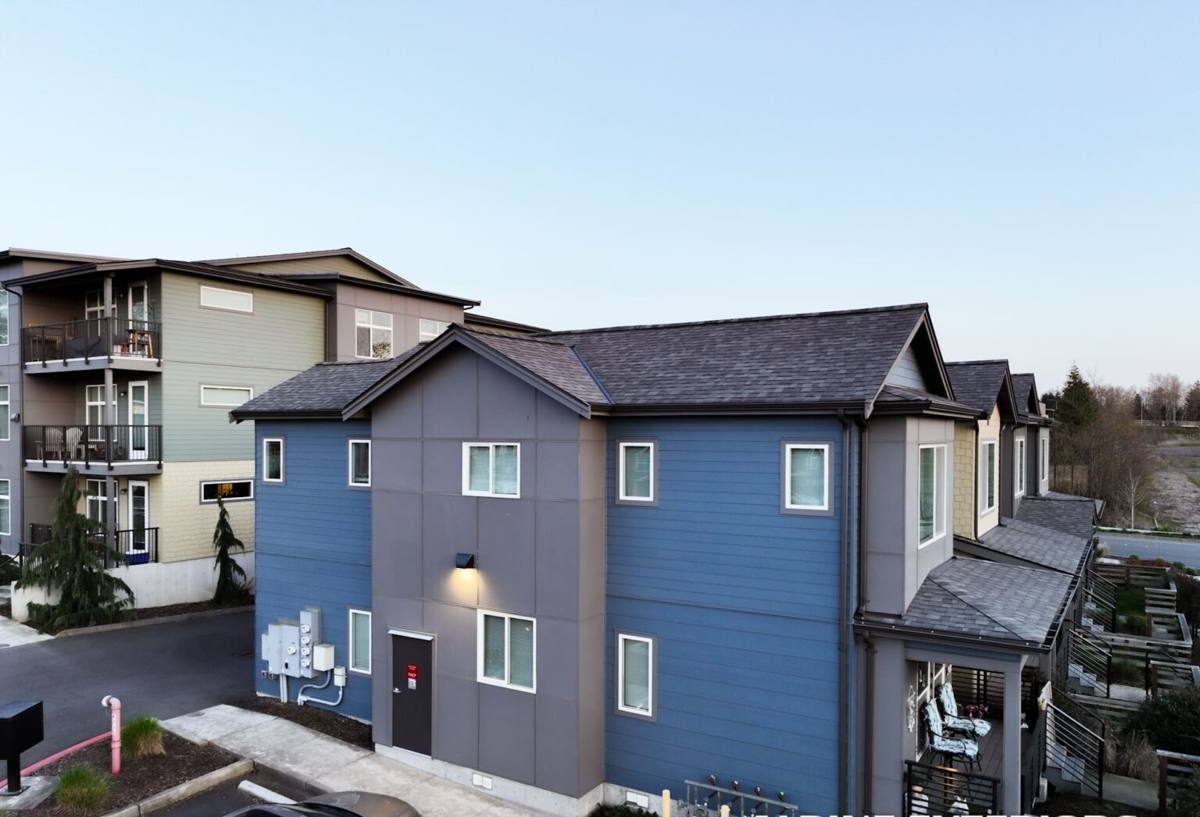
What Ferndale-Area Roofs Are Actually Up Against
Driving Rain and Wind-Driven Water
Rain that falls straight down is rarely the problem. Rain that gets pushed sideways during a windstorm is what finds its way under lifted shingles, around poorly sealed flashing, and into roof valleys that weren't detailed carefully. In Whatcom County, storms off the water regularly bring exactly that kind of wind-driven rain, and it exposes weak points a calm-weather inspection would miss entirely.
A Long Moss Season
Shade, moisture, and mild temperatures are what moss needs to thrive, and this region offers all three for a good part of the year. Moss doesn't just sit on top of shingles looking messy — its root structure lifts shingle edges, holds water against the roof deck, and accelerates granule loss. Left unaddressed through even one or two full moss seasons, a roof that had years of life left can start failing early.
Salt and Moisture-Laden Air
Proximity to the water means metal components on a roof — flashing, fasteners, vents, gutter hardware — face faster corrosion than the same materials would inland in a drier climate. Once flashing starts to corrode, its seal weakens long before it looks obviously "broken," which is why a lot of leaks trace back to flashing that still looks intact from the ground.
Common Roof Problems We See in This Area
- Moss buildup along north-facing slopes and shaded valleys that traps moisture against the deck
- Lifted or cracked shingles near ridge lines and roof edges from repeated wind exposure
- Corroded or under-sealed flashing around chimneys, skylights, and roof-wall intersections
- Clogged gutters and downspouts that back water up under the roof edge (drip edge failure)
- Soft or discolored roof decking discovered only once a leak has already reached the attic
- Granule loss on aging asphalt shingles, often accelerated by moss and standing moisture
What a Correct Roof Repair Actually Involves
A roof repair is only as good as the diagnosis behind it. Slapping a patch of new shingles or a bead of sealant over a visible problem often just hides the symptom while the underlying cause keeps working. A repair worth doing includes:
- Tracing the water, not just the stain. Interior water stains rarely sit directly below the actual entry point — water travels along rafters and sheathing before it shows up on a ceiling.
- Checking the decking, not just the surface. If plywood or sheathing has softened from sustained moisture, replacing shingles over it without addressing the deck just sets up a repeat failure.
- Rebuilding flashing details properly. Flashing around chimneys, vents, and valleys needs to be re-formed and re-sealed correctly, not just re-caulked.
- Matching materials appropriately. Patch repairs should use compatible shingle types, weights, and, where possible, similar coloring so the repair doesn't stand out or perform differently than the surrounding roof.
- Confirming ventilation isn't part of the problem. Poor attic ventilation traps moisture from the inside, which can mimic or worsen a roof leak from the outside.
Our Nooksack Roof Repair Process
We keep the process straightforward because homeowners dealing with a leak or roof damage don't need extra complexity added on top of it.
- Inspection first. We get on the roof (not just a ground-level look) and check the attic from the inside where access allows, since that's often where the real story is.
- A written, itemized estimate. You'll know what's being repaired, why, and what it involves before any work starts — no vague line items.
- The repair itself. Work is done to match the existing roof system as closely as possible, with attention to flashing, decking, and drainage, not just shingle replacement.
- Cleanup. Old materials, nails, and debris are cleared from the roof, gutters, and ground before we consider the job finished.
- A straight answer on what's next. If we find the roof is closer to end-of-life than repair-worthy, we'll tell you plainly and explain why, rather than stringing along repairs on a roof that needs replacement.
Repair Approach by Roofing Material
| Roofing Type | Typical Repair Considerations | Notes for This Climate |
|---|---|---|
| Asphalt/Architectural Shingle | Section replacement, flashing resealing, granule-loss assessment | Most common material locally; moss control matters more here than almost any other factor |
| Metal Roofing | Fastener and seam inspection, panel resealing, rust spot treatment | Holds up well against moss but fastener corrosion needs periodic checking near the water |
| Cedar Shake | Individual shake replacement, moisture and rot assessment, ventilation check | Requires closer moss and moisture monitoring given how long conditions stay damp here |
| Flat/Low-Slope Membrane | Seam inspection, ponding-water assessment, patch or overlay | Drainage detailing is critical given the volume of driving rain the area receives |
What Affects the Cost of a Roof Repair
Every repair is different, but the honest range for most roof repairs runs from a few hundred dollars for a small, contained fix to several thousand for repairs involving decking replacement or extensive flashing work. What actually moves the number:
| Factor | Why It Matters |
|---|---|
| Extent of decking damage | Rotted sheathing has to be cut out and replaced before new roofing goes back on — this is the single biggest cost driver |
| Roof pitch and access | Steeper roofs and difficult access require more time and safety setup |
| How long the leak went unaddressed | A leak caught early is a shingle-and-flashing fix; one left for a season or two can involve insulation and interior repair as well |
| Material matching | Older or discontinued shingle lines can be harder to match, sometimes requiring a broader repair area for a consistent look |
| Number of penetrations involved | Chimneys, skylights, and multiple vents each add flashing detail work |
Moss and Roof Maintenance Between Repairs
The single most useful thing a homeowner in this area can do to avoid repeat roof repairs is stay ahead of moss and debris rather than reacting to it. A few habits go a long way:
- Have moss physically removed rather than just treated — chemical treatments alone don't address the roots already lifting shingles
- Keep gutters and downspouts clear through fall and into the wetter months, since clogged gutters back water up under roof edges
- Trim back overhanging branches where practical — shade and falling debris both encourage moss growth
- Get a roof looked at after any major windstorm, even if nothing looks obviously wrong from the ground
- Address small leaks the season they appear, before a wet winter has a chance to spread the damage into decking or insulation
Repair vs. Replacement — Knowing Where the Line Is
Not every damaged roof needs a full replacement, and not every roof problem can be reasonably solved with another patch. A repair generally makes sense when the damage is localized, the roof deck underneath is sound, and the rest of the roofing material still has useful life left. Replacement becomes the more honest recommendation when decking is compromised in multiple areas, the shingles are past their expected service life and brittle throughout, or repairs would be treating symptoms of an aging roof system rather than fixing an isolated issue. We'll walk you through which situation you're actually in — our job is to give you an accurate read, not to sell you the bigger job.
Why a Crew That Already Works in Nooksack Matters
Roof repair isn't just a materials problem — it's a judgment problem. Knowing which flashing details tend to fail first in this climate, how aggressive the moss growth typically is on a given roof orientation, and what a "normal" amount of wear looks like on a Whatcom County roof at a given age all come from working on roofs in this specific area repeatedly, not from a general repair checklist. A crew based in Ferndale that regularly works in and around Nooksack shows up already knowing what questions to ask and what to check first, which means a more accurate diagnosis and fewer surprises once the work starts.
If you're dealing with a leak, a soft spot, missing shingles, or just want an honest read on where your roof stands, we're happy to take a look. Reach out for a free, no-pressure estimate using the form below.