 Ferndale Exterior
 Roofing Built for Sandy Point's Salt Air and Moss
Sandy Point sits close enough to the water that every roof out here deals with something most inland Whatcom County homes don't: near-constant salt-laden air, wind-driven rain off the Strait, and long stretches of shade and dampness that never really dry out between fall and spring. Asphalt shingles can handle all of that, but only when they're installed with this specific exposure in mind. A roof spec'd for a sunny inland lot in Ferndale isn't automatically right for a home a few blocks from the beach.
We're a Ferndale-based crew that already works this neighborhood regularly, so we're not guessing at what Sandy Point roofs need — we see the same failure patterns, the same moss buildup, and the same corrosion issues on repeat visits, and we build our installs to head those off from day one.
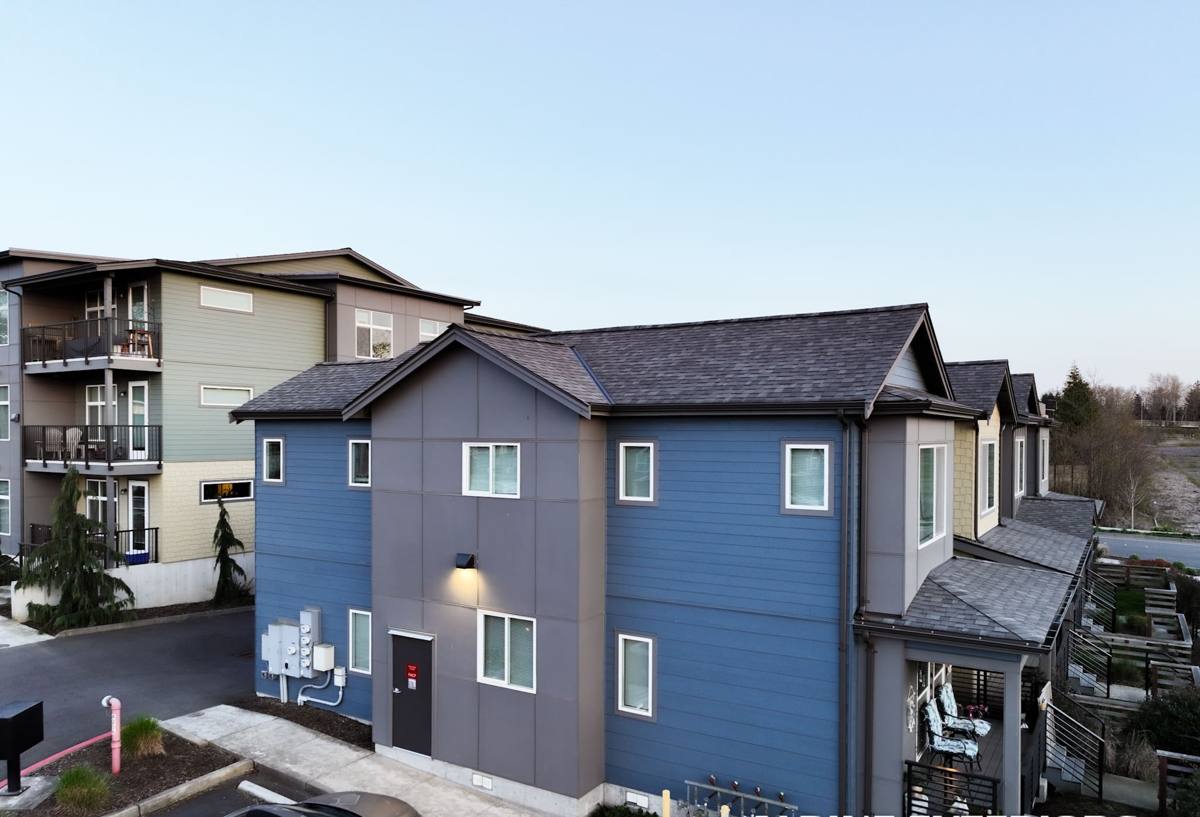
What the Sandy Point Climate Actually Does to a Roof
Salt Air and Metal Fasteners
Salt in the air accelerates corrosion on exposed metal — nail heads, flashing edges, drip edge seams, and vent housings. On a roof close to the water, standard fasteners and low-grade flashing can start showing rust streaks years before they would on a roof further inland. This doesn't mean the shingles themselves are failing; it usually means the metal components were undersized for the environment.
Driving Rain and Wind Uplift
Storms coming off the water don't just drop rain straight down — they push it sideways, under shingle tabs and into any gap in the underlayment or flashing that a calmer climate might tolerate. Wind uplift on exposed, water-adjacent lots is also a real factor when picking shingle rating and nailing pattern.
Moss, Shade, and Slow-Drying Roof Decks
Tree cover and the marine layer common to this part of Whatcom County mean roof surfaces here can stay damp far longer after a storm than a roof in full sun. That extended dampness is exactly what moss and algae need to take hold, and once moss gets under shingle tabs it lifts them, holds moisture against the deck, and shortens the life of the whole system.
What a Correct Asphalt Shingle Job Looks Like Out Here
A roof that's actually built for Sandy Point conditions isn't just "shingles nailed to plywood." It's a system, and every layer matters more here than it would on a more sheltered lot.
- Synthetic underlayment rated for high wind and moisture exposure, not just a basic felt layer
- Ice-and-water shield or equivalent membrane at eaves, valleys, and any low-slope transitions where wind-driven rain tends to back up
- Corrosion-resistant flashing and fasteners at all penetrations — vents, chimneys, skylights
- Proper drip edge on every eave and rake, sized and sealed for sideways rain, not just straight runoff
- Balanced intake and exhaust ventilation so the deck can actually dry out between wet stretches instead of staying damp
- Shingle nailing pattern and shingle wind rating matched to the exposure of the specific roof plane, not a one-size-fits-all install
Skipping any one of these doesn't usually cause an immediate problem — it shows up two, five, or ten years later as a leak, premature granule loss, or a moss colony that's already done damage by the time it's visible from the ground.
Shingle Options: What We Actually Recommend for This Area
Not every asphalt shingle product is a good fit for a coastal, moss-prone lot. We lean toward products and specs that hold up to this specific combination of salt exposure and prolonged dampness, and we're upfront about the trade-offs.
| Shingle Type | Fit for Sandy Point | Trade-Off to Know |
|---|---|---|
| Standard 3-tab | Lower upfront cost, acceptable on smaller or less exposed roof planes | Shorter wind rating, less algae resistance — needs more moss upkeep over time |
| Architectural (laminate) with algae-resistant granules | Best all-around fit for most Sandy Point roofs | Higher upfront cost than 3-tab, but far less moss/algae maintenance |
| High-wind-rated architectural | Recommended for fully exposed roof planes facing open water | Premium pricing; installation sensitivity to nailing pattern is higher |
We don't push whichever product happens to be on the truck — we walk the roof, look at exposure and shade patterns, and recommend the option that actually matches what that specific home deals with.
Our Process for a Sandy Point Re-Roof
1. On-Site Assessment
We inspect the existing roof, deck condition, ventilation setup, and how exposed the home is to wind and salt air off the water. We also check for existing moss damage that might not be obvious from the ground.
2. Straightforward Written Estimate
You get a clear scope — shingle type, underlayment, flashing plan, ventilation work if needed — and a price range broken out by category, not a vague lump sum.
3. Tear-Off and Deck Check
Old roofing comes off down to the deck so we can actually see the plywood or sheathing condition. Any soft or water-damaged decking gets flagged and addressed before new material goes down — covering over a bad deck is how a roof fails early.
4. Underlayment, Flashing, and Shingle Install
This is where the climate-specific details from the section above get built in — membrane at vulnerable points, corrosion-resistant metal, correct nailing pattern for the exposure.
5. Cleanup and Final Walkthrough
We clear debris and nails from the property and walk the finished roof with you so you know what was done and why.
Maintenance That Actually Matters Here
A well-installed roof still needs upkeep suited to this environment. The maintenance that moves the needle in Sandy Point isn't the same as a generic roofing checklist.
- Moss and debris removal from valleys and shaded roof planes before it builds up, not after tabs start lifting
- Gutter clearing so wind-driven rain has somewhere to go instead of backing up under the eave line
- Periodic check of flashing and fastener condition on the sides of the home facing the water
- Trimming back tree cover where it's keeping sections of the roof shaded and damp longer than necessary
- Prompt attention to any granule loss in gutters, which can signal shingle wear worth a closer look
Signs Your Sandy Point Roof Needs Attention Now, Not Later
Certain warning signs matter more here because of how fast moisture damage can compound in a shaded, salt-exposed environment. Watch for moss visibly lifting shingle edges, rust streaking below flashing or vents, dark streaking across shaded roof sections, granules collecting heavily in gutters, or any soft spots noticeable from inside the attic after a hard rain. None of these are emergencies by themselves, but out here they tend to get worse faster than they would on a drier, sunnier lot.
Why a Ferndale Crew That Already Works Sandy Point Matters
A roofing crew that only occasionally works this stretch of Whatcom County has to relearn the local conditions on every job. A crew that's already out here regularly knows which roof orientations take the worst of the wind off the water, which lots hold moss the longest, and which flashing details tend to fail first in this specific environment. That familiarity shows up in fewer surprises during tear-off and a spec that's right the first time, instead of a generic install that needs correcting a few years in.
Being local also means we're reachable if something comes up after the job — not a call center, not a crew that drove in from out of the area for one project and isn't coming back.
Cost Factors for a Sandy Point Asphalt Shingle Roof
Every roof is different, but the price of a job in this area is generally driven by a consistent set of factors. Roof size and pitch set the baseline labor and material need. The number of valleys, penetrations, and flashing points adds complexity and material cost, since each one needs proper waterproofing detail. Existing deck condition matters — if tear-off reveals soft or damaged sheathing, replacing it adds cost but is not optional. Shingle tier, from standard 3-tab up to high-wind architectural, changes material pricing directly. Access and site conditions, including tree cover, slope, and how close the home sits to the water, can affect crew time and equipment needs. We walk through all of these with you before any work starts so the estimate reflects your actual roof, not a generic average.
Get a Straightforward Estimate
If you're planning a re-roof, dealing with moss or moisture issues, or just want a second opinion on the condition of your current roof, we're glad to take a look. The estimate is free, there's no pressure to book on the spot, and you'll get a clear breakdown of what your Sandy Point home actually needs — use the form below to get started.