 Ferndale Exterior
 Sandy Point's Shoreline Climate Is Tougher on Siding Than Most of Ferndale
Sandy Point sits right up against the water, and that changes what a siding job needs to survive. Homes a few miles inland deal with normal Pacific Northwest weather. Homes on Sandy Point deal with that same weather plus salt-laden air blowing straight off the water, near-constant humidity, and driving rain that hits walls at an angle instead of falling straight down. Add Whatcom County's long moss season — gray, wet stretches that can run from fall into spring — and you have an environment that finds every weak point in a siding system faster than it would anywhere else in Ferndale.
Salt air is the part homeowners underestimate most. It doesn't just sit on the surface — it works into fastener heads, joints, and any spot where paint or finish has thinned. Over years, that accelerates corrosion on metal components and breaks down coatings that would otherwise last much longer a few blocks from the shoreline. Combine that with wind-driven rain finding its way behind poorly sealed trim, and you get moisture problems that show up as soft spots, staining, or paint failure well before a homeowner expects to think about siding again.
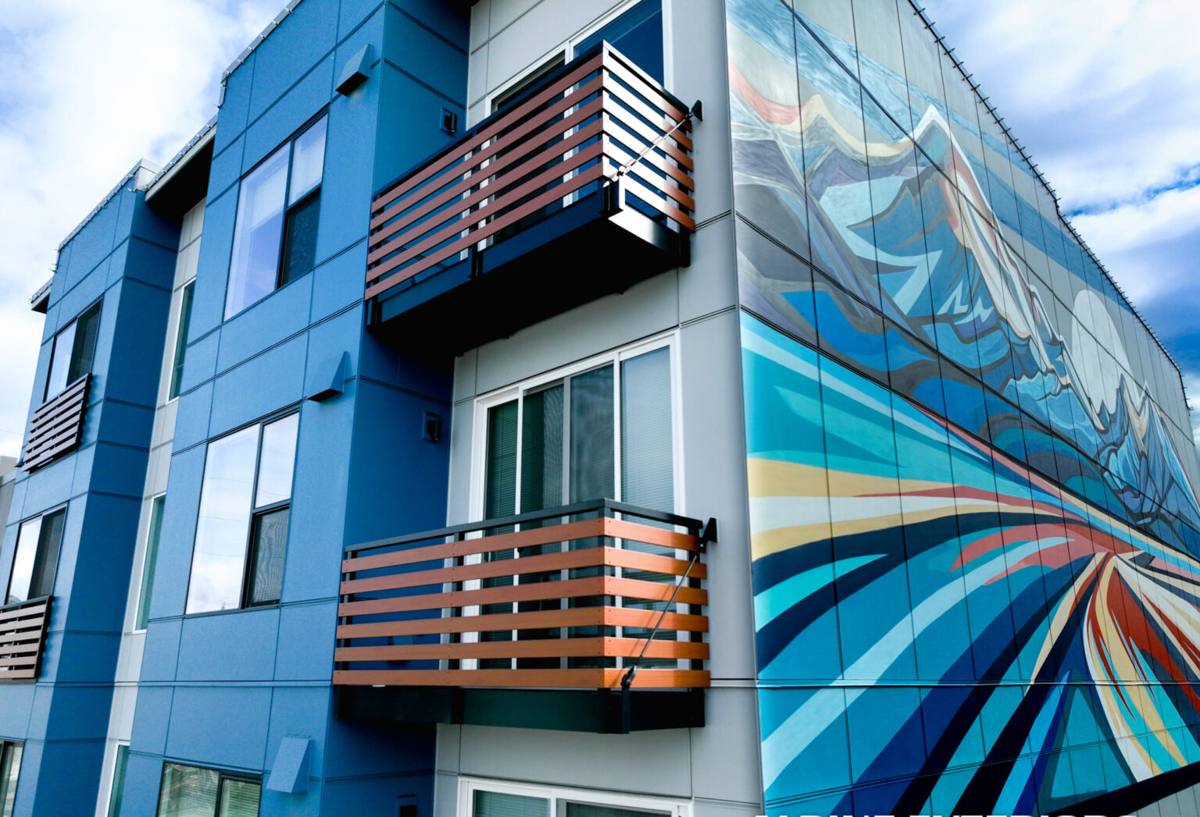
Why Board & Batten Works So Well for Sandy Point Homes
Board and batten is a vertical siding pattern — wide boards with narrow strips (battens) covering the seams between them. It's a strong fit for the waterfront and cabin-style homes common around Sandy Point, giving a clean, textured look that reads as both coastal and modern without trying too hard. The vertical lines also do something practical: they shed water more directly down the wall than some horizontal profiles, which matters when wind-driven rain is a regular guest.
Beyond looks, board and batten is a good match for accenting gables, entries, or full elevations on homes that already have a strong roofline or a lot of window area — both common on waterfront lots where the view drives the design. It pairs cleanly with stone, brick, or other siding profiles for a mixed-material front elevation, which is a look we see requested often in shoreline neighborhoods.
Why We Only Install This Look in James Hardie Fiber Cement
Board and batten can be built from several materials — cedar, primed spruce, engineered wood like LP SmartSide, vinyl panel systems, or fiber cement. We don't install any of those on Sandy Point homes, and the reasoning is straightforward once you factor in the local exposure.
Wood species and engineered wood products rely on their outer coating and sealed edges to keep moisture out. That's a manageable system inland. On a lot exposed to salt spray and sustained wet seasons, any nick, cut edge, or fastener point becomes a place for moisture to get a foothold, and repainting or resealing on a shoreline property tends to come around faster than homeowners plan for. Vinyl board and batten holds up fine against rain, but it's a thinner, more flexible material that can show waviness or fastener stress in high-wind coastal exposure, and it doesn't offer the same fire performance as fiber cement — a real consideration in Washington's increasingly common wildfire-smoke and dry-season stretches.
James Hardie fiber cement is engineered specifically to resist moisture intrusion, doesn't support rot or insect damage the way wood-based products can, and is non-combustible. Hardie's ColorPlus factory finish is baked on under controlled conditions rather than field-applied, which matters a great deal on a project where the crew is fighting damp, marine-layer mornings for half the build season. It's the one system we're comfortable standing behind on a lot this exposed.
What a Correct Board & Batten Installation Involves
Board and batten looks simple, but a correct install is more detail-sensitive than lap siding, and cutting corners on any one of these steps is where coastal homes run into trouble years later:
- A drainable weather-resistive barrier behind the siding, not just felt or wrap pressed flat against the sheathing
- A rainscreen gap (furring strips) that lets any moisture that does get behind the boards drain and dry instead of sitting against the wall
- Correct board spacing and batten overlap so the assembly can expand and contract without opening gaps at seams
- Stainless or coated corrosion-resistant fasteners set to Hardie's specified pattern — not just "close enough"
- Properly flashed and sealed window and door openings, since penetrations are the most common failure point in any vertical siding system
- Correct clearance at the base of the wall and at grade, so boards aren't wicking moisture from soil or hardscape contact
Any one of these done wrong won't fail the day the job is finished — it fails two, five, or ten years later, quietly, behind the siding where nobody's looking. That's exactly why installation quality matters more than the brand name on the product.
Board & Batten Material Comparison for Coastal Exposure
| Material | Moisture/salt-air resistance | Maintenance in this climate | Fire performance |
|---|---|---|---|
| James Hardie fiber cement | Engineered for wet, coastal climates | Low — factory finish, no resealing cycle | Non-combustible |
| Vinyl board and batten | Sheds water well but can flex/warp in wind and heat | Low, but limited repair options if damaged | Combustible, can deform near heat |
| LP SmartSide / engineered wood | Relies on coating and sealed cut edges | Moderate — edges and cuts need ongoing attention | Combustible |
| Cedar or primed spruce | Natural material, most exposure-sensitive | High — regular refinishing, especially near salt air | Combustible |
Our Process on a Sandy Point Project
Every Sandy Point job starts with a walk of the property to look at wind exposure, roof drainage patterns, and how close the structure sits to the water — those factors shape where we put extra attention on flashing and drainage detail. From there we go over the existing wall assembly, since a re-side over an older home is a different scope than new construction sheathing, and coastal homes more often than not have some hidden moisture history worth checking before board goes up.
We build in a proper rainscreen and drainage plane as standard, not as an upsell, because on this stretch of coastline it's not optional if you want the job to last. We schedule around the wetter stretches of the moss season where we can, and we don't rush board and batten installs — the reveal spacing and batten alignment are what make the finished wall look intentional instead of slapped together, and that only happens by taking the time on layout before the first fastener goes in.
Cost Factors for a Sandy Point Board & Batten Project
| Factor | Why it affects cost |
|---|---|
| Existing wall condition | Hidden moisture damage from prior siding adds repair scope before new siding can go up |
| Wall height and roofline complexity | Gables, dormers, and tall elevations mean more cuts, more staging, more labor |
| Full re-side vs. accent application | A gable or entry accent costs less than a full elevation, but needs the same detail work |
| Trim and window count | Every opening needs correct flashing — more openings means more time per square foot |
| Access and site conditions | Waterfront lots can have tighter staging areas or limited equipment access |
We don't quote board and batten off a square-footage rule of thumb alone — the walk-through is what turns these factors into a number you can actually rely on.
Maintenance Checklist for Salt Air and Moss Season
Even a well-installed Hardie board and batten wall benefits from a little seasonal attention on a shoreline lot:
- Rinse salt residue off exterior walls a couple of times a year, especially on the side facing the water
- Check caulking at windows, doors, and trim joints annually — this is the first place coastal exposure shows wear
- Keep gutters and downspouts clear so runoff isn't sheeting down wall surfaces during heavy rain
- Trim back vegetation and clear moss or organic debris that collects at the base of walls or on lower boards
- Watch for any soft spots, discoloration, or paint changes near ground level or roof intersections, and address them early
Why Hiring a Crew That Already Works Sandy Point Matters
Siding crews who mostly work inland can do fine work, but they often haven't had to solve for salt air, marine-layer moisture, and wind-driven rain on a day-to-day basis. A crew that's already worked this shoreline knows to build in drainage and flashing detail as a baseline, not an afterthought, and knows how the moss season affects scheduling and drying time between steps. That local experience shows up in the parts of the job you can't see once it's finished — the parts that determine whether the siding is still performing well in fifteen years or starting to show problems in five.
If you're planning a board and batten project on your Sandy Point home, we're happy to walk the property, look at your existing walls, and put together a straightforward, no-pressure estimate — just fill out the form below to get started.