 Ferndale Exterior
 Siding Repair Built for the Semiahmoo Climate
Homes near Semiahmoo sit close enough to the water that siding takes a different kind of beating than it does a few miles inland. Salt-laden air off the bay accelerates corrosion on fasteners and trim, wind-driven rain finds every gap in a wall assembly, and the shaded, damp winters that settle over Whatcom County keep moss and algae established on siding for months at a time. Siding repair out here isn't just cosmetic patchwork — it's about restoring a weather barrier that's been under real coastal stress.
We work in this area regularly, and the repair calls we get tend to follow a pattern: damage that started small and stayed hidden until paint started peeling, trim started softening, or a wall started feeling damp on the inside. This page covers what's actually going on with siding in a Semiahmoo-area home, what a correct repair looks like, and how we approach the job.
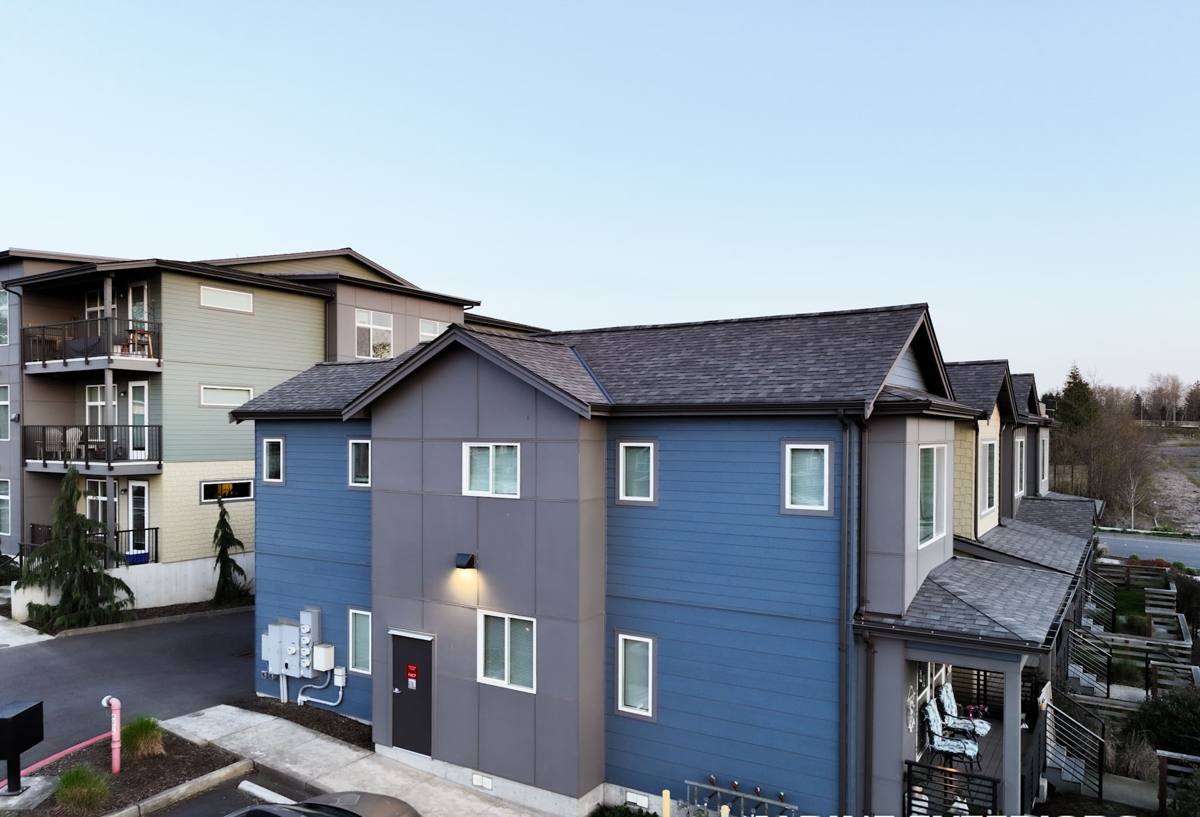
What Salt Air, Rain, and Moss Actually Do to Siding
Salt Air
Airborne salt is corrosive to metal and abrasive to painted and coated surfaces. Nails, staples, flashing, and any exposed fasteners are the first casualties — once a fastener starts rusting, it swells and loosens, which opens a path for water behind the siding. Salt exposure also breaks down paint and factory finishes faster than a typical inland home experiences, so color fade and chalking show up sooner.
Driving Rain
Wind off the water doesn't just fall straight down — it drives rain sideways into laps, seams, and butt joints that were never designed to take water head-on. Over time this pushes moisture past caulking and into seams that a calmer climate would keep dry. Once water gets behind siding, it doesn't dry out quickly in this region's humidity, and that's when rot and delamination start.
Moss and Algae
Whatcom County's long wet season keeps north-facing and shaded walls damp for extended stretches. Moss and algae take hold in that moisture and hold it against the siding surface, which keeps the material wetter, longer, than it would be if it dried in open sun. On wood-based products this accelerates rot; on any siding it accelerates finish breakdown and staining.
Signs a Semiahmoo Home Needs Siding Repair
Most siding failures give warning signs well before there's a hole in the wall. Homeowners in this area should watch for:
- Soft or spongy spots when you press on siding, especially near the bottom edges and around windows
- Paint that's peeling, bubbling, or won't hold a new coat in the same spot repeatedly
- Visible gaps at seams, corners, or trim where caulking has shrunk or failed
- Persistent moss or dark staining that keeps coming back after cleaning
- Rust streaks below fasteners or trim pieces
- Warping, cupping, or boards that have pulled away from the wall
- Musty smell or visible staining on interior walls that back up to exterior siding
- Cracked or delaminating boards, especially on older wood-based or engineered wood siding
Any one of these on its own might be minor. Several together, or any sign paired with softness underneath, usually means moisture has already gotten past the surface.
What a Correct Repair Actually Involves
A repair that just covers the visible damage without addressing what let water in will fail again — often faster the second time, because the underlying problem has had more time to spread. A repair done right in this climate involves a few non-negotiable steps:
- Find the actual entry point. Visible damage is often downstream of the real problem — a failed flashing, a gap at a window head, a seam that opened up higher on the wall.
- Open it up and check what's behind it. Sheathing, house wrap, and framing all need to be inspected once siding is removed. If there's rot or saturation behind the siding, that has to be dealt with before new material goes back on.
- Replace, don't just patch, compromised material. Soft, delaminated, or rotted sections need to come out — patching over damaged wood or fiber board just traps the problem.
- Correct the water management, not just the board. Flashing, house wrap laps, and caulking need to be restored to actually shed water, not just look sealed.
- Match or upgrade the replacement material properly. New siding needs to be fastened, primed on cut edges, and finished so it performs as well as — or better than — what it's replacing.
Repair or Replace? How We Help You Decide
Not every problem needs a full re-side, and not every problem should be patched. The right call depends on how much of the wall is affected and what's causing the damage.
| Situation | Repair Usually Makes Sense | Replacement Usually Makes Sense |
|---|---|---|
| Extent of damage | Isolated to one wall or a few boards | Recurring across multiple walls or elevations |
| Age of existing siding | Siding is under 15-20 years old and otherwise sound | Siding is near or past its expected service life |
| Cause | One-time event (impact damage, a single failed seam) | Systemic moisture intrusion or a material that's failing broadly |
| Underlying sheathing | Sound once damaged siding is removed | Rot or saturation found behind multiple sections |
| Cost over time | Lower upfront cost, addresses the immediate problem | Higher upfront cost, resets the clock on the whole exterior |
We'll always tell you honestly which side of that table your home falls on. If a targeted repair will hold, we're not going to push a full re-side — but if we open a wall and find the damage is more widespread than it looked from outside, we'll show you what we found before recommending next steps.
Why Replacement Material Matters, Not Just Workmanship
When a repair calls for new boards, what those boards are made of matters as much as how they're installed — especially this close to the water. This is why we only install James Hardie fiber cement siding on the sections we replace, rather than sourcing whatever matches cheapest. Fiber cement doesn't absorb water the way wood-based products do, so it doesn't swell, rot, or delaminate under the kind of sustained dampness that moss and driving rain create here. It's also non-combustible, holds paint and factory finish longer under salt exposure, and Hardie's ColorPlus finish is engineered to resist fading and chipping better than field-applied paint.
We don't install vinyl, LP SmartSide, Cemplank, Allura, or primed wood siding — not because those products have no place in the market, but because we've standardized on one system we trust to perform in this climate and stand behind with a real warranty. If your existing siding is a different material, we'll talk through whether a Hardie repair section is the right long-term fix, or whether it makes more sense to plan for a broader Hardie transition down the road.
Our Repair Process
Every repair job follows the same sequence, whether it's one damaged section or several:
- Inspection: We assess the visible damage and probe surrounding areas for hidden softness, gaps, or moisture.
- Diagnosis: We identify the actual water entry point, not just the symptom, and explain what we find in plain terms.
- Written scope: You get a clear description of what will be removed, what's being checked underneath, and what's going back on — before work starts.
- Removal and inspection behind the siding: Damaged material comes out, sheathing and house wrap get checked, and any rot gets addressed.
- Repair of water management: Flashing, wrap laps, and seams get corrected so water sheds the way it's supposed to.
- Installation: New Hardie material goes in fastened and finished to spec, including primed cut edges and proper caulking at seams.
- Cleanup and walkthrough: We walk the finished work with you before we consider the job done.
Why Local, Semiahmoo-Area Experience Matters
A crew that mostly works drier, inland neighborhoods can miss the specific patterns that show up on homes closer to the water — where rust shows up first, which wall orientations hold moss longest, how far driving rain actually pushes into a seam during a real winter storm. We work Ferndale and the surrounding Whatcom County coastline regularly, so when we're diagnosing a repair near Semiahmoo, we're not guessing at how the local climate behaves — we've seen the same failure patterns on nearby homes and know where to look first.
After the Repair: Keeping Salt Air and Moss From Coming Back
A good repair holds up longer with a little basic upkeep, especially in this environment:
- Rinse salt residue off siding periodically, particularly after storms with onshore wind
- Keep gutters clear so water isn't overflowing directly onto wall sections
- Trim back vegetation that's shading and keeping specific wall areas damp
- Address new moss growth early with a gentle wash rather than letting it establish
- Have caulking and seams checked every couple of years, since it's usually the first thing to fail
If you're seeing soft spots, peeling paint, or moss that won't quit on a home near Semiahmoo, we're happy to take a look and give you an honest read on whether it's a repair or something bigger. Reach out for a free, no-pressure estimate — there's a form below.