 Ferndale Exterior
 Windows Built for the Semiahmoo Climate, Not a Generic One
Homes in the Semiahmoo area sit close to the water, and that changes what a window installation needs to survive. Salt-laden air corrodes hardware and finishes faster than it does a few miles inland. Wind-driven rain off the bay pushes water sideways into gaps that would stay dry on a more sheltered lot. And Whatcom County's long, damp shoulder seasons keep siding, trim, and window perimeters wet for weeks at a stretch, which is exactly the environment moss and mildew need to take hold. A window that's a good fit for a subdivision in a drier part of the state can underperform here — not because the glass is bad, but because the installation details that matter most in a marine climate get skipped.
This page is about doing that installation correctly for a Semiahmoo-area home: the water-management details, the material choices that make sense this close to salt water, and what our process actually looks like from first look to final walkthrough.
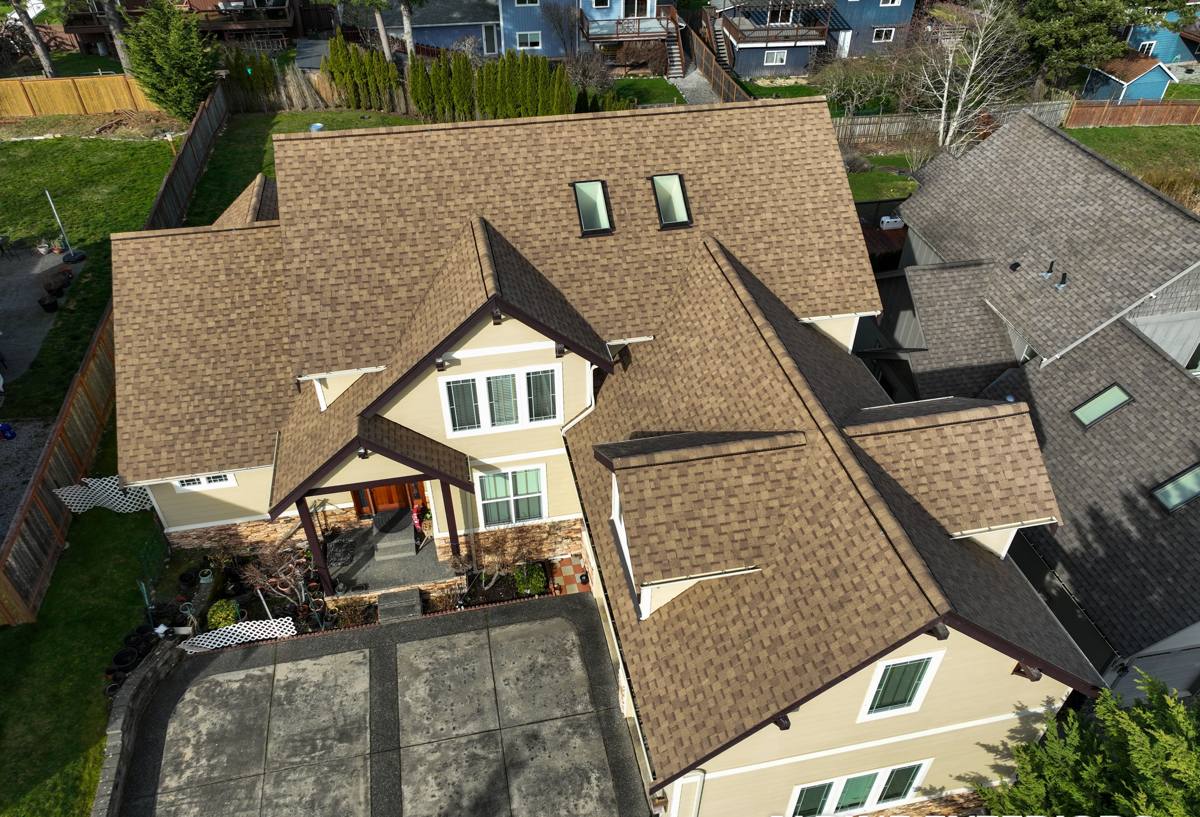
Why Coastal Exposure Changes the Job
Salt Air and Hardware
Salt in the air accelerates corrosion on anything metal — window locks, hinges, screen frames, and fasteners. Left unaddressed, this shows up first as sticky or stiff hardware, then as staining, then eventually as failure of the moving parts. It's a slow process, but it's constant in a waterfront setting, and it's one of the reasons material and hardware choice matters more here than in a typical inland install.
Driving Rain and Wind Load
Open water exposure means wind isn't just faster here, it's also more likely to push rain horizontally into a wall assembly rather than letting it run straight down and off. That puts more stress on flashing details, sealant joints, and the way a window is integrated with the house wrap or building paper behind the siding. A window that's caulked in place without proper flashing can look fine for a season or two and then start leaking during the first real winter storm.
Moss, Mildew, and a Long Wet Season
Whatcom County's wet months stretch long, and shaded or north-facing walls near Semiahmoo can stay damp for extended stretches. That's ideal conditions for moss and mildew to establish around window trim and sills, which traps additional moisture against the wood or cladding and speeds up rot if the perimeter isn't detailed and sealed correctly the first time.
What a Correct Installation Actually Involves
"Window installation" sounds simple, but the difference between a window that lasts fifteen-plus years in this climate and one that fails early almost always comes down to details most homeowners never see once the trim goes back on.
Flashing and Water Management
Every opening gets a drainage plane that directs any water that gets past the exterior finish back out, not into the wall cavity. That means a sill pan under the window (so any water that does get in has somewhere to go besides your framing), correctly lapped flashing tape integrated with the house wrap, and a weep path that isn't accidentally sealed shut. In a driving-rain environment like this one, this step matters more than the window brand.
Fasteners and Hardware
We use fasteners and hardware rated for exterior, coastal-adjacent exposure rather than standard-grade hardware that's fine sixty miles inland but starts showing corrosion within a couple of years near the water.
Air Sealing and Insulation
The gap between the window frame and the rough opening gets sealed with an appropriate low-expansion foam or backer rod and sealant — not stuffed with fiberglass insulation alone, which does nothing to stop air infiltration and can hold moisture against the frame.
Exterior Sealant Joints
The sealant bead where the window meets the siding or trim has to be continuous, properly tooled, and compatible with both the window frame material and the siding. Gaps or pinholes here are one of the most common sources of a "mystery leak" that shows up two winters later.
Choosing Window Materials for a Waterfront-Adjacent Home
There isn't one universally "best" frame material — the right choice depends on the home, its exposure, and the owner's maintenance preferences. Here's how the common options generally compare for a Semiahmoo-area setting:
| Frame Material | Coastal/Salt-Air Suitability | Maintenance | Notes |
|---|---|---|---|
| Vinyl | Good — won't corrode or rot | Low | Budget-friendly; quality varies significantly by manufacturer and reinforcement |
| Fiberglass | Very good — dimensionally stable, resists warping in temperature/humidity swings | Low | Higher upfront cost; holds paint well if a custom color is wanted |
| Aluminum | Fair — strong but conducts cold and can corrode without a quality anodized or powder-coat finish | Moderate | Best reserved for specific architectural or commercial-style applications |
| Wood / Wood-Clad | Requires the most care in a wet marine climate | High | Beautiful interior look, but exterior wood or thin cladding needs diligent upkeep near salt air and constant moisture |
For most Semiahmoo homes, we steer owners toward vinyl or fiberglass for the exterior-facing performance, reserving wood or wood-clad for interiors or sheltered elevations where the maintenance commitment makes sense. This isn't a knock on any manufacturer — it's about matching material behavior to this specific climate so the homeowner isn't fighting maintenance every year.
Our Installation Process
1. On-Site Assessment and Measurement
We look at each opening individually — not just the window itself, but the condition of the framing, sill, and any existing water damage or soft wood around it. Coastal-exposed homes sometimes have hidden moisture issues behind old trim that only show up once the exterior casing comes off, and we'd rather find that at assessment than mid-install.
2. Removal and Opening Prep
Old windows come out carefully to avoid damaging the surrounding siding or trim more than necessary. Any deteriorated sheathing, soft framing, or failed old flashing gets addressed before a new window ever goes in — installing a new window into a wet or rotten opening just locks the problem behind new trim.
3. Flashing, Setting, and Sealing
The sill pan and flashing go in first, the window gets set level, plumb, and square, then fastened per the manufacturer's specified pattern, and finally sealed on the exterior with a continuous, properly tooled bead.
4. Interior and Exterior Finish
Interior trim and exterior casing are reinstalled or replaced as needed, with attention to keeping any wood trim protected and properly primed on all sides — including the back, which is where a lot of trim rot actually starts.
5. Walkthrough and Cleanup
We walk the finished opening with the homeowner, check operation and locking hardware, and clean up debris and packaging before we leave.
Signs a Semiahmoo Home May Need New or Reinstalled Windows
Coastal exposure tends to accelerate window problems, so it's worth checking for these earlier than you might inland:
- Condensation or fogging between the panes of a double- or triple-pane window (a sign the seal has failed)
- Soft or discolored trim and sill wood around the window opening
- Drafts you can feel near the frame even with the window fully latched
- Hardware — locks, cranks, or hinges — that's stiff, corroded, or won't fully engage
- Visible staining on interior drywall or trim below or beside a window after storms
- Moss or persistent green growth building up on exterior trim or sills
- Difficulty opening or closing that wasn't there a year or two ago (often a sign of frame settling or moisture swelling)
What Drives Cost on a Job Like This
Every home and opening is different, so we won't quote a number without seeing the job, but these are the factors that typically move the price:
| Factor | Impact on Cost |
|---|---|
| Frame material (vinyl vs. fiberglass vs. wood-clad) | Moderate to significant — fiberglass and wood-clad run higher than standard vinyl |
| Full-frame replacement vs. insert/pocket replacement | Full-frame costs more but is often the right call when framing or flashing needs repair |
| Number of openings and their sizes | Straightforward — more and larger openings mean more material and labor |
| Hidden water or rot damage found during removal | Can add cost once the opening is exposed and the real condition is visible |
| Access and height (second story, tight side yards, etc.) | Harder access adds labor time |
| Trim and siding tie-in complexity | Custom trim profiles or unusual siding details take more time to match and seal correctly |
Why a Crew That Already Works in Semiahmoo Matters
Anyone can install a window in dry, calm weather. The real test is whether that installation holds up through a wet Whatcom County winter with wind coming off the water. A crew that's already worked homes in this specific area has seen what actually fails here — which flashing shortcuts cause leaks two years later, which trim details invite moss, which hardware corrodes early — and builds the job around avoiding those failure points from the start, rather than learning them on your house.
Local, established crews are also easier to hold accountable. If a warranty issue comes up, you're not trying to track down an out-of-area company that's moved on to the next region. We live and work in this area, and our reputation here depends on the work holding up, not just looking good at handoff.
Protecting the Investment After Installation
A correctly installed window in a good material shouldn't need much, but a little seasonal attention goes a long way this close to the water:
- Rinse accumulated salt residue off frames and hardware periodically, especially on wind-exposed elevations
- Keep sills and trim clear of leaves, moss, and standing debris that hold moisture against the frame
- Operate locking hardware a few times a year even on windows you don't open often, to keep mechanisms from seizing
- Inspect exterior caulk joints annually and flag any cracking or separation before it becomes a leak path
- Address any soft trim or staining promptly rather than waiting for it to spread
If you're weighing new windows, a partial replacement, or just want an honest opinion on whether your current windows are holding up the way they should in this climate, we're happy to take a look. Reach out for a free, no-pressure estimate using the form below.