 Ferndale Exterior
 Lummi Nation's Coastal Climate Puts Real Stress on Siding
Homes in and around Lummi Nation sit close to the water, and that proximity shapes everything about how siding ages here. Salt-laden air drifts in off the bay and settles on exterior surfaces day after day, slowly working into seams, fastener heads, and any spot where a coating has thinned. Add in Whatcom County's long stretch of driving rain — the kind that comes in sideways during winter storms — and siding has to do more than look good. It has to shed water reliably, resist corrosion, and hold its shape through repeated wet-dry cycles for years on end.
Then there's moss. Between the shade from mature trees, the persistent damp, and the moderate temperatures that never quite dry things out, moss and algae get a long season to establish themselves on north-facing walls, lower siding courses, and anywhere airflow is limited. On some materials that's a cosmetic nuisance you can pressure-wash away. On others, trapped moisture behind a moss mat is the first step toward rot you won't see until it's already spread. Any siding replacement in this area has to account for all three factors — salt, rain, and moss — not just one of them.
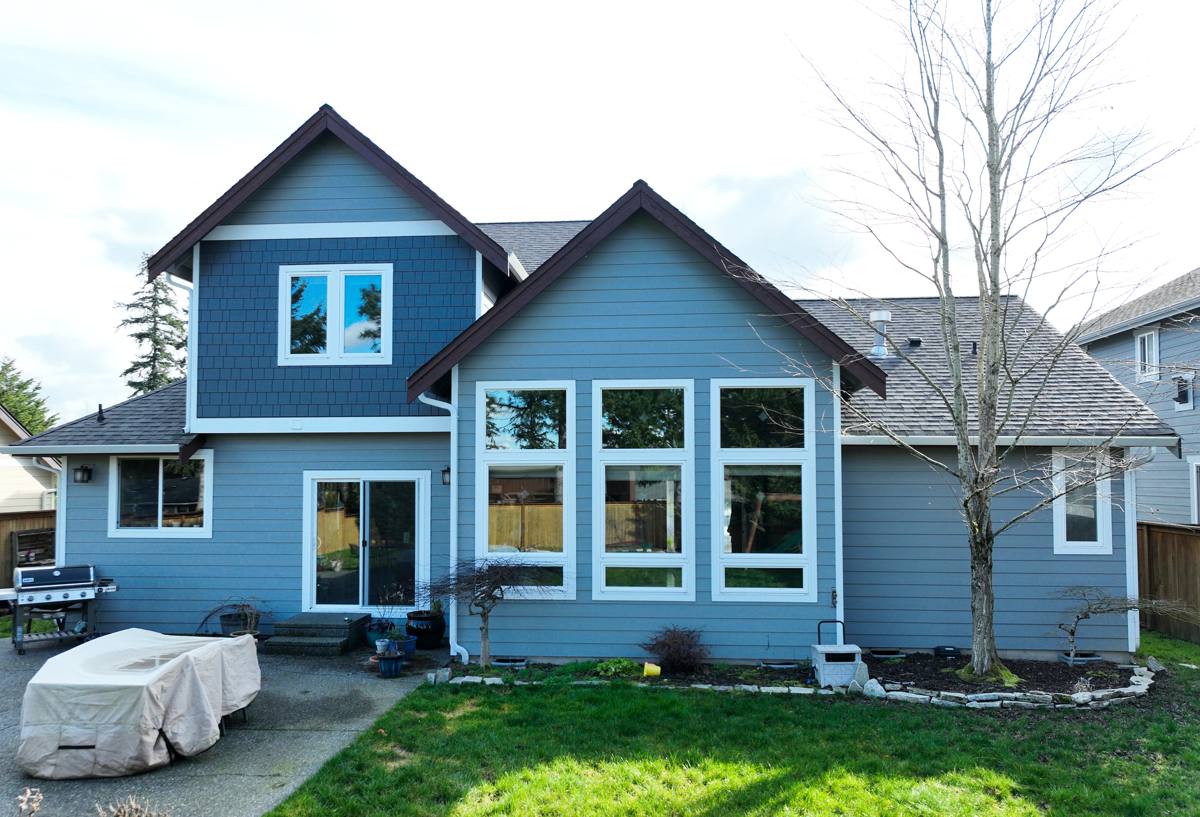
Signs Your Siding Is Telling You It's Time
Siding failure in a climate like this rarely announces itself with a dramatic problem. It shows up as a handful of small issues that, together, mean the material is no longer doing its job. Homeowners in Lummi Nation should watch for:
- Soft or spongy spots when you press on the siding, especially near the bottom courses or around window trim
- Paint that keeps failing in the same spots within a year or two of repainting
- Persistent moss or dark streaking that returns quickly after cleaning
- Visible cupping, warping, or buckling panels, particularly on walls facing prevailing wind and rain
- Gaps opening up at seams, corners, or where siding meets trim and flashing
- A musty smell near exterior walls, or interior drywall that stays damp to the touch
- Rust streaking from fastener heads, which usually means the fasteners or the coating over them have failed
One or two of these on their own might mean a repair. Several at once, especially combined with siding that's approaching or past the age you'd expect it to need attention, usually means it's more cost-effective to replace than to keep patching.
What a Correct Siding Replacement Actually Involves
The siding itself only performs as well as the work underneath it. In a climate that drives rain sideways and keeps humidity high for weeks at a stretch, the assembly behind the visible surface matters as much as the product on top of it.
Tear-Off and Inspection
Removing the old siding is also the only real chance to see what's been happening behind it. Sheathing that's soft, insulation that's damp, or framing that shows signs of past moisture intrusion all need to be addressed before anything new goes back on. Skipping this step just seals existing problems behind a new wall.
Weather-Resistive Barrier and Flashing
A properly lapped weather-resistive barrier, correctly integrated flashing at windows, doors, and any wall penetrations, and attention to how water is directed away from the structure are what actually keep a home dry — the siding is the last line of defense, not the only one. Given how much wind-driven rain this area sees, corners cut here tend to show up as interior damage within a few wet seasons.
Fastening and Fit
Fiber cement siding has specific fastening requirements — the right nail or screw type, correct penetration depth, and proper spacing — that differ from wood or vinyl installation. Installed incorrectly, even a good product will crack, split, or work loose over time. This is one of the most common places where inexperienced crews create problems that don't surface until a year or two later.
Finish and Detail Work
Caulking joints, sealing cut edges, and finishing trim correctly close the small gaps where salt-laden moisture and driving rain would otherwise find a way in. These details are quick to rush and expensive to fix once they've caused hidden damage.
Why We Install Only James Hardie Fiber Cement
We standardized on James Hardie fiber cement siding and don't install vinyl, LP SmartSide, Cemplank, Allura, primed spruce, or cedar. That's not a marketing position — it's a professional judgment call based on what holds up under exactly the conditions Lummi Nation homes deal with.
Fiber cement is non-combustible, doesn't expand and contract with temperature swings the way vinyl does, and doesn't carry the moisture sensitivity of wood-based or engineered wood products. James Hardie's ColorPlus factory-applied finish is baked on and formulated to resist fading and hold color better than field-applied paint, which matters in an area where UV isn't the biggest threat but salt exposure and constant damp are. Hardie also builds region-specific HZ product lines engineered for different climate demands, which lets us match the product to what Pacific Northwest coastal exposure actually requires rather than installing a one-size-fits-all product. Backed by a strong transferable warranty and a long track record when installed to manufacturer spec, it's simply the product we're willing to put our name behind on homes here.
How Common Siding Materials Hold Up Here
Every siding material has trade-offs. The table below reflects how these options generally perform against the specific stresses of a salt-air, high-rainfall, moss-prone climate like Ferndale and Lummi Nation's.
| Material | Moisture/Rot Resistance | Salt Air Durability | Moss/Algae Resistance | Maintenance Burden |
|---|---|---|---|---|
| James Hardie fiber cement | Excellent — cement-based, not organic | Strong, non-corrosive core | Good; cleans easily without damaging the material | Low |
| Vinyl | Fair — won't rot but can warp/crack | Can become brittle over time | Fair; moss tends to sit on the surface | Low, but limited repair options |
| Cedar | Requires diligent upkeep to prevent rot | Sensitive to salt exposure | Poor without frequent treatment | High |
| Engineered wood (e.g. LP SmartSide) | Good if sealed edges stay intact | Moderate; edge sealing is critical | Fair; needs consistent maintenance | Moderate |
This is a general comparison, not a claim that any of these products fail outright — it's why we've made fiber cement our standard rather than something we install occasionally.
Our Process, Start to Finish
Assessment and Estimate
We walk the exterior with you, look at drainage patterns, existing damage, and any areas showing early signs of moisture trouble, and put together a clear, itemized estimate before any work starts.
Preparation
Tear-off, sheathing inspection and any needed repairs, and correct installation of the weather-resistive barrier and flashing all happen before a single piece of new siding goes up.
Installation
James Hardie panels or lap siding go on to manufacturer fastening specs, with careful attention to seams, corners, and trim transitions — the details that determine how the job performs five and ten years out, not just on day one.
Final Walkthrough
We review the finished work with you, confirm caulking and paint touch-ups are complete, and make sure the site is cleaned up before we consider the job done.
Why Local Experience in Lummi Nation Matters
A crew that's already worked on homes in this specific area understands things a general contractor from farther inland might not think to check — how exposed a given wall is to prevailing wind and rain, where moss tends to establish first based on tree cover and shade, and how much salt exposure a particular property actually gets depending on its distance from the water. That local pattern recognition shapes decisions on the job, from where extra flashing attention is worth the time to which walls need the most careful sealing.
Local experience also means fewer surprises on scheduling and site access, and a working familiarity with the practical realities of doing exterior work in this part of Whatcom County — weather windows, typical drying times between rain systems, and how to sequence a project so it isn't left exposed during an unpredictable stretch of weather.
What Affects Your Project's Cost and Timeline
Every siding replacement is priced around a handful of factors, and knowing them upfront helps you understand your estimate rather than just seeing a bottom-line number.
| Factor | Why It Matters |
|---|---|
| Total square footage and home height | Larger and taller walls mean more material and more time, especially where staging or lift access is needed |
| Condition of the sheathing underneath | Rot or moisture damage found during tear-off adds repair scope before new siding can go on |
| Siding profile and Hardie product line | Lap siding, panel systems, and trim details vary in material and labor cost |
| Color and finish selection | ColorPlus factory finishes versus field-painted options affect both cost and long-term maintenance |
| Trim, window, and door detailing | More cuts, corners, and transitions mean more labor time for a clean, weather-tight result |
| Site access and weather windows | Tight lots or an unpredictable stretch of rain can affect scheduling and sequencing |
If you're noticing the warning signs above, or your siding is simply reaching the age where replacement makes more sense than continued repair, we're happy to take a look and walk you through what your home specifically needs. There's no pressure and no obligation — just a straightforward assessment and an estimate you can use to make an informed decision, using the form below to get started.