 Ferndale Exterior
 Marietta Sits Where the Weather Hits Hardest
Marietta sits right on Bellingham Bay at the western edge of Ferndale, which puts these homes in a spot that catches more of what comes off the water than roofs even a few miles inland. Salt-laden air blowing in off the bay, wind that funnels along the shoreline during winter storms, and the near-constant shade and dampness under the fir and cedar canopy all work on a roof at the same time. In our experience repairing storm damage in this part of Whatcom County, the problem is rarely just one thing — it's usually two or three issues stacked on top of each other, and a repair that only patches the obvious damage often leaves the rest to keep working on the roof underneath.
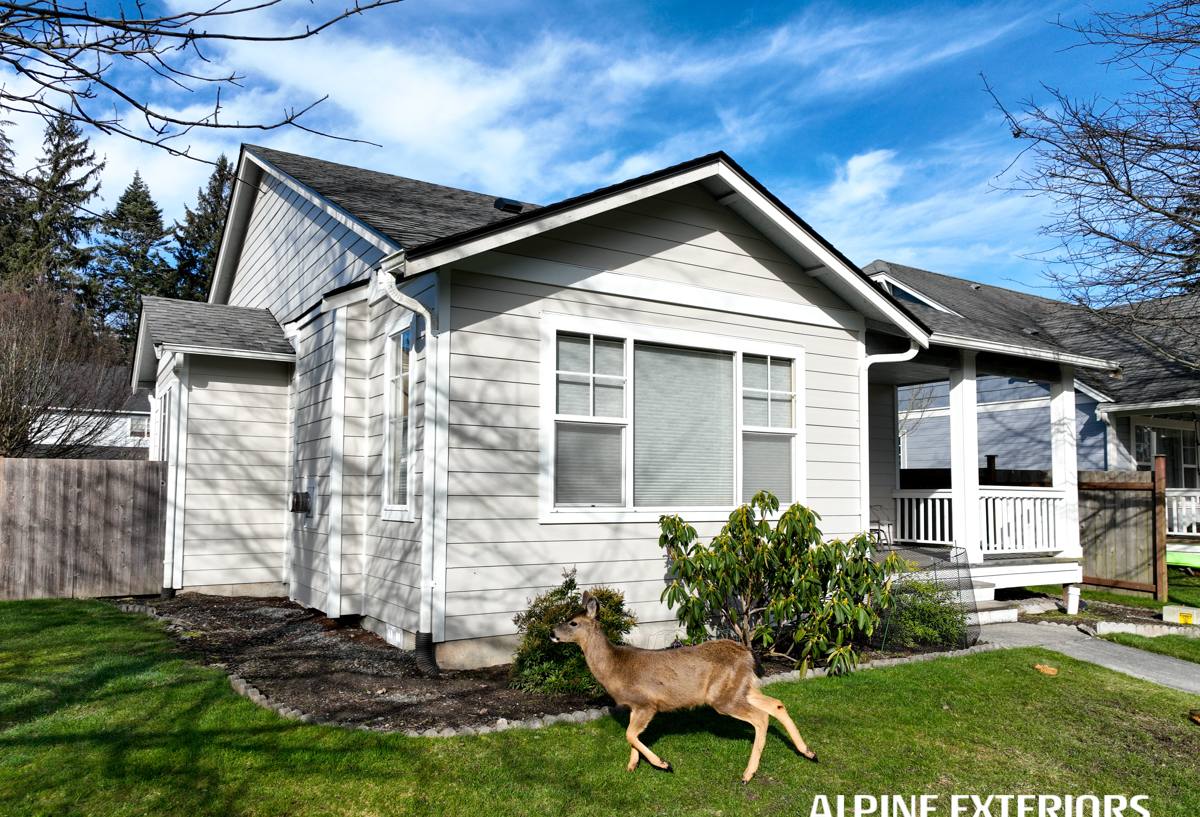
What Storm Damage Actually Looks Like on a Marietta Roof
Wind damage
Straight-line winds off the bay during a fall or winter storm don't just rip shingles off in dramatic fashion — more often they lift a tab just enough to break the seal, or crease a shingle without tearing it loose. From the ground it can look like nothing happened. Underneath, water has a new way in.
Wind-driven rain intrusion
Ferndale gets its share of rain that comes in sideways rather than straight down. That kind of weather finds every gap in flashing, every worn pipe boot, and every spot where a roof-to-wall transition was never properly sealed. It shows up later as a stain on a ceiling or a soft spot in an attic deck, well after the storm that actually caused it.
Impact and debris damage
Mature trees are part of what makes Marietta a nice place to live, and they're also the reason branch and limb strikes are a real cause of storm damage here. A branch strike can crack a shingle, dent a vent cap, or knock granules loose in a way that isn't obvious until the roof starts leaking months later.
The slow-motion storm: moss and moisture
Not every kind of storm damage arrives in a single afternoon. A long, wet moss season working on a roof for months does real structural damage — lifted shingle edges, trapped moisture, and rot in the decking underneath — even without a single named storm event. We treat this as storm-related damage because the mechanism is the same: water getting somewhere it shouldn't.
Why Salt Air, Rain, and Moss Compound Each Other Here
Any one of these on its own is manageable. Together, they accelerate each other. Salt air speeds up corrosion on exposed fasteners, flashing edges, and metal roof-vent components, which weakens the parts of the roof designed to keep water out. Once a fastener or flashing seam starts to fail, driving rain finds it faster. And once water is getting under the surface even slightly, moss and moisture take hold there first, because it's already damp and shaded. A repair that only replaces missing shingles without addressing the corroded flashing or the moss holding moisture against the deck is a repair that's likely to need doing again within a year or two.
What a Correct Storm Damage Repair Actually Involves
Start with a full inspection, not a patch guess
A storm damage repair done right starts with getting on the roof and looking at the whole system, not just the spot the homeowner noticed. That means checking flashing at every wall, chimney, and skylight; checking pipe boots and vents; checking the condition of the decking wherever there's any sign of moisture; and checking for the kind of subtle wind damage — lifted or creased shingles — that doesn't look urgent but is exactly what causes the next leak.
Matching materials the right way
Shingles fade and weather over time, so a patch using brand-new material next to years-old roofing will stand out and, more importantly, may not seal the same way against the surrounding shingles. We match not just the shingle line but the exposure and nailing pattern of the existing roof so the repaired section actually integrates with what's there instead of sitting as a separate patch waiting to fail at its edges.
The parts of the roof nobody sees
Underlayment and decking rarely get a second look once shingles are back on, but they're the part of the roof actually doing the work of keeping water out. If storm damage has let moisture into the decking, that wood needs to be assessed and, where soft or delaminated, replaced — not just covered back over. Skipping this step is the single most common reason a "fixed" roof leaks again at the first hard rain.
How We Handle a Storm Repair Call in Marietta
- Inspection and documentation. We walk the roof, photograph the damage, and note anything else we find that's related — corroded flashing, worn boots, moss buildup — even if it wasn't the reason for the call.
- Honest scope of work. We explain what's storm damage versus what's ordinary wear, what needs repair now versus what can be monitored, and why — in plain terms, before any work starts.
- Insurance paperwork, if applicable. If the damage is from an identifiable storm event, we provide the documentation homeowners need to support a claim.
- The actual repair. Matched materials, corrected flashing, and replaced decking where needed — not just shingles laid over a problem that's still there underneath.
- Cleanup and a final walk-through. Debris removed, gutters checked for anything the storm knocked loose, and a look at the finished repair together before we call it done.
Repair or Replace: What Actually Drives That Decision
Not every storm-damaged roof in Marietta needs to be replaced, and not every one is a simple patch. The honest answer depends on a few factors:
| Factor | Leans toward repair | Leans toward replacement |
|---|---|---|
| Age of existing roof | Roof has years of expected life left | Roof is already near or past its expected lifespan |
| Extent of damage | Localized to one section or slope | Spread across multiple areas or slopes |
| Decking condition | Solid, dry decking under the damaged shingles | Soft, rotted, or delaminated decking found |
| Material availability | Matching shingles still obtainable | Discontinued line, visible mismatch unavoidable |
| Moss and moisture history | Isolated, first occurrence | Chronic moss/moisture problem across the roof |
Cost follows the same logic. A straightforward repair to a section of shingles and flashing is usually a modest expense measured in the low hundreds to low thousands of dollars, depending on how much decking is involved. Once a roof needs decking replaced across multiple sections, or the damage is spread across enough of the roof that patching would leave a visibly mismatched surface, a full or partial replacement often ends up being the more cost-effective and longer-lasting choice. We'll tell you honestly which side of that line your roof falls on.
Insurance Claims and Storm Damage: What to Know
Homeowner's insurance in Washington typically covers sudden storm damage — wind, falling limbs, impact — but generally does not cover damage from long-term neglect, like moss and moisture that's been working on a roof unaddressed for years. That distinction matters when filing a claim, because an adjuster will want to see that the damage traces to a specific event rather than gradual wear. Good documentation from the inspection — photos, dates, a clear description of what's storm-related versus what's pre-existing — makes that conversation with the insurance company much easier. We're glad to provide that documentation whether or not we end up doing the repair work.
Signs Your Marietta Roof Needs a Storm Damage Inspection
- Granules collecting in gutters or at downspout outlets after a windstorm
- A shingle tab that looks lifted, curled, or out of line with its neighbors
- A new water stain on a ceiling or in the attic after a period of heavy rain
- Visible moss buildup on north-facing or shaded slopes of the roof
- A branch or limb strike during a recent storm, even if no damage is obvious from the ground
- Rust streaking or corrosion visible around flashing, vents, or fasteners
- A pipe boot or vent collar that looks cracked, warped, or pulled away from the roof
Any one of these on its own might not mean much. A few of them together, especially after a storm, are worth a proper look before the next round of Whatcom County rain finds the gap.
Why Hiring a Crew That Already Works Marietta Matters
Roofing crews that work all over Whatcom County see a lot of roofs, but crews that specifically work Marietta and the rest of Ferndale know how this particular stretch of shoreline behaves — which slopes hold moss longest, how far the salt air reaches inland from the bay, and which storm patterns tend to cause wind versus water damage in a given season. That local pattern recognition means a faster, more accurate inspection and a repair scoped to what actually causes problems here, not a generic checklist built for a different climate. It also means a crew that's still around and easy to reach if a repair needs a follow-up look after the next storm season.
If a recent storm left your Marietta roof with missing shingles, a new leak, or damage you're not sure how to read, we're happy to take a look. Fill out the form below for a free, no-pressure estimate — we'll tell you honestly what we find and what it actually needs.