 Ferndale Exterior
 Windows Built for the Way Sudden Valley Actually Weathers
Sudden Valley sits in a different microclimate than a lot of the properties we work on closer to town. Lake-adjacent, heavily wooded, and shaded for long stretches of the day, homes here deal with a slower-drying, more humid environment than open lots out toward the water or the flats. Add in the marine air that moves through this whole corner of Whatcom County, driving rain that comes in sideways more often than straight down, and a moss season that can run six months or more, and you've got a set of conditions that punishes a window installed even slightly wrong. This page is about doing that job right, specifically for this neighborhood.
We're not going to pretend Sudden Valley is identical to every other pocket of Ferndale or Whatcom County. It isn't. The tree canopy changes how long a window frame stays wet after a storm. The lake humidity changes how fast wood trim can start to hold moisture instead of shedding it. Those details change how we flash, seal, and finish a window opening — not just which window we sell you.
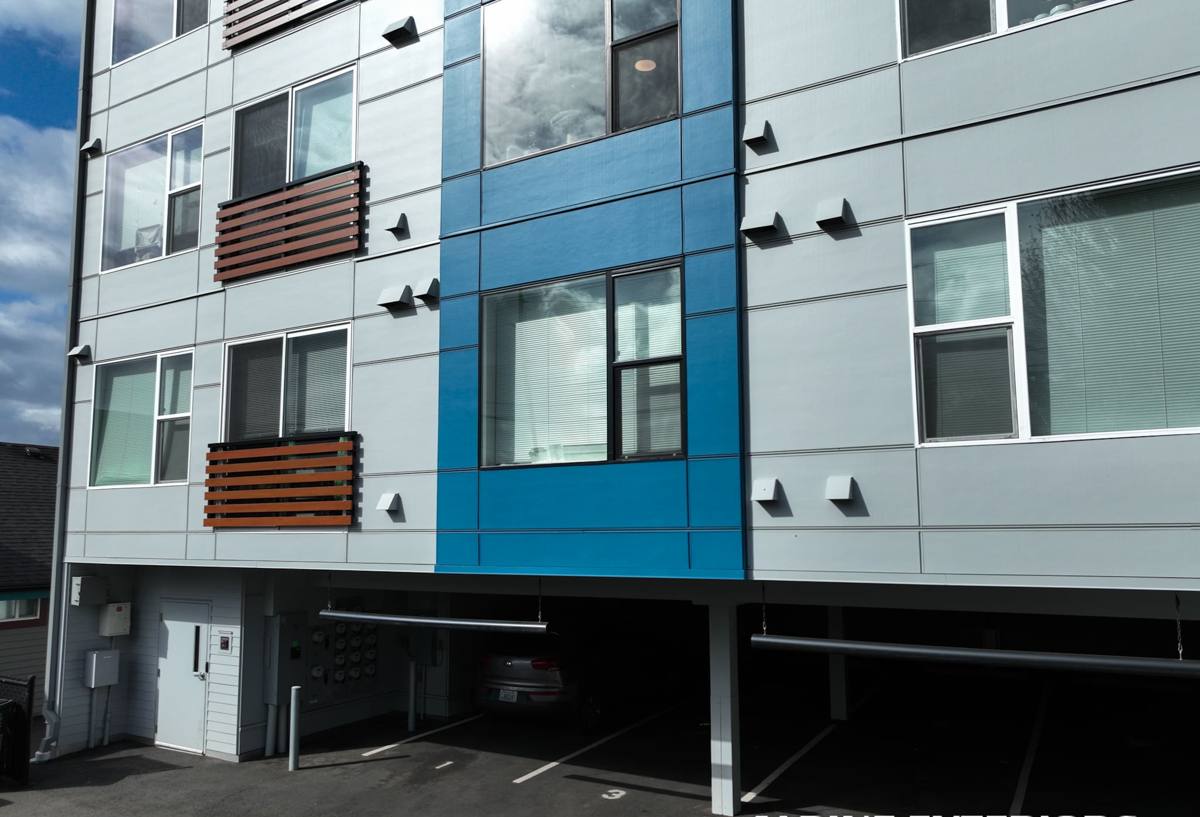
What This Climate Does to a Window Over Time
Most window failures we get called out for aren't really about the glass or the sash hardware. They're about what happened around the window during and after installation. In a shaded, moisture-retentive setting like Sudden Valley, three things show up again and again:
- Slow-drying frames — shaded walls and limited direct sun mean any water that gets behind a poorly flashed window sits longer before it can evaporate, giving rot and mold more time to take hold.
- Moss and organic buildup — moss doesn't just grow on roofs here. It works into exterior trim, sill horns, and any rough-cut wood surface around a window opening, holding moisture against the frame long-term.
- Wind-driven rain intrusion — even on a lot with tree cover, storms off the water push rain sideways. A window that relies only on caulk at the exterior face, with no proper flashing behind the siding, will eventually leak.
None of this means Sudden Valley needs some exotic product. It means the installation details — flashing sequence, sealant choice, sill pan use, and trim material — matter more here than they would on a dry, open, full-sun lot.
Signs a Sudden Valley Window Is Already Failing
- Soft or spongy wood at the sill or lower corners of the frame
- Fogging or moisture between panes on double- or triple-glazed units
- Paint or finish peeling from the inside face of the frame, not just outside
- Persistent moss or dark staining at the sill horns or trim joints
- Drafts or a noticeable temperature difference near the window on windy, rainy days
- Difficulty opening or latching a sash that used to operate smoothly
If you're seeing more than one of these, it's worth having the opening looked at before a full window replacement becomes a wall-repair job too.
What a Correct Window Installation Involves
A window installation is really an envelope detail, not just a product swap. The window itself is one piece; the flashing, sealing, and integration with your siding and weather barrier are what actually keep water out for the next twenty or thirty years. Here's what we consider non-negotiable on every job, and especially in a wet, shaded setting like this one:
- Remove and inspect. We pull the old window and check the framing, sill, and sheathing underneath for rot or hidden moisture damage before anything new goes in. This is where shaded, slow-drying walls tend to reveal problems you can't see from outside.
- Repair before replace. Any soft framing, compromised sheathing, or failed weather barrier gets addressed first. Installing a new window over damaged framing just hides the problem for a while.
- Sill pan flashing. A sloped sill pan under the window directs any water that does get past the glazing back outside instead of into the wall cavity. This is one of the details that gets skipped most often on lower-cost jobs, and it's the one we won't skip.
- Proper flashing sequence. Flashing tape and materials integrate with the weather-resistive barrier in the correct shingle-lap order — sill, then jambs, then head — so water is always directed downward and outward, never trapped.
- Insulate the gap correctly. The space between the window frame and rough opening gets filled with a low-expansion foam or backer rod and sealant, not just stuffed with fiberglass, which won't stop air or moisture movement.
- Exterior sealant and trim. Sealant goes where it belongs — not as a substitute for flashing, but as the final defense at trim joints and the exterior face.
- Interior finish and function check. Every sash gets tested for smooth operation, square fit, and a tight seal before we call the job done.
Choosing the Right Window for a Shaded, Wet Lot
There's no single "best" window brand — there's a best window for your specific opening, exposure, and budget. What we do steer away from on heavily shaded, moisture-prone lots is anything that depends on frequent exterior maintenance to perform well, or that has a track record of being unforgiving if the installation isn't precise. That's a professional standard we apply, not a knock on any one manufacturer — some products simply demand more upkeep or more installation precision than a shaded lot with a long wet season can reliably get.
| Frame Material | How It Handles This Climate | Maintenance Load |
|---|---|---|
| Vinyl | Good moisture resistance, won't rot; performs consistently in shaded, damp conditions | Low — occasional cleaning |
| Fiberglass | Excellent dimensional stability in temperature and moisture swings, holds paint well if you want a custom color | Low to moderate |
| Wood (clad exterior) | Attractive, but exterior cladding needs to be intact and well-sealed to protect the wood core from constant shade moisture | Moderate — watch cladding seams |
| Aluminum | Durable but a poor insulator and prone to condensation in humid, shaded conditions | Low, but condensation issues possible |
Glazing matters too. Double-pane, low-E units are the practical baseline for this area; on north-facing or heavily shaded walls where rooms stay cooler and more humid, a warm-edge spacer system helps reduce interior condensation on the glass, which is a common complaint in tree-covered lots around the lake.
Why Local Experience with Sudden Valley Specifically Matters
A crew that mostly works dry, open, full-sun properties elsewhere in Whatcom County can still do a technically correct window installation and still end up surprised by how this neighborhood behaves over a wet winter. Shaded lots dry differently. Moss establishes faster. Wind patterns funneled by the lake and surrounding trees can drive rain into wall assemblies from angles you wouldn't expect on a more open site.
Working this neighborhood regularly means we already know to plan around limited direct sun when sequencing exterior work, to expect longer cure times for sealants in shaded, damp conditions, and to flag trim and siding that's holding moisture even when a homeowner hasn't noticed a leak yet. That's the value of a crew that isn't learning your street for the first time on your job.
Our Process, Start to Finish
- Free on-site assessment — we look at each window opening, the framing condition, and any moisture history before quoting anything.
- Honest scope and pricing — you'll know upfront if a job is a straightforward window swap or if it involves framing or sheathing repair.
- Scheduled around the weather — openings only get exposed when conditions allow proper flashing and sealant cure times.
- Installation per the sequence above — sill pan, flashing, insulation, sealant, trim, function check.
- Cleanup and walkthrough — we review the finished work with you and confirm every sash operates correctly before we consider the job done.
What Affects Your Cost
| Factor | Why It Matters |
|---|---|
| Number and size of openings | More or larger windows means more material and labor |
| Frame material chosen | Vinyl, fiberglass, and clad-wood options carry different price points |
| Condition of existing framing | Rot or moisture damage found during removal adds repair scope |
| Access and site conditions | Tree cover, slope, and limited access on some lots can affect labor time |
| Trim and finish detail | Custom trim profiles or matching existing woodwork adds time |
We give you real numbers after we've actually looked at your windows — not a phone estimate based on square footage guesses.
Maintaining Your Windows After Installation
Even a correctly installed window benefits from a little seasonal attention in a shaded, wet environment like this one:
- Clear moss and debris from sills and trim before it has a chance to hold moisture against the wood or frame
- Check exterior caulk lines once a year, especially after a hard winter, and re-seal any cracked or separated sections
- Keep gutters and downspouts clear so roof runoff isn't sheeting directly down onto window heads
- Wipe down interior sills periodically if you notice condensation, particularly on rooms with limited sun exposure
- Trim back vegetation that's shading a window enough to keep it perpetually damp
A few minutes of upkeep a couple times a year goes a long way toward getting the full lifespan out of a properly installed window in this climate.
If you're dealing with drafty, foggy, or sticking windows in Sudden Valley, or you're planning ahead for a full home window update, we're happy to take a look and give you a straightforward, no-pressure estimate — just fill out the form below.