 Ferndale Exterior
 Building Decks for Sumas-Area Homes Near Ferndale
Sumas sits out toward the eastern edge of Whatcom County, in the low-lying valley country not far from the Nooksack River drainage — a different setting than the coastal edge of Ferndale, but it shares the same weather system that moves through this whole corner of Washington. That means the same long wet season, the same moss and algae pressure on any horizontal wood surface, and the same freeze-thaw swings in the colder months. A deck built here has to be engineered for standing water, not just rain that falls and runs off.
We're based in Ferndale and have worked decks, siding, and exterior projects across this part of Whatcom County long enough to know what actually fails first in this climate — and it's rarely the decking boards people worry about. It's usually the framing, the ledger connection, and the fasteners underneath that nobody sees until something is already soft or rusted through. This page is about deck building specifically, for homes in and around Sumas, and what a job needs to include to actually hold up here.
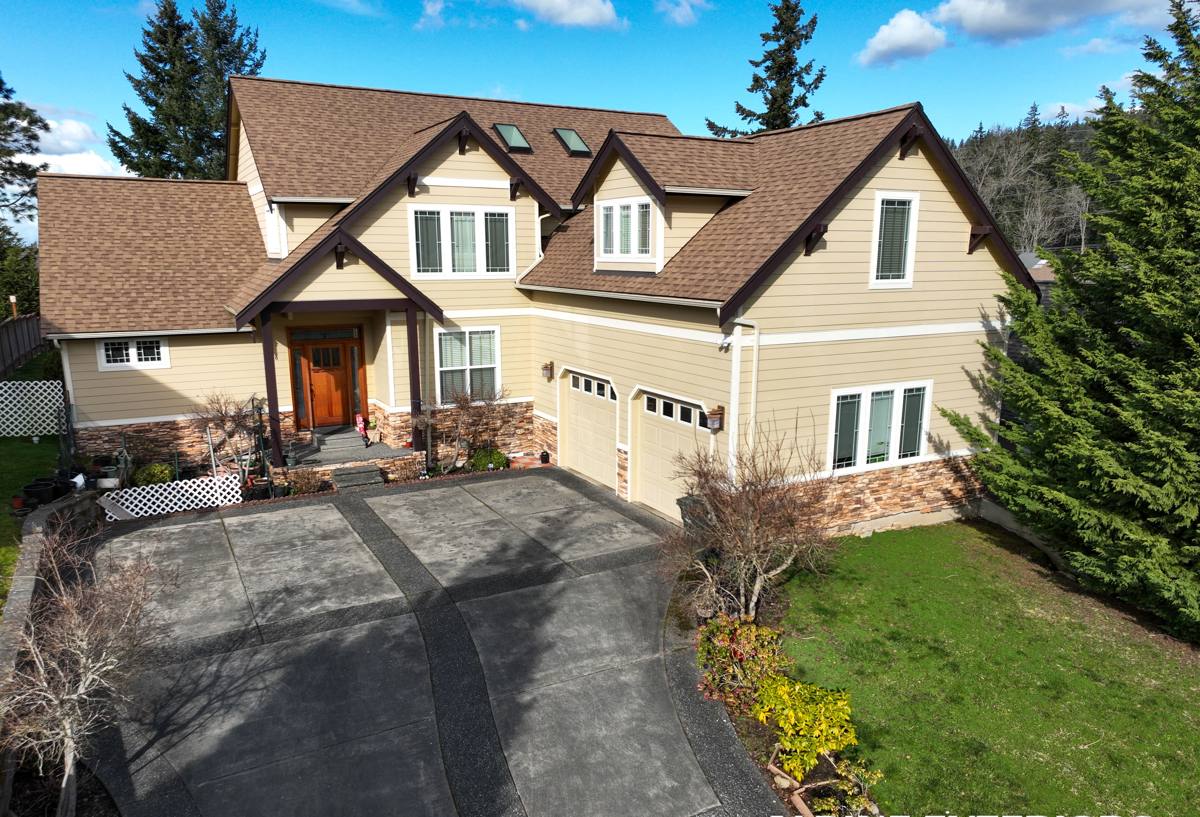
What This Climate Does to a Deck Over Time
Whatcom County's exterior wear pattern is consistent, and Sumas gets the full version of it. A few things stack up against outdoor structures here:
- Driving rain, not just rain. Wind-driven storms push moisture sideways into joints, fastener heads, and railing posts, not just straight down onto flat surfaces.
- A long moss and algae season. Cool, damp, shaded conditions for much of the year let organic growth get a foothold on decking, especially north-facing and tree-shaded areas, well before summer even shows up.
- Standing moisture at ground level. Valley and low-lying lots tend to hold moisture in the soil and under the structure longer than well-drained upland sites, which keeps posts, footings, and the underside of framing damp for extended stretches.
- Freeze-thaw cycling. It doesn't need to be brutally cold — a handful of freeze/thaw swings each winter is enough to work water into any crack in a fastener hole, a checked board end, or a poorly sealed cut.
None of this means a deck can't last decades here. It means the build has to plan for moisture from day one — drainage, ventilation, and material choice — rather than relying on the decking surface to shrug off whatever the weather sends at it.
Choosing the Right Decking Material
There's no single "correct" material for every project — it depends on budget, how much upkeep the homeowner actually wants to do, and how exposed the deck is. Here's how the common options hold up specifically against Whatcom County's wet, mossy conditions:
| Material | How it handles this climate | Maintenance reality |
|---|---|---|
| Pressure-treated wood | Solid structural choice if properly sealed and kept ventilated underneath; softens where moisture sits | Needs re-sealing every 1–2 years; moss removal is an ongoing task |
| Cedar | Naturally rot-resistant and handles our humidity well, but still needs finish to fight graying and moss | Moderate — periodic cleaning and refinishing to keep it from silvering and holding moisture |
| Composite decking | Doesn't rot or splinter, resists moisture absorption into the board itself | Low — but still needs regular cleaning, since moss and algae will grow on any surface if left damp and shaded |
| Capped composite / PVC | Best moisture resistance of the group; capped surface sheds water and resists staining | Lowest — occasional wash-down is usually enough |
We'll walk through this table with actual homeowners on-site, because sun exposure, tree cover, and how the deck will be used all change the answer. A shaded, tree-covered lot pushes hard toward composite or capped composite simply because moss control on wood in full shade is a losing, endless battle. A sunny, open lot gives wood a fair shot if the owner is willing to do the maintenance.
A Note on Why We're Selective About Certain Products
We don't install every decking product on the market. Some budget composite lines have had issues with moisture behavior at cut ends or in ground-contact conditions, and some finishes require a maintenance schedule that's unrealistic for how most people actually live. Our standard is simple: if a product needs babying to survive this climate, or its warranty structure doesn't hold up to real Pacific Northwest weather, we'd rather steer a homeowner toward something that will actually perform.
Framing and Substructure: Where Decks Actually Fail
The decking surface is what people see, but the substructure is what determines whether the deck is still safe in fifteen years. In this climate, three things matter more than almost anything else:
Ledger Attachment
The ledger board — where the deck ties into the house — is the single most common failure point on older decks, and it's also a safety issue, not just a cosmetic one. It needs proper flashing that sheds water away from the house framing, correct fastener spacing, and a moisture barrier between the ledger and the siding. Done wrong, water gets trapped right where the deck meets the house and rots both the ledger and the wall framing behind it without being visible from outside.
Joist Protection
Every cut end and every top edge of a joist is an entry point for water once the decking is fastened down. Joist tape or an equivalent flashing membrane over the top of each joist keeps fastener penetrations from becoming a slow leak path into the wood over years of freeze-thaw cycling.
Airflow Underneath
Low clearance decks that don't get airflow underneath stay damp far longer after a storm, which is exactly the condition moss, mildew, and rot organisms want. Where grading allows it, we build in enough clearance and skirting ventilation to let the underside actually dry out between rain events.
Railings, Fasteners, and Hardware
Hardware quality is an easy thing to cut corners on because it's mostly hidden — and an easy thing to regret later. In a wet, coastal-influenced climate, standard interior-grade fasteners corrode faster than most homeowners expect, and corroding fasteners are a structural problem, not just a cosmetic stain issue.
| Hardware element | What we use and why |
|---|---|
| Structural fasteners | Hot-dip galvanized or stainless, rated for ground contact and treated lumber, to resist the corrosion this climate accelerates |
| Joist hangers and connectors | Matched coating to the fastener type — mixing metals invites galvanic corrosion, which is a common hidden failure mode |
| Railing posts | Properly through-bolted with blocking, not just lag-screwed into a rim joist — this is a safety-critical connection, not a finish detail |
| Post bases | Standoff bases that keep post end grain off the deck surface, so water can't pool against exposed wood fibers |
Our Deck Building Process
The process is the same discipline whether the deck is a small ground-level platform or a full multi-level structure off the back of the house:
- On-site assessment. We look at drainage, sun/shade exposure, tree cover, existing structure condition if we're replacing a deck, and how the space will actually be used.
- Material and layout conversation. We go through the tradeoffs — wood versus composite, railing style, footprint — with straight answers about maintenance and cost, not upsells.
- Permitting and structural planning. Footings, beam sizing, and attachment method are engineered to code before anything is built, not figured out on the fly.
- Demolition and site prep if an old deck is coming out, including a real look at what condition the ledger and house framing are in underneath it.
- Framing with moisture protection built in — ledger flashing, joist tape, proper fastener selection, and ventilation clearance, not just fast lumber assembly.
- Decking and railing installation to manufacturer spec, with attention to gapping and fastening for expansion in wet-to-dry cycles.
- Final walkthrough covering how the specific material chosen should be cleaned and maintained through the moss season.
Permits and Code Considerations
Most decks above a certain height or attached to the house require a permit and inspection under Whatcom County or local jurisdiction rules, and structural elements like footing depth, beam span, and railing height/spacing are governed by code for real safety reasons — guardrail spacing and stair rules exist because of actual injury patterns, not bureaucracy for its own sake. We handle the permitting and inspection process as part of the build rather than leaving a homeowner to sort it out, and we won't quietly skip a permit to save time, because an unpermitted deck can become a real problem at resale or insurance time.
Deck Maintenance Checklist for This Climate
Whatever material a homeowner chooses, a little seasonal attention goes a long way in a climate that pushes moss and moisture this hard. A realistic yearly routine:
- Sweep debris and standing leaves off the deck surface regularly through fall, since trapped organic matter is what feeds moss growth
- Rinse or wash the surface at least once or twice a year to knock back algae and moss buildup before it stains or gets slick
- Check railing post connections annually for looseness — a wiggling post is often the first visible sign of a moisture problem underneath
- Inspect ledger flashing and the house-to-deck joint for gaps or staining, which can indicate water getting behind it
- Re-seal or re-stain wood decking on the schedule the finish product calls for, not just when it looks faded
- Confirm gaps between deck boards aren't clogged with debris, since that traps moisture against the board edges
- Clear vegetation and trim back tree cover that's keeping the deck shaded and damp longer than necessary
Why a Crew That Already Works This Area Matters
Deck building isn't exotic work, but building one that's still sound in twenty years in this specific climate takes judgment that only comes from having done it here repeatedly — knowing which ledger details actually keep water out through a real Whatcom County winter, which fastener choices hold up against the moisture this region throws at exterior hardware, and which materials are worth the extra cost versus which ones just add upkeep without adding life span. A crew that treats every deck the same regardless of region will often build something that looks fine on day one and starts showing problems by year three or four, right around when the framing underneath has been quietly absorbing moisture the whole time.
We build decks the way we'd want one built on our own house in this weather — with the substructure and hardware treated as seriously as the visible decking surface, because in Sumas and the surrounding Ferndale-area communities, that's the part of the deck the climate actually goes after first.
If you're planning a new deck or need to replace one that's showing its age, we're happy to come take a look and talk through honest options for your property — no pressure, no pushy sales pitch. Use the form below to request a free estimate.