 Ferndale Exterior
 Windows Built for Whatcom County Weather
Bellingham sits close enough to the water that salt air is a real factor in how exterior materials age, and it shares the same wet, gray stretch of fall-through-spring weather that defines the rest of Whatcom County. Driving rain off the Sound, near-constant humidity, and a moss season that can run six months or longer put steady pressure on anything installed on the outside of a house — and windows are one of the few components that have to seal against water, air, and temperature swings all at once, every single day, for decades.
A window that's a good fit for a dry inland climate isn't automatically a good fit here. What matters in Bellingham is how well a window and its installation handle sustained moisture exposure, not just how it looks or performs on a spec sheet in ideal conditions.
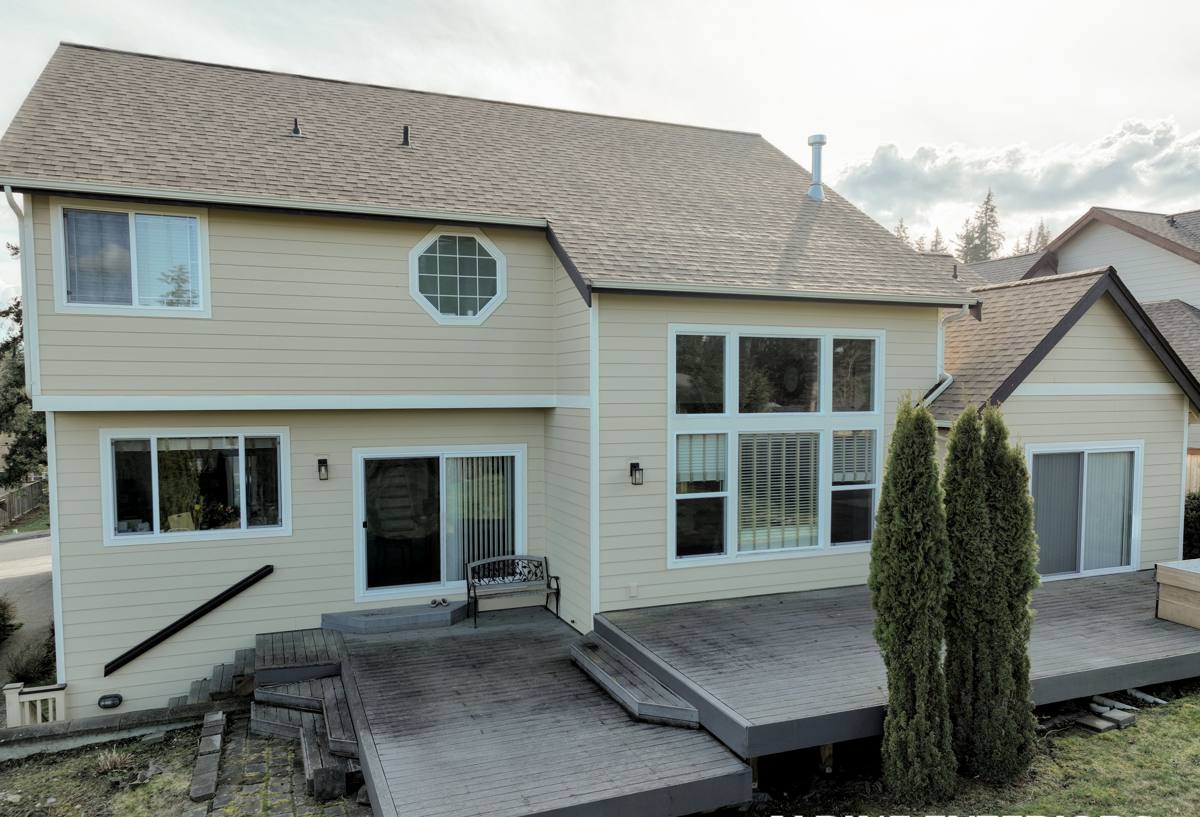
Signs Your Windows Are Due for Replacement
Homeowners in this area usually notice a handful of consistent warning signs before they call for an estimate. None of these mean the sky is falling, but together they point toward a window system that's no longer doing its job:
- Visible fogging or moisture between panes of double-pane glass (a failed seal, not a cleaning issue)
- Soft or discolored wood on the interior sill or exterior trim
- Drafts you can feel near the frame even when the window is fully latched
- Windows that are difficult to open, close, or lock — often from swelling or warping
- Visible gaps between the frame and siding, or paint/caulk that keeps failing in the same spot
- A noticeable jump in heating costs during the wet months without any other explanation
Any one of these is worth a look. Several at once usually means the original installation or the window unit itself has reached the end of its useful life.
What a Correct Window Installation Actually Involves
Window installation is judged almost entirely on details that aren't visible once the job is done. A window can look perfect from the curb and still leak within a year or two if the underlying work was rushed. In a climate like ours, where wind-driven rain regularly tests every seam in a building envelope, those details matter more than in drier parts of the state.
The Water Management Layer
Before a new window ever goes into the opening, the rough opening needs a properly lapped weather-resistive barrier and a sloped sill pan flashing that directs any water that gets past the window back out — not into the wall cavity. This is the single most common shortcut we see in older or poorly done installations, and it's almost always the reason a "new" window still leaks.
Flashing Sequencing
Flashing has to be installed shingle-style — each layer overlapping the one below it — so water is always directed downward and outward, never trapped behind the siding. Get this sequence backward and you've built a pocket that holds moisture against the wall sheathing.
Sealing and Insulation
The gap between the window frame and the rough opening needs to be sealed for air infiltration but not packed solid with rigid foam, which can bow the frame and cause operational problems. Low-expansion foam or backer rod and sealant, used correctly, keeps the unit square and weathertight without distorting it.
Interior and Exterior Finish Work
Proper caulking at the exterior trim, correctly primed and painted or capped surfaces, and interior sealing all contribute to the long-term performance of the unit. Skipping any of these steps shortens the life of an otherwise good window.
Comparing Window Materials for This Climate
There's no single "best" window material — the right choice depends on the home, the exposure, and the budget. Here's how the common options generally perform in a wet, salt-influenced coastal climate like Bellingham's:
| Material | Moisture Resistance | Maintenance | Typical Lifespan |
|---|---|---|---|
| Vinyl | Excellent — won't rot or corrode | Low — occasional cleaning | 20–30+ years |
| Fiberglass | Excellent — very stable in wet/dry cycles | Low | 30–40+ years |
| Wood (unclad) | Requires diligent upkeep to resist rot | High — regular painting/sealing | Varies widely with maintenance |
| Wood-clad (aluminum or vinyl exterior) | Good — exterior shell protects the wood core | Moderate | 25–35 years with proper install |
| Aluminum | Corrosion-resistant but conducts cold/condensation | Low | 20–30 years |
Given the moss, mildew, and salt-air exposure common around Bellingham and the rest of Whatcom County, we generally steer homeowners toward vinyl or fiberglass frames for most replacement projects — not because other materials are bad products, but because they hold up with the least maintenance burden in this specific weather pattern. Unclad wood can still be the right call on certain homes where matching an existing architectural style matters more than minimizing upkeep, but it's an honest trade-off worth talking through.
Glass and Performance Ratings Worth Understanding
Beyond the frame material, the glass package does a lot of the actual work. A few terms are worth knowing before you compare quotes:
- U-factor — measures how well the window prevents heat from escaping; lower is better for our heating-dominated climate
- Low-E coating — a microscopically thin coating that reflects heat while still letting light through
- Argon or krypton gas fill — inert gas between panes that improves insulation over plain air
- Condensation resistance — relevant here given how often indoor/outdoor temperature and humidity differ
We'll walk through which glass package makes sense for your specific home rather than defaulting to whatever's cheapest or most expensive — orientation, shading, and how the room is used all factor in.
Our Installation Process
Every project follows the same sequence, whether it's a single window or a full-home replacement:
- On-site assessment — we inspect existing framing, sills, and siding condition, and measure precisely for a proper fit
- Product selection — we go over frame material, glass package, and style options based on your home and budget, with no pressure to upsell
- Removal — old units are removed carefully to check for hidden rot or water damage in the rough opening before anything new goes in
- Repair as needed — any compromised framing or sheathing is addressed before the new window goes in, not covered up
- Flashing and sill pan installation — the water management layer goes in correctly, every time
- Window installation — set plumb, level, and square, then fastened and sealed per manufacturer specs
- Interior and exterior finish — trim, caulking, and paint or capping completed to match the home
- Final walkthrough — we test operation, locks, and seals with you before we consider the job done
What Drives the Cost of a Window Project
Every home is different, so we don't quote sight-unseen, but these are the main factors that move a project's price up or down:
| Factor | Why It Matters |
|---|---|
| Number and size of windows | More units and larger openings mean more material and labor |
| Frame material | Vinyl is typically the most budget-friendly; fiberglass and wood-clad cost more upfront |
| Condition of existing framing | Rot or water damage found during removal adds repair time before the new window can go in |
| Window style | Simple double-hung units are generally less involved than large picture windows, bays, or custom shapes |
| Access and site conditions | Second-story or hard-to-reach windows take more time and setup |
| Full-frame vs. insert replacement | Full-frame replacement (removing down to the studs) costs more but is often necessary when the existing frame is compromised |
We give straightforward, itemized estimates so you can see exactly what you're paying for — not a lump sum with no explanation.
Why a Bellingham-Area Crew Makes a Difference
Window installation isn't a job that rewards guesswork, and it especially doesn't reward a crew unfamiliar with how the local climate behaves. A contractor who works this area regularly already knows how Whatcom County's rain patterns test flashing details, how salt-tinged air near the water accelerates wear on unprotected materials, and how quickly moss and mildew take hold on anything left slightly out of level or improperly sealed. That local experience shows up in fewer callbacks and windows that actually perform the way they're supposed to, year after year.
It also matters for permitting and code compliance. Local building departments have specific requirements for egress sizing, energy code compliance, and inspections, and a crew that pulls permits regularly in Ferndale and Bellingham knows the process rather than learning it on your project.
Keeping New Windows Performing Long-Term
A correctly installed window still benefits from basic upkeep, especially in a climate this wet. A short annual routine goes a long way:
- Inspect exterior caulking each spring and touch up any cracked or missing sections
- Clear weep holes on the exterior sill track so water can drain properly
- Check for and remove any moss or organic buildup on sills and trim before it holds moisture against the surface
- Test that all windows still open, close, and lock smoothly each season
- Look for any soft spots in interior or exterior trim, which can signal a developing leak
Catching small issues early is far cheaper than dealing with hidden water damage down the line.
If your windows are drafty, fogging, or just past their prime, we're happy to take a look and walk you through honest options for your home. Fill out the form below for a free, no-pressure estimate.