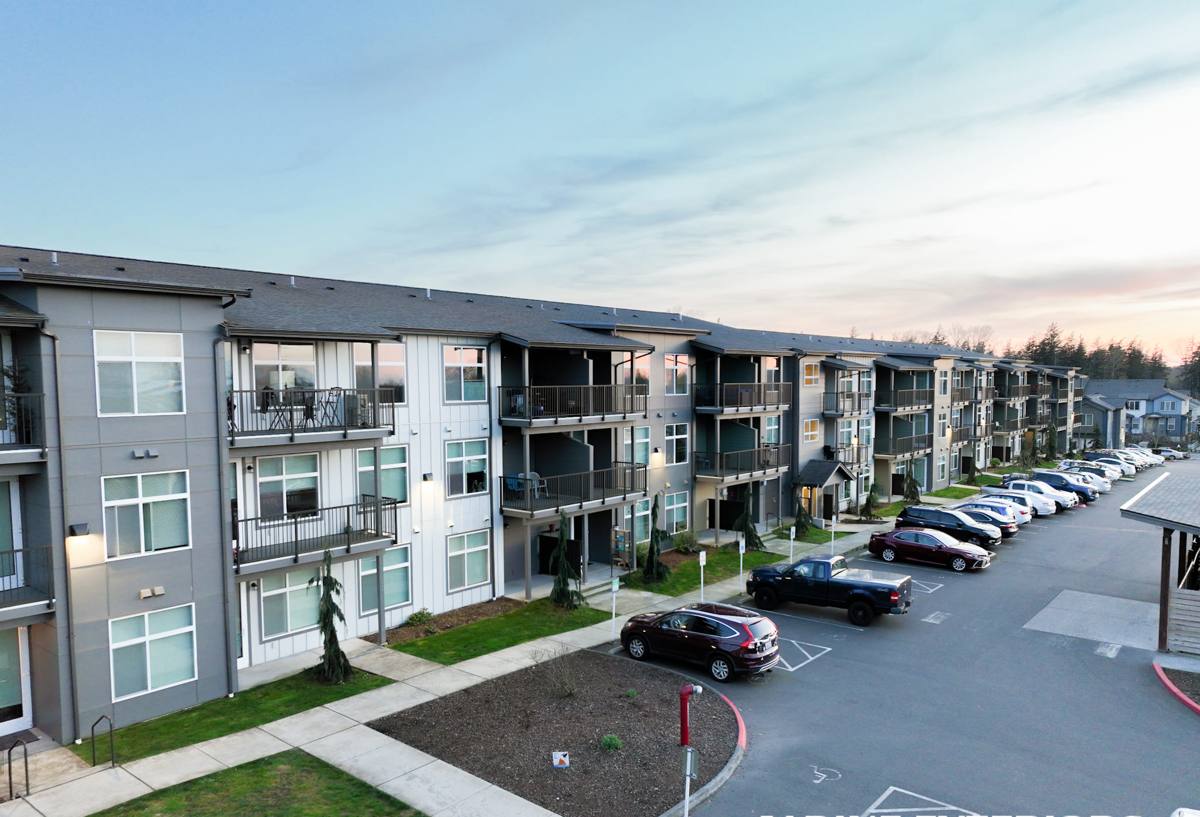
 Ferndale Exterior
 Window Replacement in Sumas: A Different Kind of Wet
Most of what gets written about window replacement in Whatcom County assumes a coastal house — salt air off the water, wind-driven rain hitting the siding sideways, and a moss season that seems to start earlier every year. Out toward Sumas, that picture shifts. You're far enough inland, tucked into the Nooksack valley near the Canadian border, that salt spray isn't the daily concern it is closer to the water. But the same marine weather pattern still reaches you — long stretches of steady rain, heavy valley fog that settles in and doesn't burn off until midday, and enough dampness in the air that moss and algae growth is just as much of a problem on north-facing trim and sills as it is anywhere else in the county.
What that means for windows: a Sumas home deals with more condensation and frost cycling on cold, still mornings than a house with steady coastal breeze, and it deals with sustained moisture exposure from long rain events rather than short, hard-driving squalls. Both wear on old window units, but they wear on them differently, and that difference matters when you're deciding what to replace and how.
Signs Your Sumas Home May Need New Windows
Before recommending a full replacement, we look for the same set of warning signs on every job. If you're seeing more than one or two of these, it's worth getting an honest look rather than waiting.
- Fogging or moisture trapped between the panes — the seal has failed and the insulated glass unit can't be repaired, only replaced
- Heavy condensation on the inside of the glass on cold mornings, especially frost forming on the glass itself rather than just the frame
- Wood frames or sills that are soft, discolored, or show bubbling paint from trapped moisture
- Windows that are hard to open, close, or lock — a sign the frame has swelled, warped, or racked out of square
- Visible daylight or a noticeable draft around the frame when the wind picks up
- Moss or dark staining building up on sills and exterior trim faster than you can keep it cleaned off
- Rooms near older windows that are noticeably harder to heat, or that feel damp compared to the rest of the house
- Single-pane or original aluminum-frame windows that have never been upgraded
What a Correct Window Replacement Job Actually Involves
Swapping in a new window is easy to describe and easy to do poorly. The parts that actually determine whether the job holds up for the next twenty years happen before the new window is ever set in the opening.
Removal and Inspection
Once the old window is out, we check the rough opening for rot, soft framing, or water staining that wasn't visible from outside. In a damp valley climate, it's not unusual to find some moisture damage around older wood-framed windows, especially at the sill. That gets addressed before anything new goes in — installing a new window over a compromised opening just hides the problem for a few more years.
Flashing and the Sill Pan
This is the step that matters most and gets skipped most often. A proper sill pan and correctly lapped flashing direct any water that gets past the window — and some always will, eventually — back out of the wall rather than down into the framing. Given how much steady rain this area sees over a typical winter, flashing done wrong is the single biggest cause of hidden rot behind window openings.
Insulation and Air Sealing
The gap between the new window frame and the rough opening gets sealed with proper low-expansion foam or backer rod and sealant — not just caulk smeared around the edge. Done right, this cuts drafts and reduces the condensation that forms when warm indoor air meets a cold, poorly sealed frame.
Trim and Finish
Interior and exterior trim gets reset or replaced, and every exterior joint is sealed with a product rated for sustained wet exposure, not just occasional rain. This is also where moss and algae resistance starts — a clean, well-sealed trim line sheds water instead of holding it against the wood.
Choosing the Right Frame Material for a Whatcom County Valley Home
There's no single "best" window material — the right choice depends on the home, the budget, and how much upkeep you want to take on. Here's how the common options actually compare for a house dealing with steady rain, fog, and a long damp season.
| Frame Material | Moisture Behavior | Maintenance | Typical Lifespan |
|---|---|---|---|
| Vinyl | Won't rot; can flex slightly with temperature swings | Low — occasional cleaning | 20–30 years |
| Fiberglass | Very stable, minimal expansion/contraction, strong moisture resistance | Low | 30+ years |
| Wood-clad | Good insulator but relies entirely on the cladding and seals staying intact | Higher — cladding and seals need periodic inspection | 20–30 years if well maintained |
| Aluminum | Conducts cold, prone to interior condensation in this climate | Low, but poor thermal performance | Varies widely |
For most Sumas homes, we steer people toward vinyl or fiberglass. Not because wood-clad windows are a bad product — they're not — but because their long-term performance depends on cladding and seals staying perfect for decades in a climate that doesn't forgive small gaps. Vinyl and fiberglass simply ask less of the homeowner over time, which matters if you don't want window maintenance to become a recurring chore.
Glass Packages and Condensation Resistance
The frame is only half the equation. In a valley that sees regular fog and frost, the glass package matters just as much.
Standard double-pane, low-E, argon-filled glass is a solid baseline and handles most of what this climate throws at it. For rooms that run cold, face north, or have a history of heavy interior condensation, triple-pane glass is worth the added cost — it keeps the interior glass surface warmer, which is what actually prevents fogging and frost buildup on cold, still mornings. We'll walk through where triple-pane makes a real difference versus where it's an unnecessary upgrade, room by room, rather than selling it as a blanket recommendation.
How Our Process Works, Start to Finish
- Free on-site estimate — we look at the actual windows, the framing condition, and how the house is oriented, not just a photo or a phone description.
- Straightforward written quote — window count, materials, glass package, and a clear price, with no pressure to decide on the spot.
- Scheduling around the weather — we plan installs for dry windows where possible and protect open framing if conditions turn while a job is in progress.
- Removal, inspection, and repair — old windows come out, framing gets checked, and any rot or damage is repaired before anything new goes in.
- Installation with proper flashing and sealing — sill pans, flashing, insulation, and sealants installed to hold up against sustained rain, not just pass a quick visual check.
- Walkthrough and cleanup — every window gets tested for smooth operation and a tight seal, and the site is cleaned up before we leave.
What Window Replacement Typically Costs in Sumas
Every home is different, so we won't quote a number without seeing the job — but these are the main factors that move the price up or down.
| Factor | How It Affects Cost |
|---|---|
| Number and size of windows | The most direct driver — more openings, larger openings, higher total cost |
| Frame material and glass package | Vinyl is generally the most budget-friendly; fiberglass and triple-pane glass add cost but reduce long-term maintenance and energy loss |
| Condition of the existing framing | Rot or water damage found during removal adds repair time before the new window can go in |
| Access and window type | Second-story, oddly shaped, or hard-to-reach openings take more time and equipment |
| Trim and finish work | Matching existing interior trim or upgrading exterior trim adds labor beyond the window unit itself |
As a broad range, homeowners in this area typically see per-window pricing that spans from a few hundred dollars into the low thousands depending on the factors above — with whole-house replacements scaling accordingly. We'll always give you the real number for your specific home rather than a generic estimate that doesn't hold up once we're actually looking at the openings.
Why a Crew That Already Works in Sumas Makes a Difference
Sumas sits far enough from Ferndale and Bellingham that it doesn't always get the same attention from contractors based closer to the coast. A crew that regularly works this part of Whatcom County already knows how the valley's fog and frost pattern behaves differently from the coastal weather most window guidance is written for, and adjusts the flashing, sealing, and glass recommendations accordingly instead of applying a one-size-fits-all approach.
There's also a practical side: depending on whether a home sits inside Sumas city limits or in unincorporated Whatcom County, permitting requirements and inspection contacts can differ. A crew that's done the paperwork before doesn't have to figure it out for the first time on your job, which keeps the schedule predictable and avoids delays that catch homeowners off guard.
Caring for New Windows After Installation
A correctly installed window should need very little from you, but a few habits will keep it performing well for the long haul.
- Rinse sills and tracks periodically to clear dirt and moss spores before they take hold
- Check exterior caulk lines once a year, especially after a hard winter, and flag any cracking or separation
- Keep gutters and downspouts clear so water isn't sheeting down across window openings
- Wipe down interior sills if condensation collects on cold mornings, so moisture doesn't sit against the frame
- Operate locks and hardware occasionally through the winter so mechanisms don't seize from disuse
If you're weighing whether it's time to replace windows on a Sumas property, we're glad to come take a look. The estimate is free, there's no pressure to sign anything on the spot, and you'll get a straight answer about what your home actually needs — use the form below to get started.