 Ferndale Exterior
 Asphalt Shingle Roofing Built for Custer's Weather
Custer sits in a stretch of northern Whatcom County that takes weather seriously. Homes here deal with salt-tinged air rolling in off nearby marine waters, long stretches of driving rain through fall and winter, and a moss season that can run eight months or longer if a roof isn't set up to resist it. Asphalt shingle roofing is still the right choice for most Custer homes — it's durable, cost-effective, and easy to repair — but only when it's installed with this specific climate in mind. A shingle roof designed for a dry inland town won't hold up the same way out here, and that difference shows up within a few years in the form of granule loss, moss colonies, and soft decking.
This page focuses specifically on asphalt shingle roofing for Custer properties: what the climate demands, what a correct installation actually includes, and how we approach the job differently than a crew that doesn't work this area regularly.
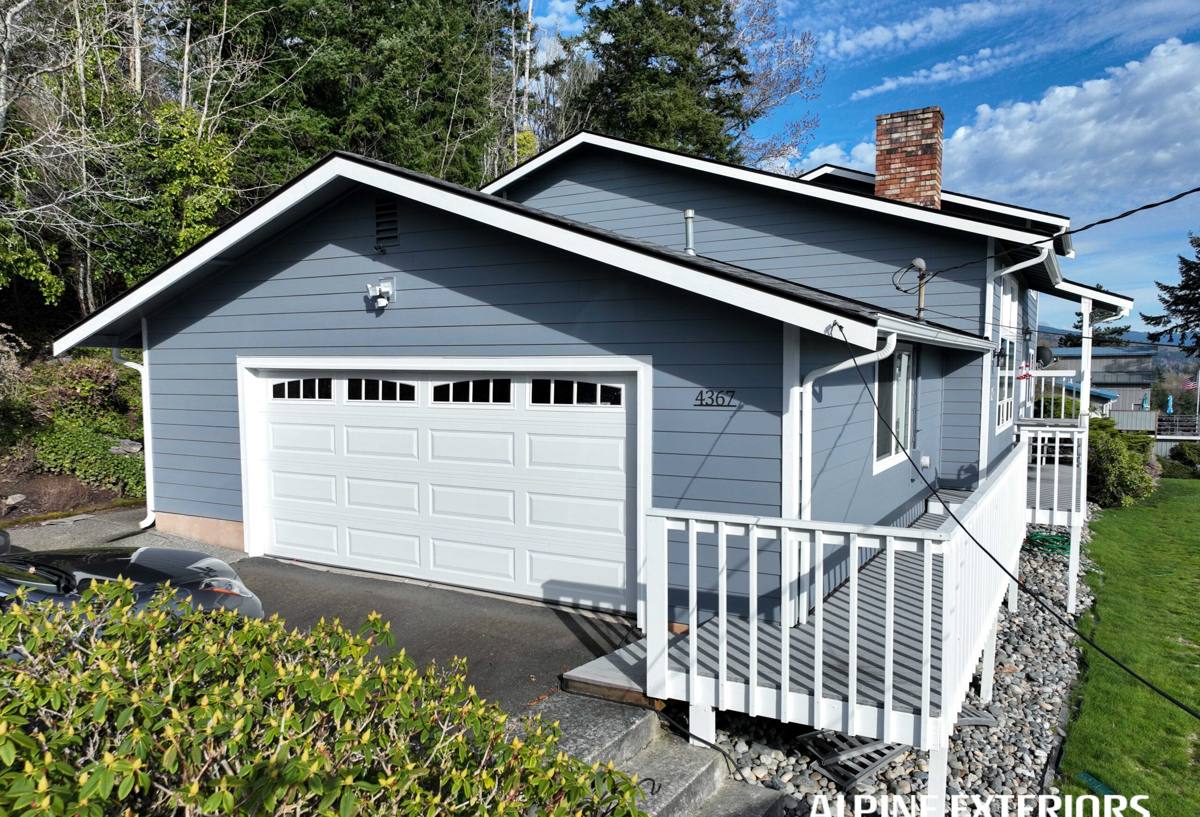
Why Salt Air, Rain, and Moss Are a Tough Combination
Salt Air and Granule Wear
Airborne salt from nearby marine waters accelerates the breakdown of asphalt shingle granules over time. Granules are what protect the asphalt mat underneath from UV exposure — once they start thinning, the shingle ages faster and becomes more brittle. It's a slow process, but it's steady, and it's part of why shingle selection matters more here than it would forty miles inland.
Driving Rain and Water Intrusion
Whatcom County storms don't always come straight down. Wind-driven rain pushes water sideways and upward under shingle edges, around flashing, and into any gap that a lower-quality installation left behind. A roof that would perform fine in a calmer climate can leak in Custer simply because the rain isn't falling the way the installer assumed it would.
Moss: The Long Game
Moss doesn't destroy a roof overnight — it works slowly, holding moisture against the shingle surface, prying up edges as it grows, and feeding on the same organic material asphalt shingles are built from. In a climate with a long wet season and limited direct sun on north-facing or shaded slopes, moss gets a long runway to establish itself if the roof isn't built and maintained to resist it.
What a Correct Asphalt Shingle Installation Includes
A shingle roof is a system, not just a layer of shingles nailed to plywood. Each component below plays a specific role, and skipping or underbuilding any one of them is usually where Custer roofs run into trouble.
- Ice and water barrier at eaves and valleys — a self-adhering membrane that seals around nail penetrations, critical where wind-driven rain and occasional freeze events put the most stress on the roof edge.
- Synthetic underlayment across the full deck — a secondary water barrier under the shingles themselves, more consistent and longer-lasting than older felt products in a persistently damp climate.
- Correct nailing pattern — proper nail count and placement per shingle, which directly affects wind resistance and warranty validity.
- Metal flashing at all transitions — chimneys, sidewalls, skylights, and roof-to-wall junctions are the most common leak points on any roof, shingle quality aside.
- Balanced attic ventilation — intake at the eaves and exhaust at the ridge, working together to keep moisture from condensing inside the roof assembly.
- Starter strips and drip edge — often skipped or done poorly on lower-bid jobs, these protect the most vulnerable edges of the roof from wind uplift and water backup.
Choosing a Shingle That Holds Up in This Climate
Architectural vs. 3-Tab Shingles
Architectural (laminated) shingles are heavier, rated for higher wind speeds, and generally perform better under the driving rain and gusty conditions typical of Whatcom County. Standard 3-tab shingles are lighter-duty and more prone to edge lift in sustained wind. For most Custer homes, we recommend architectural shingles as the standard, not the upgrade.
Algae-Resistant Granules
Most major manufacturers now offer shingles with copper- or zinc-infused granules designed to resist the algae growth that causes those dark streaks on roofs in wet, shaded climates. This isn't a cosmetic feature out here — it's a practical one, and we treat it as standard spec for this region rather than an optional add-on.
Wind and Impact Ratings
Look for a shingle with a wind rating appropriate to coastal-influenced Whatcom County exposure, not just a generic regional average. This is a detail that gets glossed over on lower-end bids but matters the first time a real windstorm comes through.
How Our Process Works
| Step | What Happens | Why It Matters in Custer |
|---|---|---|
| Inspection | Full roof and attic walkthrough, including ventilation and any existing moss or moisture damage | Identifies problems a simple curb-side estimate would miss |
| Tear-off vs. overlay decision | We evaluate deck condition rather than defaulting to one method | A damp, aging deck under existing shingles needs to be seen, not guessed at |
| Deck repair | Any soft, rotted, or delaminated sheathing is replaced before new shingles go down | Shingles installed over a compromised deck fail early regardless of quality |
| Underlayment and flashing | Ice and water barrier, synthetic underlayment, and new metal flashing installed to spec | This is where most weather-related failures actually start |
| Shingle installation | Correct nailing pattern, starter strips, and manufacturer-specified exposure | Protects wind rating and keeps the warranty valid |
| Ventilation check | Intake and exhaust balanced or corrected as needed | Prevents trapped moisture and premature aging from the inside out |
| Final walkthrough and cleanup | Site cleared, magnetic sweep for nails, roof reviewed with the homeowner | Straightforward, no surprises |
Moss and Algae: Prevention Over Cure
Once moss is established on a roof, scraping it off can do more damage than leaving it, since it often pulls granules and lifts shingle tabs with it. The better approach is prevention built into the installation and reinforced with light seasonal maintenance:
- Algae-resistant shingles specified at installation, especially on north-facing and shaded slopes
- Keeping overhanging branches trimmed back so roof sections get more light and airflow
- Gentle, low-pressure roof cleaning rather than pressure washing, which can strip granules
- Clear gutters and valleys so water isn't sitting against the shingle edge longer than it needs to
- Zinc or copper control strips near the ridge as a supplemental option on moss-prone roofs
Attic Ventilation: The Part You Can't See
In a climate with as much sustained moisture as Whatcom County, what happens inside the attic matters almost as much as what happens on the roof surface. Warm, moist air rising from the living space needs somewhere to go. Without balanced intake and exhaust ventilation, that moisture condenses on the underside of the roof deck, which can lead to rot, mold, and premature shingle failure from below — none of which is visible from the ground. We check ventilation on every Custer roof we quote, not just the ones where a homeowner mentions an issue, because it's a common gap on older installations in this area.
What Affects the Cost of a Custer Roof Replacement
| Factor | Why It Changes the Price |
|---|---|
| Roof size and pitch | Steeper roofs require more safety setup and labor time |
| Number of layers to remove | Tear-off of multiple old layers adds disposal and labor cost |
| Deck condition | Rotted or soft sheathing needs replacement before shingles go on |
| Shingle tier | Architectural and algae-resistant products cost more upfront but reduce moss-related maintenance |
| Roof complexity | Valleys, dormers, chimneys, and skylights all add flashing and labor time |
| Ventilation upgrades | Adding or correcting intake/exhaust vents is often bundled into a reroof |
We don't quote a Custer roof off a satellite photo. Every estimate follows an actual on-site look at the deck, the attic, and the existing ventilation, because those are the things that actually drive the price and the long-term performance.
Why It Matters to Hire a Crew That Already Works Custer
A roofing crew that regularly works this part of Whatcom County already knows how salt air, driving rain, and moss season interact with a shingle roof over time — not from a manufacturer's spec sheet, but from seeing it firsthand on homes in the area. That familiarity shows up in small decisions: which slopes get algae-resistant shingles as standard rather than upsell, how much attention flashing gets around chimneys and sidewalls, and whether ventilation gets checked as a matter of course. Ferndale Exterior Co works throughout Ferndale and the surrounding Whatcom County communities, including Custer, and we build every shingle roof to hold up against the specific conditions this area produces, not a generic regional average.
A Simple Maintenance Checklist for Custer Homeowners
- Clear gutters and valleys at least twice a year, more often under overhanging trees
- Trim back branches that shade roof sections and slow drying after rain
- Have moss addressed early with gentle methods, not scraped off once established
- Check attic ventilation isn't blocked by insulation or debris
- Watch for granules collecting in gutters, a sign of aging shingles
- Have flashing around chimneys and skylights inspected every few years
- Schedule a roof inspection after any major windstorm
If your Custer home is due for a new roof, showing early signs of moss or wear, or you just want a straight answer on what condition it's really in, we're glad to take a look. Reach out for a free, no-pressure estimate using the form below.