 Ferndale Exterior
 Storm Damage on a Bellingham Roof Isn't Like Storm Damage Everywhere Else
Bellingham sits right on the water, and that changes what "storm damage" actually means for a roof here. Inland, a storm repair conversation is mostly about wind and hail. On the bay, you're also dealing with salt-laden air that works on metal and fasteners every single day, driving rain that hits roof edges and penetrations sideways instead of straight down, and a moss season that runs long enough to be doing quiet damage between storms rather than only during them. A roof here rarely fails because of one dramatic event. It usually fails because storm damage lands on top of material that was already being worn down by the climate, and the storm is just what finally opens a hole.
That's the frame we bring to every storm repair call in Bellingham: what did this specific storm do, and what was the roof's condition before it hit. Both answers matter for getting the repair right.
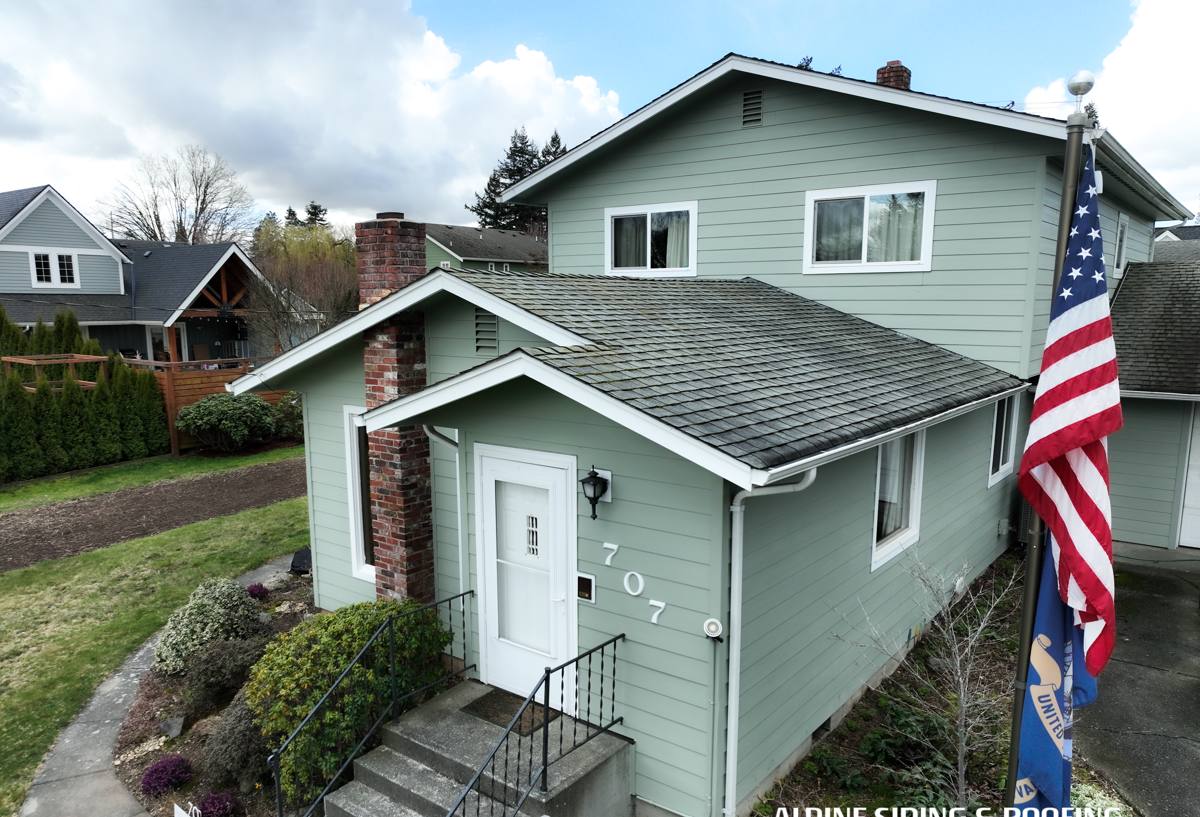
What Storm Damage Actually Looks Like on a Roof Here
Wind Damage
Wind off the water doesn't need to be extreme to do real damage to a roof that's already lost some of its grip. Shingles that have gone brittle from years of sun and salt exposure can crack or lift in wind that a newer roof would shrug off. Once a shingle's edge lifts, wind can get underneath it and peel it back further with each gust, and a roof can lose tabs or whole shingles in a pattern that follows the direction the storm came from rather than being spread evenly across the field.
Water Intrusion and Flashing Failures
Most storm-related leaks don't start in the open field of the roof — they start at a transition: a chimney, a vent pipe, a valley, or the edge where the roof meets a wall. Flashing at those points is designed to shed water moving in one direction, and wind-driven rain moving in from the side is exactly the condition that finds the gaps in flashing that's aged, corroded from salt exposure, or wasn't detailed quite right to begin with. A leak that shows up during or right after a storm is very often an existing flashing weakness that the storm simply pushed water through hard enough to notice.
Debris and Impact Damage
Bellingham has plenty of mature tree cover, and wind events bring down branches, and sometimes whole limbs, onto roofs. Impact damage can range from a few cracked or punctured shingles to bruised or fractured decking underneath, which isn't always visible until you're actually up there looking at the underside of the roofing material, not just the surface.
Why Getting to It Quickly Matters
A damaged roof doesn't stay static between the storm and the repair. Every rain event after the initial damage pushes more water through an opening that's already there, and in this climate that next rain event usually isn't far off. Water that gets past the roofing material and into the decking or attic space can spread laterally before it ever shows up as a stain on your ceiling, which means the visible damage inside the house is often smaller than the actual damage happening above it. Moss and organic debris also don't wait — they'll start colonizing a damaged, moisture-holding area faster than they would a healthy roof surface, adding another layer of deterioration on top of the storm damage itself.
What a Correct Storm Repair Actually Involves
A storm repair done right isn't just "replace the shingles that are obviously missing." It's an assessment of the whole roof plane and its penetrations, because storm damage is rarely as contained as it looks from the ground.
- A full inspection of the affected roof plane, not just the spot that's visibly damaged, since wind damage often extends beyond what's obvious from the ground
- Checking the decking underneath any impact or missing-material area for cracking, soft spots, or fastener pull-through before new roofing goes back on
- Inspecting and, where needed, replacing flashing at chimneys, vents, valleys, and wall transitions near the damaged area, not just patching around old flashing
- Matching replacement shingles or roofing material as closely as possible in type, color, and exposure to avoid an obvious patch that also ages differently than the surrounding roof
- Clearing moss, needles, and debris from the surrounding area so trapped moisture isn't undermining the repair from day one
- Confirming the repair is sealed and fastened to hold up against the next wind-driven rain event, not just the average one
Our Process for a Bellingham Storm Repair
- Inspection and documentation. We get on the roof, assess the full extent of the damage, and document what we find, including anything that will matter for an insurance claim.
- Honest scope conversation. We tell you plainly whether this is a contained repair, a larger repair, or a situation where the roof's overall condition means a repair is only a short-term fix. No inflating the scope, and no downplaying it either.
- Decking and structure check. Before anything new goes on, we confirm what's underneath is sound. Roofing material installed over compromised decking doesn't hold up, regardless of how good the shingles are.
- Repair and flashing work. We replace damaged material, correct or renew flashing at nearby transitions, and match the surrounding roof as closely as the existing material allows.
- Site cleanup. Debris, old material, and displaced granules get cleared, including a magnetic sweep for stray fasteners around the work area.
- Follow-up. We let you know what to watch for and when, if ever, the rest of the roof is likely to need attention, rather than disappearing the moment the visible repair is done.
Repair or Replace? What Actually Decides It
| Factor | Leans Toward Repair | Leans Toward Replacement |
|---|---|---|
| Age of existing roof | Roof is well within its expected service life | Roof is already near or past the age where the material is failing generally |
| Extent of damage | Isolated to one plane or a contained area | Spread across multiple planes or found alongside pre-existing wear |
| Decking condition | Decking underneath is sound | Decking shows rot, soft spots, or damage in multiple areas |
| Material availability | Matching material is readily available | Existing material is discontinued or won't visually match a patch |
| History of prior repairs | This is the roof's first significant repair | Roof already carries several past patches or repair points |
Most storm calls in Bellingham turn out to be legitimate repairs, not replacements. But we'll say so directly if a repair is only going to buy you a season or two, rather than let you spend money on a patch that doesn't actually solve the underlying problem.
What Insurance Adjusters Typically Look For
If you're filing a claim, adjusters generally want clear documentation tying the damage to a specific storm event: photos, a description of the damage pattern, and confirmation that the damage is consistent with wind or impact rather than gradual wear. We document repairs with that in mind, because a claim that's well-documented from the start tends to move faster than one that has to be pieced together after the fact.
Moss, Salt Air, and Why Prevention Matters After the Repair
Fixing the storm damage is only half the job if the roof's underlying condition is what let the storm do as much damage as it did. In Bellingham specifically, salt air continues to work on exposed fasteners and metal flashing long after the storm has passed, and moss will keep colonizing shaded or north-facing sections of the roof if it isn't kept in check. A repair that ignores those ongoing pressures is a repair that's likely to need attention again sooner than it should. Periodic moss treatment, keeping gutters and valleys clear of needle and leaf debris, and catching small flashing issues before they become active leaks all extend the life of both the original roof and the repair itself.
Why Hiring a Crew That Already Works Bellingham Matters
A roofer who works this part of Whatcom County regularly knows which wall and roof orientations take the brunt of wind-driven storms coming off the water, which materials actually hold up to sustained salt exposure versus which ones just look fine on a spec sheet, and how fast moss reestablishes itself on a shaded Bellingham roof compared to a drier inland property. That local pattern recognition shows up in small but real ways: knowing to check a particular valley design that tends to trap debris in this area, or recognizing storm damage that's about to become a bigger problem versus damage that's genuinely contained. It also means a faster response when a storm actually comes through, since we're not driving in from outside the area to get eyes on your roof.
After a Storm: What to Check From the Ground
You don't need to get on the roof yourself, and we'd rather you didn't. But a few things are worth checking safely from the ground or from inside the house after a significant wind or rain event:
- Shingle pieces, granules, or flashing fragments in the yard or gutters
- Visible gaps, curled edges, or missing sections on the roof plane you can see from the ground
- New or worsening ceiling stains, especially near chimneys, skylights, or where two roof planes meet
- Water in the attic, if you can safely check, particularly around vent pipes and valleys
- Debris or broken branches resting directly on the roof surface
- Gutters that are overflowing or pulling away from the fascia after heavy rain
If you notice any of these, it's worth having someone look sooner rather than later. A small storm repair now is almost always less costly, in time and money, than the same damage left to spread through another wet season.
If a recent storm has left your Bellingham roof with missing shingles, a new leak, or damage you're not sure how to assess, we're glad to take a look. Reach out using the form below for a free, no-pressure estimate.