 Ferndale Exterior
 Roof Repair Built for Birch Bay's Shoreline Conditions
Birch Bay sits right on the water, and that changes what a roof has to deal with compared to homes further inland in Whatcom County. Salt-laden air moves in off the bay and settles on every exposed surface, including your roof. Add in driving rain that comes at an angle instead of straight down, steady wind off the water, and a moss season that runs longer here than in drier parts of the county, and you have a roof that ages differently than one a few miles east. A repair that works fine on a sheltered inland roof can fail fast on a waterfront or near-waterfront home if it doesn't account for these conditions.
We repair roofs across Ferndale and the surrounding Whatcom County area, and Birch Bay homes are a regular part of that work. That means we're not guessing at what the salt air and wind do to fasteners, flashing, and shingle edges out here — we've seen it, patched it, and learned which fixes actually hold up.
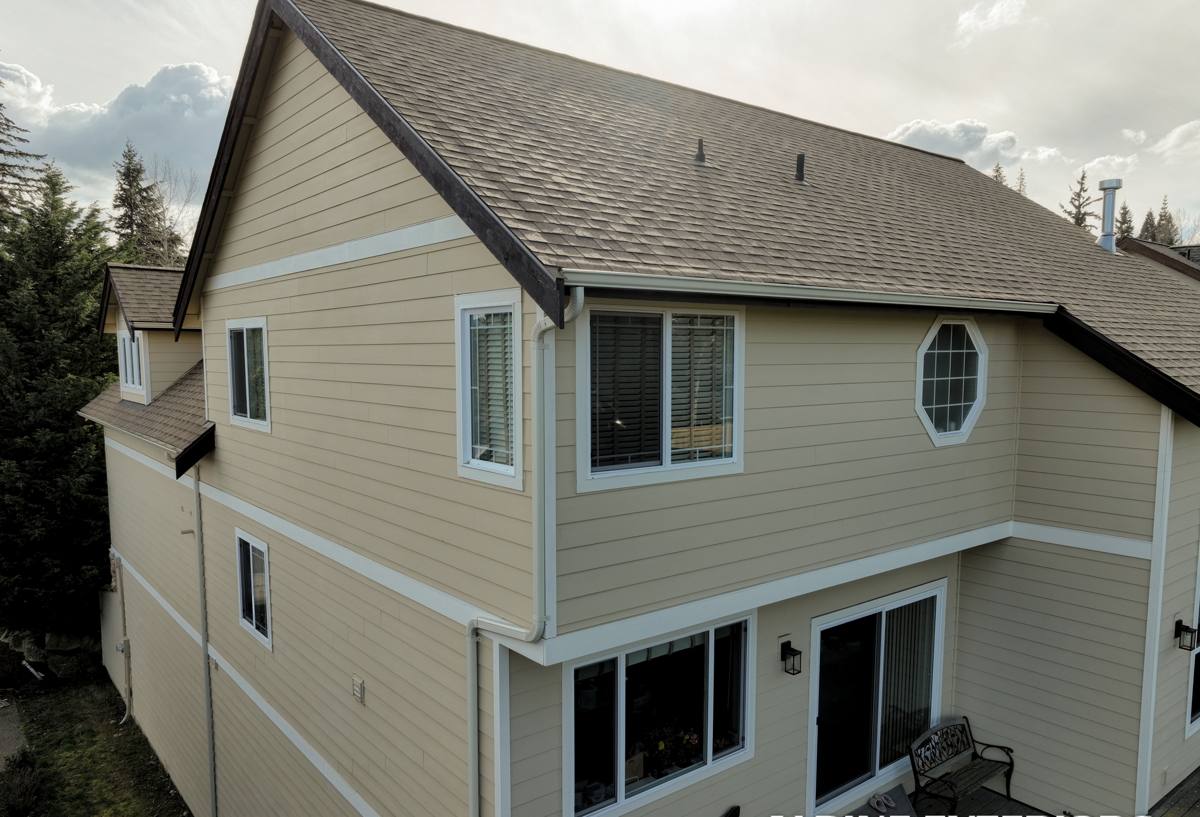
Signs a Birch Bay Roof Needs Repair, Not Just a Look
Most roof repairs start with something a homeowner already noticed. The trick is telling the difference between a small, fixable problem and a sign that bigger trouble is building underneath. Here's what we look for and what it usually means:
- Water stains on ceilings or in the attic — almost always an active leak, and it rarely stays small.
- Granules collecting in gutters or downspouts — shingles losing their protective coating faster than normal, often sped up by salt exposure and constant moisture.
- Moss or algae streaking on north-facing or shaded slopes — a sign the roof is staying damp longer than it should between rains.
- Lifted, cracked, or missing shingles after a windy stretch — wind off the water can work an edge loose that would otherwise sit tight for years.
- Rust streaks or soft spots near flashing — a strong clue that metal flashing or fasteners are corroding faster than expected.
Common Trouble Spots on Coastal-Exposed Homes
On the roofs we repair near the water, the same few areas cause most of the problems: valleys where two roof planes meet and water concentrates, chimney and vent flashing where metal meets shingle, and any low-slope section where wind-driven rain can push water sideways under the roofing material instead of letting it run off. These spots deserve extra attention on every inspection, not just a glance from the ground.
What a Correct Roof Repair Actually Involves
A roof repair that's done right starts with figuring out why the damage happened, not just patching where the water is showing up. Water often travels along the underlayment or roof deck before it appears inside the house, so the visible stain and the actual entry point can be several feet apart. We trace the path before we start replacing anything.
Matching Materials, Not Just Covering the Spot
Whenever possible, we match the existing shingle or roofing material so the repair blends in and performs the same as the surrounding roof. Mismatched patches don't just look bad — they can create small seams where water collects differently than the rest of the roof was designed to handle.
Flashing and Fasteners Get Checked Every Time
Because salt air accelerates corrosion on exposed metal and fasteners, we don't just replace the shingle and move on. We check the condition of the flashing, nail heads, and any exposed metal in the repair area, and replace anything that's starting to corrode — even if it isn't the direct cause of the current leak. Leaving weakened metal in place just means another call in a year or two.
Ventilation Plays a Role Too
A roof that traps moisture underneath the shingles from poor attic ventilation will keep growing moss and shortening its own lifespan no matter how many surface repairs get done. Where ventilation is clearly part of the problem, we'll tell you honestly, rather than repeating the same patch every couple of seasons.
Moss, Algae, and Birch Bay's Long Wet Season
Moss isn't just cosmetic. It holds moisture directly against the roofing material, works its way under shingle edges, and can lift shingles enough to let water in during the next storm. In a shoreline community like Birch Bay, shaded and north-facing slopes stay damp longer between dry spells than they would further inland, which is exactly the environment moss needs to establish itself.
Removing moss the right way matters as much as removing it at all. Scraping or pressure-washing moss off aggressively can strip granules and damage the shingle surface, which shortens roof life instead of extending it. We remove moss using methods that clear the growth without tearing up the roofing material underneath, and where a repair area has active moss growth, we treat it as part of the job rather than leaving it for the homeowner to deal with separately.
Repair Materials and Trade-offs
Different roofing materials respond differently to salt air, wind, and constant moisture. Here's how the common options compare when it comes to repair in a coastal-exposed setting like Birch Bay:
| Material | How It Handles Salt Air & Moisture | Repair Considerations |
|---|---|---|
| Asphalt composition shingle | Generally holds up well; granule loss can speed up with prolonged salt exposure | Widely available matching shingles; straightforward to patch when caught early |
| Cedar shake/shingle | Moisture and moss-prone in shaded, damp areas; needs consistent airflow underneath | Requires careful matching and moss management to avoid repeat repairs |
| Metal panel roofing | Performs well against wind and rain when fasteners and coatings are intact | Fastener and sealant condition near the coast needs regular checking |
| Flashing (any roof type) | Most exposed component; corrodes fastest in salt air over time | Should be inspected and often replaced during any repair, not just spot-fixed |
None of these materials are wrong choices for a home near the water — each one just comes with a different maintenance rhythm. Our job during a repair is to work with what's already on your roof and be straightforward with you about what it needs to hold up going forward.
Our Repair Process
Every roof repair we do in Birch Bay follows the same basic steps, whether the job is a single flashing fix or a larger section of storm damage:
- Inspection. We get on or above the roof, not just look from the ground, to see the actual extent of the damage and check nearby areas that are often affected but not yet showing symptoms.
- Honest assessment. We explain what's actually wrong, whether it's a straightforward repair or something that signals a bigger issue coming, and give you our recommendation without upselling a full replacement you don't need.
- Written estimate. You get a clear scope of work before anything starts, so there are no surprises about what's being done or why.
- Repair. We match materials where possible, check flashing and fasteners in the surrounding area, and address moss or moisture issues that contributed to the damage.
- Cleanup and check-over. We clear debris and old materials from the site and do a final check of the repaired area before we consider the job done.
Why Hiring a Crew That Already Works Birch Bay Matters
A repair crew that mostly works drier, more sheltered neighborhoods can miss things that are routine for a shoreline home. Knowing to check flashing and fastener corrosion as a matter of course, recognizing how far moss can spread on a shaded slope during a wet Whatcom County winter, and understanding how wind off the water tends to lift shingles at specific edges and corners — that's knowledge that comes from doing this work in this kind of setting repeatedly, not from a general roofing checklist.
It also matters for the practical side of the job. Crews familiar with Birch Bay and the surrounding Ferndale area know what weather windows are realistic for scheduling repair work, and they show up prepared for conditions — wind, damp roofing surfaces, limited access on some waterfront lots — that catch an unfamiliar crew off guard.
Homeowner Checklist: Before You Call for a Roof Repair
- Note where you're seeing water inside the home (ceiling, wall, attic) and when it shows up — during heavy rain, wind-driven rain, or steady drizzle.
- Check gutters and downspouts for granule buildup after cleaning them out.
- Look at north-facing and shaded roof slopes for moss or dark streaking.
- After a windy storm, check for any shingles that look lifted, curled, or missing from the ground with binoculars — don't climb up yourself.
- Write down roughly how long it's been since the roof was last inspected or repaired.
- Avoid pressure-washing moss or debris off the roof yourself; it can do more damage than the moss itself.
Protecting Your Roof Through Another Whatcom County Winter
A roof repair done correctly in Birch Bay accounts for what the shoreline throws at it — salt air working on metal and fasteners, wind-driven rain finding its way under loose material, and moss that has all season to take hold in the damp, shaded spots. Catching problems early and fixing them properly the first time is almost always less disruptive and more affordable than waiting until a small leak becomes a deck or interior repair too.
If you're seeing signs of trouble on your roof, or it's simply been a while since anyone took a close look, we're happy to come out, inspect it, and give you a straightforward, no-pressure estimate. Use the form below to get in touch and we'll take it from there.