 Ferndale Exterior
 Metal Roofing in Blaine: A Different Climate Problem Than Most of the Country
Blaine sits at the northwest corner of Whatcom County, right up against the water and close enough to the Canadian border that the weather pattern is its own thing. Homes here deal with a combination most manufacturers don't design for on a national average: salt-laden air off the water, wind-driven rain that comes in sideways more often than straight down, and a moss season that can run most of the year in shaded or north-facing sections of a roof. A metal roof that's correctly specified and installed for this environment can outlast two or three asphalt roofs. A metal roof that's installed with generic, one-size-fits-all details will show corrosion, streaking, or leaks at the seams well before it should.
This page is specifically about metal roofing for homes in and around Blaine — not a general metal roofing overview. The fastener choice, coating spec, and flashing details we recommend here are shaped by what actually happens to a roof a few miles from saltwater in Whatcom County.
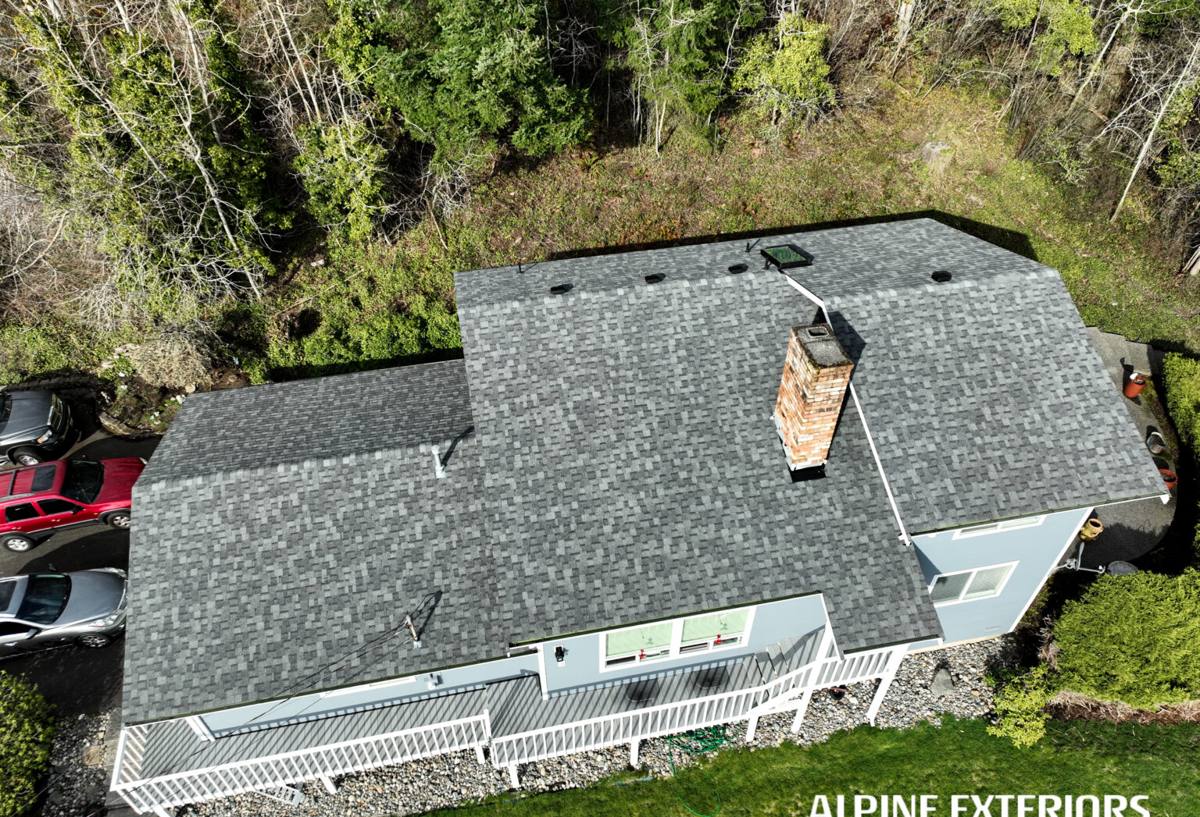
What Blaine's Climate Actually Does to a Roof
Salt Air and Corrosion
Airborne salt is the big one. It doesn't take a beachfront lot — salt drift travels inland on wind and settles on any exposed metal, where it accelerates corrosion at fastener heads, cut edges, and any spot where a protective coating has been scratched or thinned during installation. Bare or poorly coated steel, and mismatched fasteners that create galvanic reaction with the panel material, are the two most common causes of premature rust we see on roofs in this area.
Wind-Driven, Sideways Rain
Blaine gets weather systems that push rain horizontally, not just down. That matters for a metal roof because it means water is being forced up and under laps, around penetrations, and into any gap in flashing that would never see moisture on a calmer, drier site. Standard lap and flashing details that work fine inland can leak here if they weren't built with wind-driven rain in mind.
Moss and Shade
North-facing slopes, roofs under tree cover, and low-slope sections that stay damp longer than the rest of the roof are where moss takes hold. On metal roofing, moss is less about structural damage than it is about trapped moisture, staining, and — on textured or stone-coated panels — a foothold that's harder to keep clean than it is on smooth standing seam.
What a Correct Metal Roof Installation Actually Involves Here
A metal roof is only as good as the details underneath and around it. In this climate, the following aren't optional upgrades — they're what separates a roof that performs for decades from one that needs early repairs.
- Fastener compatibility: Fasteners and flashing metal need to match the panel material to avoid galvanic corrosion, and exposed fastener systems need gaskets rated for long-term compression, not just a fresh seal at install.
- Underlayment built for wind-driven moisture: A synthetic or self-adhered underlayment underneath the panels acts as the real weather barrier if wind ever forces water past the metal itself.
- Flashing detail at every penetration and transition: Valleys, wall-to-roof transitions, chimneys, and vents need flashing sized and lapped for sideways rain, not just vertical runoff.
- Ventilation that doesn't trap moisture: Metal roofs need airflow underneath to avoid condensation building up on the underside of the panels, which is its own moisture problem separate from what's coming from outside.
- Edge and seam sealing appropriate to the coating: Cut edges expose bare metal underneath the protective coating; those need to be treated or positioned so they're not sitting where water collects.
Comparing Metal Roofing Options for a Coastal Whatcom County Home
| System | Corrosion Resistance in Salt Air | Performance in Wind-Driven Rain | Moss Resistance | Typical Maintenance |
|---|---|---|---|---|
| Standing seam steel | Very good with proper coating | Excellent — concealed fasteners, minimal penetration points | Good — smooth surface sheds debris | Low; periodic inspection |
| Exposed-fastener panel | Good, but fasteners are the weak point over time | Good, but relies on gasket condition at every fastener | Good | Moderate; fastener checks and re-seating over the roof's life |
| Stone-coated steel | Good — coating protects panel | Good | Fair — textured surface can hold debris and moisture longer | Moderate; occasional debris and moss cleaning |
| Aluminum panel | Excellent — naturally corrosion resistant, well suited to salt exposure | Very good | Good | Low |
For homes closer to the water with more direct salt exposure, we generally steer homeowners toward standing seam or aluminum systems because they minimize the exposed-fastener corrosion risk that's the most common long-term failure point in this environment. That's a maintenance and longevity call, not a statement that other systems are bad — exposed-fastener panels are a legitimate, more budget-friendly option when the site and expectations fit.
Our Process for a Blaine Metal Roofing Project
1. On-Site Assessment
We walk the roof and the attic or rafter space, note slope, shade patterns, existing moss or moisture issues, and how exposed the home is to prevailing wind and salt drift. That assessment drives the panel, fastener, and underlayment recommendation — it's not a generic quote.
2. Tear-Off or Overlay Evaluation
Depending on the condition of the existing roof deck and covering, we'll evaluate whether a full tear-off is warranted versus overlay, and flag any deck repair needed before new material goes down — installing over a compromised deck just moves the problem underneath the new roof.
3. Installation with Climate-Specific Details
Underlayment, flashing, fastener spec, and ventilation are installed to the standards above — built for this site's wind and salt exposure, not a generic national spec sheet.
4. Final Walkthrough
We review the completed roof with the homeowner, explain what maintenance (if any) is recommended going forward, and make sure any warranty documentation is in hand.
What Drives Cost on a Metal Roofing Project
| Factor | Why It Matters |
|---|---|
| Panel system chosen | Standing seam and aluminum typically cost more upfront than exposed-fastener panels, offsetting with lower long-term maintenance |
| Roof complexity | Valleys, dormers, and multiple roof planes add labor and flashing work |
| Deck condition | Rot or damage found during tear-off adds repair cost before new roofing goes on |
| Ventilation upgrades | Adding or correcting attic/roof ventilation is sometimes needed alongside a re-roof |
| Access and site conditions | Steep slope, tree cover, or tight site access affect labor time |
We give a specific number after seeing the roof in person — broad online estimates rarely account for the deck condition or complexity that actually drives the final price.
Living With a Metal Roof in a Moss-Prone Climate
One advantage of metal over asphalt shingles in this climate is that moss has a much harder time establishing itself on a smooth, non-porous surface — there's no granule texture for spores to catch on. That said, no roof in Whatcom County is immune to it, especially under tree cover or on shaded north slopes. A basic annual check — clearing debris out of valleys and off any low-slope sections, and confirming gutters are flowing freely — goes a long way toward keeping a metal roof performing the way it's supposed to for decades. We're glad to walk a homeowner through what to look for, whether or not we did the original install.
Why It Matters That We Work Blaine Regularly
A crew that installs roofs across a wide mix of climates will default to generic details unless someone tells them otherwise. A crew based in and around Ferndale that works Blaine and the rest of coastal Whatcom County on a regular basis already knows which fastener and flashing choices hold up here and which ones show problems in a few years. That's not a marketing point — it shows up directly in how long the roof lasts and how few callbacks it needs.
When you're evaluating a contractor for a metal roofing project in this area, a few questions can tell you a lot about whether they actually understand the local conditions:
- Do they ask about the home's exposure to wind and salt drift, or just measure the roof and quote a standard package?
- Can they explain why they're recommending a specific fastener and flashing approach for this site?
- Do they address ventilation as part of the project, or only the roof covering itself?
- Are they upfront about deck condition risk before tear-off, rather than surprising you mid-project?
- Can they speak to other roofs they've done in Blaine or nearby coastal areas specifically?
Get a Straightforward Estimate
If you're weighing a metal roof for a home in Blaine, we're happy to come take a look, walk the roof with you, and give you a straightforward assessment — no pressure, no generic quote pulled from a national average. Fill out the form below and we'll get in touch to schedule a free estimate.