 Ferndale Exterior
 Deck Repair Built for Sudden Valley's Conditions
Decks in Sudden Valley take a different kind of beating than decks in a lot of other Whatcom County neighborhoods. Wooded, lake-adjacent lots mean more shade, more standing moisture, and a moss season that runs longer than most homeowners expect. Add in the driving rain that comes off the water for months at a time, plus the salt-laden air that reaches inland from Bellingham Bay and the broader Puget Sound region, and you've got a climate that's genuinely tough on outdoor wood and hardware. We repair decks throughout the Ferndale area, and Sudden Valley is one of the neighborhoods where we see the same failure patterns often enough to know exactly what to check first.
This page covers what deck repair actually looks like for homes in this area — what tends to go wrong, what a correct repair involves, and how we approach the job so it holds up through another wet season instead of needing attention again next year.
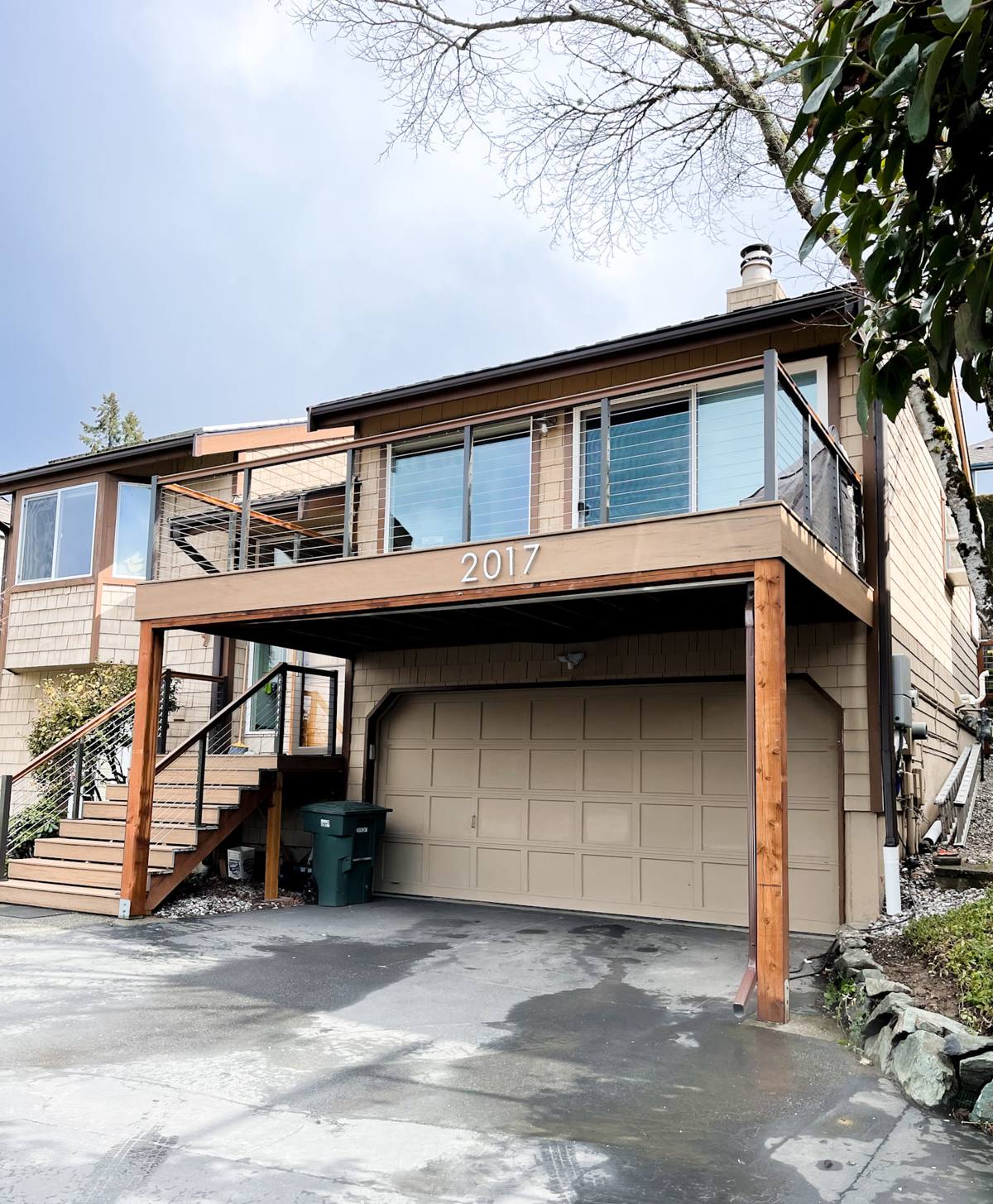
Why Sudden Valley Decks Wear Differently
Three things drive most of the deck damage we see out here, and they compound each other.
Shade and Moisture Retention
Tree cover keeps a lot of Sudden Valley decks shaded for most of the day, especially on north- and east-facing builds tucked against a wooded lot line. Shade feels nice in July, but it means decking boards, joists, and ledger connections stay damp far longer after a rain than they would in full sun. Wood that never fully dries out is wood that's setting up for rot, whether that's a slow soft spot under a rug or a joist that's lost structural integrity where it meets the house.
A Long Moss Season
Moss doesn't just look bad — it holds water directly against the deck surface and works its way into seams, screw heads, and butt joints. On shaded boards it can establish itself in early fall and stay active well into late spring. Once moss gets a foothold on a horizontal wood or composite surface, it's also a slip hazard, which turns a cosmetic issue into a safety one.
Rain Volume and Direction
Driving rain doesn't just fall on a deck — wind-driven rain gets pushed sideways into ledger boards, stair stringers, and the gap where decking meets the house wall. That's the area most prone to hidden rot, because it's the hardest to inspect without pulling boards, and it's usually the last place a homeowner thinks to check.
Salt Air's Slower, Quieter Damage
Sudden Valley sits back from the water, but this part of Whatcom County still gets enough salt-carrying air off the Sound to accelerate corrosion on exposed metal — fasteners, joist hangers, railing brackets. Corroded hardware is one of the most common reasons a deck that looks fine on the surface turns out to have a real structural problem underneath.
Common Deck Problems We Find in Sudden Valley
- Soft or spongy decking boards — usually wood decking that's held moisture too long, often on shaded sections
- Rot at the ledger board — where the deck attaches to the house, frequently hidden until flashing is pulled back
- Rusted or corroded fasteners and joist hangers — weakened connections that don't show from above
- Moss and algae buildup — on decking, stairs, and railings, especially in shaded corners
- Loose or wobbly railings and posts — often from water intrusion at the post base rather than a hardware failure alone
- Stair stringer deterioration — stairs take direct rain exposure and heavy foot traffic, so they fail faster than flat decking
- Gaps and cupping in aging wood decking — normal wood movement that gets worse with repeated wet-dry cycles
What a Correct Deck Repair Actually Involves
A repair that actually holds needs to start below the surface, not just at the board you can see. Here's what we check and address on a proper deck repair:
Structural Inspection First
Before we touch a single board, we check the framing — joists, beams, posts, and especially the ledger connection to the house. A deck can have brand-new decking on top of a compromised frame, and that's a repair that will fail again fast if the framing isn't addressed first.
Fastener and Hardware Condition
Given how hard local conditions are on metal, we look closely at joist hangers, structural screws, and railing hardware for corrosion — not just rust stains, but actual loss of holding strength. Compromised hardware gets replaced, not painted over.
Moisture Path Correction
If a deck is failing because water is getting somewhere it shouldn't — behind flashing, into a post base, under a ledger — replacing the damaged wood without fixing the water path just resets the clock on the same failure. Every repair we do addresses why the damage happened, not just where.
Board-Level Repair or Replacement
Individual boards with rot, splitting, or heavy cupping get replaced rather than patched. Mixing old and new boards on a repair is normal and reasonable — the goal is a structurally sound, safe deck, not an entirely new one, unless the damage is widespread enough that replacement makes more sense.
Repair vs. Replacement: How We Decide
Not every deck problem calls for a full rebuild, and not every deck is worth patching indefinitely. Here's the general logic we use when we're out looking at a Sudden Valley deck:
| Condition Found | Typical Approach | Why |
|---|---|---|
| Isolated soft or rotted boards, sound framing underneath | Targeted board replacement | Framing is the expensive part — if it's solid, repair is the honest call |
| Rot at the ledger board or main support beam | Structural repair, often more involved | These are load-bearing connections; they need to be right, not patched |
| Corroded hardware throughout, decking otherwise fine | Hardware replacement pass | Cheaper than full replacement and addresses the actual failure point |
| Widespread rot across most of the deck surface and framing | Full or near-full rebuild | Piecemeal repair on a deck this far gone rarely pencils out long-term |
| Deck is structurally sound but heavily moss-stained or weathered | Cleaning, sealing, cosmetic repair | No structural work needed — this is maintenance, not repair |
Our Deck Repair Process
- On-site inspection — we walk the full deck, check framing from underneath where accessible, and test boards, railings, and stairs by hand
- Honest scope and estimate — we tell you what actually needs repair versus what's cosmetic, and give you real numbers before any work starts
- Address the cause, not just the symptom — if water intrusion or drainage is behind the damage, that gets corrected as part of the repair
- Repair or replace affected components — framing, decking, railings, and hardware, matched to what the deck actually needs
- Final check and cleanup — we confirm everything is secure and safe to use before we consider the job done
Materials We Use — and Why
Material choice matters more here than in drier climates, because everything on a Sudden Valley deck spends significant time wet.
Wood Decking
Pressure-treated fir and cedar are both common in this area and both can perform well when properly maintained — sealed or stained on a regular schedule and kept free of standing moss and debris. Wood is the more affordable option up front but does require the most ongoing homeowner maintenance to hold up against local moisture.
Composite Decking
Composite decking costs more initially but resists rot and doesn't need staining, which is appealing given how much moisture this area sees. Our standard is to be upfront that composite still requires some care — buildup on the surface, especially moss and organic debris in shaded spots, needs to be cleaned off periodically or it will hold moisture against the board just like it would on wood.
Fasteners and Hardware
We favor stainless or heavily corrosion-resistant fasteners and connectors for repairs in this area specifically because of how fast standard galvanized hardware can degrade with sustained damp exposure and salt-air influence. It costs a bit more upfront, but replacing hardware twice costs more in the long run.
Maintenance Checklist Between Repairs
A repaired deck stays repaired longer with some basic seasonal attention. Here's what we recommend to Sudden Valley homeowners:
- Sweep leaves and debris off the deck surface regularly, especially in shaded areas, to prevent moisture and moss from building up
- Rinse or gently scrub visible moss and algae before it spreads, rather than waiting for a heavy buildup
- Check for standing water after heavy rain — pooling usually points to a drainage or slope issue worth addressing
- Inspect railings and stair posts for movement once or twice a year
- Look at the ledger board area where the deck meets the house for any staining, gaps, or soft spots
- Reseal or restain wood decking on the schedule appropriate to the product — don't wait until it's visibly weathered
- Address small issues (a loose board, a soft spot) promptly — they don't improve on their own in this climate
Why a Crew That Already Works in Sudden Valley Matters
A contractor who works this specific area regularly knows which parts of a deck tend to fail first here, what the shaded, lake-adjacent lots do to wood over time, and how to inspect for damage that isn't obvious from the surface. That local pattern recognition matters — it's the difference between a repair that treats the visible symptom and one that catches the moisture problem causing it. We've built our approach around what actually happens to decks in Ferndale-area conditions, not a generic checklist.
If you've got a deck in Sudden Valley that's showing soft spots, moss buildup, wobbly railings, or you're just not sure whether it needs repair or replacement, we're happy to take a look. Reach out for a free, no-pressure estimate using the form below — we'll give you an honest read on what your deck actually needs.