 Ferndale Exterior
 Everson's Climate Is Harder on Siding Than It Looks
Everson sits inland from Ferndale along the Nooksack River valley, but that doesn't mean the siding on local homes gets an easy ride. Whatcom County as a whole deals with a long wet season, low winter sun angles that keep north- and east-facing walls damp for days at a time, and moisture-laden air that moves through the region from the coast. Add in driving rain that comes sideways during winter storms, and you have conditions that punish siding materials that can't handle repeated wetting and drying cycles.
The result on a lot of older Everson homes is the same pattern we see across Whatcom County: moss and algae streaking on shaded walls, paint that's failing years ahead of schedule, and soft spots where wood-based siding has been absorbing moisture at the bottom courses and around trim. None of that is a mystery — it's just what happens when a siding product isn't engineered for this specific climate.
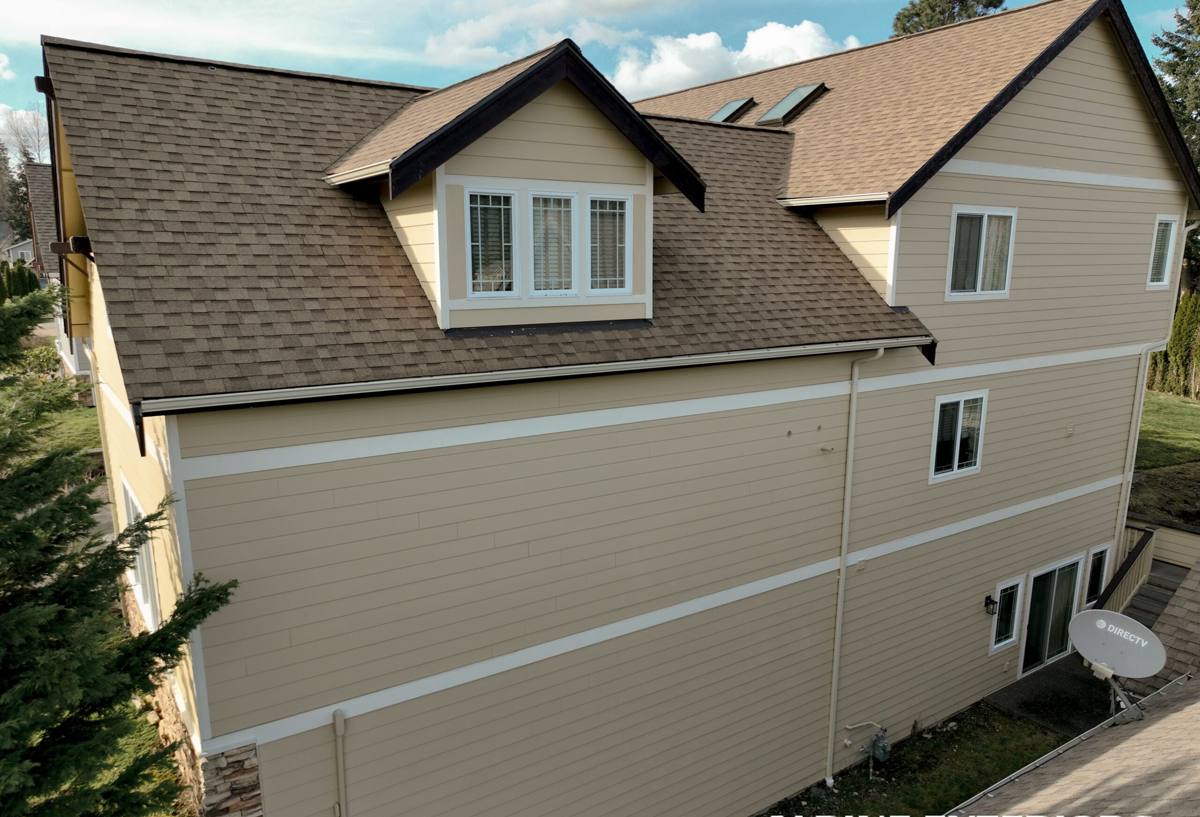
What Everson Homes Actually Need From Their Siding
Before talking about products, it helps to be clear about what a wall assembly in this area needs to hold up over decades, not just years:
- Resistance to prolonged moisture exposure without swelling, delaminating, or losing paint adhesion
- A factory finish that doesn't rely on the homeowner repainting every 3-5 years to stay protected
- A surface that doesn't feed moss and algae growth the way porous or absorbent materials do
- Enough dimensional stability to keep joints and caulk lines tight through repeated wet-dry cycles
- Fire resistance, given the wildfire smoke and drought stress the whole Pacific Northwest has seen in recent summers
This is exactly why we standardized on James Hardie fiber cement siding and stopped installing other materials. It isn't a marketing position — it's a response to what we've seen hold up in this climate and what hasn't.
Why We Install James Hardie and Nothing Else
James Hardie fiber cement is a mix of cement, sand, and cellulose fibers, engineered specifically for different climate zones. For the Pacific Northwest, Hardie's HZ5 product line is built for our combination of moisture and temperature swings. A few things matter specifically for a town like Everson:
Non-Combustible Core
Fiber cement doesn't burn, which matters more each year as regional wildfire smoke and dry summer stretches become part of the normal Whatcom County calendar. It's one less thing to think about compared to wood-based products.
ColorPlus Factory Finish
Rather than field-painting siding on site, Hardie's ColorPlus finish is baked on in a controlled factory process. That finish resists fading and chipping far longer than field-applied paint, and it means the color match on future repairs or additions stays consistent instead of drifting over time.
Moisture Behavior
Fiber cement doesn't absorb water the way wood, wood composite, or some engineered products do. It won't swell at the edges, and it doesn't provide the same food source for moss and mildew that organic materials do — which matters directly in a region with our moss season.
Warranty Structure
Hardie backs its siding with a strong, transferable limited warranty on both the substrate and the ColorPlus finish. That transferability is a real selling point if a home changes hands, which happens regularly in growing Whatcom County communities.
We get asked why we don't also offer vinyl, LP SmartSide, or other fiber cement brands. The honest answer is that once we standardized our crews, our detailing, and our warranty backing around one product system, we could get better at installing it correctly every time — rather than spreading training and quality control across several products with different moisture behavior, expansion rates, and flashing requirements.
Signs an Everson Home's Siding Is Overdue for Replacement
Homeowners often wait longer than they should because siding damage develops slowly. Watch for:
- Persistent moss or algae streaking that comes back within weeks of cleaning
- Paint that's peeling, bubbling, or chalking noticeably faster than the rest of the house
- Soft or spongy spots when you press on siding near the bottom courses or around window trim
- Visible gaps, warping, or buckling boards, especially on walls that get the most weather exposure
- Rising heating bills that can't be explained by anything else — often a sign moisture has compromised the wall assembly behind the siding
If you're seeing two or more of these, it's worth having someone look at what's happening behind the siding, not just the surface.
What a Correct Fiber Cement Installation Involves
Fiber cement siding is only as good as the installation behind it. A rushed or poorly detailed job can undercut even the best product. Correct installation includes:
- Removing old siding and inspecting the sheathing underneath for rot or moisture damage before anything new goes up
- Installing a proper weather-resistive barrier and flashing at every window, door, and penetration
- Maintaining Hardie's specified clearances from grade, roof lines, and decks so water has somewhere to go
- Correct fastener spacing and type — under- or over-driven nails are one of the most common causes of early failure
- Properly sealed and caulked joints using products compatible with the ColorPlus finish
- Final inspection of trim, corners, and butt joints before calling the job complete
This is the part of the job that doesn't show up in photos but determines whether the siding performs for thirty years or ten.
Our Process for Everson Siding Projects
We keep the process straightforward because homeowners deserve to know what's happening at each stage:
1. On-Site Assessment
We walk the exterior, check for moisture damage or soft sheathing, and talk through what you're seeing and what you want out of the project.
2. Straightforward Proposal
You get a clear scope of work and pricing before any work begins — no vague allowances or surprise change orders for things we could have identified up front.
3. Prep and Tear-Off
Old siding comes off, sheathing gets inspected and repaired where needed, and any hidden moisture issues get addressed before new siding goes up.
4. Installation to Spec
Hardie panels or lap siding go up following manufacturer clearances, fastening requirements, and flashing details — not shortcuts.
5. Final Walkthrough
We walk the finished job with you so you know exactly what was done and what to expect going forward.
Fiber Cement Compared to Other Siding Options
| Material | Moisture Resistance | Finish Durability | Fire Resistance |
|---|---|---|---|
| James Hardie Fiber Cement | Strong — engineered for wet climates | Factory-baked ColorPlus finish | Non-combustible |
| Vinyl | Doesn't rot, but can warp and gap over time | Color molded in, fades over years | Combustible, can melt or deform |
| Wood-Based Composite (LP SmartSide, etc.) | Vulnerable if seams or edges aren't maintained | Field or factory paint, needs upkeep | Combustible |
| Cedar / Primed Spruce | Absorbs moisture, needs regular sealing | Requires repainting/staining every few years | Combustible |
Cost Factors on an Everson Siding Project
Every home is different, so we don't quote broad numbers without seeing the property, but the factors that move a project's cost are consistent:
| Factor | Why It Matters |
|---|---|
| Home size and wall complexity | More corners, dormers, and trim details mean more labor and cut waste |
| Condition of existing sheathing | Hidden rot or water damage adds repair scope once old siding is off |
| Siding profile chosen | Lap siding, panel systems, and shingle-style products have different material and labor costs |
| Trim and accessory work | Corner boards, fascia, and soffit work often get bundled into a siding project |
| Access and site conditions | Tight lots, slopes, or landscaping can affect staging and labor time |
Why It Matters That We Already Work in Everson
A crew that regularly works Everson and the surrounding Whatcom County towns already understands the moisture patterns, the moss growth cycle, and the kind of wear this climate puts on a home's exterior. That's not something you get from a crew that's mostly worked drier climates and treats every job the same way. It also means faster response if you ever need a warranty follow-up or a repair down the road — you're not waiting on a company that's an hour away and only comes through occasionally.
Simple Maintenance Once Your New Siding Is Up
James Hardie siding is low-maintenance, not no-maintenance. A little attention keeps it looking right for decades:
- Rinse the exterior once or twice a year to keep moss and pollen from building up, especially on shaded walls
- Keep gutters clear so overflow doesn't run down the siding face
- Trim back landscaping so foliage isn't holding moisture against the wall
- Check caulking at trim and joints periodically and re-seal if it's cracked or pulling away
- Address any impact damage promptly rather than letting it sit exposed
If you're dealing with tired, moss-streaked, or failing siding on an Everson home, we're happy to come take a look and give you a straightforward, no-pressure estimate — just fill out the form below.