 Ferndale Exterior
 Building a Deck That Can Actually Handle Fairhaven's Weather
Fairhaven sits close enough to the water and open enough to the weather coming off the Sound that a deck here has to do more work than a deck built inland. Salt-laden air accelerates corrosion on anything metal. Driving rain off Whatcom County storms finds every gap in a poorly flashed ledger board. And the long, wet, low-light stretch of fall through spring turns north-facing and shaded decking into a moss farm if it isn't designed to shed water and dry out. None of this means a deck can't last decades here — it just means the build has to account for the actual conditions instead of using a generic spec sheet.
This page covers what we look at specifically for custom deck projects in the Fairhaven area: material selection, structural details, drainage and moss management, permitting, and what our process looks like from first visit to finished deck.
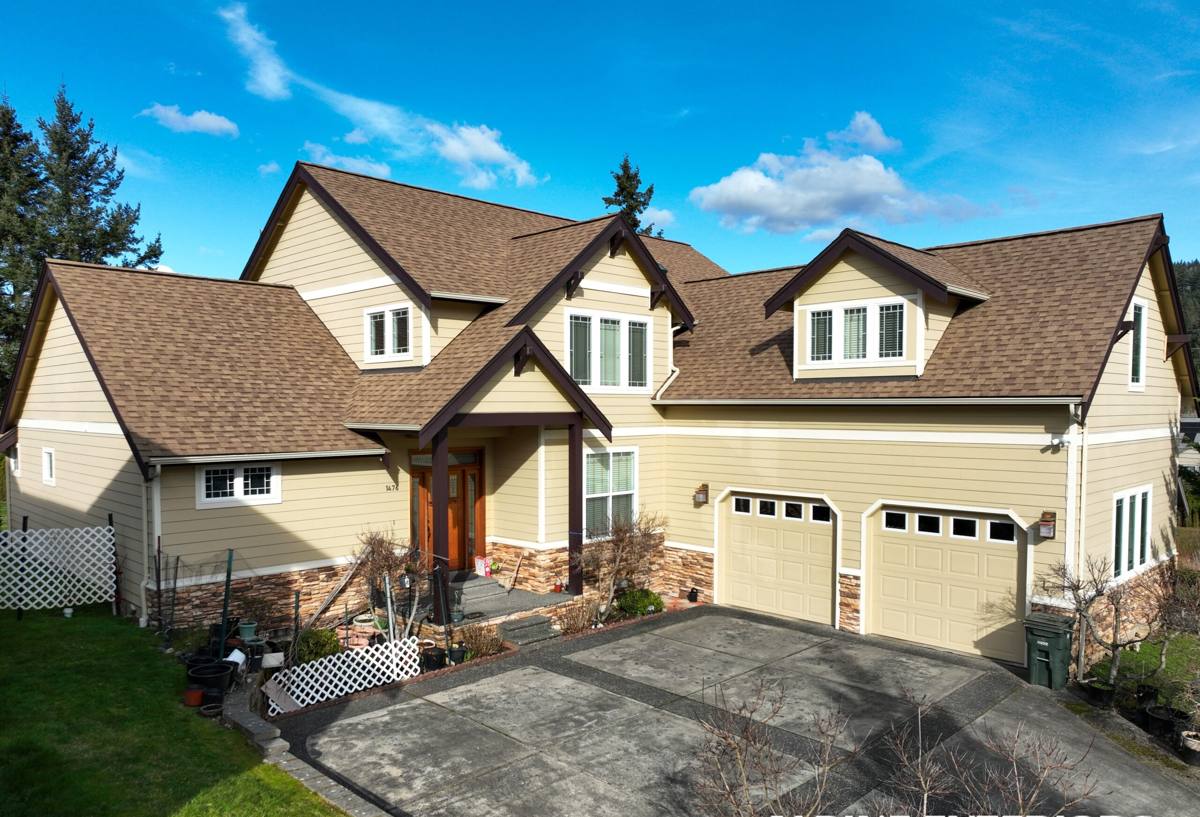
What Fairhaven's Climate Does to an Under-Built Deck
We see the same failure patterns repeat on decks that weren't built with this environment in mind:
- Corroded fasteners — standard galvanized screws and nails pit and rust faster near salt air, eventually staining the decking and weakening the connection.
- Rotted ledger boards — the board bolted to the house is the single most common point of water intrusion and structural failure on a deck, especially without proper flashing.
- Moss and algae buildup — shaded, low-airflow areas stay damp for days after rain, and moss doesn't just look bad — it holds moisture against the wood surface and makes boards slick and dangerous underfoot.
- Cupping and warping boards — wood that isn't properly spaced, ventilated, or finished absorbs moisture unevenly through repeated wet-dry cycles.
- Soft or heaving footings — Whatcom County's wet clay-heavy soils in low-lying areas can shift footings that weren't set to proper depth and drainage.
A deck built to fight these problems from day one costs more in materials and labor than a bare-minimum build, but it costs far less than replacing a deck after eight or ten years.
Choosing Decking Material for This Environment
There's no single "best" decking material — the right choice depends on your budget, how much maintenance you want to do, and how exposed the deck is to sun, shade, and salt air. Here's how the common options actually compare for Fairhaven-area conditions:
| Material | Moisture & Moss Resistance | Maintenance | Typical Lifespan | Cost Tier |
|---|---|---|---|---|
| Pressure-treated fir/pine | Fair — needs sealing to perform well | Annual cleaning and re-sealing recommended | 10-15 years | Lowest |
| Cedar | Good natural rot resistance, but still absorbs moisture | Periodic cleaning and oil/stain every 1-2 years | 15-20 years | Mid |
| Composite decking | Very good — doesn't absorb water or rot, though moss can still grow on the surface film | Periodic washing, no sealing or staining | 25-30+ years | Higher |
| PVC decking | Excellent — fully moisture-resistant core | Occasional washing | 25-30+ years | Highest |
We don't push one product line as a universal answer. Wood costs less up front and has a warmer, natural look many homeowners want, but it demands real maintenance discipline in a wet climate — skip a year of sealing and you're playing catch-up. Composite and PVC cost more initially but trade ongoing maintenance for upfront investment. We'll walk through the honest trade-offs for your specific site, sun exposure, and budget rather than defaulting to whatever's easiest to install.
A Note on Fasteners and Hardware
Whatever decking material you choose, the hardware holding it together matters just as much. In coastal and near-coastal air, we use stainless steel or high-grade coated fasteners and structural connectors rather than standard galvanized hardware, and we specify corrosion-resistant flashing at every point where the deck meets the house. This is one of the least visible parts of a deck build and one of the most common places contractors cut corners, because the difference doesn't show up until years later when fasteners start bleeding rust through the decking or a ledger connection starts to fail.
Framing and Structure: Built for Wet Ground, Not Dry Textbook Conditions
A deck's substructure has to handle two things at once in this region: structural load and constant moisture cycling. That shapes several decisions on every project:
- Footing depth and drainage — footings are set below frost depth and away from standing water, with gravel drainage where soil conditions call for it.
- Joist spacing and airflow — proper spacing under and between boards lets air move and moisture escape instead of pooling against the framing.
- Ledger flashing — a correctly flashed ledger board is the single biggest factor in whether a deck stays watertight where it attaches to the house.
- Post-to-footing connections — structural connectors rated for exterior, corrosion-prone environments, not interior-grade hardware.
None of this is visible once the deck is finished, which is exactly why it matters to have it done right the first time — these are not repairs you want to make after the decking is down.
Designing Against Moss, Shade, and Standing Water
Moss doesn't grow because a deck is "in Ferndale" — it grows wherever moisture sits and sunlight and airflow are limited. A few design choices make a real difference over the life of the deck:
Orientation and Shade
North-facing decks and decks shaded by mature trees or the house itself stay damp longer after rain. We factor sun exposure into board spacing, material choice, and sometimes layout adjustments to reduce the areas that never fully dry.
Slope and Drainage
A deck surface should have a slight, consistent slope away from the house so water sheds instead of pooling. On multi-level or covered decks, we also plan for where runoff actually goes rather than letting it collect at a low corner.
Gaps and Spacing
Board spacing that's too tight traps debris and moisture between boards, which is one of the most common causes of localized moss and rot. Correct spacing lets water and air pass through instead of collecting.
Permitting and Code Considerations
Deck projects in Whatcom County typically require a building permit once you're past a certain size or height off grade, and inspections check footing depth, structural connections, guardrail height, and stair specifications. We handle the permitting process as part of the project rather than leaving it to the homeowner to sort out, and we build to code minimums as a floor, not a target — several of the details above (ledger flashing, fastener grade, footing drainage) go beyond bare code requirements because code minimums are written for the whole state, not specifically for wet, salt-exposed sites like Fairhaven.
Our Process From First Call to Finished Deck
- Site visit and assessment — we look at sun exposure, drainage patterns, existing structure (if replacing a deck), soil conditions, and how you actually plan to use the space.
- Design and material selection — we go over the honest trade-offs between wood and composite options for your specific site and budget, not a one-size answer.
- Permitting — we prepare and submit what's needed for Whatcom County/local permitting and schedule required inspections.
- Demolition and site prep (if replacing an existing deck) — including a check of what's underneath, since old footings and framing aren't always reusable even if they look fine from the top.
- Framing and structural work — footings, ledger flashing, joists, and structural connections built to the standards above.
- Decking, railing, and finish work — installation of your chosen decking material, railing system, stairs, and any finishing (staining/sealing for wood).
- Final walkthrough and inspection — we review the finished deck with you and confirm it passes any required final inspection.
Keeping a Fairhaven-Area Deck Looking and Performing Well
Even a well-built deck needs some seasonal attention in this climate. A simple maintenance checklist we give homeowners:
- Sweep debris off the deck surface regularly, especially fallen leaves and needles that trap moisture against boards
- Clean moss and algae buildup before it spreads, using a deck-safe cleaner rather than a pressure washer set too aggressively (which can damage wood fibers)
- Check and reseal wood decking on a 1-2 year cycle depending on sun exposure and product used
- Inspect fasteners and connections annually for rust staining or looseness
- Confirm gutters and downspouts near the deck are directing water away, not onto or under the structure
- Keep gaps between boards clear of packed debris so water and air can still move through
Why Local Experience on This Kind of Project Matters
A deck design that works fine in a dry inland climate can underperform here within a few years — not because the materials were bad, but because the details weren't matched to the conditions. A crew that regularly builds decks in the Ferndale and Fairhaven area already knows which fastener grades hold up, how local soil drains, what inspectors in Whatcom County are checking for, and where moss tends to become a recurring problem on a given site orientation. That's the difference between a deck that needs real repair work in year six and one that's still solid at year twenty.
If you're planning a new deck or replacing one that's showing its age, we're happy to take a look and talk through what makes sense for your property — no pressure, no pushy sales pitch. Use the form below to request a free estimate and we'll go from there.