 Ferndale Exterior
 Windows in Kendall Work Harder Than People Realize
Kendall sits up toward the foothills of Whatcom County, close enough to the Nooksack valley and the marine air moving in off the Salish Sea that homes here deal with a climate that's tougher on windows than it looks from the outside. Long stretches of driving rain, humidity that lingers under tree cover, salt-tinged air working its way inland during storms off the water, and a moss season that can run half the year all put steady pressure on window frames, seals, and glazing. None of that is dramatic on its own. It's the accumulation — years of moisture cycling in and out of a frame, UV breaking down old seals, condensation sitting in a corner that never quite dries — that eventually shows up as rot, fogged glass, or a window that won't latch right anymore.
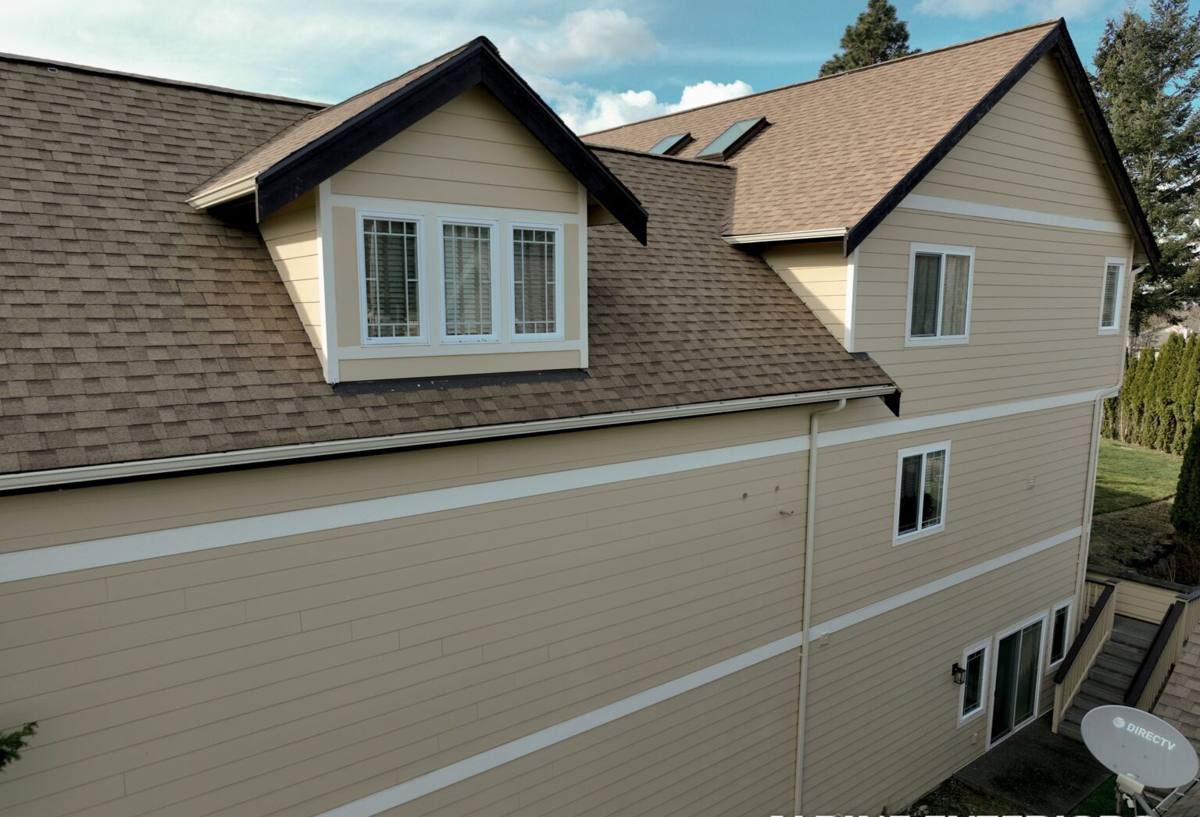
Custom windows aren't a luxury upgrade in this environment — they're often the only way to actually solve the problem. Stock sizes force compromises around flashing, shimming, and sealing that stock openings weren't built for, especially in older Kendall homes with settled framing or additions built at different times. A custom window is built to the actual opening, which means the installer isn't fighting the house to make it fit.
What "Custom" Actually Means Here
"Custom" gets used loosely in this industry, so it's worth being specific. For us, a custom window job means:
- The window is manufactured to the precise, as-built dimensions of your opening — not trimmed down or shimmed out from a standard size
- Frame material, glazing package, and hardware are chosen based on that window's exposure — a north-facing window under trees gets treated differently than one facing open weather
- Flashing and drainage details are planned before the old window ever comes out, not improvised on site
- Sightlines, grid patterns, and trim match the rest of the house instead of looking like an obvious retrofit
Custom doesn't have to mean unusual shapes or high-end architectural glass, though we do that too. Most of our Kendall custom work is straightforward replacement windows built to fit real openings correctly — which is its own kind of custom, and the kind that actually keeps water out.
Signs a Kendall Home Needs Window Attention
Because moisture damage in this climate develops slowly, homeowners often live with early warning signs for a year or two before calling anyone. Worth checking for:
- Soft or discolored wood at the sill or bottom corners of the frame, inside or out
- Moss or dark streaking building up on the frame or the siding just below the window
- Condensation forming between panes (a sign the seal has failed on double- or triple-glazed units)
- Windows that are noticeably harder to open, close, or lock than they used to be
- Visible daylight or a draft you can feel around the frame on a windy day
- Paint that keeps bubbling or peeling near the window even after repainting
- A noticeable rise in heating costs without any other explanation
Any one of these can be minor on its own. Two or three together, especially on the same window, usually means water has been getting into the frame or wall cavity for a while.
Frame and Glazing Options — What Fits This Climate
There's no single "best" window material — it depends on exposure, budget, and how much maintenance a homeowner actually wants to keep up with. Here's how the common options hold up for Kendall's rain-and-moss conditions:
| Frame Type | Moisture Performance | Maintenance | Best Fit |
|---|---|---|---|
| Vinyl | Won't rot; seams are the main watch point | Low — occasional cleaning | Most Kendall homes, especially value-focused replacements |
| Fiberglass | Very stable, minimal expansion/contraction | Low | Homes wanting a longer-life frame and don't mind higher upfront cost |
| Wood-clad | Good if cladding and flashing are done right, vulnerable if not | Moderate to high | Homeowners prioritizing interior wood appearance and willing to maintain it |
| Aluminum | Durable but conducts cold and can condense in this climate | Low | Limited use — mainly larger openings or specific architectural needs |
Glazing matters as much as the frame. In this area we typically recommend double-pane with a low-E coating as the baseline, with argon fill and a warm-edge spacer for rooms with more exposure or a colder microclimate — some of the lower, shaded lots around Kendall run a few degrees cooler and hold moisture longer than open, sun-exposed sites nearby.
A Note on Why We're Selective About Certain Products
We don't install every window product on the market, and it's not because a given brand is bad — it's because some frame and glazing combinations demand installation tolerances or long-term maintenance that don't line up well with this much sustained moisture exposure. We'd rather steer a homeowner toward a system we can warranty confidently in this climate than install something that looks good on a spec sheet but needs more upkeep than most people realistically keep up with.
Our Installation Process
- On-site assessment. We inspect the existing openings, framing condition, and any signs of prior water intrusion before quoting anything.
- Precise measurement. Every opening is measured individually — even openings that look identical from the outside often aren't, especially in older or settled homes.
- Manufacturing to spec. Windows are built to those exact measurements rather than pulled from stock sizing.
- Removal and inspection. Old windows come out carefully so we can check the sheathing and framing underneath for hidden rot before it gets covered up again.
- Flashing and drainage first. Proper flashing tape, sill pans, and drainage planes go in before the new window — this step is where most long-term leaks are prevented or created.
- Installation and sealing. The window is set, shimmed level and square, fastened per manufacturer spec, and sealed with materials rated for sustained wet-climate exposure.
- Interior and exterior finish work. Trim, caulking, and paint or stain are finished to match the rest of the house.
- Final walkthrough. We test operation, check seals, and walk the homeowner through care and warranty details.
Moisture, Flashing, and Moss — The Part Most Installers Rush
Moss doesn't damage a window directly, but it's a symptom worth paying attention to. Moss holds moisture against a surface far longer than bare wood or vinyl would dry on its own, and in Whatcom County's long wet season that constant dampness is exactly what accelerates rot at frame joints and sills. A well-flashed window sheds that water before it ever has a chance to sit and grow anything.
This is the step that separates a correct installation from one that just looks finished. Flashing tape needs to overlap in the right order — bottom to top, like shingles — so water is always directed outward and down, never trapped behind the siding. A sill pan under the window gives any water that does get in somewhere to drain instead of pooling against the wood. Skipping or rushing these steps is invisible on installation day and only shows up two or three winters later, which is exactly why it's worth asking a contractor directly how they handle flashing before hiring them.
Energy Performance for This Climate
Whatcom County doesn't hit extreme temperatures often, but it does deliver long stretches of damp cold and gray days where a home's heating system runs almost continuously. Old, leaky, or single-pane windows are one of the biggest sources of heat loss in older Kendall homes, and it's not just about comfort — it's about condensation. A cold window surface in a heated, humid interior is exactly where condensation forms, and repeated condensation is one of the quieter causes of sill and frame rot over time. Upgrading to a properly sealed, low-E double-pane window addresses both problems at once: lower heating costs and a warmer interior glass surface that resists condensation.
Why a Local Crew Matters for This Job
Window installation is one of those jobs where local experience actually changes the outcome, not just the sales pitch. A crew that regularly works Kendall and the surrounding Ferndale area knows what this specific stretch of Whatcom County throws at a house — the wind-driven rain patterns, the shaded lots that stay damp longer, the way moss builds up faster under tree cover than it does on open, sun-exposed properties nearby. That local pattern recognition shows up in small decisions: which side of the house needs extra flashing attention, which glazing package is worth the upgrade, which frame material will actually hold up without babying it every year.
It also matters for permitting and code familiarity specific to Whatcom County, and for being reachable afterward — if a seal ever needs adjusting or a warranty question comes up, you're calling a crew that's still working in your area, not chasing down a company that did one job and left.
Get a Free, No-Pressure Estimate
If your Kendall home has windows showing any of the signs above, or you're just ready to stop fighting drafts and condensation every winter, we're happy to take a look and walk you through honest options — no pressure, no upsell. Use the form below to request a free estimate.