 Ferndale Exterior
 Kendall's Climate: What Your Siding Is Actually Up Against
Kendall sits inland from the coast, at the edge of Whatcom County's wooded foothill country near the Nooksack River drainage and the base of the Mount Baker corridor. That location shapes what siding has to survive here. Weather systems that roll in off the Salish Sea and Puget Sound carry a lot of moisture inland, and by the time they reach Kendall they're often dumping steady, driving rain against west- and south-facing walls for days at a stretch. Add the tree canopy that covers much of the area — big firs and cedars shading roofs and siding for large parts of the day — and you get walls that stay damp longer than they would on an open, sunny lot.
That combination of shade and moisture is exactly what moss, algae, and mildew need to take hold. On wood-based or poorly ventilated siding systems, a damp wall that never fully dries between rain events is how rot starts from the inside out, often long before it's visible from the yard. Add the freeze-thaw swings that come with Kendall's proximity to higher elevation — cold snaps that follow wet stretches — and any siding material or installation detail that traps water is going to fail faster here than it would in a drier part of the state.
None of this means siding in Kendall is doomed. It means the material and the installation both have to be matched to a wet, shaded, moss-prone climate rather than a generic one. That's the standard we hold every Kendall job to.
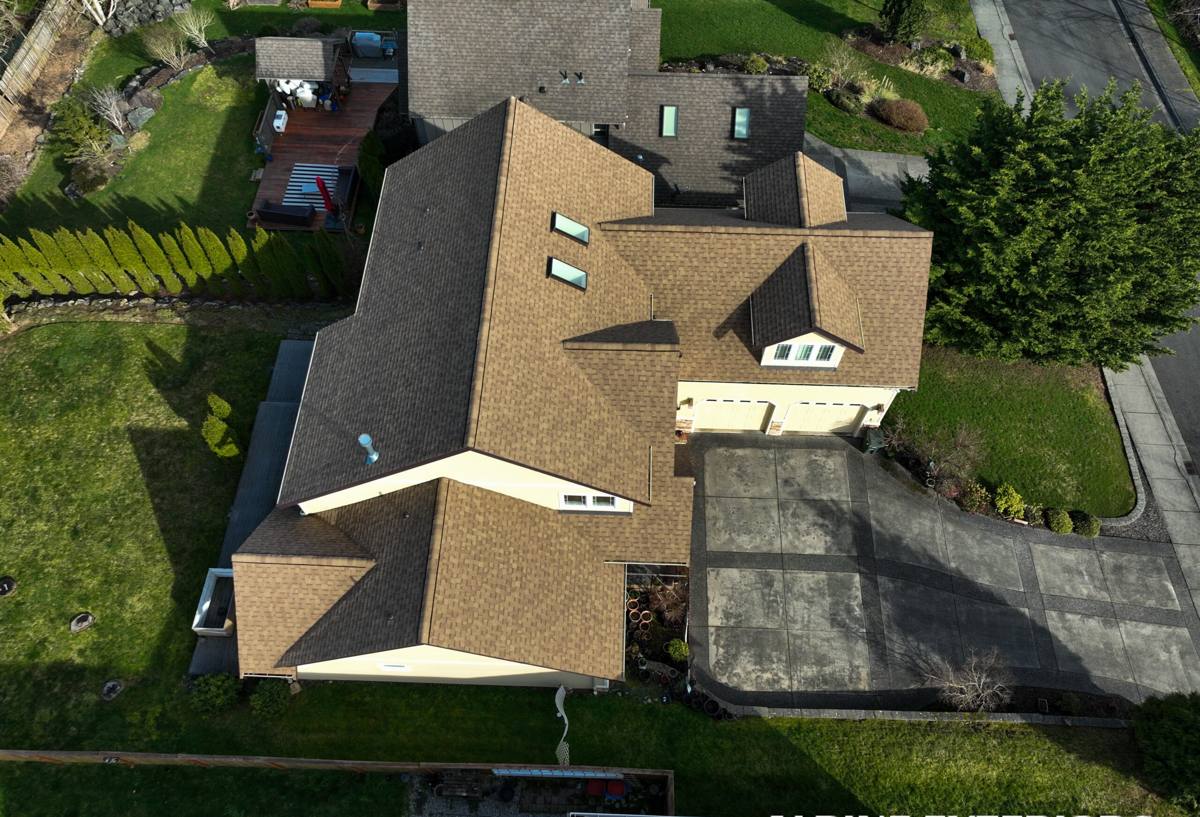
What a Correct Siding Installation Actually Involves
Most siding failures we get called out to inspect aren't a material problem — they're an installation problem. The siding itself can be a fine product, but if the water management behind it was done wrong, the wall was going to fail eventually no matter what was nailed to the outside. In a climate like Kendall's, these details matter more, not less.
Weather-Resistive Barrier and Drainage Gap
Every wall needs a continuous weather-resistive barrier (WRB) behind the siding, lapped correctly from the bottom up so water sheds outward instead of working its way behind the paper. On shaded, high-moisture sites like much of Kendall, we build in a drainage gap (a rainscreen) between the WRB and the siding itself, so any water that does get past the cladding has somewhere to go and air can circulate to dry the wall assembly out. Skipping this gap is a common shortcut, and it's one of the fastest ways to trap moisture against a house that already doesn't get much sun.
Flashing at Windows, Doors, and Penetrations
Windows, doors, hose bibs, light fixtures, and vents are where siding jobs actually leak. Proper head, jamb, and sill flashing — installed in the right order relative to the WRB — is what keeps wind-driven rain from working its way into the wall cavity around every one of those openings. This is detail work that takes time to do right, and it's invisible once the siding goes on, which is exactly why it's worth asking a contractor about directly.
Fastening, Clearances, and Caulking
Fiber cement siding has specific fastener spacing, embedment depth, and butt-joint requirements that affect both its warranty and its performance. Ground clearance at the base of the wall, gaps at inside and outside corners, and where (and where not) to caulk all affect how well the wall drains and dries. Installed off-spec, even a premium siding product will trap water and fail early.
Why We Install Only James Hardie Fiber Cement
We standardized on James Hardie fiber cement siding for every home we side, including in Kendall, and we don't install vinyl, LP SmartSide, or other wood-based siding products. That's a deliberate choice, not a default. Fiber cement is non-combustible, doesn't absorb and swell with moisture the way wood-based products can, and Hardie's ColorPlus factory finish is baked on under controlled conditions rather than field-painted, which matters in a climate where a house might not see three dry days in a row for weeks at a time. Hardie also engineers specific product lines by climate zone — homes in western Washington are typically specified in the HZ5 line, built for the freeze-thaw and moisture cycle this region actually sees.
We're not going to tell you every alternative product is bad — vinyl and engineered wood siding both have legitimate uses and plenty of homes wear them fine in drier climates. What we will say is that in a shaded, wet, moss-prone place like Kendall, the trade-offs of moisture-sensitive or field-finished products (more frequent repainting, higher sensitivity to installation detail, more maintenance to keep moss and algae from taking hold) are trade-offs we'd rather not put on a customer's house. Fiber cement, installed correctly, holds up to that climate with less upkeep over the life of the siding.
| Factor | James Hardie Fiber Cement | Vinyl / Wood-Based Alternatives |
|---|---|---|
| Moisture & rot resistance | Cement-based, doesn't absorb water or swell | Varies; wood-based products are more moisture-sensitive |
| Finish | Factory-applied ColorPlus finish | Often field-painted or color is embedded in the material |
| Fire rating | Non-combustible | Combustible (wood-based); vinyl can deform under heat |
| Moss & algae resistance | Resists surface growth; easy to clean | Textured or porous surfaces can hold moss longer |
| Warranty | Long-term, transferable | Varies by manufacturer and product line |
Our Siding Installation Process in Kendall
- On-site assessment of the existing siding, sheathing, and wall assembly — including checking for hidden moisture damage under the current cladding.
- Decision on full tear-off versus re-siding over sound existing material, based on what we find during the assessment, not a default assumption.
- Repair or replacement of any damaged sheathing before anything new goes on the wall — no siding job should cover up rot.
- Installation of a continuous weather-resistive barrier and rainscreen drainage gap.
- Flashing of all windows, doors, and wall penetrations before siding installation begins.
- Installation of James Hardie panels or lap siding to manufacturer fastening and clearance specifications.
- Trim, corners, and caulking finished to shed water at every joint.
- Final walkthrough with the homeowner and warranty registration paperwork completed.
Signs Your Kendall Home May Need New Siding
- Soft or spongy spots when you press on the siding, especially near the base of the wall
- Moss or algae that stays green and spreads year-round rather than washing off seasonally
- Visible cracking, warping, or buckling panels
- Paint or finish that's failing again just a couple years after the last repaint
- Gaps opening up at trim, corners, or window and door casings
- Rising heating bills with no other obvious cause, which can point to a compromised wall assembly
- Dark staining or mold visible at seams or the bottom edge of the siding
What It Costs: Factors That Actually Move the Price
We don't quote siding jobs off square footage alone, because the details below usually matter more than the raw size of the house.
| Factor | Why It Matters |
|---|---|
| Tear-off vs. re-side | Full tear-off costs more upfront but lets us fix hidden sheathing or moisture damage |
| Siding profile | Lap, panel, and shingle-style Hardie products have different material and labor costs |
| Number of stories and roof lines | Complex rooflines and multiple stories add scaffolding, staging, and labor time |
| Window, door, and trim count | Every opening needs flashing and trim work, which adds time regardless of wall square footage |
| Site access | Wooded or tight lots common around Kendall can slow material staging and require extra care around landscaping |
| Condition found at tear-off | Rot or moisture damage discovered once old siding comes off can change the scope |
Why Hiring a Crew That Already Works Kendall Matters
Whatcom County's permitting and inspection process, realistic install weather windows, and the way local homes are built and sited aren't things you learn from a manual — they're things you learn from doing the work here. A crew that already works Kendall knows to schedule around the wettest stretches of the year rather than fighting them, knows what to expect when sheathing comes off a shaded, decades-old wall, and has a working relationship with local inspectors that keeps a project moving instead of stalling on paperwork. That local familiarity shows up in fewer surprises mid-project and a wall assembly that's actually built for the site it's on, not a generic install applied the same way everywhere.
If you're weighing a siding replacement on a Kendall home, we're happy to take a look and walk you through what your specific house needs — no pressure, no obligation. Reach out using the form below for a free estimate.