 Ferndale Exterior
 Lummi Island Roofs Face a Different Kind of Wear
A roof on Lummi Island doesn't age the same way a roof ten miles inland does. Being surrounded by saltwater changes the equation: airborne salt settles on every exposed surface, metal fastener, and flashing seam, and it doesn't wash off completely even in a hard rain. Add in Whatcom County's long, wet winters and the tree cover that shades much of the island, and you get a roof environment that combines corrosion, moisture, and moss growth in ways a standard mainland roof rarely deals with all at once.
Homeowners on the island often tell us their roof "looks fine" from the ground but is failing where it counts — at the fasteners, the flashing, and the underlayment. That's the pattern we plan for when we replace a roof out here: build for what actually breaks down first in this environment, not just what looks good going up.
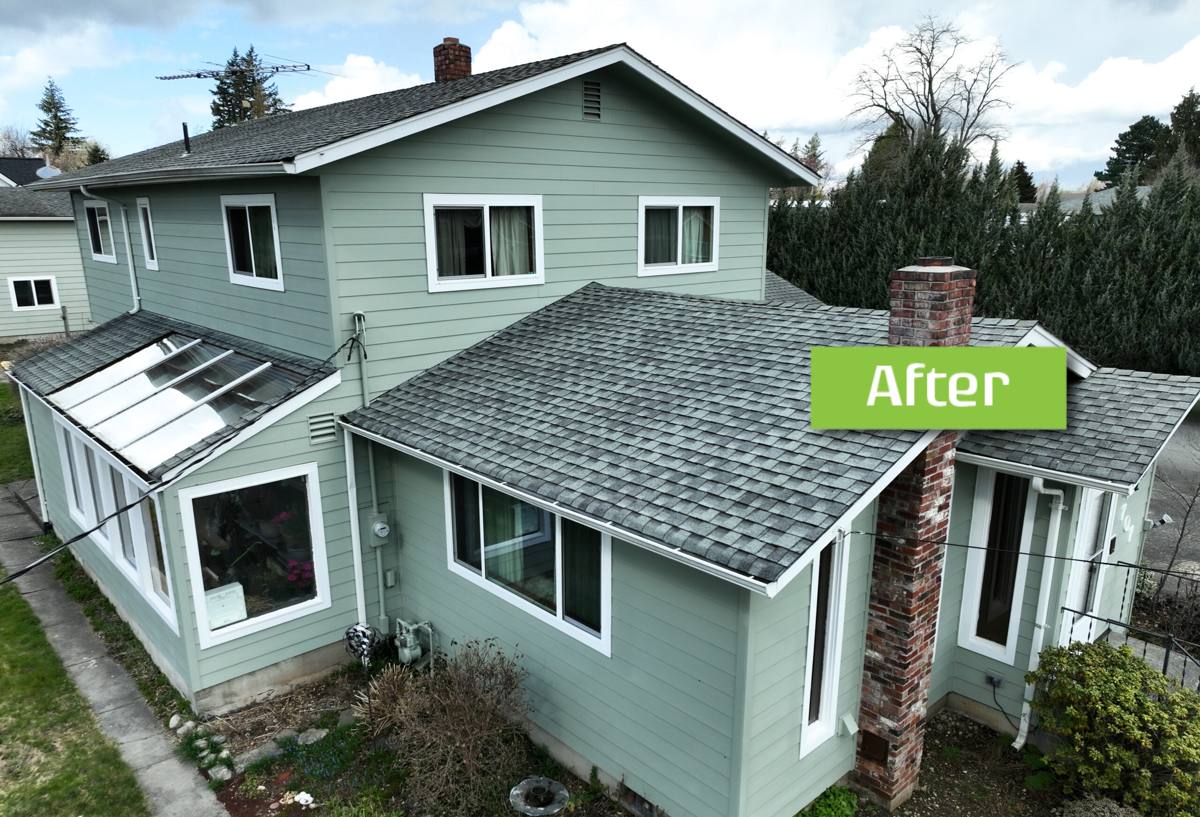
What Salt Air, Rain, and Moss Actually Do to a Roof
Salt Air and Corrosion
Salt-laden air accelerates corrosion on anything metal — nails, staples, flashing, drip edge, vent boots, and the fasteners holding shingles or panels down. Standard electro-galvanized fasteners can start showing rust streaks and weakening well before a roof's shingles are due for replacement. Once fasteners corrode, they lose grip strength, and that's when shingles start lifting in wind before they'd normally fail.
Driving Rain
Storms coming off the water tend to push rain sideways, not straight down. That matters at every penetration point — chimneys, skylights, vent stacks, and valleys — because wind-driven rain finds gaps that vertical rain never would. A roof built for average rainfall, without extra attention to flashing laps and underlayment coverage, is more likely to develop hidden leaks here than the same roof built inland.
Moss Season
Shaded, moisture-retaining roof sections — north-facing slopes, areas under overhanging trees — are prime moss territory for much of the year. Moss holds water against the roofing material, works its way under shingle tabs, and can lift material enough to let water in even before the moss is visible from the ground. Left unaddressed, moss shortens the useful life of an otherwise sound roof.
Signs a Lummi Island Roof Needs Replacement, Not Just Repair
- Granule loss heavy enough that you can see bare, shiny patches on asphalt shingles
- Multiple soft spots or sagging areas in the roof deck when walked
- Rust staining or visible corrosion at flashing, vent boots, or exposed fasteners
- Moss or moisture staining that returns within a season or two of cleaning
- Leaks appearing in more than one location, or in new locations each winter
- Shingles curling, cracking, or lifting at the edges, especially on wind-exposed slopes
- The roof is at or past its material's expected service life and repairs are becoming frequent
One or two of these on their own might mean a targeted repair is enough. Several at once — especially deck softness combined with corrosion or recurring leaks — usually means the underlying materials are past the point where patching makes financial sense.
What a Correct Replacement Involves Out Here
A roof replacement done right on Lummi Island isn't just "same roof, new shingles." A few steps get extra attention because of the environment:
Full Tear-Off and Deck Inspection
We remove the old roofing down to the deck rather than layering over it. That's the only way to actually see the condition of the sheathing — moisture damage, soft spots, or rot hide under old shingles, and covering them up instead of replacing damaged decking just sets up the next failure.
Underlayment Built for Wind-Driven Rain
Given how often rain here arrives at an angle, we pay close attention to underlayment coverage and lap direction, with extra protection at eaves, valleys, and any low-slope transitions where water is more likely to be pushed uphill by wind before it drains.
Corrosion-Resistant Fasteners and Flashing
In a salt-air environment, the hardware matters as much as the shingles. We use fasteners and flashing rated for coastal exposure rather than standard-grade hardware that corrodes faster here than it would inland. It costs a little more upfront and saves a lot of grief later.
Ventilation That Actually Works
Trapped attic moisture accelerates deck rot and can make moss and mildew worse from the inside out. Correct intake and exhaust ventilation is part of a proper replacement, not an optional add-on — especially on homes with the heavier tree cover common on parts of the island.
Material Options: What Holds Up on Lummi Island
There's no single "best" roofing material for every home here — it depends on the home's exposure, roof pitch, tree cover, and budget. Here's how the common options compare for this specific environment:
| Material | Salt Air / Corrosion Behavior | Moss Resistance | Typical Lifespan Here |
|---|---|---|---|
| Architectural asphalt shingle | Good with corrosion-resistant fasteners and flashing | Moderate; benefits from algae-resistant granules | 20-30 years with proper install and upkeep |
| Metal roofing (standing seam) | Very good when properly coated and fastened | High — sheds moisture quickly, little for moss to grip | 40-50+ years |
| Basic 3-tab asphalt shingle | Fair; more sensitive to fastener corrosion over time | Lower resistance without treated granules | 15-20 years |
| Synthetic/composite shingle | Good; resists rust since it's not metal-based | Moderate to good depending on product | 30-40 years |
We'll walk through these trade-offs honestly during the estimate — upfront cost, maintenance expectations, and how the material performs specifically on a shaded, salt-exposed roof versus a sunnier, more sheltered one.
Cost Factors Specific to This Job
Every roof replacement estimate depends on roof size, pitch, material, and current condition, but a few factors show up more often on Lummi Island jobs than elsewhere in our service area:
- Deck repair scope — moisture-related sheathing damage found during tear-off adds material and labor
- Access and staging — narrower driveways, tree cover, or waterfront access can affect equipment staging and material delivery
- Fastener and flashing upgrades — corrosion-resistant hardware costs more than standard-grade but pays for itself in reduced future repairs
- Number and complexity of penetrations — chimneys, skylights, and multiple vents each need careful flashing work
- Disposal logistics — hauling torn-off material off the island is a real scheduling factor, not an afterthought
Our Process, From Estimate to Cleanup
- On-site inspection — we look at the whole roof system: shingles, decking (where accessible), flashing, ventilation, and any moss or moisture patterns specific to your home's exposure.
- Honest, itemized estimate — material options, what we recommend for your specific roof, and why, with no pressure to upsell beyond what the home actually needs.
- Scheduling built around island logistics — we plan crew and material transport, including ferry timing, so the job runs on the timeline we quote instead of losing days to logistics we didn't plan for.
- Tear-off and deck inspection — full removal of old roofing, with any damaged decking identified and replaced before anything new goes down.
- Installation — underlayment, flashing, and roofing material installed to manufacturer specification and built for the wind and rain exposure of your specific roof slopes.
- Cleanup and haul-off — old material and debris removed from the property and off the island, not left staged for a "later" trip.
- Final walkthrough — we go over the finished roof with you, including basic maintenance expectations for moss and gutter upkeep going forward.
Why It Matters to Hire a Crew That Already Works Lummi Island
Roofing crews that mostly work inland jobs often underestimate what island logistics do to a schedule — ferry timing, tighter delivery windows, and the extra planning needed to move a full tear-off's worth of debris back off the island. A crew unfamiliar with that reality can turn a three-day job into a week of delays, or worse, cut corners on hauling and staging to compensate.
Beyond logistics, experience with the specific way salt air and moss behave on island roofs changes what a contractor actually recommends. A crew that's only seen mainland wear patterns may not flag corrosion-prone fasteners or moss-prone shading as priorities — details that make a real difference in how long your new roof performs before it needs attention again.
After Your Roof Is Replaced: Keeping It Performing
A correctly installed roof still benefits from basic upkeep in this climate. A short, practical checklist for homeowners:
- Have gutters cleared at least twice a year so water doesn't back up under eave edges
- Check shaded or north-facing slopes each fall for early moss growth before it spreads
- Trim back overhanging branches that keep roof sections damp and shaded longer than necessary
- Have flashing and vent boots visually checked every couple of years, since these fail before shingles typically do
- Address small leaks immediately rather than waiting for the next storm season
None of this is complicated, but skipping it is the most common reason a well-installed roof underperforms its expected lifespan on the island.
Get a Straightforward Estimate
If your Lummi Island roof is showing granule loss, recurring moss, corrosion at the flashing, or leaks that keep coming back, it's worth having it looked at before another wet season adds to the damage. We'll give you a straight answer on whether you need a repair or a full replacement, walk through material options that make sense for your home's exposure, and provide a clear, no-pressure estimate — use the form below to get started.