 Ferndale Exterior
 Roofing in Lummi Nation: A Different Set of Demands
Homes in and around the Lummi Nation sit close to Bellingham Bay and the open water of the Salish Sea, which means roofs here deal with a combination most inland Whatcom County homes never see. Salt-laden air moves in off the water and settles on every exposed surface, accelerating corrosion on fasteners, flashing, and any metal component that isn't rated for it. Add in driving rain that comes in sideways during winter storms, and a moss season that can run eight or nine months out of the year under the tree cover common in this area, and you have a roof that ages faster than the same materials would twenty miles inland.
We work on homes throughout this stretch of Whatcom County, and the roofs we replace out here consistently show the same wear patterns: corroded nail heads and flashing before their time, moss root systems working under shingle tabs, and soffit or fascia rot from water that never fully dries between storms. A roof replacement done right in this area has to account for all three of those pressures at once, not just swap old shingles for new ones.
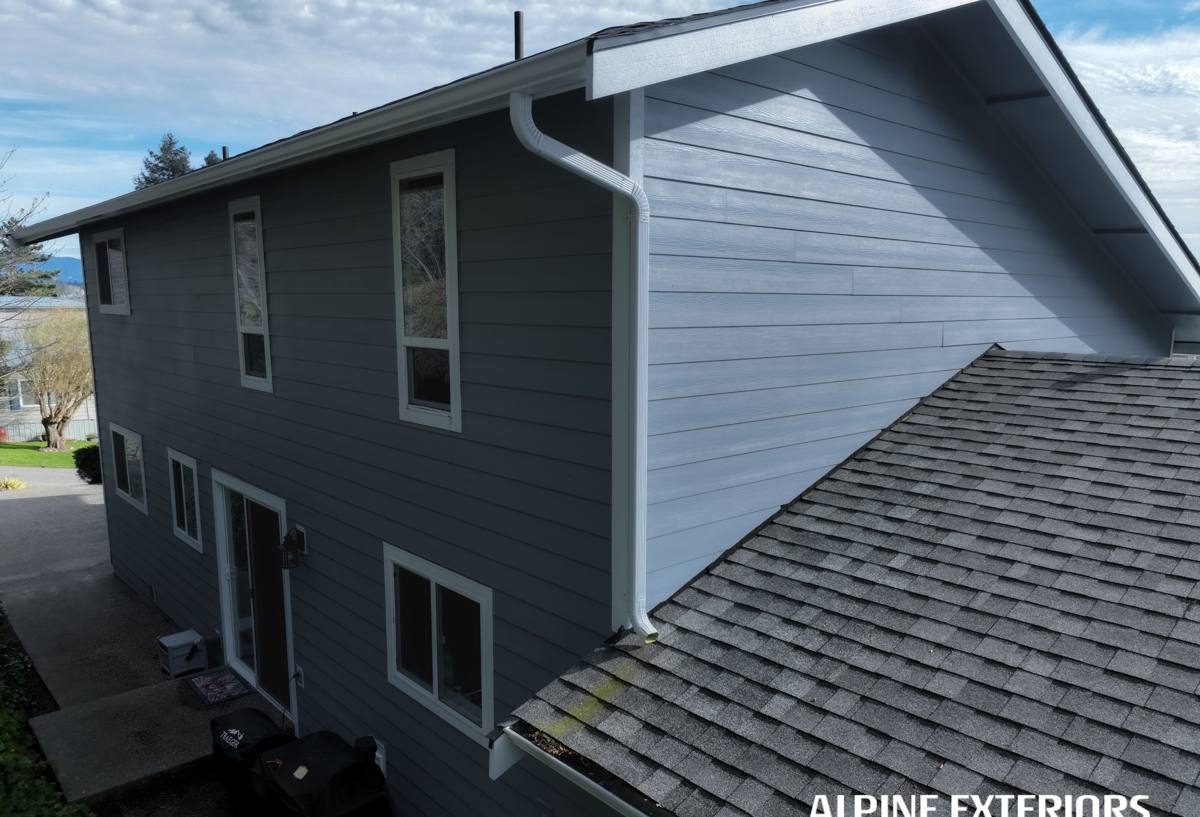
Signs a Roof in This Area Needs Replacing, Not Patching
Salt air and moss don't always announce themselves with a leak. Often the damage is happening slowly, underneath a roof that still looks okay from the driveway. Here's what we actually check for before recommending replacement over repair:
- Moss growth thick enough that you can't see the shingle texture underneath it, especially on north-facing slopes
- Granule loss showing up in gutters or downspouts, which means the shingles are past their protective life
- Rusted, pitted, or lifting flashing around chimneys, vents, and valleys
- Soft spots in the decking when walked, usually found near valleys or eaves
- Curling, cracking, or missing shingles, particularly on the side of the roof that takes the most weather
- Daylight visible through the attic decking, or damp insulation below the roofline
- A roof that's 20+ years old with asphalt shingles, or 15+ years with no ventilation upgrades
If a roof only has one or two of these, targeted repair can often buy several more years. Once several of these show up together, patching becomes a short-term fix on a roof that's already failing underneath.
Choosing a Roofing System That Actually Holds Up Here
There's no single "best" roofing material for every home, but there are real trade-offs worth understanding before you decide, especially with salt air and moss both in play.
| Material | How it handles salt air | How it handles moss | Typical lifespan here |
|---|---|---|---|
| Architectural asphalt shingles | Good with corrosion-resistant fasteners and flashing | Moderate — needs periodic cleaning under tree cover | 20–25 years |
| Standing seam metal | Excellent when properly coated/finished for coastal exposure | Very good — moss struggles to root on smooth metal | 40–50 years |
| Composite/synthetic shake | Good | Good, though texture can trap some debris | 30–40 years |
| Cedar shake | Fair — requires more upkeep near salt exposure | Poor without regular treatment; moss root growth is a known issue | 20–30 years with maintenance |
Why We're Selective About Cedar in This Area
Cedar shake has a real place in this region's architecture, but we're upfront with homeowners about what it demands here specifically. The combination of moisture that doesn't dry quickly and moss spores that are constantly present means cedar needs more frequent cleaning, treatment, and inspection than it would in a drier climate. That's not a knock on the material — it's a maintenance commitment, and we'd rather tell you that before you sign a contract than after year three.
Why Fasteners and Flashing Matter as Much as the Shingle
A lot of roof failures we see in salt-exposed areas aren't shingle failures at all — they're corroded fastener or flashing failures that let water in around a shingle that's otherwise fine. We spec stainless or hot-dip galvanized fasteners and flashing rated for coastal exposure on every replacement out here, not just the standard-grade hardware that's fine further inland.
What a Correct Roof Replacement Actually Involves
A roof replacement is more than removing old shingles and nailing down new ones. Done correctly, especially in a climate like this, it involves several layers that most homeowners never see once the job is finished:
- Full tear-off. We don't install over existing layers. Overlaying traps moisture and hides decking problems, and in a wet climate that's a recipe for rot you can't see until it's serious.
- Decking inspection and repair. Once the old roofing is off, every sheet of decking gets checked for soft spots, delamination, or rot. Any compromised decking gets replaced before anything new goes down — skipping this step is the single most common shortcut we see on failed roofs.
- Ice and water shield at vulnerable points. Eaves, valleys, and roof penetrations get a self-adhering waterproof membrane underneath the underlayment, which matters more here than in drier parts of the state given how much of the year this roof spends wet.
- Synthetic underlayment across the full deck. This is the roof's real second line of defense and it needs to be installed correctly, not just rolled out and stapled down.
- Corrosion-rated flashing and fasteners. As covered above, this is where salt-air roofs quietly fail if the wrong hardware gets used.
- Proper ventilation. Covered in more detail below, but it's not optional in this climate.
- Final inspection and cleanup. Magnetic sweep for stray nails, gutter check, and a walk-through so you know exactly what was done.
Ventilation and Moisture Control Aren't Optional Here
An underventilated attic is one of the fastest ways to shorten a new roof's life in this climate. When warm, moist air gets trapped in the attic instead of moving out through ridge and soffit vents, it condenses against the underside of the decking. That moisture feeds rot from the inside out and creates ideal conditions for mold, all while the shingles above look brand new. Combined with the amount of moss-feeding moisture already sitting on the roof surface from the outside, a poorly ventilated attic is fighting a battle on two fronts.
Part of every replacement estimate includes an honest look at your current attic ventilation — intake at the soffits, exhaust at the ridge — and whether it's adequate for the size and shape of the roof. If it isn't, we'll tell you before the tear-off starts, not after we're already up there.
Our Process, Start to Finish
We keep the process straightforward and try to minimize surprises, especially on the cost side:
- On-site inspection. We walk the roof and the attic, not just look at it from the ground, and photograph problem areas so you can see what we're seeing.
- Written estimate. Material options, scope of work, and a firm price — no vague allowances that turn into change orders later.
- Scheduling around weather. Roofing in this area means working around rain windows. We plan tear-off days for stretches where the deck can stay protected, and we tarp aggressively if weather turns mid-job.
- Tear-off and decking repair. Old material off, decking inspected, damaged sections replaced.
- Underlayment, flashing, and new roofing installed to manufacturer specification, with attention to ventilation and coastal-rated hardware throughout.
- Final walkthrough and cleanup, including a magnetic nail sweep of the yard and driveway.
Cost Factors Worth Understanding Before You Get Quotes
Roof replacement pricing varies a lot based on the specifics of the home, and anyone who quotes a number without inspecting the roof first is guessing. Broadly, the factors that move the price are:
| Factor | Why it affects cost |
|---|---|
| Roof size and pitch | Steeper roofs take longer to work safely and use more material |
| Number of layers to remove | Tear-off labor scales with how much existing material has to come off |
| Decking condition | Rotten or delaminated sheets found underneath add material and labor |
| Material choice | Asphalt, metal, and composite systems differ significantly in material cost |
| Ventilation upgrades | Adding or improving ridge/soffit ventilation is a worthwhile add most homes here benefit from |
| Access and site conditions | Tree cover, driveway access, and roof complexity affect setup time |
We'd rather walk you through these factors on your specific roof than throw out a broad range that doesn't mean much until we've actually inspected the property.
Why It Matters to Hire a Crew That Already Works This Area
A roofing crew that mostly works drier, inland areas can still do competent work, but they're not always thinking about salt exposure, moss cycles, or the amount of standing moisture this region's tree cover and rainfall create. We work on homes throughout Ferndale and the surrounding Whatcom County communities, including Lummi Nation, and the hardware, ventilation choices, and material recommendations we make reflect what actually holds up here — not what holds up in a different climate. We're also mindful that any property work should respect the specific permitting or jurisdictional requirements that may apply to a given site, and we're glad to help sort out what's needed for your property specifically rather than assuming a one-size-fits-all process.
Get a Straight Answer About Your Roof
If your roof is showing moss buildup, granule loss, or you're just not sure whether it's got a few more years left in it, we're happy to take a look and give you an honest read — no pressure, no hard sell. Fill out the form below to schedule a free estimate, and we'll walk the roof with you and explain exactly what we find.