 Ferndale Exterior
 Asphalt Shingle Roofing for Lynden Homes
Lynden sits inland from Bellingham Bay in the flat, open farmland of the Nooksack River valley, and that setting gives it a slightly different exposure than the coastal parts of our Whatcom County service area. The same marine weather systems that push salt-tinged air and driving rain across the county still reach into the valley, but here they arrive over open agricultural ground with far less tree cover and fewer buildings to break up the wind before it hits a roofline. We work on asphalt shingle roofs throughout Lynden regularly, and the details we pay attention to on install day reflect that specific combination of open exposure, valley moisture, and a moss season that runs long across this part of the county.
We install quality architectural asphalt shingle systems from established manufacturers, specified with the underlayment, flashing, and ventilation details a Lynden roof actually needs rather than a generic package pulled off a price sheet.
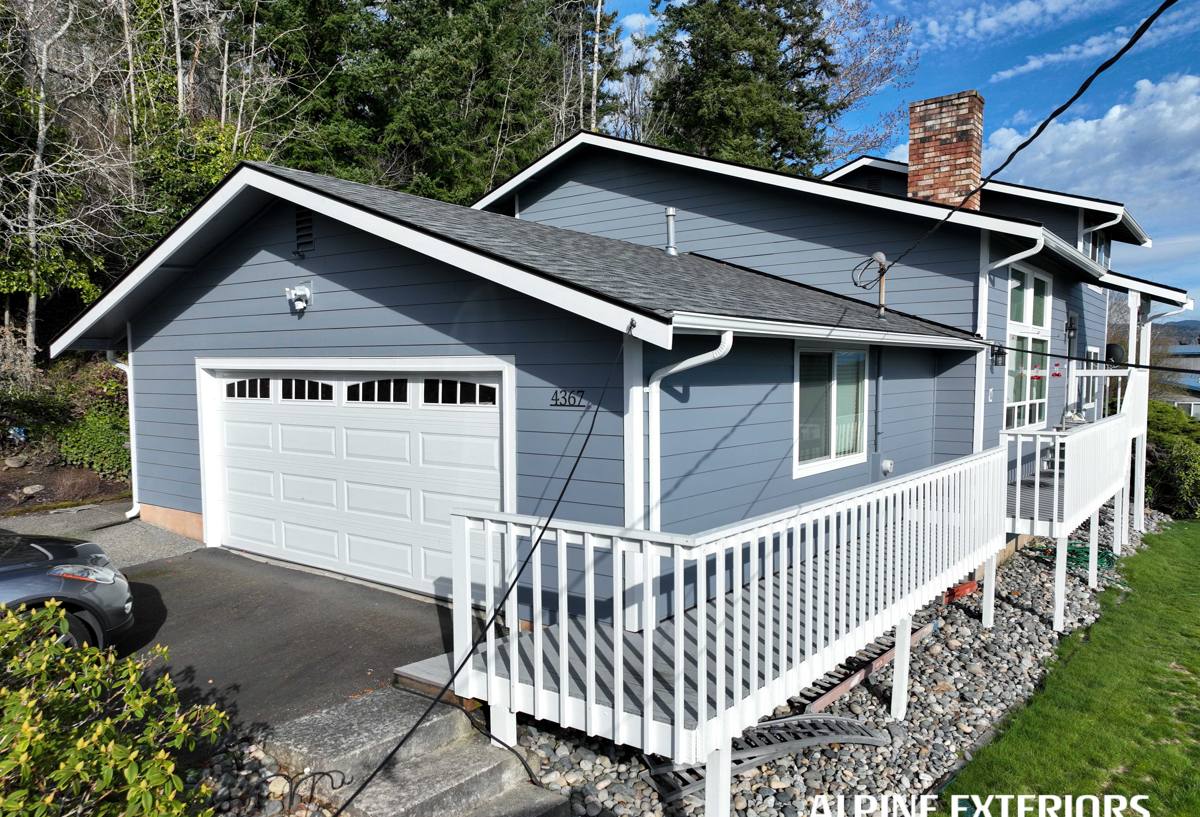
What the Lynden Climate Does to an Asphalt Shingle Roof
Wind-Driven Rain Over Open Farmland
A roof on a wooded or tightly built in-town lot gets some natural wind protection from trees and neighboring structures. A lot of Lynden's housing stock doesn't have that buffer — open fields and pasture on multiple sides mean wind carries more speed by the time it reaches a roof edge, and rain arrives sideways more often than it falls straight down. Shingles and flashing that aren't detailed to handle wind-driven rain, rather than just ordinary rainfall, tend to show water intrusion first at ridge caps, rake edges, and anywhere a shingle lap is running short of spec.
A Long Moss and Algae Season
Persistent regional dampness and mild temperatures add up to a moss and algae season that stretches across much of the year in this part of Whatcom County, and shaded or north-facing roof slopes show it first. On a Lynden roof, moss isn't just a cosmetic problem — it holds moisture directly against the shingle surface and, left alone, works its way under tabs and ridge caps, which is how a moss problem eventually becomes a leak.
Frost, Freeze-Thaw, and Cold Valley Nights
The Nooksack valley floor around Lynden tends to run colder overnight than areas closer to the water, with more frequent frost and occasional hard freezes through the winter months. That matters for a shingle roof in two ways: moisture that's already worked into a granule surface or a weak seal expands when it freezes, accelerating cracking, and shingles themselves get more brittle in cold temperatures, which is exactly why installation timing and technique matter on a cold-weather job.
Choosing the Right Shingle for a Lynden Roof
Not every asphalt shingle product is built the same way, and the right choice for a Lynden home depends on the roof's exposure, slope, and how much shade it gets.
| Shingle Type | Best Use | Why It Fits This Area |
|---|---|---|
| Standard 3-tab shingles | Budget-conscious re-roofs on simpler rooflines | Lower upfront cost, though shorter service life and lower wind rating than architectural shingles under open, wind-exposed conditions |
| Architectural (dimensional) shingles | Most Lynden homes, especially open or wind-exposed sites | Heavier construction and a higher wind rating hold up better where there's little windbreak from trees or neighboring structures |
| Algae-resistant shingles | Shaded or north-facing slopes, tree-adjacent lots | Copper-infused granules slow the dark streaking and moss growth that a long, damp moss season encourages |
| Impact-resistant shingles | Homes wanting added protection against wind-driven debris | Reinforced construction resists granule loss and cracking better under sustained wind exposure |
For most Lynden properties, we recommend algae-resistant architectural shingles as the baseline — the extra wind rating and moss resistance are worth the modest upcharge given how this area's exposure actually behaves over a roof's lifespan. The final choice still comes down to the specific roof, the budget, and how long you plan to stay in the home.
What Correct Installation Looks Like on a Lynden Roof
Tear-Off vs. Overlay
Installing new shingles over an existing layer can look like a cheaper option, but it hides the roof deck from inspection and traps whatever moisture damage is already there underneath. On a valley property where moss and trapped moisture are common, a full tear-off is usually the honest recommendation — it's the only way to actually see and repair deck damage before it's covered up again for another twenty-plus years.
Underlayment and Flashing
A synthetic or self-adhered underlayment handles wind-driven rain far better than older felt products, and it matters more on an open, wind-exposed Lynden lot than it would on a sheltered site. Flashing at valleys, chimneys, and any wall or dormer intersections is where most roof leaks in this region actually start, not in the open field of shingles, so we treat flashing detail as core work rather than an afterthought.
Ventilation
Balanced attic ventilation keeps moist, warm air from condensing against the underside of the roof deck. Poor ventilation traps humidity that accelerates deck rot from underneath and can encourage moss growth on the shingle surface even when the exterior side is doing everything right. On a home with an older or undersized ventilation system, a re-roof is the right time to correct it.
Repair or Full Replacement?
Not every roof problem on a Lynden home means a full tear-off. Wind-damaged sections, an isolated flashing failure at a chimney or valley, or a section that's taken storm debris impact can often be repaired and matched into the surrounding shingles if the rest of the roof still has useful life left. But if moss has been established for years, granule loss is widespread, or moisture has been tracking into the deck for a while, patching usually just delays a bigger job while hidden rot keeps spreading underneath. We'll walk the roof and tell you honestly which situation you're actually looking at.
Roof Readiness Checklist
- Shingle surface checked for granule loss, curling, or cracking, especially on south- and west-facing slopes
- North-facing and shaded slopes checked for moss, algae, or dark streaking
- Flashing inspected at valleys, chimneys, skylights, and any wall or dormer intersections
- Attic checked for daylight gaps, water staining, or signs of poor ventilation
- Gutters and downspouts checked for granule buildup, a sign of shingle wear
- Interior ceilings and top-floor walls checked for staining that could indicate a slow leak
Our Process
- An in-person roof inspection, including the attic where accessible, before we quote anything
- An honest assessment of whether the roof needs a repair, a partial re-roof, or full replacement
- A written estimate specifying shingle product, underlayment, flashing scope, and ventilation work
- Scheduling that accounts for weather windows, since this region has a real wet season
- Tear-off, deck inspection and repair as needed, and installation to manufacturer spec
- A final walkthrough, cleanup, and magnetic nail sweep of the property before we call the job done
Cost Factors for Lynden Roofing Projects
| Factor | What It Affects | Why It Matters Here |
|---|---|---|
| Tear-off vs. overlay | Labor scope and deck visibility | Tear-off reveals hidden moisture and rot damage common under older roofs in a damp valley climate |
| Deck condition | Repair costs before new shingles go on | Long-term trapped moisture or past moss growth can rot sheathing underneath |
| Shingle grade and wind rating | Material cost and long-term durability | Open, wind-exposed lots common in Lynden benefit from a higher wind-rated architectural shingle |
| Ventilation upgrades | Attic airflow and moisture control | Undersized or poorly balanced ventilation accelerates both deck rot and moss growth |
| Roof pitch and access | Labor time, staging, and safety equipment | Steeper or harder-to-access rooflines add real labor time regardless of location |
| Site access | Equipment staging and material delivery | Rural and agricultural properties can have longer driveways or different staging needs than an in-town lot |
Exact costs depend on the specific roof and its condition, which is why we walk the property in person before giving a real number instead of quoting off a generic price sheet.
Why a Local Crew That Works Lynden Matters
A crew that works this part of Whatcom County regularly understands how open farmland exposure, valley moisture, and cold overnight temperatures behave on real Lynden roofs over a full year, not just how a shingle performs on a spec sheet. That experience shapes practical decisions on install day: which slopes hold moss longest, where extra flashing attention pays off, and which wind-rated products are worth specifying on a lot with little natural windbreak. Lynden's inland, agricultural setting gives it a different exposure profile than the coastal towns closer to Bellingham Bay, and a crew with hands-on local experience treats that difference seriously instead of applying a one-size-fits-all approach built for a sheltered, in-town lot.
Get a Free Estimate
If your Lynden home needs a new asphalt shingle roof, a repair, or just an honest inspection to see what shape your current roof is really in, we're glad to take a look. Reach out using the form below to schedule a free, no-pressure estimate.