 Ferndale Exterior
 Why Metal Roofing Makes Sense for Lynden Homes
Lynden sits in the part of Whatcom County where weather doesn't do anything by half measures. Winters bring long stretches of steady rain, spring and fall throw in wind-driven storms, and the shoulder seasons stay damp and shaded long enough for moss to get comfortable on any roof that isn't shedding water well. Add in the temperature swings that come with a farming valley — cool nights, warmer days, fog that sits low over the fields — and you get a roof surface that's wet more often than it's dry for a good chunk of the year.
Metal roofing holds up well against that combination when it's installed correctly. It sheds water fast, it doesn't absorb moisture the way organic shingle materials can, and a properly finished panel system gives moss a lot less to grab onto. That doesn't mean any metal roof will do the job — the details of the install matter more here than they would in a drier climate, because this area doesn't give a poorly flashed valley or a sloppy fastener pattern much of a break.
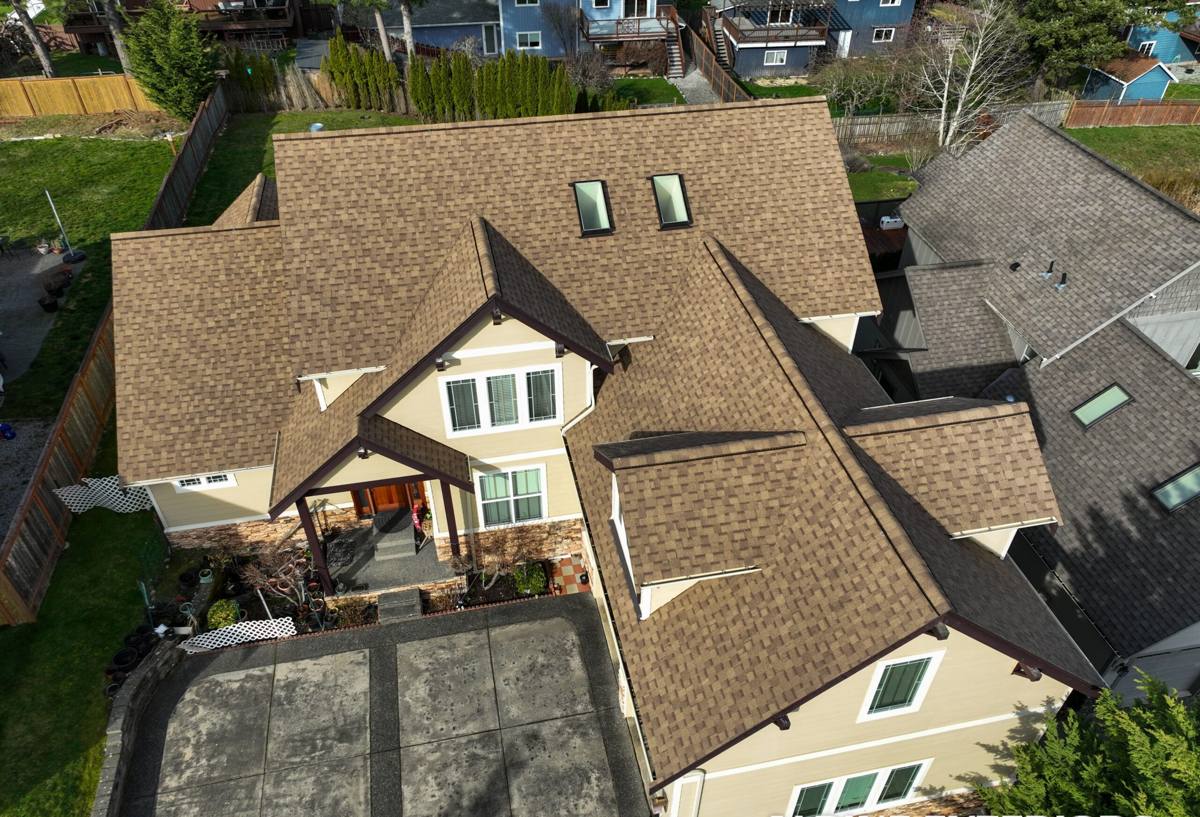
What Local Homes Are Up Against
A few things specific to this part of Whatcom County shape how we approach a metal roof install:
- Extended moss season: Shaded roof planes and north-facing slopes stay damp long enough for moss and algae to establish if the surface and fastening details don't shed water cleanly.
- Driving rain: Storms here don't always come straight down — wind pushes rain sideways under poorly lapped panels and around weak flashing details, especially at valleys and wall transitions.
- Regional salt-air influence: Whatcom County's proximity to the Sound means metal components and fasteners need corrosion resistance that matches the coastal-influenced air, even further inland.
- Seasonal debris: Farmland and tree cover mean gutters and roof valleys collect organic debris that holds moisture against the roof surface if it's not cleared.
None of this is unusual for the area — it's just what a roof here has to be built to handle, and it's why the installation details matter as much as the material choice.
What a Correct Metal Roof Installation Involves
Metal roofing gets a reputation for being "low maintenance," which is true — but only after it's installed right. A few things separate a metal roof that performs for decades from one that causes problems within a few years:
Underlayment and Moisture Barrier
A high-temperature, self-adhering underlayment at valleys, eaves, and penetrations gives the roof a backup layer in case wind-driven rain gets past the panel laps — which, in a climate like this one, it eventually will during a bad storm. Skipping this step, or using a basic felt product, is one of the most common shortcuts we see on roofs that develop leaks.
Fastener Pattern and Type
Exposed-fastener panel systems rely on the screws themselves to stay watertight, which means fastener spacing, torque, and washer condition all matter. Over-driven or under-driven screws are a leading cause of early leaks on this style of roof, and it's a detail that's easy to rush on a job priced too low.
Flashing at Valleys, Walls, and Penetrations
This is where most roof leaks actually start, on metal or any other material. Valleys need enough overlap and the right profile to handle heavy flow during a storm, and wall flashing needs to be integrated with the siding, not just caulked and hoped for.
Ventilation
A metal roof over a poorly ventilated attic can trap moisture underneath the panels, leading to condensation issues that have nothing to do with the roofing material itself. Ridge and soffit venting needs to be sized correctly for the home, not just carried over from whatever was there before.
Comparing Panel Systems for a Lynden Roof
Not every metal roofing system fits every home or budget. Here's how the two most common approaches compare for a climate like this one:
| Factor | Exposed-Fastener Panel | Standing Seam |
|---|---|---|
| Water resistance | Good, if fasteners are maintained | Excellent — no exposed penetrations |
| Typical lifespan | 25–40 years | 40–60+ years |
| Maintenance | Occasional fastener/washer checks | Minimal |
| Upfront cost | Lower | Higher |
| Best fit | Outbuildings, shops, budget-conscious re-roofs | Primary residences, long-term ownership |
We install both, and we'll tell you honestly which one fits your situation rather than steering every job toward the higher-margin option. For a shop or outbuilding, exposed-fastener panels are often the smart, practical call. For a primary home you plan to stay in, standing seam usually pays for itself in reduced maintenance and longer service life.
Mistakes We Commonly Find and Correct
Working in this area over time, we see the same handful of issues come up again and again on metal roofs that were installed by out-of-area crews or priced as a fast turnaround job:
- Valley flashing cut too narrow, leaving no margin for heavy rain volume during a real storm
- Fasteners driven at the wrong torque, crushing or under-compressing the washer seal
- Missing or undersized ice-and-water membrane at eaves and valleys
- Ridge caps installed without adequate ventilation behind them
- Panel end-laps too short, relying on sealant alone instead of proper overlap
Most of these aren't visible from the ground, which is part of why they go unnoticed until a leak shows up inside the home.
Our Process for a Metal Roofing Project in Lynden
We keep the process straightforward and don't skip steps to move faster:
- On-site assessment — we look at the existing roof structure, decking condition, ventilation, and any problem areas before quoting anything.
- System recommendation — based on the home, budget, and how long you plan to own it, we'll recommend exposed-fastener or standing seam and explain why.
- Written estimate — clear scope, materials, and price, with no vague allowances hidden in the fine print.
- Tear-off and deck inspection — we check the decking once the old roofing is off, since that's the only time you can actually see its condition.
- Underlayment and flashing installation — the part of the job that determines whether the roof performs in a real storm.
- Panel installation — fastened or seamed to manufacturer spec, not shortcuts.
- Final walkthrough — we go over the finished roof with you before calling the job done.
Cost Factors for a Lynden Metal Roof
Every roof is different, but the same factors tend to move the price up or down:
| Factor | Effect on Cost |
|---|---|
| Roof pitch and complexity | Steeper, more cut-up rooflines take longer to flash correctly |
| Panel system chosen | Standing seam costs more upfront than exposed-fastener panels |
| Decking condition | Rot or damage found at tear-off adds repair cost |
| Existing layers | Removing old roofing versus roofing over it affects labor |
| Access | Difficult access or steep sites add time and equipment needs |
We don't quote a metal roof off a satellite photo. An accurate number requires an actual look at the roof, which is part of every estimate we give.
Maintenance Homeowners Can Handle Themselves
A correctly installed metal roof doesn't need much, but a little seasonal attention goes a long way in this climate:
- Clear leaves, needles, and debris from valleys and gutters before the fall rains set in
- Watch for moss or algae starting at shaded areas and address it early rather than letting it spread
- Trim back overhanging branches that keep sections of the roof shaded and damp
- After major windstorms, do a visual check from the ground for any lifted or displaced panels
- Keep an eye on attic ventilation — blocked soffit vents reduce airflow and can lead to condensation issues
Why a Local Crew Matters for This Job
Metal roofing isn't a product where the brand does all the work — the installation is what determines whether it holds up. A crew that already works in and around Lynden knows what this area's rain and moss season actually do to a roof over time, not just in theory. That means we're not guessing at underlayment coverage or flashing details — we're building to what we've seen work here, and fixing the specific mistakes we've seen fail here.
Being local also means we're not disappearing after the invoice clears. If a question comes up two years down the road, or a storm does something unexpected, you're calling a crew that's still working in the same county, not chasing down a company that only shows up for the sale.
If you're weighing metal roofing options for a home in Lynden, we're happy to take a look and give you a straight answer on what your roof actually needs — no pressure, no upsell. Reach out for a free estimate using the form below.