 Ferndale Exterior
 Siding Built for the Nooksack Area's Particular Kind of Wet
Homes in and around Nooksack sit in a stretch of Whatcom County that gets hit from two directions: marine air pushing in off Bellingham Bay and the Strait of Georgia, and the steady, grinding rainfall that defines a Pacific Northwest winter. Add in the shade from mature conifers and the valley's tendency to hold moisture longer than more open, wind-exposed ground, and you get a siding environment that punishes shortcuts. This isn't a place where the cheapest board wins long-term. It's a place where the material and the installation both have to be right the first time, because a callback six years later means pulling apart work that should have lasted decades.
We've been doing exterior work in Ferndale and the surrounding Whatcom County communities long enough to know what actually fails out here and what holds up. That experience is why we install James Hardie fiber cement siding exclusively — not vinyl, not LP SmartSide, not primed cedar or spruce, not off-brand fiber cement. This page walks through what Nooksack-area homes specifically need from their siding, what a correct fiber cement install involves, and how our process works from first look to final walk-through.
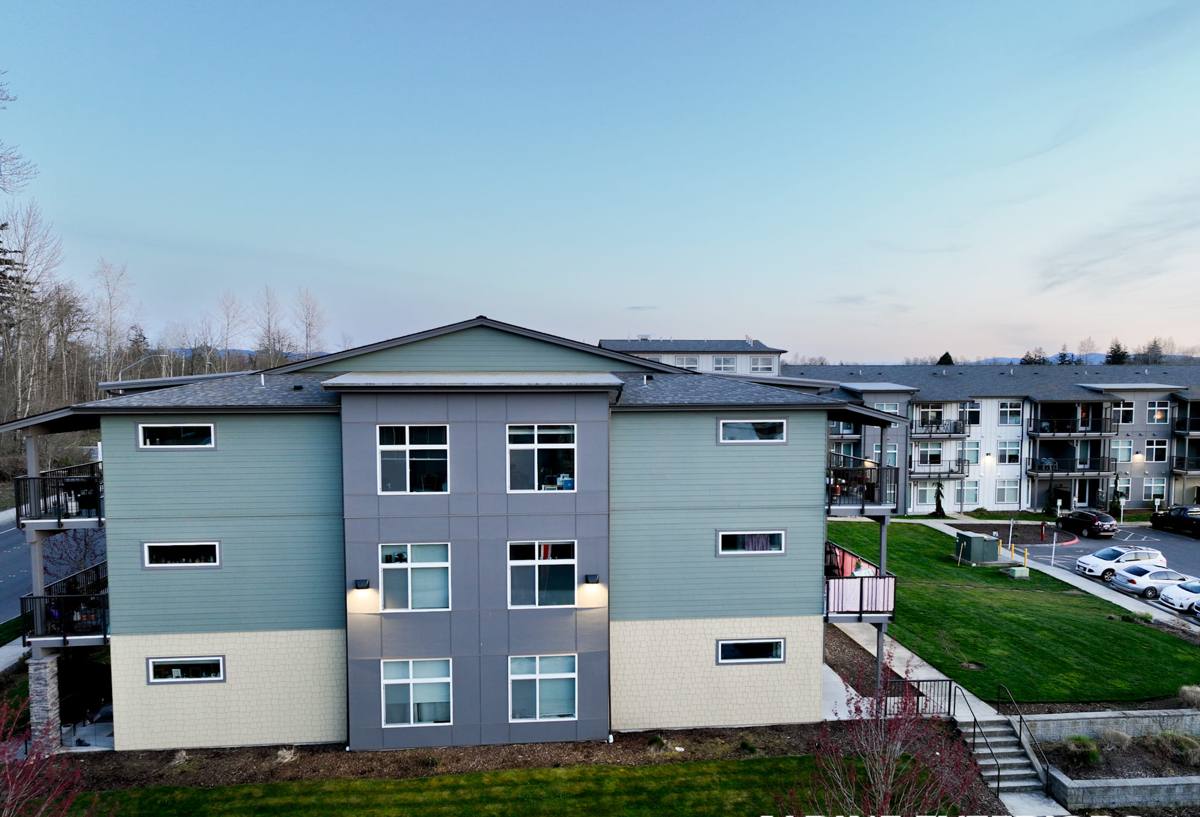
What the Local Climate Actually Does to Siding
Three climate factors matter most for siding performance in this part of Whatcom County, and they compound each other:
Salt Air and Airborne Moisture
Proximity to the Strait and the bay means chloride-laden air moves inland on prevailing winds. Over years, that salt-bearing moisture accelerates the breakdown of fasteners, trim, and any siding material that isn't dimensionally stable or properly sealed at the edges. It also keeps humidity elevated even on days without active rainfall, which matters more than most homeowners realize — siding doesn't just need to survive a storm, it needs to survive being damp more often than it's dry.
Driving Rain
Rain in this part of Washington rarely falls straight down. Wind-driven rain gets pushed sideways into wall assemblies, working its way behind laps, around penetrations, and into any gap that wasn't flashed or caulked correctly. A siding system's water-shedding detailing — how each course overlaps the one below it, how corners and window trim are integrated, how the weather-resistive barrier behind the siding is lapped — matters as much as the siding material itself.
A Long Moss and Algae Season
Shaded, moisture-retentive sites in the Nooksack area support moss and algae growth for a much longer stretch of the year than drier inland climates. Moss holds water against a surface, and sustained contact moisture is one of the fastest ways to degrade wood-based siding products or compromise paint film on lesser materials. Siding here needs a factory finish that resists staining and holds its color without repeated homeowner maintenance, because moss and mildew will find any surface that gives them a foothold.
Why We Only Install James Hardie
We made a deliberate call years ago to standardize on one product line rather than offer a menu of options at different price points. Fiber cement as a category makes sense for this climate because it's dimensionally stable, non-combustible, and doesn't feed moisture the way wood-based products can. Within fiber cement, James Hardie is the manufacturer we trust to back that performance with engineering specific to this region.
- HardiePlank HZ5: Hardie's HZ5 climate zone product line is engineered for the Pacific Northwest's freeze-thaw cycles and sustained moisture exposure — it's not a generic national product repackaged for our region.
- ColorPlus factory finish: baked-on, not field-applied, which means better adhesion and fade resistance than a job-site paint job, and none of the touch-up maintenance a repainted wood or spruce product eventually demands.
- Non-combustible core: a genuine safety advantage over wood-based siding, independent of climate.
- Transferable warranty: backed by Hardie directly, which matters to future buyers if the home sells.
We don't install LP SmartSide, vinyl, Cemplank, Allura, primed spruce, or cedar, and we're upfront about why. Vinyl expands and contracts with temperature swings and can warp or crack under UV exposure over time; it also isn't a material we can back with the same confidence in a marine climate. Wood-based engineered products and real wood or spruce siding require an unbroken paint or sealant film to keep moisture out — and in a climate with this much sustained dampness and moss pressure, that film is under constant stress. Other fiber cement brands may be reasonable products, but we've standardized our crews, our fastening schedules, and our warranty relationship around one system we know inside and out, and that's Hardie.
What a Correct Installation Actually Involves
Fiber cement siding fails prematurely almost never because of the material itself — it fails because of installation shortcuts. Given the rain and moisture load in the Nooksack area, these details aren't optional:
Water Management Behind the Siding
Every wall gets a properly lapped weather-resistive barrier before a single piece of siding goes up. Flashing at windows, doors, and any wall penetration is integrated with that barrier so water is directed out and down, never trapped behind the cladding. This is the layer nobody sees once the job is done, and it's the layer that determines whether the wall assembly survives the next twenty winters.
Clearances and Gaps
Hardie's own installation instructions specify minimum clearances from grade, roofing, decks, and other abutting surfaces — typically several inches — precisely because trapped moisture at these transitions is the most common cause of siding damage. We hold those clearances even when it would be faster not to.
Fastening Schedule
Correct nail placement, spacing, and penetration depth affect both the siding's wind resistance and its long-term dimensional stability. Over-driven or under-driven fasteners are a common cause of cracking and callback repairs on fiber cement jobs done by crews unfamiliar with the material.
Caulking and Sealant Joints
Butt joints, trim intersections, and penetrations need the right sealant, applied correctly, not just for appearance but to stop wind-driven rain from working its way in sideways — the exact failure mode this climate produces most often.
Ventilation and Rainscreen Detailing
On many homes, particularly those with shaded, moisture-retentive sites like much of the Nooksack area, a rainscreen gap behind the siding gives any moisture that does get through a path to drain and dry rather than sitting against the sheathing. We evaluate whether this detail makes sense for each specific home rather than applying one approach everywhere.
| Install Factor | Why It Matters Here | What We Do |
|---|---|---|
| Weather barrier lapping | Driving rain pushes water sideways and up under laps | Shingle-lap every course, integrate flashing at all penetrations |
| Clearance from grade/decks | Standing moisture and splash-back accelerate wear at the base | Hold Hardie's specified minimum clearances throughout |
| Fastener placement | Improper nailing causes cracking and reduces wind resistance | Follow HZ5-specified fastening schedule, checked per course |
| Factory finish vs. field paint | Field-applied paint fails faster under sustained moss/moisture exposure | Install ColorPlus pre-finished product, no field painting needed |
| Rainscreen/ventilation | Shaded, damp sites don't dry out on their own | Assess site conditions and add rainscreen detailing where warranted |
How Our Process Works, Start to Finish
We keep the process straightforward and communicate at every stage, because siding replacement is disruptive enough without surprises.
- On-site assessment: we walk the exterior, check current siding condition, look at grade clearances, drainage patterns, and any moisture or moss staining that points to underlying water issues.
- Written estimate: a clear scope covering material, prep work, tear-off (if applicable), and any repairs to sheathing or framing found along the way.
- Prep and tear-off: removal of old siding, inspection of the sheathing underneath for rot or damage, and repair of anything compromised before new material goes up.
- Weather barrier and flashing: the water management layer goes in first and gets inspected before any siding is installed over it.
- Hardie installation: HZ5 product installed to manufacturer fastening and clearance specifications, with attention to corners, trim, and penetrations.
- Final walk-through: we go through the finished work with the homeowner and address anything before calling the job complete.
Why a Crew That Already Works This Area Matters
Siding installation isn't uniform across Washington. A crew that mostly works drier, more sheltered inland areas may not default to the clearance and flashing decisions that matter most in a marine, high-rainfall zone like the Nooksack area. Local experience means we've already seen how moss establishes on north-facing walls here, how driving rain behaves against a two-story elevation facing open ground, and which trim details tend to trap water on homes in this part of Whatcom County. That's not something a crew learns from a manual — it's learned from doing the work here repeatedly and paying attention to what holds up.
It also means we're a known quantity locally rather than a company that shows up for one job and disappears. Warranty support, follow-up questions, and future exterior work are easier when the crew that installed your siding is still working in your area.
Signs Your Current Siding May Be Struggling
- Persistent moss or algae staining that returns shortly after cleaning
- Soft spots, bubbling, or visible warping, especially near the base of walls or around windows
- Paint that's peeling or chalking faster than expected between repaints
- Visible gaps at trim, corners, or butt joints where caulking has failed
- Musty smells or interior wall staining that suggest moisture is getting behind the cladding
- Cracked or separated boards, particularly after a hard winter or windstorm
Any of these can indicate the water management layer behind your current siding has failed, not just a cosmetic problem with the surface material. Worth having looked at before it becomes a sheathing or framing issue.
What Fiber Cement Siding Typically Costs to Install
Pricing depends on the size and complexity of the home, how much tear-off and prep is needed, trim details, and site access — we don't quote broad numbers without seeing the specific job, since a straightforward single-story home and a home with multiple gables, extensive trim, and difficult access can differ substantially in labor hours. What we can tell you honestly: fiber cement costs more upfront than vinyl and is comparable to or somewhat more than engineered wood products, but the factory finish eliminates the repainting cycles that wood-based sidings require, which changes the real cost picture over the life of the siding, not just at installation.
If you're in the Nooksack area and thinking about your home's exterior, we're happy to come take a look and give you a straightforward, no-pressure estimate — no obligation, just an honest read on what your home needs and what it would take to do it right.