 Ferndale Exterior
 Why Point Roberts Siding Has to Work Harder
Point Roberts sits in a category of its own along the Whatcom County coastline. It's a peninsula surrounded on three sides by water, which means homes here take on a level of exposure that inland Ferndale properties simply don't see. Salt-laden air moves off the water and settles onto exterior surfaces daily, wind-driven rain finds every gap in a poorly detailed wall assembly, and the long, damp shoulder seasons keep siding wet for extended stretches. Add in the moss and algae growth that thrives in Whatcom County's mild, moist climate, and you have a set of conditions that will expose the weaknesses of the wrong siding material within a handful of years.
This isn't a generic Pacific Northwest siding page. It's specifically about what James Hardie fiber cement siding needs to deliver for a Point Roberts home, and what a correctly executed installation looks like when salt air and sustained moisture are part of the daily reality rather than the occasional storm.
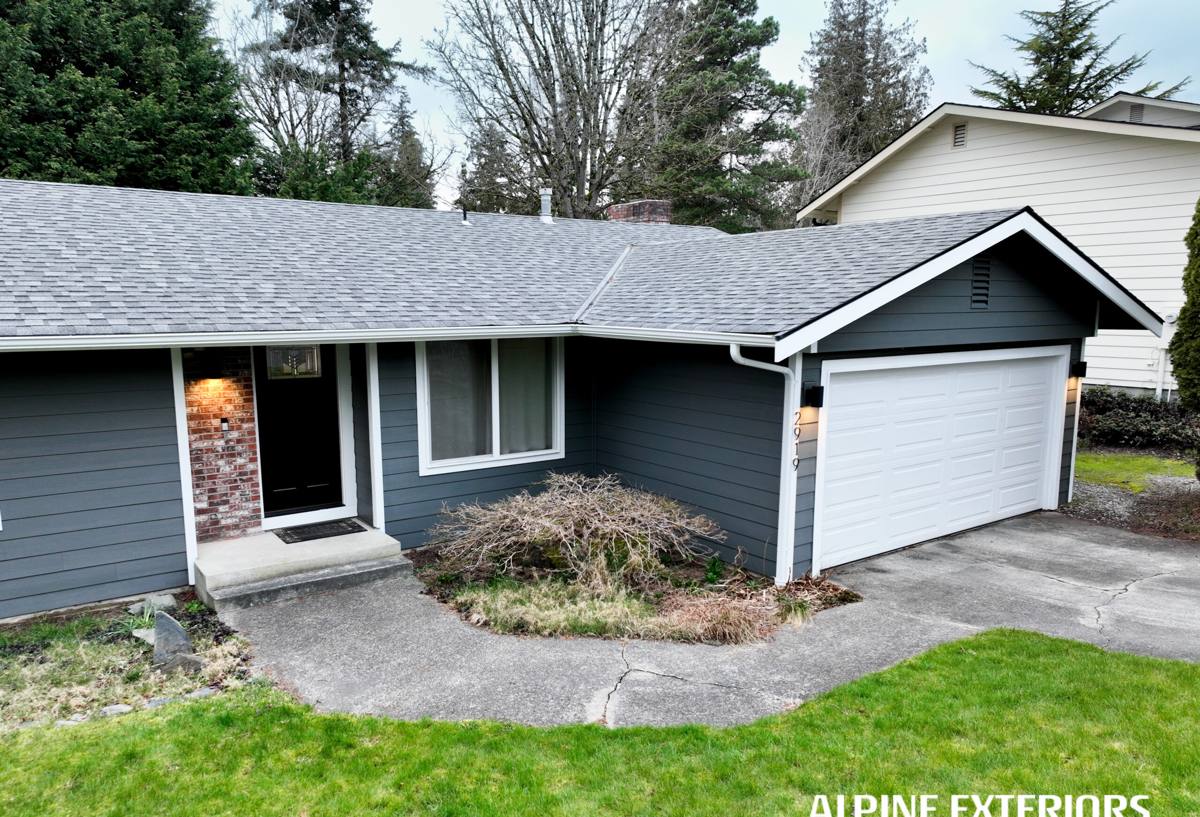
What Salt Air and Driving Rain Actually Do to Siding
Salt exposure isn't just cosmetic corrosion on metal fixtures. Salt is hygroscopic — it pulls moisture out of the air and holds it against whatever surface it's settled on. On wood-based or wood-adjacent siding products, that means the material stays damper, longer, than it would in a drier inland setting. On fasteners and flashing, it accelerates corrosion unless those components are rated for coastal use.
Driving rain adds a second problem: wind pushes water sideways and upward, not just straight down. That means laps, joints, and penetrations that would shed water fine in a calm rain can take on water in a Point Roberts storm if they weren't detailed with that wind-driven exposure in mind. Over time, water that gets behind siding — rather than running off it — is what causes rot, sheathing damage, and mold, regardless of what the face material is.
Moss and algae are the visible, everyday version of this same moisture story. Anywhere shade, north-facing exposure, or reduced airflow keeps a wall damp longer, organic growth follows. It's not just an appearance issue — sustained organic growth holds moisture against the siding surface and can accelerate deterioration of the coating or the substrate underneath.
Why This Matters More in Point Roberts Specifically
- Marine exposure on multiple sides of most properties, not just one prevailing-wind face
- Extended damp seasons with limited full-sun drying time
- Wind-driven rain events that stress joints, corners, and trim transitions
- Salt deposition that accelerates fastener and flashing corrosion if the wrong hardware is used
- Reduced airflow in some wooded or closely built lots, which favors moss and algae growth
Why We Standardize on James Hardie for This Exposure
We install James Hardie fiber cement exclusively — we don't install vinyl, LP SmartSide, primed spruce, cedar, or other fiber cement brands like Allura or Cemplank. That's a deliberate standard, not a default, and coastal exposure like Point Roberts is exactly why.
Fiber cement is non-combustible and dimensionally stable in a way wood-based products aren't. It doesn't swell and contract with moisture the way engineered wood siding can, which matters a great deal when a wall is spending a large share of the year damp rather than dry. James Hardie's ColorPlus factory-applied finish is baked on under controlled conditions, which gives it better adhesion and color retention against sustained UV and salt exposure than field-applied paint typically achieves — and it comes with its own finish warranty rather than relying entirely on a site-applied topcoat.
James Hardie also engineers regional product lines (HZ5 for harsher climates) specifically to perform in different moisture and temperature conditions across the country. For a Whatcom County coastal property, that climate-engineered approach is a meaningful advantage over a one-size-fits-all product.
What We Won't Install Here, and Why
| Product | Where It Falls Short in This Exposure |
|---|---|
| Vinyl siding | Can warp or become brittle with temperature swings; seams and laps are more vulnerable to wind-driven rain intrusion over time |
| LP SmartSide / engineered wood | Wood-strand core is more sensitive to sustained moisture exposure than fiber cement; edge sealing becomes critical and harder to guarantee long-term |
| Primed spruce / cedar | Natural wood requires ongoing refinishing to hold up against salt air and moss growth; maintenance burden is significantly higher |
| Other fiber cement brands | May lack the same climate-specific product engineering and factory finish warranty structure we've standardized around |
What a Correct Installation Involves in a Marine Climate
The siding material is only part of the equation. In an exposure like Point Roberts, the installation details are what actually determine whether a wall stays dry or takes on water over the next 20 years.
Water Management Behind the Siding
Every correctly installed Hardie system starts with a drainage plane — a weather-resistant barrier and, ideally, a rainscreen gap that lets any incidental moisture that gets past the siding drain and dry out rather than sitting against the sheathing. In a climate where walls stay damp for extended stretches, that drainage gap is not optional detailing — it's what keeps a small amount of moisture intrusion from becoming a rot problem.
Flashing and Fastening
Every window, door, and penetration needs flashing that directs water outward and downward, lapped correctly with the weather barrier above and below. Fasteners and any exposed metal components should be corrosion-resistant hardware rated for coastal use — standard fasteners can start showing rust streaks and lose holding strength faster in salt air than they would inland.
Joints, Caulking, and Clearances
James Hardie's installation specifications call for specific gaps at butt joints, trim, and ground clearance, and for those gaps to be properly caulked or left open per the manufacturer's detail — not sealed in a way that traps moisture. Skipping or shortcutting these details is one of the most common causes of premature siding failure, and it voids the manufacturer warranty regardless of how good the siding material itself is.
Our Process for a Point Roberts Project
- On-site assessment — we walk the property, check current siding and sheathing condition, and note exposure-specific concerns like wind direction, shaded moss-prone areas, and existing moisture damage.
- Product and color selection — we help you choose the right Hardie plank profile and ColorPlus finish for the home, factoring in how the color and texture will read against this coastal light and setting.
- Tear-off and substrate check — old siding comes off and we inspect sheathing for any rot or damage before anything new goes up. Damaged substrate gets addressed, not covered over.
- Weather barrier and drainage plane installation — a properly lapped weather-resistant barrier, with rainscreen detailing where called for.
- Flashing at every penetration — windows, doors, vents, and any wall penetration get flashed to shed water outward.
- Hardie installation to manufacturer spec — correct fastener type and placement, proper joint gaps, correct clearance at grade and roofline.
- Final inspection and walkthrough — we review the completed work with you before calling the job done.
Why Local Experience in Point Roberts Matters
Point Roberts is geographically unusual — it's part of the U.S. but physically separated from the rest of Whatcom County by Canadian territory, which affects material delivery timing and scheduling in ways a crew unfamiliar with the area won't anticipate. A contractor who has worked this peninsula before knows to plan logistics around that, knows what exposure a given lot typically sees based on its position relative to the water, and has already seen firsthand how moss, salt, and wind-driven rain show up on siding in this specific setting.
That local pattern recognition is not something a crew coming from outside Whatcom County brings with them on a first job. It shows up in small decisions — where to add extra flashing attention, which side of a home needs the most rigorous joint detailing, how much ground clearance to build in given local moisture patterns — that add up to a siding system that actually performs over decades rather than years.
What to Ask Before Hiring for a Coastal Siding Job
- Are they a James Hardie certified or preferred contractor, and can they explain the specific HZ product line recommended for this climate?
- Do they install a rainscreen or drainage gap behind the siding, or just a weather barrier?
- What fastener and flashing hardware do they use, and is it rated for coastal/marine exposure?
- Have they worked in Point Roberts or similarly exposed coastal Whatcom County properties before?
- Will they inspect and address sheathing condition before installing new siding, not just over the old wall?
Cost Factors for a Point Roberts Hardie Project
| Factor | Why It Affects Cost |
|---|---|
| Home size and wall complexity | More corners, dormers, and trim transitions mean more detailing and labor time |
| Existing siding removal and disposal | Tear-off scope and any sheathing repair found underneath |
| Product line and plank profile | HZ5 and specific ColorPlus finishes vary in material cost |
| Access and logistics | Point Roberts delivery and scheduling logistics can factor into project timelines |
| Rainscreen/drainage detailing | Added labor and material for proper drainage plane installation, which pays off in longevity |
If your Point Roberts home is due for new siding, or you want a straight answer on whether your current siding is holding up the way it should against this coastline's salt air and rain, we're glad to take a look. Request a free, no-pressure estimate using the form below.