 Ferndale Exterior
 Why Blaine Roofs Take a Different Kind of Beating
Blaine sits right on the water, close to the Canadian border, in a stretch of Whatcom County where the weather doesn't let a roof coast. Salt-laden air moves in off the bay on a near-daily basis, winter storms drive rain sideways instead of straight down, and the shade and dampness common to this part of the county keep moss active for most of the year. No single one of these conditions would wreck a roof quickly. Stacked together over several seasons, they wear roofs out in specific, predictable places — fasteners, flashing, valleys, and anywhere moss gets a foothold and holds moisture against the surface.
We're based in nearby Ferndale and work roofs across this part of Whatcom County on a regular basis, so we're not guessing at what a Blaine roof needs. We see the same handful of failure patterns repeat from house to house. This page covers what actually goes wrong here, what a correct repair involves, and how we handle the work when you call us.
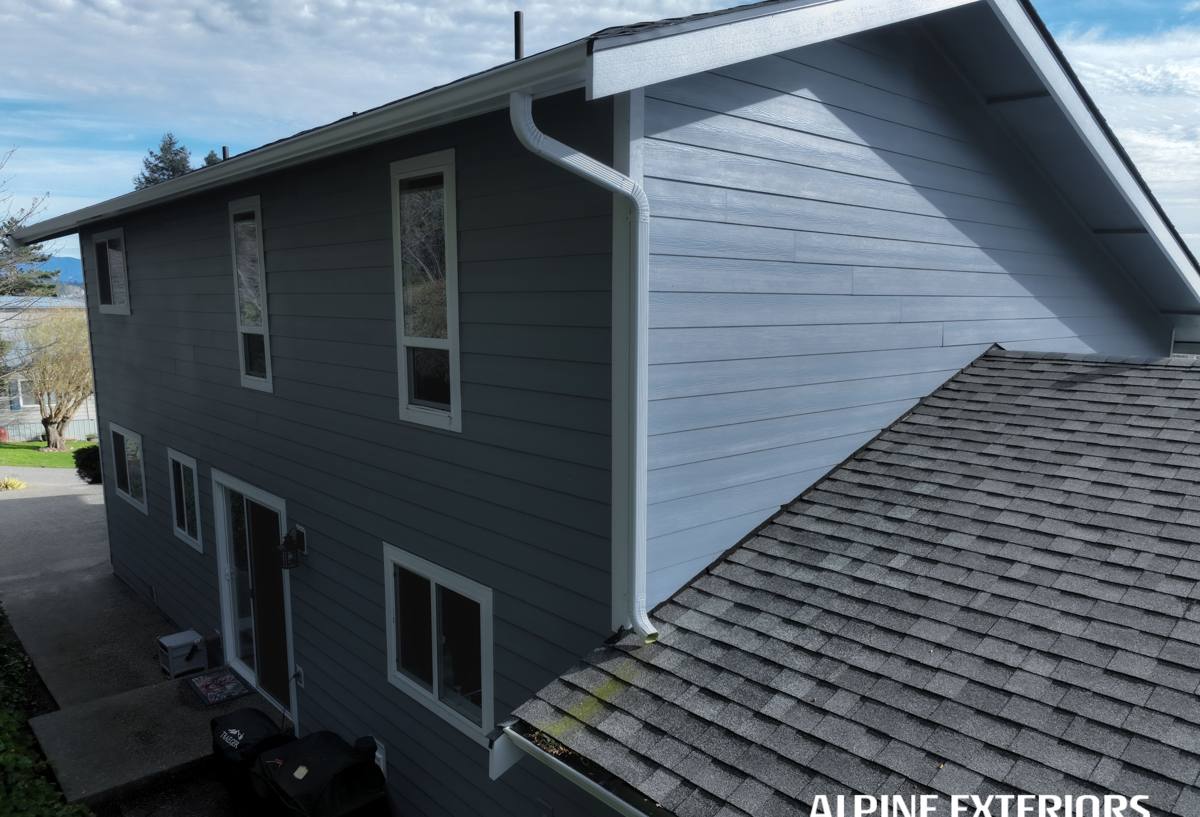
Common Roof Problems We See on Blaine Homes
Moss Lifting Shingles and Trapping Moisture
Moss doesn't just sit on top of a roof looking bad — it grows roots and mat under shingle tabs, lifting the edges just enough for wind-driven rain to get underneath. Once moisture is trapped under a lifted shingle, the deck beneath it stays wet far longer than it should, which is where rot and eventually leaks start. In a climate with a long moss season, a roof that isn't checked and cleared regularly can go from "a little green" to "actively leaking" faster than most homeowners expect.
Corrosion at Fasteners and Flashing
Salt air is hard on exposed metal. Nail heads, staples, and lower-grade flashing that would hold up fine twenty miles inland can start corroding years earlier this close to the water. Once a fastener corrodes, it loses grip and the shingle or panel around it works loose in wind — and once flashing corrodes, especially at chimneys, skylights, and roof-to-wall transitions, it stops shedding water the way it's supposed to. Neither failure is dramatic at first. Both get expensive if ignored.
Wind-Driven Rain Intrusion
Rain that comes in at an angle behaves differently than rain that falls straight down. It can work its way under shingle laps, past poorly sealed vents and pipe boots, and into valleys that were cut a little too tight. On an inland roof in calmer weather, a marginal detail might never get tested. On a Blaine roof, it gets tested every winter, which is why the same weak points tend to fail first.
What a Correct Roof Repair Actually Involves
A roof repair that holds up here has to do more than patch the spot where water is showing up inside the house. Water almost never enters where it appears on a ceiling — it travels along the underlayment or decking before it drips somewhere convenient to notice. A repair that only addresses the visible drip spot without tracing the actual entry point is a repair that comes back.
A correct repair, in our process, involves:
- Tracing the actual water path, not just patching the ceiling stain or the obvious gap
- Checking the roof deck underneath for soft spots, rot, or delamination before covering anything back up
- Matching replacement shingles, flashing metal, and fasteners to what's already on the roof, or upgrading the specific detail that failed
- Re-flashing properly at valleys, chimneys, and penetrations rather than relying on sealant alone to bridge a gap
- Confirming the repair ties into surrounding courses correctly so water sheds over it, not into it
Sealant and caulk have a place in roofing, but they're a short-term fix when used alone. A tube of sealant over a flashing gap might buy a season, but in this climate it's usually cracking or pulling away again within a year or two. We use it to finish a properly flashed detail, not to replace one.
Salt Air and Your Roofing Materials
Not every roofing material or fastener handles marine air the same way. Some of this is about the material itself, some is about installation grade, and some is about where on the roof the component sits. Here's how the common materials generally hold up in a coastal Whatcom County environment:
| Roof Component | Behavior Near Salt Air | What We Look For |
|---|---|---|
| Standard galvanized fasteners | Can corrode noticeably faster than inland use | Hot-dip galvanized or stainless fasteners in exposed areas |
| Painted steel flashing | Holds up well if the coating is intact; fails fast once scratched or worn through | Coating condition, cut edges, and joints where paint is thinnest |
| Aluminum flashing | Generally resists salt corrosion better than bare steel | Correct gauge and clean installation, since it's softer and dents easier |
| Asphalt shingles | The shingle mat itself isn't the weak point — the fasteners and flashing around it usually fail first | Algae-resistant granules and fastener quality, not just shingle brand |
| Roof vents and pipe boots | Rubber and plastic components degrade with UV and salt exposure over time | Cracking, shrinkage, and seal integrity at the base |
None of this means one specific product is bad — it means installation detail and fastener grade matter more here than they would on a roof twenty miles inland. When we recommend upgrading a fastener type or flashing metal during a repair, it's because of what we're seeing come off your specific roof, not a generic upsell.
Moss: More Than a Cosmetic Problem Here
Whatcom County's moss season runs long compared to drier parts of the state, and a coastal spot like Blaine gets the shade, humidity, and mild temperatures moss needs to keep growing through most of the year. Homeowners moving here from drier climates are often surprised at how quickly it comes back after a cleaning.
The issue isn't just appearance. Moss holds water against the roof surface, which keeps shingles damp longer after every rain and accelerates granule loss on asphalt roofing. On shaded north-facing slopes — common on roofs tucked among trees near the water — moss can re-establish within a season if nothing is done to slow it down.
Two things actually control moss long-term: physical removal done the right way, and prevention. Scraping moss off dry, brittle shingles can do more damage than the moss itself, so removal has to be done carefully, usually when the roof is damp enough that moss lifts without tearing granules with it. For prevention, zinc or copper strips installed near the ridge let rain carry trace metal down the roof slope, which discourages regrowth without chemical treatments that can stain siding or harm plantings below.
Our Roof Repair Process
When you call us for a roof repair in Blaine, here's what actually happens:
- Inspection. We get on the roof, not just in the attic, and look at the actual problem area plus the rest of the roof's condition — flashing, fasteners, moss coverage, and deck condition where accessible.
- Diagnosis. We trace the leak or damage back to its real source, which is often several feet from where water is showing up inside.
- Written estimate. You get a clear explanation of what failed, what we're proposing to fix, and why — no vague line items.
- The repair itself. We match materials where possible, re-flash properly rather than patching over old flashing, and use fasteners suited to a coastal environment.
- Cleanup and check. We clear debris and moss from the work area and surrounding roof surface, since leftover moss right next to a fresh repair defeats the purpose.
- Follow-up. If anything about the repair doesn't hold up as expected, we want to know and come back to make it right.
Repair vs. Replacement: How We Help You Decide
Not every roof problem in Blaine needs a full replacement, and not every leak can be permanently solved with a patch. The right call usually comes down to the roof's age, how widespread the damage is, and how much of the underlying structure has been affected by trapped moisture over time.
| Factor | Leans Toward Repair | Leans Toward Replacement |
|---|---|---|
| Roof age | Under roughly two-thirds of its expected lifespan | Nearing or past its expected service life |
| Damage extent | Isolated to one area, valley, or penetration | Spread across multiple slopes or recurring in different spots |
| Deck condition | Solid decking found under the damaged section | Soft spots, rot, or repeated deck repairs needed |
| Moss/algae history | Manageable with cleaning and prevention | Heavy, recurring growth across most of the roof |
| Fastener/flashing condition | Isolated corrosion at specific details | Widespread corrosion across most flashing and fasteners |
We'll always tell you honestly which side of that line your roof falls on. A repair that's likely to need another repair in a year isn't a good use of your money, and we'd rather say that upfront than let you find out the hard way.
Signs Your Blaine Roof Needs a Repair Call
Most roof damage in this climate builds slowly and quietly before it becomes an obvious leak. Watch for:
- Visible moss buildup, especially on shaded or north-facing slopes
- Granules collecting in gutters or at downspout outlets
- Shingle edges that look lifted, curled, or out of alignment after a windstorm
- Rust streaking below metal flashing, vents, or fasteners
- Soft or spongy spots noticeable if you're up there for another reason
- Daylight visible through the roof deck from inside the attic
- Water stains on ceilings or upper walls that appear after wind-driven rain specifically
- Sealant around vents or flashing that's cracked, shrunk, or pulling away
Catching any of these early is almost always cheaper than waiting for an active leak, since the damage is usually contained to one detail rather than having spread into the deck or interior.
Why a Crew That Already Works Blaine Matters
Roofing crews who mostly work drier, inland areas don't always think in terms of salt exposure and near-constant moss pressure — they're used to problems showing up differently and on a different timeline. Because we work this part of Whatcom County regularly, we know which details tend to fail first on a coastal roof, what fastener and flashing choices actually hold up here, and how aggressive the moss situation typically is on a given lot depending on tree cover and sun exposure.
That local familiarity also means a faster, more accurate estimate. We're not learning the region on your roof — we've already seen the failure patterns this environment produces, which means less guesswork and fewer surprises once we're up there.
If you're dealing with a leak, visible moss, or damage after a windstorm on a Blaine-area roof, we're glad to take a look. Fill out the form below for a free, no-pressure estimate — we'll tell you honestly what we find and what it would take to fix it right.