 Ferndale Exterior
 Building Decks for Sandy Point's Coastal Conditions
Sandy Point sits close enough to the water that every deck out here deals with a different set of stresses than a deck three miles inland. Salt-laden air moves through fasteners and framing connectors. Driving rain off the Strait gets pushed sideways under railings and around post bases. And Whatcom County's long, grey moss season means anything that stays damp for weeks at a time becomes a growing surface if it isn't detailed correctly. None of this is exotic — it's just consistent, and consistency is what wears decks out. A deck built for Sandy Point needs to be built with all three of those realities in mind from the framing up, not just at the surface level.
We work on decks throughout Ferndale and the surrounding Whatcom County coastline, and Sandy Point projects get treated as their own category. The fastener specs, drainage details, and board selection we'd use on a sheltered inland lot aren't automatically right for a property exposed to salt spray and wind-driven rain. This page walks through what that means in practice.
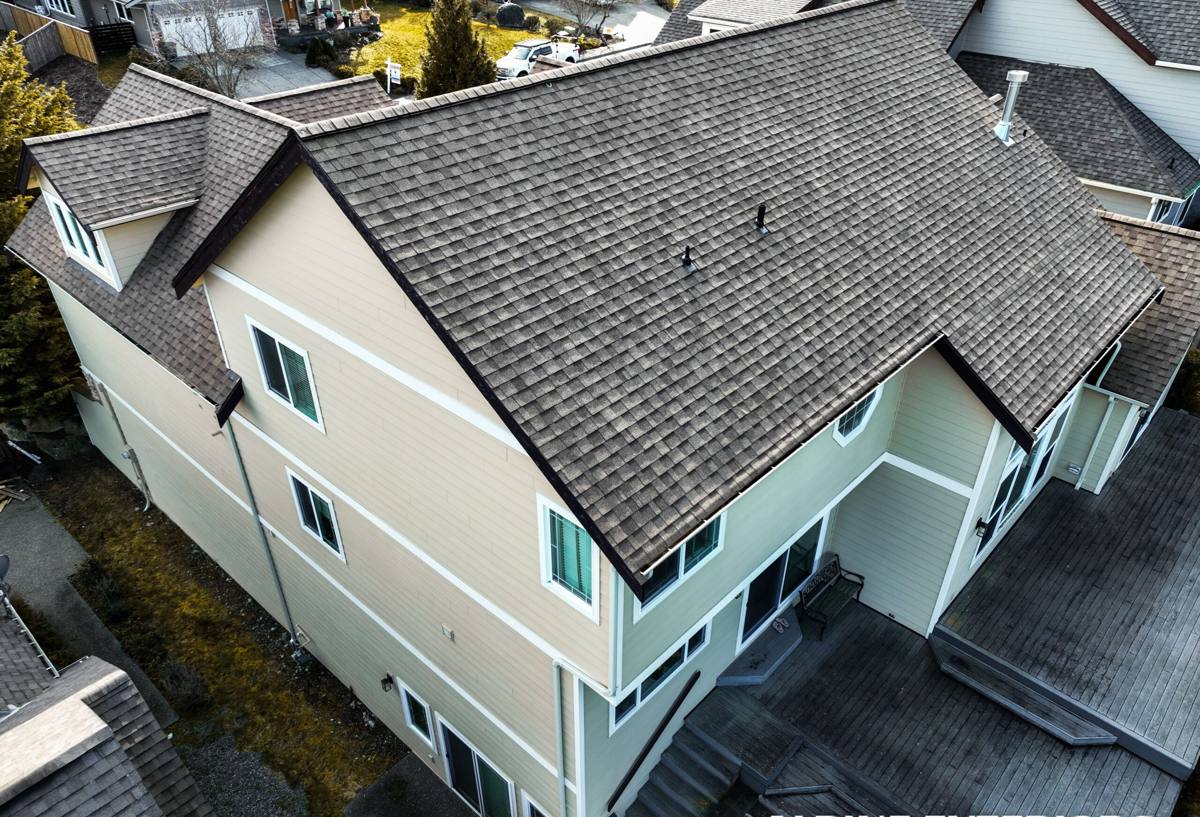
Why Composite Makes Sense Here
Composite decking was developed largely to solve the problems wood has in exactly this kind of environment — moisture cycling, splintering, and the ongoing maintenance burden of sanding and refinishing. For a Sandy Point property, the appeal isn't cosmetic. It's that a correctly installed composite deck doesn't absorb water the way wood does, so it isn't feeding the moss and algae growth that thrives in this climate's damp, low-sun stretches.
That said, composite isn't maintenance-free, and we won't tell a homeowner it is. It still needs periodic cleaning to stay ahead of surface mildew and pollen film, and the framing underneath — whether wood or composite substructure — still needs to be built to shed water properly. The board material solves one set of problems. It doesn't solve bad drainage, poor ventilation under the deck, or fasteners that weren't rated for a marine-influenced environment.
What Salt Air Actually Does to a Deck
Salt air doesn't just affect metal on boats. Over years, it accelerates corrosion in standard fasteners, joist hangers, and structural screws. On a coastal property like Sandy Point, we spec stainless or coated fasteners rated for corrosive exposure rather than the standard hardware that's fine for inland builds. This is a detail that's invisible once the deck is finished but shows up as rust streaking and weakened connections five to ten years later if it's skipped.
What a Correct Composite Deck Build Involves
A composite deck is only as good as what's underneath it. The board itself gets most of the attention, but the framing, fastening, and airflow decisions are what determine whether the deck is still solid and clean-looking in fifteen years.
- Framing lumber that's rated for ground contact or elevated exposure as appropriate, with proper joist spacing for the specific composite product's span rating
- Corrosion-resistant structural connectors and fasteners, sized for coastal exposure rather than standard interior-grade hardware
- A ledger board attachment that's properly flashed against the house to stop water intrusion at the single most common failure point on any deck
- Joist tape or an equivalent moisture barrier on top of framing members to keep water from sitting in the wood-to-composite contact line
- Adequate under-deck ventilation so damp air isn't trapped where it encourages moss and mildew growth
- Board spacing and fastening per the manufacturer's specification, since composite expands and contracts with temperature differently than wood
- Proper drainage slope away from the house, so water doesn't pool against the ledger or under low spots in the decking
Skipping any one of these doesn't usually cause an immediate problem. It shows up two, five, or ten years out as a soft spot, a rust stain, a section of decking that stays wet longer than the rest, or a railing post that's gone loose. Coastal exposure just speeds up the timeline on anything that was built wrong.
Moss and Algae: The Long Season Problem
Whatcom County's moss season isn't a short window — it's a big part of the year, and a north-facing or shaded Sandy Point deck can stay damp for extended stretches without much direct sun to dry it out. Composite decking resists moss better than untreated wood because it doesn't absorb moisture into the fiber the way wood does, but moss and algae can still form a film on the surface, especially in low-traffic corners, under furniture, and along board edges where debris collects.
Two things reduce this over the life of the deck: correct board selection with a cap or finish designed to resist organic growth, and a build that promotes airflow and drainage instead of trapping moisture. A deck built tight against a fence line with no airflow underneath is going to grow moss faster than one with proper clearance and ventilation, regardless of what the boards are made of.
Realistic Maintenance Expectations
Homeowners considering composite for a Sandy Point property should expect periodic washing — typically a seasonal rinse and occasional soft-wash cleaning to keep pollen, salt film, and organic growth from building up. This is lighter than the sanding, staining, and sealing cycle wood requires, but it isn't zero maintenance, and we'd rather set that expectation up front than have it be a surprise later.
Comparing Decking Approaches for a Coastal Lot
| Factor | Composite Decking | Pressure-Treated Wood |
|---|---|---|
| Moisture absorption | Low; resists swelling and rot from salt-driven rain | Higher; absorbs and releases moisture with weather cycles |
| Moss/algae resistance | Better on properly capped boards, still needs cleaning | More prone to growth, especially in shaded, damp areas |
| Maintenance | Periodic cleaning, no sanding or staining | Regular sanding, staining, and sealing to keep ahead of weathering |
| Fastener/hardware needs | Coastal-rated hardware still required at framing level | Coastal-rated hardware still required at framing level |
| Upfront cost | Higher material cost | Lower material cost, higher lifetime maintenance cost |
| Long-term appearance | Consistent color and surface with less upkeep | Requires ongoing refinishing to maintain appearance |
Neither option is wrong on its own — plenty of well-built wood decks hold up fine with consistent upkeep. The honest trade-off is that composite shifts the cost toward the upfront material and installation, while wood shifts it toward ongoing labor and refinishing. For a lot of Sandy Point homeowners who want less recurring maintenance in a climate that already demands enough of it, composite is the more practical long-term choice.
Our Process for Sandy Point Projects
1. On-Site Assessment
We walk the property, look at sun exposure, drainage patterns, proximity to the water, and any existing structure being replaced. Exposure to prevailing wind and rain direction matters for board and hardware decisions, and it's specific to each lot.
2. Framing and Structural Plan
We plan joist spacing, ledger attachment, and footing layout to meet both the composite manufacturer's span requirements and the structural demands of the site — including any additional bracing a more exposed or elevated deck might need.
3. Coastal-Spec Materials
Fasteners, flashing, and connectors are selected for corrosion resistance rather than defaulting to standard-grade hardware, and board selection accounts for the site's sun exposure and moss risk.
4. Build with Drainage and Airflow Built In
Ledger flashing, joist tape, deck slope, and under-deck ventilation are treated as core parts of the build, not optional add-ons, because these are what determine how the deck ages in this climate.
5. Walkthrough and Care Guidance
Before we consider the job finished, we walk the homeowner through what routine care actually looks like for their specific deck — cleaning frequency, what to watch for near the ledger and post bases, and what a normal weathering pattern looks like versus something worth a call.
What to Check Before Hiring Anyone for This Job
Composite decking installation looks straightforward from the surface — boards, hidden fasteners, done. The parts that determine whether it lasts are underneath, and they're easy for an inexperienced crew to shortcut without it being obvious at handoff.
- Ask specifically what fastener and hardware grade they use, and whether it's rated for coastal or marine-adjacent exposure
- Ask how they handle ledger board flashing against the house — this is the most common source of hidden water damage on any deck
- Confirm they're following the composite manufacturer's span and fastening specifications rather than treating it like a standard wood install
- Ask about under-deck ventilation and drainage slope, especially if the site is shaded or close to the water
- Check that they carry proper licensing and insurance for exterior construction work in Washington
- Ask whether they've worked in your specific area before and understand its particular exposure — a crew that only builds inland decks may not think about salt-rated hardware by default
A crew that's already worked in Sandy Point and similar coastal pockets of Whatcom County isn't guessing at these answers. They've seen what standard-grade fasteners look like after several seasons of salt exposure, and they build around it from day one instead of learning the lesson on someone's deck after the fact.
Why Local Experience Matters on This Kind of Job
Ferndale and its coastal neighborhoods, including Sandy Point, sit in a specific microclimate within Whatcom County — closer to salt spray and driving coastal weather than properties just a few miles inland, and under the same long moss season that affects the whole region. A contractor who mainly works drier, more sheltered sites may build a technically fine deck that still wasn't built for what this particular location will throw at it over the next fifteen years.
We're based locally and do this kind of work regularly along the Ferndale coastline, which means the hardware specs, drainage details, and board choices on this page aren't theoretical — they're what we actually build with when we're out on a Sandy Point property.
If you're weighing composite decking for a home in Sandy Point, we're happy to take a look at your specific site and talk through what it would actually take to get it right. There's no pressure and no cost to get a straightforward estimate — just fill out the form below and we'll go from there.