 Ferndale Exterior
 Building Decks for a Coastal Whatcom County Neighborhood
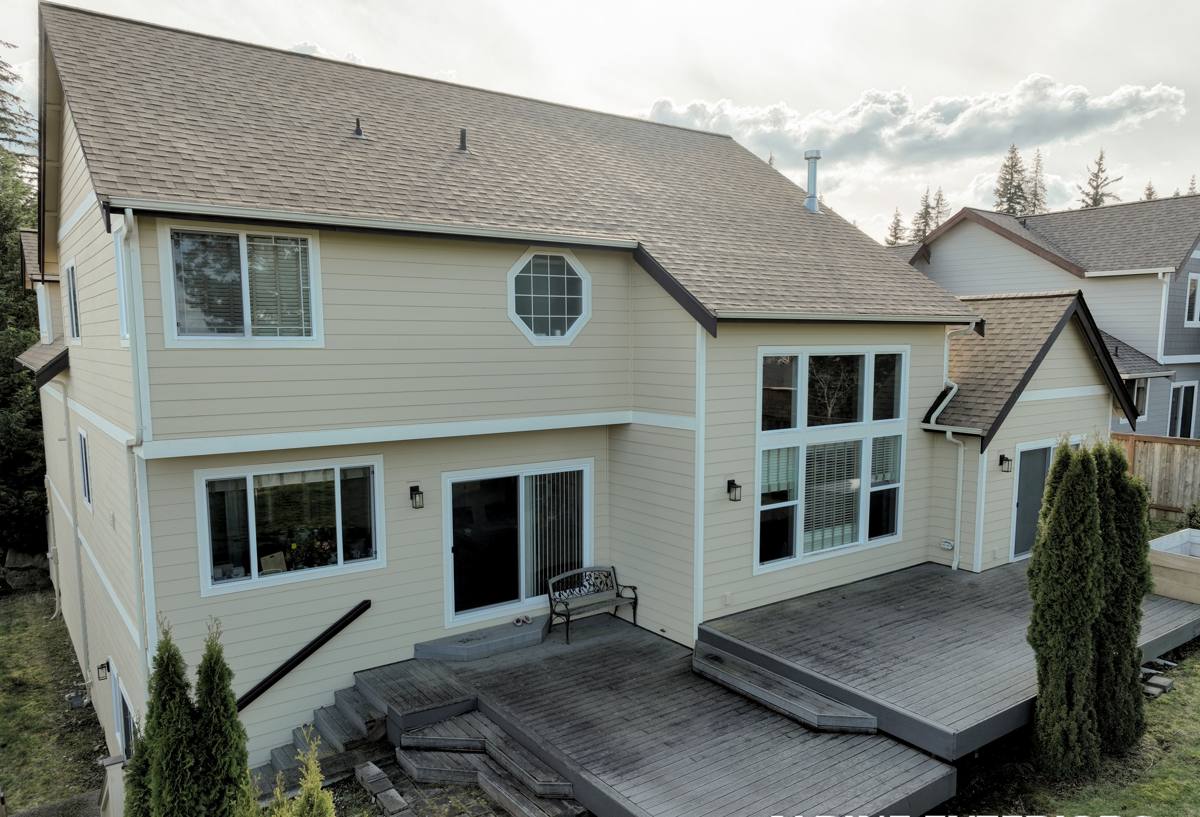
Sandy Point sits close enough to the water that every outdoor structure on a property deals with conditions most inland Ferndale homes never see. Salt-laden air moves through the neighborhood constantly, driving rain comes in sideways off the water during winter storms, and the shaded, damp stretches under trees and along north-facing walls stay wet long enough each year to grow a steady crop of moss and algae. A deck built without those specific conditions in mind will look fine for a season or two and then start showing problems — corroding hardware, cupped boards, slick walking surfaces, or soft spots where water has been sitting against wood it shouldn't.
We build decks in Sandy Point regularly, and this page walks through what that actually means in practice: the materials that hold up, the details that matter more here than they would twenty minutes inland, and how we run the job from first conversation to final walkthrough.
Why Sandy Point's Climate Is Harder on Decks
Salt Air
Airborne salt accelerates corrosion on anything metal — fasteners, joist hangers, railing brackets, and hinges. On a deck built with standard-grade hardware, that corrosion often shows up first at the fastener heads, which weakens the connection long before the surrounding wood or composite shows any visible wear. Once a fastener starts rusting, it's also staining the material around it, which is usually the first sign homeowners notice.
Driving Rain
Whatcom County's winter storms don't just bring volume, they bring wind-driven rain that hits vertical surfaces — ledger boards, fascia, the underside of rail posts — that a straight-down rain would never reach. Any gap, unsealed fastener hole, or missed flashing detail becomes a path for water to get behind the structure instead of running off it.
The Long Moss Season
Shaded and low-airflow spots on a Sandy Point property can stay damp for a large part of the year. Moss and algae need exactly that — moisture and shade — and they'll establish themselves on any deck surface that doesn't shed water and get some sun or airflow. Beyond looking bad, a mossy deck surface gets genuinely slippery, which is a real safety issue on stairs and near doorways.
What a Correctly Built Deck Needs Here
None of this requires exotic materials or unusual techniques. It requires choosing the right grade of ordinary materials and getting the details right that get skipped on a faster, cheaper build.
- Corrosion-resistant fasteners and structural hardware rated for coastal or treated-lumber exposure, not general-purpose interior-grade hardware
- Ledger board flashing that actually sheds water away from the house rim joist, not just a bead of caulk
- Footings sized and set to local frost and soil conditions, inspected before they're covered
- Joist spacing and blocking that keeps the decking surface flat and supported, especially at board ends where moisture intrusion starts
- A decking material chosen for how it actually performs wet and shaded, not just how it looks on a sunny showroom sample
- Airflow underneath the deck so the structure can dry out between rain events instead of staying damp
Choosing a Decking Material for Sandy Point Conditions
There's no single "correct" decking material for every Sandy Point property — it depends on budget, how much shade the deck sits in, and how much maintenance the homeowner actually wants to do. Here's how the common options hold up under this specific climate mix:
| Material | Salt Air Behavior | Moss/Algae Resistance | Maintenance |
|---|---|---|---|
| Pressure-treated wood | Good if fasteners are corrosion-rated; wood itself handles salt air fine | Needs regular cleaning and periodic sealing to resist moss in shaded areas | Annual cleaning, re-sealing every 2-3 years |
| Cedar | Naturally weather-resistant; still needs corrosion-rated fasteners | Better natural resistance than pressure-treated pine, but still needs upkeep in shade | Periodic cleaning and finish maintenance |
| Composite decking | Excellent — no corrosion risk in the board material itself | Varies by product line; capped composites resist algae growth better than uncapped | Low — periodic washing, no sealing |
| PVC decking | Excellent — fully synthetic, unaffected by salt | Generally strong resistance; still needs washing in persistently shaded spots | Low — occasional washing |
We'll talk through this honestly rather than pushing whatever has the best margin. A shaded, low-airflow deck near mature trees is a different recommendation than an open, sun-exposed deck closer to the water, even on the same street.
A Note on Product Trade-Offs
Composite and PVC decking have real advantages in a climate like this — less maintenance, no re-sealing schedule, no risk of fastener corrosion staining the board. The trade-off is upfront cost and, on some product lines, a different feel underfoot than natural wood. Wood costs less upfront but asks for a consistent maintenance schedule that, if skipped for a year or two in a shaded, damp spot, shows up fast as moss growth and graying. Neither is wrong — it's a question of what the homeowner is willing to put into upkeep versus pay for upfront.
Framing and Hardware: Where Most Deck Failures Actually Start
Homeowners tend to focus on the decking surface because that's what they see, but the framing underneath and the fasteners holding it together are what actually determine how long a deck lasts near the water. In a salt-air environment, standard electro-galvanized fasteners and joist hangers corrode faster than they would inland, and once a joist hanger starts failing, it's a structural issue, not a cosmetic one.
We use fasteners and structural connectors rated for the treated lumber and coastal exposure this area calls for, and we flash the ledger board connection properly instead of relying on sealant alone. That ledger connection is the single most common point of hidden water damage on decks anywhere in Western Washington, and it's worse here because of how much wind-driven rain hits vertical wall surfaces during winter storms.
Designing Against Moss Before It Starts
The best defense against moss isn't a cleaning schedule — it's a deck designed so water doesn't sit and shade doesn't trap moisture. That means:
- Proper board spacing so water drains through rather than pooling on the surface
- Grading and structure that lets air move underneath the deck
- Avoiding unnecessary low-clearance sections where debris and moisture collect against the frame
- Choosing a decking surface texture and material that doesn't hold moisture in shaded zones
A deck that's designed this way still needs occasional cleaning in a climate with this much moisture and shade, but it won't turn slick and green within a single wet season the way a poorly drained deck will.
Our Process, Start to Finish
- On-site visit. We look at sun exposure, shade patterns, existing drainage, and how exposed the location is to wind and salt air off the water.
- Material and design conversation. We walk through decking options honestly against your budget and how much maintenance you want to take on.
- Permitting. Deck projects in and around Ferndale and unincorporated Whatcom County typically require permits depending on size, height, and attachment to the home. We handle that process as part of the job.
- Footings and framing. Footings are set and inspected before anything is built on top of them. Framing goes in with corrosion-rated hardware and proper ledger flashing.
- Decking and railing installation. Installed per manufacturer spacing and fastening specs, which matters more for warranty coverage than most homeowners realize.
- Final walkthrough. We go over the finished deck with you, including what maintenance (if any) it needs going forward.
Maintaining a Deck Once It's Built
Even a well-built deck in Sandy Point benefits from a light annual routine rather than none at all:
- Rinse or sweep off accumulated debris in shaded areas before it holds moisture against the surface
- Check fastener heads and railing hardware yearly for early signs of corrosion staining
- Clear gutters and downspouts near the deck so runoff isn't draining directly onto or under it
- For wood decks, plan on cleaning and re-sealing on the schedule the finish product calls for — usually every couple of years
- Address any moss or algae growth early with a gentle cleaning rather than letting it establish
Why Hiring a Crew That Already Works Sandy Point Matters
A deck built by a crew unfamiliar with this specific stretch of coastline tends to use general-purpose materials and hardware that work fine most places but underperform here. We already know which fastener grades hold up against this level of salt exposure, how the ledger flashing needs to handle wind-driven rain off the water, and where moss actually becomes a problem versus where it's cosmetic. That's the difference between a deck that needs real attention in three years and one that's still solid well past that.
We're a Ferndale-based crew, and Sandy Point is part of our regular service area — not a special trip. That means straightforward scheduling, familiarity with the permitting process for this part of Whatcom County, and a crew that's already seen how decks in this exact neighborhood age.
Get a Straight Answer on Your Deck Project
If you're planning a new deck or replacing one that hasn't held up to Sandy Point's salt air and rain, we're happy to take a look and give you an honest read on materials, scope, and cost. Fill out the form below for a free, no-pressure estimate.