 Ferndale Exterior
 Sandy Point Sits Right in the Weather's Path
Sandy Point is one of the more exposed residential communities in Whatcom County. Homes here sit close to the Strait of Georgia, which means siding takes on a combination most inland Ferndale properties never deal with at the same intensity: salt-laden air moving off the water, wind-driven rain that hits walls sideways instead of falling straight down, and a shaded, damp off-season that lets moss and algae get a foothold on north- and west-facing walls. Any one of those on its own is manageable. Together, over years, they're what separates siding that looks good at year 15 from siding that's chalking, staining, or rotting at year 8.
This page is about one thing: what it takes to install James Hardie fiber cement siding correctly on a Sandy Point home, and why the details matter more here than they do a few miles inland.
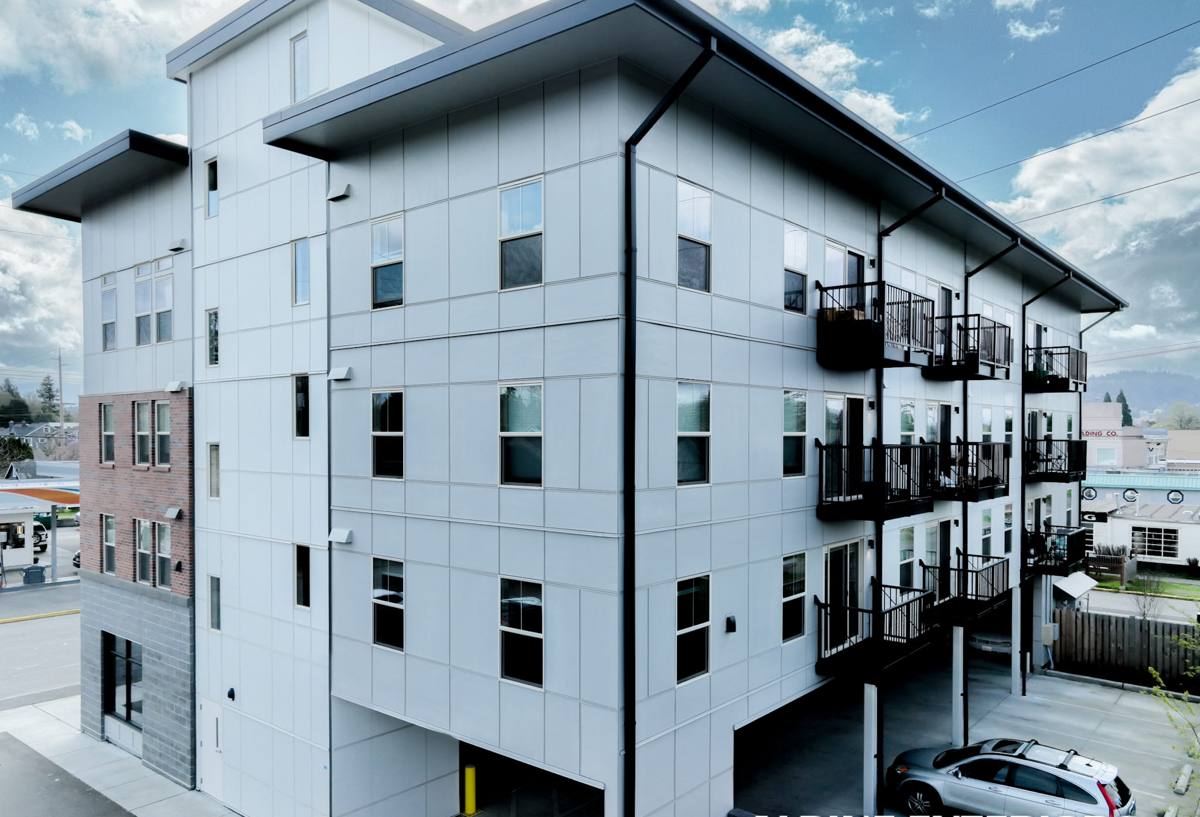
What Salt Air, Rain, and Moss Actually Do to Siding
It helps to understand the specific failure modes before talking about the fix.
Salt air
Airborne salt is corrosive to exposed metal — fasteners, flashing, trim edges — and it accelerates the breakdown of paint films that aren't formulated to resist it. Siding that looks fine from the street can have fastener heads rusting and staining through the finish within a few seasons if the wrong hardware or an unprotected finish was used.
Driving rain
Wind off the water pushes rain up and under laps, seams, and trim edges instead of letting it simply run off. A siding system's water-shedding details — lap overlap, flashing at every horizontal transition, sealant only where it belongs — matter more here than on a sheltered inland lot, because the assumption of "water always falls straight down" doesn't hold.
Moss and algae
Whatcom County's wet, mild winters and shaded coastal lots are ideal moss conditions. Moss holds moisture against a wall surface far longer than open air would, which is bad for any siding material but especially bad for anything with an organic component — wood, fiber-based composites, or paint films that break down under sustained dampness.
Why James Hardie Is the Right Material for This Site
We install James Hardie exclusively, and Sandy Point is a good example of why. Hardie's fiber cement is non-combustible and dimensionally stable — it doesn't swell, warp, or rot the way wood-based products can when they stay damp for extended periods. That matters directly for moss season: a wall that holds moisture against wood-based siding for weeks at a time is a wall with a maintenance problem waiting to happen. Fiber cement doesn't have that vulnerability in the same way.
Two specifics matter for a site like this:
- HZ5 engineering. Hardie manufactures its siding in climate-specific formulations, and the HZ5 line is built for wetter, colder Pacific Northwest conditions. It's engineered around moisture exposure and freeze-thaw cycling rather than being a one-size-fits-all product.
- ColorPlus factory finish. Instead of field-applied paint, ColorPlus is baked on at the factory in multiple coats, which gives a harder, more UV- and weather-resistant finish than most site-applied paint jobs achieve — and it's backed by its own finish warranty separate from the substrate warranty.
We won't claim fiber cement is maintenance-free — nothing on a coastal lot is. What we will say is that it removes several of the failure points that make wood-based and vinyl products a harder sell this close to the water: no swelling seams, no UV-driven brittleness, no organic material for moisture to work on.
What a Correct Installation Looks Like Here
Fiber cement siding is only as good as the details underneath it. A rushed or generic install on a coastal home will fail at the seams long before the panels themselves wear out. On a Sandy Point job, we pay particular attention to:
| Detail | Why it matters at Sandy Point |
|---|---|
| Weather-resistive barrier and flashing at every penetration | Driving rain finds any gap; flashing has to shed water outward at windows, doors, and trim, not just seal a joint |
| Correct fastener type and placement | Salt air corrodes the wrong hardware; Hardie's own fastener specs exist for a reason and we follow them, not shortcuts |
| Proper lap and clearance at grade | Keeps splash-back and standing moisture off the bottom course, a common rot-start point on waterfront lots |
| Rainscreen / drainage gap where the wall assembly calls for it | Gives incidental moisture a path to drain and dry instead of sitting against the sheathing |
| Factory-cut and factory-primed edges kept intact | Field cuts need to be sealed per spec — an exposed cut edge is a weak point in a salt-air environment |
| Caulking only where Hardie's install guide specifies | Over-caulking traps moisture instead of letting the assembly drain and dry as designed |
None of this is exotic. It's the manufacturer's own installation standard, followed completely instead of partially. The difference between a siding job that holds up on this coastline and one that doesn't is almost never the material — it's whether these steps were actually done.
Our Process for a Sandy Point Job
The steps are the same ones we'd walk any homeowner through, but the site conditions here shape a few of the decisions along the way.
- On-site assessment. We look at wall orientation relative to prevailing wind and rain, existing moisture or moss damage, current siding condition behind the surface, and any trim, window, or flashing issues that need to be corrected — not just covered up.
- Product and color selection. HZ5-rated Hardie products in a ColorPlus finish suited to a coastal palette, plus trim and accessory choices that match the home's exposure.
- Tear-off and substrate check. We don't install over rot or a compromised weather barrier. If we find damage during tear-off, we tell you before we cover it up, not after.
- Weather barrier, flashing, and drainage detailing. This is the step that determines whether the job lasts — done to spec at every window, door, and horizontal transition.
- Siding installation. Panels, fasteners, and laps installed to Hardie's published specifications, with fastener choice and spacing adjusted for the coastal exposure.
- Final inspection and walkthrough. We go over the finished work with you, including what routine maintenance to expect given the site's exposure.
What Drives Cost on a Job Like This
Every home is different, but on Sandy Point properties specifically, a few factors move the estimate more than they would on a typical inland Ferndale home:
| Factor | Why it affects the estimate |
|---|---|
| Condition of the existing wall assembly | Moisture or moss-related damage found at tear-off adds repair scope before new siding goes on |
| Home's exposure to wind-driven rain | More exposed elevations get more flashing and drainage detail, which adds labor |
| Site access | Waterfront and community-road lots can have tighter staging and material delivery logistics than a standard suburban lot |
| Trim and architectural detail | More corners, windows, and transitions mean more flashing and cutting time |
| Product line and finish selection | HZ5 panel types and ColorPlus color/texture choices vary in price |
We give a real, itemized estimate after seeing the home in person — not a number pulled from a square-footage average. Coastal jobs in particular deserve a walk of the actual walls before anyone commits to a price.
Living With Moss Season After the Job's Done
Fiber cement siding reduces moss-related risk, but it doesn't make moss stop growing on a shaded coastal wall — nothing does. What changes is the consequence. A properly installed Hardie wall with correct drainage detailing sheds and dries faster than a wood-based system holding moss against organic material for weeks at a stretch. Homeowners here still get value from basic seasonal upkeep: keeping gutters clear so runoff doesn't sheet down the wall face, trimming back vegetation that shades and dampens siding longer than necessary, and a gentle wash on north- and west-facing walls where moss tends to establish first. None of that is unique to Hardie — it's just good practice on any coastal Whatcom County home.
Why a Crew That Already Works Sandy Point Matters
Coastal siding work isn't just "the same install, closer to the water." A crew that's already worked this community knows which elevations take the worst of the weather, understands the access and staging realities of waterfront and community-road lots, and has already made the fastener, flashing, and drainage-gap decisions that generic inland installers sometimes skip because they've never had to think about salt air. That experience shows up in the details that don't get inspected until years later — the ones that decide whether a siding job was actually done right.
Before hiring anyone for a job like this, it's worth checking a few things directly:
- Are they installing to James Hardie's published specifications, not a generic fiber-cement approach?
- Do they use HZ5 or another climate-appropriate product line for this region, and can they explain why?
- Will they inspect and address the substrate and weather barrier, not just install over what's there?
- Do they carry proper licensing and insurance for exterior work in Washington?
- Can they describe how their flashing and drainage details change for a wind- and rain-exposed elevation?
- Are they willing to put the scope of work — tear-off, barrier, flashing, fastener spec — in writing?
If a contractor can't answer those questions specifically, that's worth knowing before the tear-off starts, not after.
Get an Honest Look at Your Home
If you're weighing a siding replacement on a Sandy Point property, the most useful next step is having someone walk the actual walls and tell you what they see — not a generic quote based on square footage alone. We'll look at your home's exposure, current siding condition, and what a correct James Hardie installation would involve, and give you a straightforward, no-pressure estimate. Reach out through the form below to get started.