 Ferndale Exterior
 Why Homes Near Nooksack Take a Different Kind of Beating
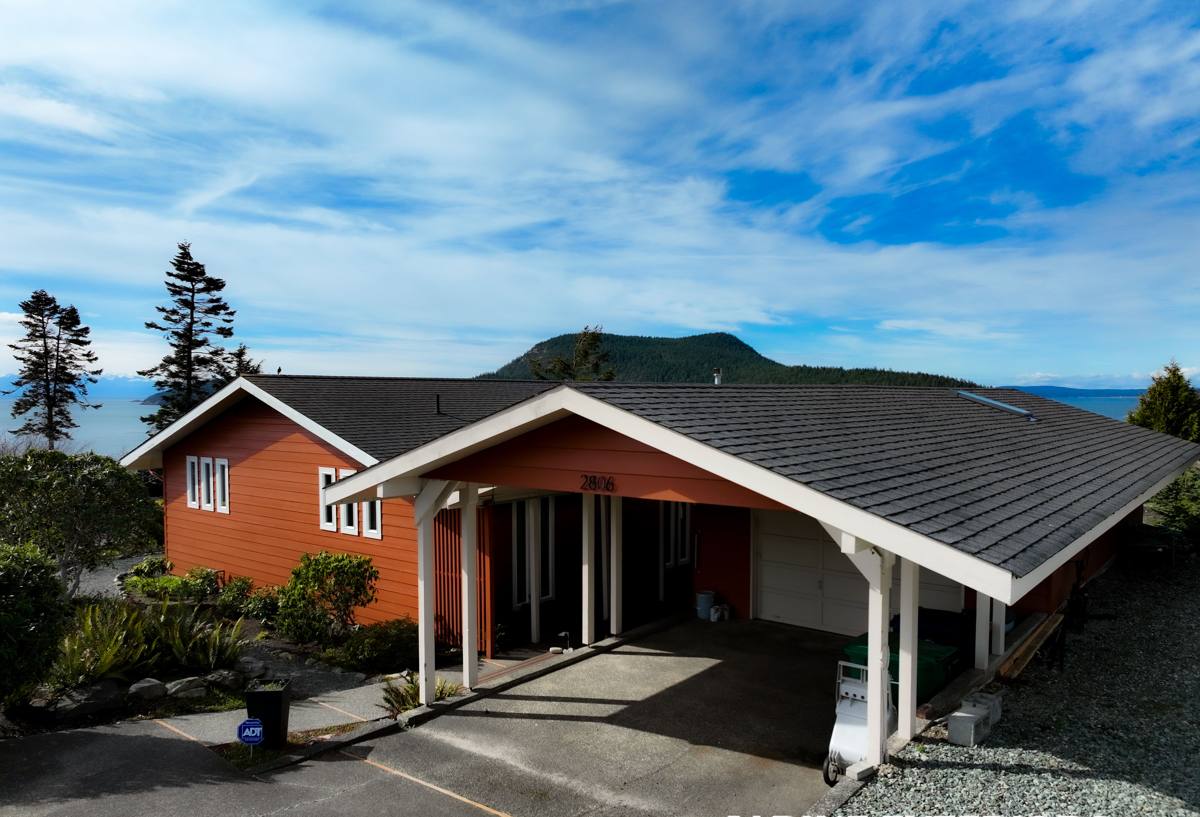
Properties in and around Nooksack sit in a stretch of Whatcom County where three things gang up on exterior siding at once: salt-laden air drifting in off Bellingham Bay and the Strait of Georgia, driving rain that comes in sideways during fall and winter storms, and a moss season that can stretch from October clear through April. Individually, any one of those is manageable. Together, they shorten the lifespan of the wrong siding material by years, and they're the reason a siding replacement done right here looks different from one done in a drier inland climate.
We work on homes throughout this part of the county, and the failure patterns we see on older siding are consistent: paint that's chalked and peeling on the north and west-facing walls, moss and algae staining that keeps coming back no matter how many times it's pressure washed off, and soft or delaminating panels near the ground line and around windows where rain has had years to work its way in. None of that is bad luck — it's what happens when siding material and installation details aren't matched to this specific climate.
What Salt Air, Rain, and Moss Actually Do to Siding
Salt Air
Airborne salt is corrosive to metal fasteners, flashing, and trim, and it accelerates the breakdown of some paint and coating systems faster than plain UV exposure alone would. Siding that isn't engineered with a factory-cured finish tends to fade and chalk noticeably faster within a few miles of the water.
Driving Rain
Wind-driven rain doesn't just fall on a wall — it gets pushed sideways and upward into laps, seams, and penetrations. Siding systems and installation details that assume mostly vertical rainfall (common in drier climates) leave gaps that this region's storms will eventually find. This is as much an installation issue as a material issue.
Moss and Sustained Moisture
Long stretches of overcast, damp weather keep siding surfaces wet for days at a time, which is exactly what moss, algae, and mold need to establish themselves. Materials that absorb moisture rather than shed it stay wet longer, which feeds the cycle and, over time, softens the substrate underneath.
Signs a Nooksack-Area Home Needs Siding Replacement, Not Just Repair
- Soft or spongy spots when you press on the siding, especially near the bottom courses or around windows and doors
- Paint that fails again within a year or two of repainting, even after prep work
- Persistent moss or dark streaking that returns quickly after cleaning
- Visible gaps, warping, or buckling in panels, especially on the west and north walls that take the brunt of the weather
- Rising energy bills alongside drafts near exterior walls, which can point to moisture-compromised sheathing behind the siding
- Siding that's original to a home 20-plus years old, particularly if it's never been fully replaced
Repair makes sense when the damage is isolated and the underlying wall assembly is still sound. Full replacement makes sense once the damage is spread across multiple walls, or once you're patching the same areas repeatedly — at that point you're paying to delay the inevitable rather than fix it.
Why We Only Install James Hardie Fiber Cement
We don't install vinyl, LP SmartSide, primed spruce, cedar, or other fiber cement brands, and that's a deliberate standard, not a sales pitch. In a climate that combines salt exposure, driving rain, and a long wet season, the material matters as much as the workmanship. James Hardie fiber cement is non-combustible, dimensionally stable, and engineered specifically for wet climate zones through its HZ10 product line — which is what we use in this part of Washington. It doesn't absorb moisture the way wood-based products can, and it doesn't get brittle in cold snaps or soften in prolonged damp the way some alternatives do over time.
The ColorPlus factory finish is baked on under controlled conditions rather than field-applied, which matters directly for salt air exposure — it holds color and resists chalking far longer than most site-applied paint systems, and it carries its own finish warranty separate from the product warranty. Combined with Hardie's transferable product warranty, it's a system we're comfortable standing behind on homes that are going to face 20 or more Whatcom County winters.
What a Correct Siding Replacement Job Actually Involves
Swapping old siding for new isn't just a surface job — most of what determines whether siding lasts happens underneath it, before a single new panel goes up.
| Step | Why It Matters Here |
|---|---|
| Full tear-off and sheathing inspection | Reveals hidden rot or moisture damage from years of driving rain before it's sealed behind new siding |
| Repair or replace damaged sheathing/framing | New siding over compromised sheathing just hides a problem that keeps getting worse |
| Install a weather-resistive barrier with proper lapping | Directs incidental moisture down and out instead of letting it pool at laps and penetrations |
| Rain screen / drainage gap where appropriate | Lets siding dry out between storms instead of staying damp, which cuts down on moss and rot |
| Correct flashing at windows, doors, and roof lines | These are the spots wind-driven rain exploits first; flashing details matter more than the siding itself |
| Manufacturer-spec fastening and clearances | Improper nailing or ground clearance voids warranty coverage and invites moisture wicking |
| Caulking and trim detailing to spec | Salt air and UV break down poor-quality sealants fast; correct products and placement extend service life |
Skip or shortcut any one of these steps and you can end up with siding that looks fine for a season or two before the same problems resurface — often hidden behind brand-new panels where they're harder to catch.
Our Process for a Nooksack-Area Siding Replacement
- On-site assessment — We walk the exterior, check for soft spots, moisture damage, and problem areas specific to your home's exposure to sun, wind, and rain.
- Written estimate — A clear scope covering tear-off, any sheathing repair, weather barrier, flashing, and the Hardie products and colors that fit your home.
- Tear-off and inspection — Old siding comes off and we inspect what's underneath before anything new goes up.
- Weather barrier and flashing installation — The unglamorous part that determines whether the job holds up in storm season.
- Hardie siding installation to manufacturer spec — Correct fastening, clearances, and joint treatment, not just what's fastest.
- Final walkthrough — We review the finished work with you and go over care and warranty details.
Cost Factors for Siding Replacement in This Area
| Factor | Impact on Cost |
|---|---|
| Home size and wall complexity | More square footage and more corners, gables, and trim detail increase labor and material |
| Condition of existing sheathing | Rot or moisture damage found during tear-off adds repair scope not visible from the outside |
| Siding profile and accessories | Lap width, trim boards, and accent details affect material cost and install time |
| Access and site conditions | Rural lots, fencing, landscaping, or multi-story walls can affect equipment and labor time |
| Color and finish selection | Factory ColorPlus finishes vary slightly by color and product line |
We don't quote a number without seeing the home, but we're upfront that the biggest cost swings usually come from what's found once the old siding comes off — not from the siding itself.
Why It Matters That a Crew Already Works This Area
A crew that regularly works homes near Nooksack and Ferndale has already seen what this climate does over 10, 15, and 20 years — which walls fail first, which details hold up, and which shortcuts show up as callbacks two winters later. That's different from experience installing siding in general. Flashing details that are optional in a dry climate aren't optional here. Drainage gaps that seem like overkill inland are what keep moss from taking hold on a shaded, rain-facing wall near the river. A contractor who's watched those patterns play out on real homes in this area makes fewer guesses and fewer mistakes.
What to Ask Before You Hire
- Do you tear off the old siding and inspect sheathing, or install over existing siding?
- What weather-resistive barrier and drainage details do you use, and why?
- Are you a certified James Hardie installer, and what does that warranty actually cover?
- Can you walk me through your flashing details at windows and rooflines?
- How many siding projects have you completed in this specific area?
- What's included in writing, and what would trigger a change order?
If a contractor can't give straight answers to those questions, that's worth noticing before any contract gets signed.
If your siding is showing its age or you're just weighing your options, we're happy to take a look and walk you through what we're seeing — no pressure, no obligation. The form below gets you a free estimate from a crew that already knows this stretch of Whatcom County.