 Ferndale Exterior
 Custom Decks for the Sudden Valley Area
Homes in and around Sudden Valley deal with a specific mix of weather that a lot of national deck-building advice simply doesn't account for. Whatcom County's combination of salt-laden air, driving rain that comes in sideways off a storm front, and a moss season that can stretch from October through April means a deck here has to work harder than one built in a dry inland climate. We build custom decks for this area with that reality in mind, not as an afterthought.
A deck is one of the more exposed structures on a property. It sits low, catches runoff, holds moisture against wood and hardware, and takes direct weather with no roof overhang to shed water. Get the design and materials right for this climate and a deck will give you decades of use. Get it wrong and you're looking at soft boards, rusted fasteners, and a slippery, moss-covered surface within a few seasons.
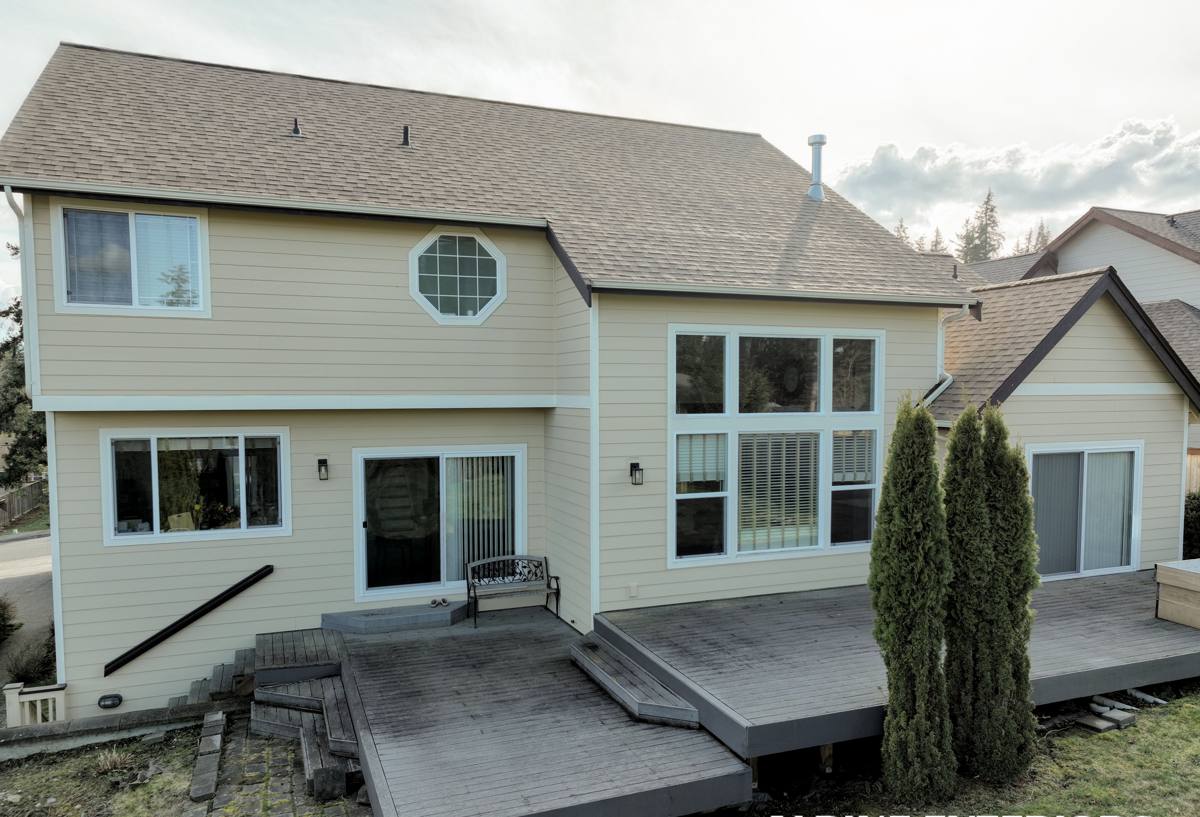
What Salt Air, Rain, and Moss Actually Do to a Deck
It helps to understand the specific failure modes we're designing against, because they're not the same ones you'd worry about in Arizona or even most of the Midwest.
Salt Air and Corrosion
Airborne salt accelerates corrosion on any exposed metal — nails, screws, joist hangers, post bases, and railing hardware. Standard electro-galvanized fasteners can start showing rust streaks within a year or two in this environment. Once a fastener corrodes, it loses holding strength long before it looks obviously bad, which is part of why hardware choice matters more here than in drier regions.
Driving Rain and Water Intrusion
Rain that comes in at an angle finds its way into places vertical-only rain never would: end grain on deck boards, the ledger board connection where the deck meets the house, and any gap where flashing wasn't detailed correctly. Wood is far more vulnerable to end-grain water absorption than face absorption, so cut ends, notches, and fastener holes are where rot typically starts.
Moss and Shaded, Damp Decks
A long moss season means any deck surface that doesn't get much direct sun — north-facing decks, decks under tree cover, or decks tucked against a house — stays damp for extended stretches. Moss isn't just cosmetic. It holds moisture against the wood surface, and a moss-covered deck gets genuinely slick when wet, which is a real fall hazard on stairs and near railings.
Choosing the Right Decking Material for This Area
There's no single "best" decking material — it depends on your budget, how much upkeep you want to do, and how much sun exposure your specific site gets. Here's how the common options actually compare for this climate.
| Material | Moisture & Moss Behavior | Maintenance | Typical Lifespan Here |
|---|---|---|---|
| Pressure-treated fir/hem-fir | Absorbs water at cut ends and fastener holes; needs sealing to resist moss and checking | Annual cleaning, re-sealing every 1-2 years | 10-15 years with upkeep |
| Cedar | Naturally more rot-resistant than treated softwood, but still needs finish maintenance in shaded, damp spots | Cleaning plus re-staining every 2-3 years | 15-20 years with upkeep |
| Composite/PVC | Doesn't absorb water into the board itself, but surface film and organic debris can still support moss growth if not cleaned | Periodic washing, no sealing or staining | 25+ years, varies by product warranty |
Composite and PVC decking has become popular here specifically because it removes wood rot from the equation, but it isn't maintenance-free — moss and mildew will still grow on the surface of any decking material in a shaded, damp spot if it isn't cleaned periodically. We'll walk through your site's actual sun exposure before recommending a material, because a deck that gets full afternoon sun has very different needs than one shaded most of the day.
Framing, Footings, and Hardware Done Right
The parts of a deck you don't see are what determine whether it's still solid in fifteen years. This is where we see the most corner-cutting on decks that come to us for repair or rebuild.
- Footings sized and set to the correct frost depth for this area, not just poured shallow to save time
- Ledger board attached with proper flashing that sheds water away from the house rim joist, not just caulked
- Joist tape or an equivalent moisture barrier on top of all joists and beams so fastener penetrations don't become water entry points
- Stainless steel or heavy hot-dip galvanized fasteners and hardware rated for exterior/coastal-influenced exposure
- Adequate under-deck airflow and drainage so the framing can dry out between rain events instead of staying wet
None of this is exotic or unusual — it's standard good practice. The difference is whether it actually gets done consistently, especially on the connections that are covered up once decking goes down and never get a second look until something fails.
Railings, Stairs, and Code Requirements
Any deck built above a certain height needs a code-compliant guard rail system, and stairs have their own rules for rise, run, and handrail height. Whatcom County and the local building department require permits for most new deck construction and significant deck rebuilds, and inspections check exactly these details: guard height, baluster spacing (no gaps a small child could fit through), stair geometry, and structural connections at the ledger and footings.
We pull permits and build to code as a matter of course, not as an upsell. A deck that isn't permitted or doesn't meet current code can complicate a home sale later and, more importantly, is a safety issue on the one part of the house designed to hold a crowd of people at once.
Design Choices Worth Discussing
Beyond code minimums, there are design decisions that matter more in this climate than in a mild, dry one: railing material (metal balusters resist moss buildup better than wood ones in shaded spots), stair tread material (some composite products offer better wet-traction profiles than others), and whether a partial roof or pergola over part of the deck makes sense to keep one zone drier for furniture and gatherings.
Our Process, Start to Finish
Every deck project we build follows the same general sequence, adjusted for the specific site:
- On-site assessment — we look at sun exposure, drainage, existing structure (if it's a rebuild), and how the deck will connect to the house
- Design and material discussion — we lay out honest trade-offs between material options for your specific site, not a one-size pitch
- Written estimate covering materials, labor, and permit fees, with no surprise add-ons buried in fine print
- Permit submission and approval through the local building department
- Demo of the old structure if applicable, then framing, footings, and structural work
- Decking, railing, and stair installation
- Final walkthrough where we go over basic care for whatever material you chose
Maintenance Checklist for Sudden Valley Homeowners
Whatever material your deck is built from, a few habits go a long way in this climate:
- Clear leaves and debris out of gaps between boards before fall rains set in — trapped organic matter is what feeds moss and rot
- Rinse or wash the deck surface at least once or twice a year, more often if it's shaded most of the day
- Check fastener heads and hardware periodically for early rust staining, especially near the coast-facing side of the house
- Re-seal or re-stain wood decking on the schedule appropriate to the product, don't wait until it visibly fails
- Keep nearby vegetation trimmed back so more sun and airflow reach the deck surface
- Address any soft or spongy boards immediately rather than waiting for a full failure
Why Hiring a Crew That Already Works in This Neighborhood Matters
A deck builder who mostly works in a drier climate will often default to standard details that aren't wrong exactly, but aren't matched to what this weather does over time. Working regularly in the Ferndale area and Whatcom County means we already know what fastener corrosion looks like two years in, which decking products actually hold up to a long moss season versus which ones just claim to, and how local building department reviewers expect a permit set to be documented. That familiarity shows up in fewer surprises during the permit process and in a deck that's actually built for the conditions it will sit in, not a generic spec sheet.
If you're planning a new deck or need to replace one that's showing its age, we're happy to come take a look and give you a straightforward, no-pressure estimate — use the form below to get started.