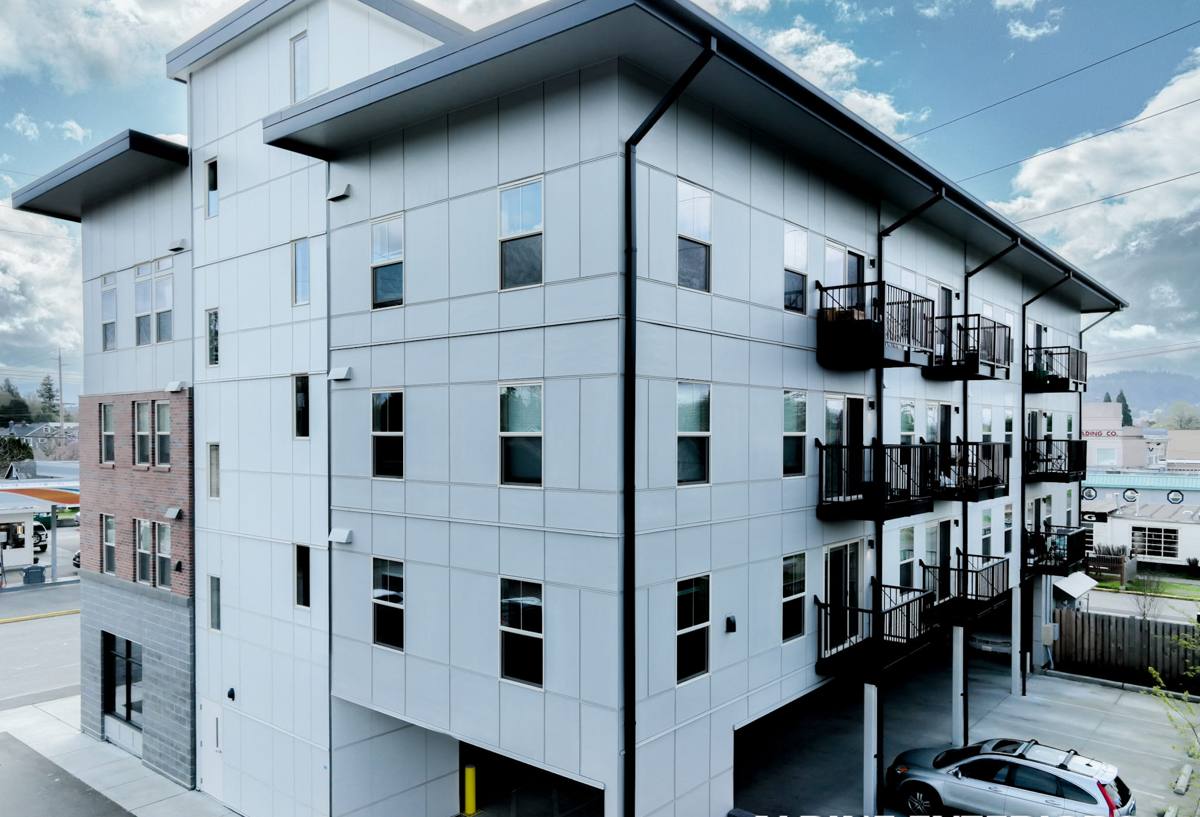
 Ferndale Exterior
 Why Sudden Valley Homes Need Siding Built for This Climate
Homes in the Sudden Valley area near Ferndale sit inside one of the more punishing exterior-cladding environments in Whatcom County. You've got salt-laden air moving inland off Bellingham Bay and the Strait of Georgia, long stretches of driving, wind-blown rain rather than gentle vertical rainfall, and a shade-and-moisture cycle that keeps roofs, trim, and siding damp for weeks at a time in fall, winter, and spring. That combination is exactly what breaks down cladding that isn't matched to it.
Salt air accelerates corrosion on fasteners, flashing, and any exposed metal trim. Driving rain doesn't just wet a wall — it gets pushed sideways and upward under laps, around penetrations, and into any gap a builder-grade installation leaves behind. And the region's long moss season means anything with texture, shade, or a north-facing exposure stays wet longer than it should, which is a problem for wood-based products and a non-issue for fiber cement done right. Siding installation here isn't just about appearance. It's about choosing a material and an installation method that can shed water fast, resist the salt and moisture cycle, and not need constant upkeep to stay sound.
What "Correct" Siding Installation Actually Involves
A lot of siding problems homeowners deal with five or ten years in aren't material failures — they're installation shortcuts. The siding itself is only as good as what's behind it and how it was hung. Correct installation in a climate like this means getting several layers right, not just the visible one.
The Water-Resistive Barrier
Every wall needs a continuous drainage plane behind the siding — a weather-resistive barrier installed shingle-style (upper layers overlapping lower ones) so any water that gets past the cladding drains down and out instead of finding a seam to enter. In a driving-rain climate, gaps or reversed laps in this layer are one of the most common causes of hidden rot.
Flashing at Every Penetration
Windows, doors, hose bibs, light fixtures, vents — every penetration through the wall plane is a place water wants to get in. Proper step flashing, head flashing, and sealant at these points (not sealant alone, which fails over time) is what keeps a home dry through years of wind-driven rain.
Rainscreen or Drainage Gap
A small air gap between the back of the siding and the water-resistive barrier lets any moisture that does get behind the cladding drain and dry out instead of sitting against the wall sheathing. In a moss-prone, high-humidity area, this ventilation gap matters more than it does in a drier climate.
Fastening and Clearances
Fiber cement siding has manufacturer-specified nailing patterns, fastener types, and minimum clearances from grade, roof lines, decks, and other siding. Getting these wrong voids warranty coverage and creates the exact wick points where moisture and, eventually, moss and rot take hold.
Why We Install Only James Hardie Fiber Cement
We made a deliberate decision to install one siding system: James Hardie fiber cement. We don't install vinyl, LP SmartSide, or other engineered wood or fiber cement alternatives, and that's not a marketing position — it's based on what actually holds up in this specific climate, decade after decade.
Vinyl siding can warp and become brittle with UV and temperature swings, and its seams and J-channels give wind-driven rain more chances to work behind the panel. Engineered wood products, even well-made ones, rely on a wax-resin sealed core that has to stay intact — any cut edge, fastener puncture, or coating breach that isn't fully re-sealed opens the door to moisture absorption, which is a real risk in a region where siding stays wet for extended stretches during moss season. Fiber cement is non-combustible, dimensionally stable across our wet winters and warm-but-mild summers, and doesn't rely on a factory seal being perfect at every job-site cut.
James Hardie's ColorPlus factory finish is baked on and warrantied against fading and peeling far beyond what field-applied paint typically holds up to, which matters on a coastline where UV and salt both attack a painted surface. Hardie also engineers regional HZ5 product lines specifically for climates like ours — freeze-thaw cycling, sustained moisture, and coastal exposure. We stand behind the installation with a workmanship warranty, and Hardie's own product warranty is transferable, which adds real value if a Sudden Valley home changes hands.
How Our Siding Installation Process Works
Every home is different, but a correct fiber cement installation in this area follows the same disciplined sequence:
- Assessment and tear-off. We inspect the existing wall assembly, remove the old siding, and check the sheathing underneath for hidden rot or moisture damage before anything new goes up.
- Sheathing repair. Any soft, delaminated, or water-damaged sheathing gets replaced. Installing new siding over compromised sheathing just hides a problem that will resurface.
- Water-resistive barrier. A new, continuous barrier is installed shingle-lapped, with special attention around windows, doors, and any wall penetrations.
- Flashing. Head flashing, sill pans, and step flashing are installed at every opening and penetration before trim or siding goes on.
- Rainscreen/furring where appropriate. Depending on the wall assembly, we install a drainage gap so any incidental moisture behind the cladding can escape.
- Hardie installation to spec. Panels or planks are cut, fastened, and gapped according to James Hardie's published installation instructions — not shortcuts that happen to look fine on install day.
- Trim, caulk, and touch-up. Factory-finished trim is installed with the correct clearances, and any factory-matched touch-up paint is applied only where the manufacturer allows it.
- Final walk-through. We review the completed job with the homeowner and point out anything they should know for long-term care.
What Drives the Cost of a Siding Installation
Every Sudden Valley home is a little different, and an accurate number only comes from an in-person estimate — but these are the main factors that move the price up or down:
| Factor | Why It Matters |
|---|---|
| Home size and wall complexity | More corners, dormers, and roof lines mean more cutting, flashing, and labor time |
| Sheathing condition | Rot or moisture damage found during tear-off adds repair work before new siding can go on |
| Siding profile chosen | Lap, shingle, and panel styles differ in material and labor cost |
| Trim and accessory scope | Corner boards, window trim, and fascia detailing add material and install time |
| Access and site conditions | Steep lots, limited access, or extensive landscaping protection affect scheduling and labor |
| Tear-off and disposal | Removing and hauling away the old siding is part of the job, not an add-on |
Signs Sudden Valley Homeowners Shouldn't Ignore
Because of the moisture and moss exposure here, siding problems often show up as texture and color changes before they become structural. Watch for:
- Persistent moss or algae growth that returns quickly after cleaning, especially on shaded or north-facing walls
- Soft spots, bubbling, or visible swelling, particularly near the bottom courses or around window trim
- Peeling or bubbling paint that keeps recurring in the same spots year after year
- Visible gaps opening up at seams, corners, or trim joints
- A musty smell or discoloration on interior walls that back up to exterior siding
- Fastener staining or rust streaks running down the face of the siding
Any one of these on its own might be minor. Several together, especially on a home that's had the same siding for 15-plus years, usually means it's worth having someone look at the wall assembly, not just the surface.
What to Ask Before Hiring a Siding Contractor in This Area
Siding installation is one of those trades where the difference between a good job and a bad one is almost entirely invisible once the wall is closed up. A crew that already works Sudden Valley and the greater Ferndale area understands the specific exposure your home faces — which walls take the worst of the driving rain, how long moss season really runs here, and what wall assemblies are common in local building stock. Before hiring anyone, it's worth asking:
- Are you a certified or preferred installer for the siding product you're proposing?
- What water-resistive barrier and flashing details will you use around my windows and doors?
- Will you install a rainscreen or drainage gap, and why or why not for my home?
- What happens if you find rotten sheathing once the old siding comes off?
- What warranty covers your workmanship, separate from the manufacturer's product warranty?
- Can I see the manufacturer's installation instructions you'll be following?
A contractor who answers these clearly and specifically, rather than in generalities, is one who actually understands the assembly they're building — not just the product they're selling.
Maintaining Hardie Siding in a Coastal, Moss-Prone Climate
One of the practical advantages of fiber cement in this climate is how little upkeep it demands compared to wood-based alternatives. It won't absorb moisture and swell the way engineered wood can if a seal is compromised, and it won't become brittle from salt and UV exposure the way vinyl can over time. That said, a few habits keep it performing at its best through Whatcom County's wet seasons:
- Rinse siding annually, especially shaded or north-facing walls where moss and algae take hold fastest
- Keep gutters clear so overflow doesn't sheet down the siding face
- Trim back vegetation and maintain clearance from grade so airflow can dry the wall after storms
- Have caulking at trim and penetrations inspected every few years and refreshed as needed
- Address any impact damage promptly rather than letting a chipped edge sit exposed through a wet winter
Why Local Installation Experience Matters Here
Sudden Valley's mix of coastal exposure, tree cover, and Whatcom County's extended wet season isn't the same challenge every siding crew is used to solving. A crew that installs siding across drier or more sheltered parts of the state may not default to the flashing details, drainage gaps, and fastening discipline that this specific exposure calls for. Getting it right the first time matters more here than in milder climates, because the cost of a shortcut compounds every wet season it goes uncorrected — hidden moisture doesn't announce itself until the damage is already done.
If you're planning a siding project for a home in the Sudden Valley area or elsewhere around Ferndale, we're happy to take a look and walk you through what your specific home needs. Reach out for a free, no-pressure estimate — there's no obligation, and it's the best way to get a real answer for your home rather than a general one.