 Ferndale Exterior
 Full Siding Replacement in Sudden Valley: When Repair Isn't Enough
Sudden Valley sits on the south shore of Lake Whatcom, wrapped in second-growth forest, with homes spread across hilly terrain at a wide range of elevations and sun exposures. That setting is part of what makes it a desirable place to live, but it's also a demanding one for exterior siding. Between the moisture that collects under heavy tree canopy, the driving rain and marine-influenced humidity that reach inland from Bellingham Bay and the broader Whatcom County coastline, and a moss season that runs longer here than in drier parts of the state, siding on an older Sudden Valley home tends to show its age earlier than the same product would on a more open, sun-exposed lot.
Not every siding problem calls for a full re-side. But when a homeowner reaches the point where patching keeps failing, or the siding is old enough that repair just delays the inevitable, a correct full replacement is a bigger decision than most homeowners make more than once or twice in a lifetime. This page is about that specific job: what a proper siding replacement looks like on a Sudden Valley property, and why the details matter more here than they would on a milder, more open site.
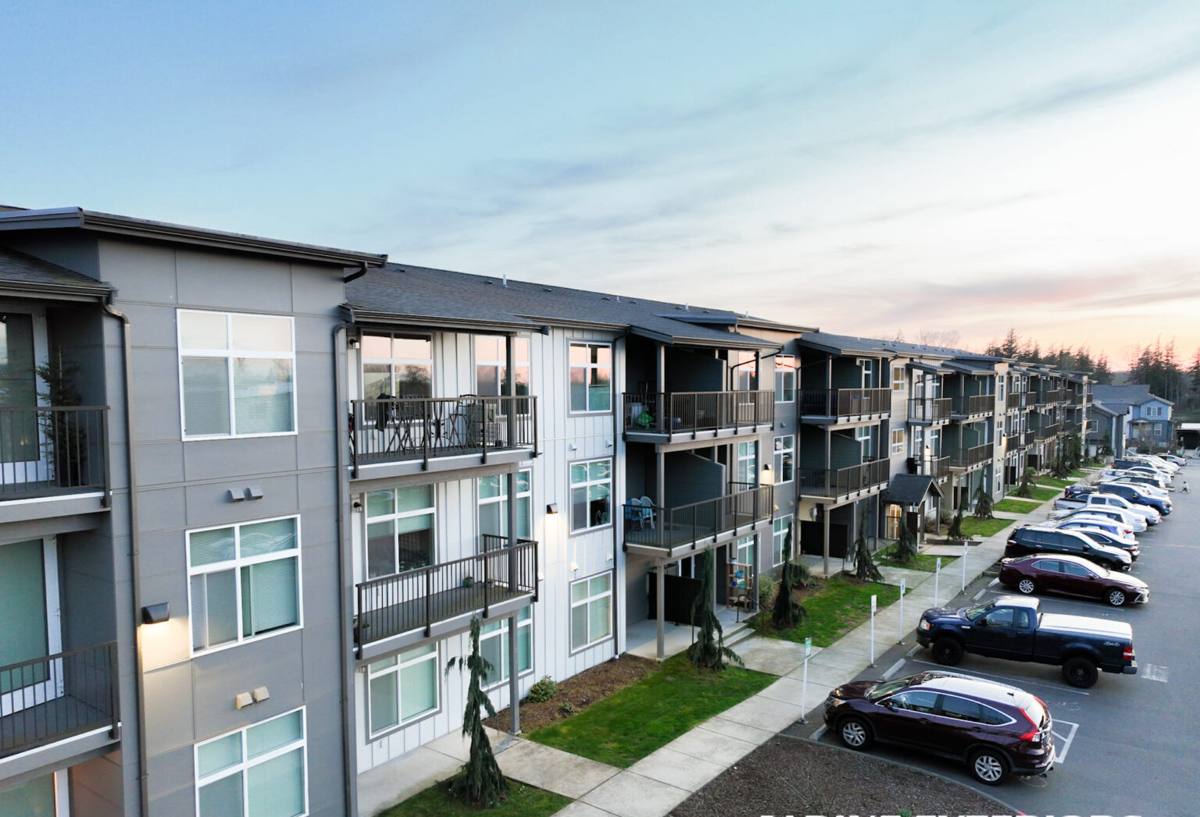
What a Tear-Off Usually Finds on an Older Sudden Valley Home
Once old siding comes off a shaded, moisture-exposed wall, it's common to find problems that weren't visible from the outside. Recognizing these ahead of time helps a homeowner budget realistically for a replacement instead of being surprised mid-project.
Trapped Moisture Behind the Old Siding
Siding materials that don't manage water well — swelling wood-based products, cupped or gapped lap siding, house wrap that's torn or improperly lapped — often trap moisture against the sheathing rather than shedding it. On a wall that stays damp for extended stretches because it never gets much direct sun, that trapped moisture has more time to do damage before anyone notices a problem from inside the house.
Soft or Rotted Sheathing
Where moisture has been getting in for a while, the wood sheathing underneath can go soft, delaminate, or rot outright, especially near window openings, butt joints, and the bottom courses closest to grade. This is exactly the kind of damage a tear-off is designed to catch and correct before new siding goes back on — and exactly why we treat inspection of the substrate as a required step, not an optional add-on.
Corroded Fasteners and Failed Flashing
Metal flashing and fasteners that spend years in a persistently damp, shaded environment corrode faster than the same hardware would on a drier property. Failed flashing around windows, doors, and roof-to-wall transitions is one of the more common hidden causes of water intrusion we find once the old siding is off, and it needs to be replaced correctly as part of the job, not just covered back over.
Deciding Between Repair and Full Replacement
A single damaged board, an isolated impact spot, or a localized trim failure can often be repaired and matched into existing Hardie siding without a full tear-off. But full replacement is usually the right call when the existing siding is an older, non-Hardie product nearing the end of its service life, when moisture damage shows up in multiple areas rather than one isolated spot, or when repeated patch jobs haven't stopped the underlying problem. On a shaded, moisture-retentive lot like a typical Sudden Valley property, we'd rather tell a homeowner honestly that a patch will only buy a season or two than sell a repair we don't believe will hold.
What a Correct Siding Replacement Job Involves
Full Tear-Off and Substrate Inspection
We remove the old siding down to the sheathing rather than installing over it, because covering existing damage with new material just hides a problem that keeps getting worse underneath. Every wall gets checked for soft spots, rot, and moisture staining before anything new goes up, and any damaged sheathing or framing gets repaired first.
Water Management Behind the New Siding
The house wrap or weather-resistive barrier, window and door flashing, and any drainage plane detailing behind the siding do most of the real work of keeping a wall dry — the siding itself is really the second line of defense. On walls that stay shaded and damp longer after each rain, we pay particular attention to lapping every layer correctly, from the bottom up, so water is always directed outward and downward rather than finding a path inward.
Installing to Manufacturer Specification
Fiber cement only performs the way it's engineered to when it's installed to Hardie's published specs: correct fastener type, spacing, and clearance from grade and roof lines; proper joint treatment; and, where the wall assembly calls for it, a rainscreen gap that lets moisture drain and the wall breathe. A loosely installed product will develop problems on a Sudden Valley lot regardless of how good the underlying material is, which is why installation discipline matters as much as the product choice itself.
Why James Hardie Is the Only Product We Put Back On
We install James Hardie fiber cement exclusively, and a full re-side is exactly the moment that decision matters most, because it's the one chance to get the whole wall assembly right for the next several decades rather than the next few years.
- Non-combustible core: Fiber cement doesn't feed a fire the way wood-based siding products can, which matters for both household safety and, in many cases, insurance underwriting — a relevant point for homes surrounded by second-growth forest.
- Factory-applied ColorPlus finish: Color is baked on under controlled factory conditions rather than brushed on in the field, and it resists fading, chalking, and moisture intrusion far longer than site-applied paint, even on walls that stay damp longer than average.
- Climate-engineered HZ product lines: Hardie builds different formulations for different climate zones, including versions engineered for sustained moisture exposure — a real match for a shaded, lake-adjacent property like a typical Sudden Valley home.
- Dimensional stability: Fiber cement doesn't swell, cup, or warp the way engineered wood siding can after repeated wet-season moisture cycles, which matters more on walls that rarely get a full day of drying sun.
- Strong transferable warranty: Hardie backs its products with a solid warranty structure, provided installation follows spec, which carries real weight on a full re-side meant to be the last one for a long time.
We don't install LP SmartSide, vinyl siding, Cemplank, Allura, primed spruce, or cedar. Each has a place in the broader market, and other homeowners are satisfied with them elsewhere. But on a full replacement — the point where a homeowner is paying to get it right once — we've made the professional call that one system we trust completely is worth more than a cheaper option that quietly shifts maintenance risk back onto the homeowner within a decade.
Matching the Right Hardie Line to a Wooded, Lakeside Lot
| Product Line | Best Fit | Why It Works for a Sudden Valley Re-Side |
|---|---|---|
| HardiePlank lap siding | Most standard single-family homes | Traditional lapped profile sheds wind-driven rain effectively when flashed and overlapped correctly |
| HardiePanel vertical siding | Accent gables and modern or cabin-style homes | Clean vertical lines that suit the wooded, lake-cabin aesthetic common around Lake Whatcom |
| HardieShingle siding | Craftsman-style homes and accent sections | Textured, shingle-style look without the moisture absorption and upkeep of real wood shingle |
| HardieTrim boards | Corners, window and door casing, fascia | Factory-finished trim resists the same shade-driven moisture cycling as the field siding |
Profile and color choices come down to the individual home and the homeowner's preference, but the product family and installation approach stay consistent — we spec what fits a shaded, moisture-heavy lot rather than defaulting to whatever's easiest to install.
What Full Replacement Costs Depend On
| Factor | What It Affects | Why It Matters in Sudden Valley |
|---|---|---|
| Sheathing and framing repair | Labor and material cost beyond the siding itself | Long-term trapped moisture on shaded walls is more likely to have damaged the substrate before anyone noticed |
| Number of shaded vs. sun-exposed elevations | How much extra drainage and flashing detail each wall needs | Elevations under heavy canopy dry out slower and often warrant more careful detailing than sun-facing walls |
| Site access and staging | Labor time and equipment needs | Private roads, tree cover, and hilly lots can limit staging area and truck access compared with an open in-town lot |
| Trim, window, and door complexity | Labor hours for flashing and cutting around openings | More openings and transitions mean more places water can get in if not detailed correctly |
| Product line and profile | Material cost | HardiePlank, panel, and shingle profiles carry different material and labor costs depending on design |
Exact pricing depends on the specific home, so we walk the property in person and give a real, written number rather than a phone estimate or a generic price-per-square-foot figure.
Our Replacement Process, Start to Finish
- On-site walkthrough of every elevation, noting shade patterns, existing damage, and any drainage or grading issues around the foundation
- Honest assessment of whether the home needs full replacement, partial replacement, or targeted repair
- Written scope and estimate before any contract is signed, with no pressure to decide on the spot
- Full tear-off, sheathing inspection, and any needed structural repair before new water management layers go on
- Installation of house wrap, flashing, and Hardie siding to manufacturer specification, with attention to the elevations that stay shaded and damp longest
- Final walkthrough with the homeowner to confirm the work before we consider the job finished
If your community has design or exterior-material guidelines, it's worth checking those early — many private, HOA-governed communities require some form of review before exterior changes, and we're happy to work from whatever documentation is required as part of planning the job.
Why Hire a Crew That Already Works in Sudden Valley
A crew that regularly works this specific stretch of Whatcom County already understands things a first-time visitor to the neighborhood doesn't: how much a wall's sun exposure varies from one elevation to the next on a hilly, tree-covered lot, which fastener and flashing details are worth the extra time on a property that rarely dries out fully, and how to work efficiently around private roads and limited staging space. Those are practical judgment calls that come from hands-on experience with this exact setting, not from a general siding background applied to an unfamiliar property. For a job as significant as a full re-side — one that's meant to last decades, not just get the home through the next wet season — that local familiarity is worth having on your side.
If you're weighing whether your Sudden Valley home needs a full siding replacement or just targeted repair, we're glad to take an honest look and walk you through what we find. Reach out using the form below to schedule a free, no-pressure estimate.