 Ferndale Exterior
 New Roof Installation Built for Sumas Weather
Sumas sits at the far edge of Whatcom County, tucked against the Nooksack Valley and the Canadian border, and it gets its own version of what the rest of western Washington deals with all winter: long stretches of low, wet weather, heavy tree cover in a lot of neighborhoods, and short windows of good drying weather between storms. A roof out here isn't just shingles and nails — it's the one system standing between your home and months of driving rain, standing moisture, and the moss that thrives in shaded, damp conditions. When it's time for a new roof, the goal isn't just to make the house look finished. It's to build a roof system that actually holds up to how this valley behaves, year after year.
A lot of new roof installations fail early not because of bad shingles, but because of shortcuts underneath them — the underlayment, the ventilation, the flashing details around valleys and penetrations. Those are the parts nobody sees once the job is done, and they're exactly where local climate knowledge matters most.
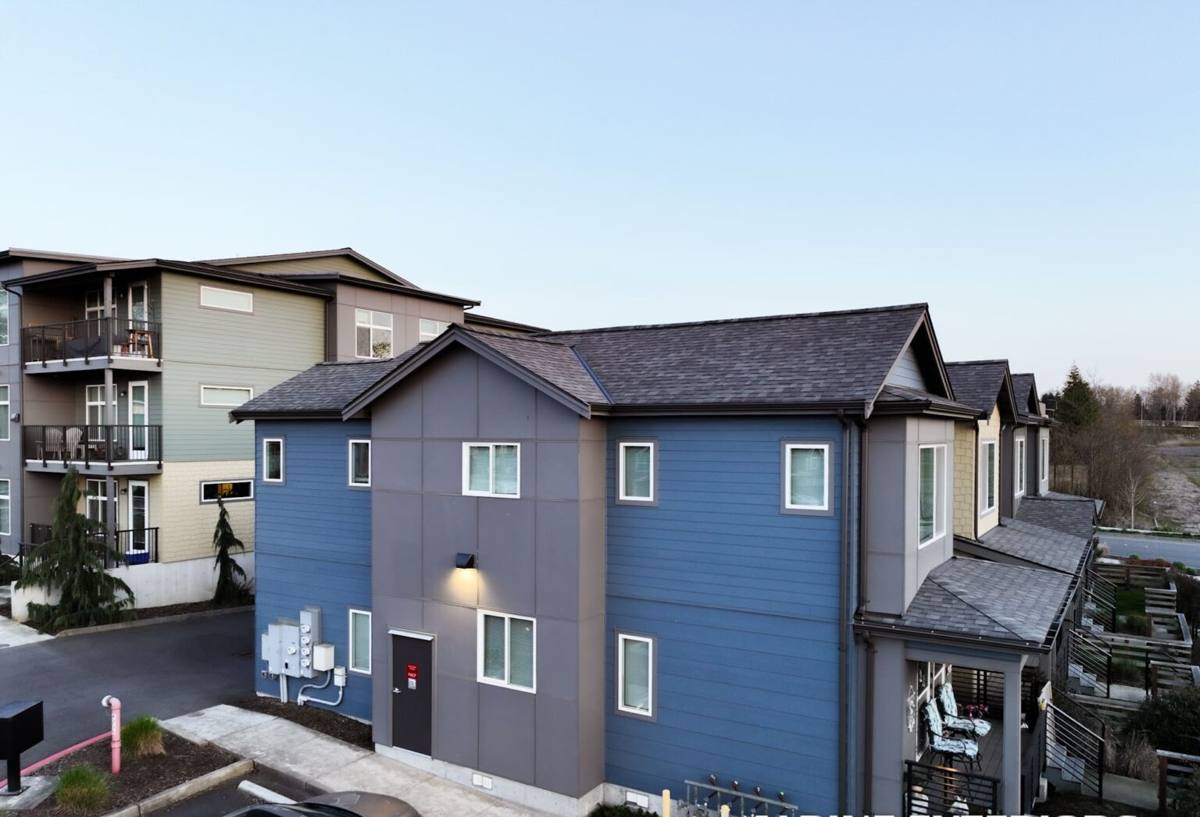
What Sumas Homes Need From a Roof
Whatcom County's marine-influenced weather pushes inland through the valley, and Sumas homes end up dealing with the same driving rain and long moss season that coastal properties see, just filtered through more tree cover and shade. That combination creates a few specific demands on a new roof:
- Moisture management underneath the shingles — not just on top of them
- Airflow through the attic so trapped humidity doesn't condense and rot decking from the inside
- Moss-resistant surfaces and details on shaded slopes and north-facing roof planes
- Durable flashing at every valley, chimney, and wall intersection, since that's where driving rain finds its way in first
- A roof pitch and material choice that sheds water fast instead of letting it sit
None of this is exotic. It's just what a roof needs when it spends a good chunk of the year wet.
What a Correct New Roof Installation Actually Involves
Tear-Off and Deck Inspection
A proper new roof starts with a full tear-off down to the decking, not a layover on top of old shingles. That's the only way to actually see the plywood or OSB underneath and catch soft spots, delamination, or rot before they get sealed under a new roof for another 20-30 years. Any damaged decking gets replaced, not patched around.
Underlayment
This is the layer that does the real work when wind-driven rain gets under a shingle tab, which happens more often in this valley than most homeowners realize. A synthetic underlayment across the full roof, with self-adhered ice-and-water membrane at eaves, valleys, and around every penetration, gives the roof a second line of defense that a builder-grade felt underlayment simply doesn't match.
Flashing
Chimneys, skylights, sidewalls, and valleys are where the vast majority of roof leaks actually start — not in the open field of shingles. Correct new roof installation means new flashing at every one of these points, formed and installed to shed water outward, not old flashing reused to save a step.
Ventilation
An attic that can't breathe traps humidity, and trapped humidity condenses on the underside of the roof deck. Over a few wet seasons that turns into soft decking, mold, and a roof that fails from underneath while the shingles on top still look fine. Balanced intake (soffit vents) and exhaust (ridge vents) are part of doing this job right, not an upsell.
Field Installation
Shingle or panel installation to manufacturer spec — correct nailing pattern, correct exposure, correct starter course and ridge detail. This is the part that's visible, but it's the least likely part to cause a failure if everything underneath it was done correctly.
Comparing Roofing Materials for This Valley
There's no single "best" roofing material for every home — it depends on your roof's pitch, shade exposure, budget, and how long you want to go before the next major roof work. Here's how the common options stack up for a property in Sumas' climate.
| Material | Moss/Moisture Resistance | Typical Lifespan | Maintenance |
|---|---|---|---|
| Architectural asphalt shingle | Good with proper ventilation; benefits from occasional cleaning on shaded slopes | 25-30 years | Low to moderate |
| Standing seam metal | Excellent — sheds moisture fast, little surface for moss to grip | 40-50+ years | Low |
| Synthetic/composite shake | Good; more consistent than natural wood in wet, shaded conditions | 30-40 years | Low to moderate |
| Natural cedar shake | Requires ongoing upkeep in damp, shaded settings to manage moisture and moss | 20-30 years with regular maintenance | High |
We install asphalt shingle and metal roofing as our standard offerings because they give Sumas homeowners the best balance of upfront cost, long-term moisture performance, and manufacturer warranty support. Natural wood shake can look great, but the maintenance schedule it needs to perform well in a shaded, damp valley is a real, ongoing commitment — one we're upfront about rather than glossing over.
Our New Roof Installation Process
- On-site inspection and estimate — we look at your current roof, attic ventilation, and any problem areas, and give you a written scope and price
- Material selection — we walk through options based on your budget, roof pitch, and how much shade your roof planes get
- Scheduling around weather — we plan tear-off and dry-in around the driest windows we can find, since an open roof deck and a Whatcom County storm don't mix
- Tear-off and deck repair — full removal, deck inspection, replacement of any compromised sheathing
- Underlayment, flashing, and ventilation installed — the parts that determine whether the roof actually performs over time
- Field installation — shingles or panels installed to spec
- Final walkthrough — we go over the finished roof with you, including a look at the ventilation and flashing details, before we call the job done
We keep the jobsite clean throughout — magnetic sweeps for nails, tarped landscaping, and daily cleanup — because a new roof job shouldn't leave you with a mess to deal with after.
Signs Your Sumas Home Needs a New Roof, Not Another Repair
Repairs make sense for isolated issues. A full new roof installation makes sense once a roof is failing broadly, not just in one spot. Watch for:
- Granule loss heavy enough that shingles look bare or patchy in several areas
- Moss buildup that returns quickly after cleaning, especially on shaded or north-facing slopes
- Curling, cupping, or cracked shingles across multiple roof planes
- Soft spots in the decking you can feel when walking the roof
- Daylight visible through the attic roof boards
- Repeated leaks in different locations rather than one recurring spot
- A roof approaching or past the upper end of its material's expected lifespan
If you're only seeing one or two of these, a repair may still be the right call — and we'll tell you that instead of pushing a full replacement you don't need yet.
What Affects the Cost of a New Roof in Sumas
Every roof is different, so we don't quote off a generic per-square number without seeing the job. The main factors that move the price:
| Factor | Why It Matters |
|---|---|
| Roof size and number of planes | More material, more labor, more flashing details to execute correctly |
| Pitch and access | Steeper or harder-to-access roofs take longer and require more safety setup |
| Layers to remove | Tearing off multiple existing layers costs more than a single-layer tear-off |
| Decking condition | Rot or soft sheathing found during tear-off means replacement material and labor |
| Material choice | Asphalt shingle, metal, and composite products all carry different material costs |
| Ventilation upgrades | Adding proper intake/exhaust venting where none existed adds scope, but pays off in roof lifespan |
We give you a firm, written estimate after seeing the roof in person — not a phone-quote guess — so you know what you're actually paying for before work starts.
Why Hire a Crew That Already Works in Sumas
A roofing crew that regularly works this part of Whatcom County already understands how the valley's weather behaves — where moss tends to build up fastest, which roof orientations stay wet longest, and how to schedule a tear-off around a realistic dry window instead of gambling on the forecast. That local familiarity shows up in the details: the right underlayment strategy, ventilation that's sized correctly for the attic, and flashing work that accounts for how hard the rain actually drives in this area.
It also means a crew that's reachable if something comes up after the job — not a company that did one job in the area and moved on. We're based in Ferndale and work throughout Whatcom County, including Sumas, so when we say we stand behind the work, there's a real local presence behind that.
If your roof is showing its age or you're planning ahead, we're happy to take a look and give you a straightforward, no-pressure estimate. There's a form below — reach out and we'll set up a time to come see your roof in person.